

Your daily dose of tech news! We curate the most important stories, innovations, and trends in the world of Technology, Cybersecurity and AI.
Joined October 2024
- Tweets5.3K
- Following22
- Followers3.2K
- Likes439
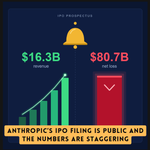





Anthropic has made its IPO paperwork public, and the numbers reveal explosive growth alongside equally explosive costs.
Revenue reached $16.3 billion in the first half of 2026, versus roughly $4.6 billion for all of 2025. Q2 alone brought in $11.5 billion.
The losses are just as striking. Net loss hit $42 billion in 2025, up from $8.3 billion in 2024, and reached $80.7 billion in the first six months of 2026. About $72.4 billion of that recent loss came from non-cash charges tied to its rising valuation.
The spending commitments are enormous. Anthropic has pledged more than $500 billion in compute and infrastructure over roughly a decade, and much of it cannot be cancelled.
There are risks too. Nearly a quarter of revenue came from just two customers, and many large clients have no long-term contracts. Investor sentiment is already shifting. Some backers now value the company at about $1.5 trillion, down from roughly $2 trillion a week earlier.
Is this the boldest bet in tech history, or a warning sign for the AI boom?
Follow us to stay up to date with tech news!

Google has officially entered the AI laptop race with Googlebook, its new Android-powered laptop platform designed around Gemini.
Google says the first models are coming this fall, with premium hardware, seamless Android phone integration, and features like the Magic Pointer and custom widgets built in. Hardware partners including Acer, ASUS, Dell, HP, and Lenovo are already on board, while Google also says existing Chromebooks will keep receiving 10 years of automatic updates. That makes this more than a product tease, it’s a major shift in Google’s laptop strategy. If Googlebook delivers on its promise, it could become one of the biggest PC stories of the year.
Follow us to stay up to date with tech news!

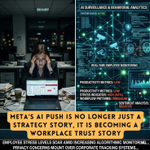
Meta’s aggressive AI strategy is now colliding with employee morale in a big way. Reports say the company is tracking mouse movements, clicks, and keystrokes on U.S. workers’ laptops to train AI models, while also tying AI usage to performance expectations and preparing for major workforce cuts.
That combination has created anxiety inside the company. The New York Times reports that Meta’s 78,000 employees are seeing more monitoring, more pressure to use AI, and less confidence in their long-term future, especially as the company moves toward additional layoffs and doubles down on AI spending. In plain terms, workers are being asked to help build the tools that may reshape or replace parts of their own jobs.
Follow us to stay up to date with tech news!

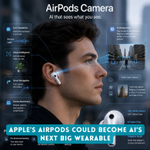
Apple is reportedly moving camera-equipped AirPods into late-stage testing, a sign that its AI hardware strategy is accelerating. Bloomberg says the earbuds are in DVT, the final major development stage before production validation, and prototypes now have a near-final design and capabilities.
The cameras are expected to help Siri “see” the world around the user, not take photos, with use cases like identifying objects, reading context, and improving visual intelligence features.
The timing matters: Apple had initially aimed for a launch as early as the first half of 2026, but Siri-related delays pushed the timeline back, with the revamped assistant now reportedly targeted for September.
This could be Apple’s first truly AI-native wearable, blending audio, vision, and assistant features into one device.
Follow us to stay up to date with tech news!

Apple may be preparing one of its most important AI moves yet. According to Bloomberg, Apple plans to let users choose rival AI models across iOS 27 features, including tools for generating and editing text and images. Reuters reports that Apple has already tested integrations with Google and Anthropic, and that the feature is internally called “Extensions,” with model selection available in Settings.
If this ships as reported, it would mark a major change from Apple’s tightly controlled ecosystem to a more open, user-choice model. The timing also matters: the feature is expected to arrive with iOS 27, iPadOS 27, and macOS 27 this fall.
Follow us to stay up to date with tech news!

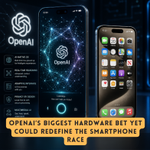
OpenAI may be preparing to challenge the iPhone with its own AI-native phone, according to fresh reporting and analyst claims. The move follows OpenAI’s $6.5 billion acquisition of Jony Ive’s io Products in 2025, a deal that brought Apple’s former design chief into OpenAI’s hardware ambitions.
What makes this story stand out is the scale and timeline. Ming-Chi Kuo says OpenAI is working with MediaTek and Qualcomm on smartphone processors, with Luxshare as a manufacturing partner, and that mass production could begin in 2028. Reuters also reported in February 2026 that OpenAI was already building a broader hardware lineup, including a smart speaker, smart glasses, and a smart lamp.
If OpenAI really enters phones, the real disruption may not be the device itself, but the shift from app-first use to AI-agent-first computing.
Follow us to stay up to date with tech news!

Netflix has officially launched “Clips”, a new vertical video feed inside its mobile app that works like TikTok, but for discovering series, films, specials, and more. The rollout began on April 29, 2026, and is already available in major markets including the US, UK, Canada, India, Australia, Malaysia, Pakistan, the Philippines, and South Africa. Netflix says the feed is built as a personalized highlight reel, designed to make browsing quicker, easier, and more visual for mobile users.
This move matters because Netflix reported $12.25 billion in Q1 2026 revenue, up 16.2% year over year, and it is clearly pushing harder to turn discovery into engagement. With mobile usage, short-form video, and personalized recommendations now central to streaming habits, Netflix is betting that swipeable clips can keep users exploring longer.
Follow us to stay up to date with tech news!

SpaceX’s board has reportedly turned Musk’s Mars vision into a formal pay plan, and the targets are unlike anything in corporate history. Reuters says the package could grant Musk 200 million super-voting restricted shares if SpaceX reaches a $7.5 trillion valuation and helps establish a permanent human colony on Mars with at least 1 million people.
That is not all. The filing also points to a separate award of up to 60.4 million restricted shares tied to space-based data centers delivering 100 terawatts of compute power, showing how deeply SpaceX is linking compensation to long-term expansion beyond Earth.
The scale of this deal underscores how aggressively SpaceX is betting on Mars, orbital computing, and a future that investors would once have dismissed as science fiction.
Follow us to stay up to date with tech news!

OpenAI’s biggest platform shift in years is now official: after ending Microsoft exclusivity, its models are moving onto Amazon Web Services, giving enterprises a new way to access frontier AI across clouds. AWS says the latest OpenAI models, including GPT-5.5 and GPT-5.4, are available in preview on Amazon Bedrock, and Amazon says this is the first time AWS customers can use OpenAI frontier models through Bedrock’s existing APIs and controls.
The timing matters because Microsoft still remains OpenAI’s primary cloud partner, but the new terms open the door for broader distribution and faster enterprise adoption. This follows Amazon’s February 2026 partnership with OpenAI, which included a $50 billion investment and a plan to expand compute capacity by 2 gigawatts, showing how aggressively the AI cloud race is escalating.
Follow us to stay up to date with tech news!

Elon Musk’s push to turn X into a true super app is getting closer to reality. Bloomberg reports that X Money, the platform’s banking and payments tool, is expected to enter early public access imminently, after Musk said in March that it would launch next month.
The numbers make the story even more striking: early users have reported 3% cash back on eligible purchases, a 6% interest rate on cash savings, free peer-to-peer transfers, and a metal Visa debit card tied to a user’s X handle. Reuters also reported that Visa is the first partner for X Money, helping users fund wallets, link debit cards, and transfer money to bank accounts.
If X can scale this, it could move beyond social media and toward Musk’s long-promised everything app vision.
Follow us to stay up to date with tech news!

According to Bloomberg reporting, Tim Cook is leaving John Ternus with a pipeline of roughly 10 major new product categories, with the foldable iPhone expected to be the first headline launch in September. Bloomberg also says Cook has overseen only three new product categories since 2011, which makes this roadmap unusually ambitious by Apple standards.
The rumored lineup includes foldable devices, smart glasses, AI-powered home products, and other categories that could reshape Apple’s next decade. If even part of this materializes, Ternus could inherit one of the most aggressive product expansion plans in the company’s history.
Apple’s future may not just be about better iPhones and Macs. It may be about entirely new markets.
Follow us to stay up to date with tech news!

Amazon is pulling the plug on its futuristic grocery experiment, closing all 57 Amazon Fresh supermarkets and 15 Amazon Go cashierless stores across the United States in a sweeping retail reset. After years of testing “Just Walk Out” technology and smart Dash Carts, the company says it never cracked a truly distinctive in‑store experience with the right economics to scale nationwide.
Instead, Amazon is shifting its firepower to a grocery business that already works: more than 550 Whole Foods Market locations, a rapidly growing Whole Foods Daily Shop concept, and an online grocery operation that reaches over 5,000 communities and drives more than $150 billion in annual grocery sales. Some shuttered Fresh and Go locations will be converted into Whole Foods stores, while customers can still order Amazon Fresh online for fast, same-day delivery in many areas. Physical Amazon-branded grocery stores may be disappearing, but Amazon’s grocery ambitions are not shrinking, they’re consolidating around the channels where customers are already shopping at scale.
In addition to these US-based figures, Amazon had already announced in late 2025 the closure of all 19 Amazon Fresh locations in the UK, with five of those earmarked for conversion into Whole Foods Market stores.
Follow us to stay up to date with tech news!

Apple is in the middle of an AI overhaul that could finally turn Siri from a lagging voice assistant into a true AI front-runner. Bloomberg’s Mark Gurman reports that Apple is developing two new versions of Siri, with one tied to the iOS 26.4 update targeted for spring 2026 and designed around a deeper, end‑to‑end “V2” architecture to boost accuracy and reliability. Internally, this shake‑up has already triggered management changes, moved design oversight to potential CEO candidate John Ternus, and opened the door to using third‑party and even open‑source models instead of relying solely on Apple’s in‑house AI.
To accelerate this turnaround, Apple has struck a high‑profile AI partnership with Google, with a new Gemini‑powered Siri experience expected to be previewed as soon as next month, promising more conversational, ChatGPT‑style interactions and tighter integration with apps and on‑screen content. After years of delays and criticism, this two‑track Siri reboot is Apple’s clearest signal yet that it intends to compete head‑on in the generative AI race.
Follow us to stay up to date with tech news!

Nvidia CEO Jensen Huang is confirmed to be in Shanghai as the company navigates fierce local competition and increased scrutiny from Chinese regulators. Beijing is still weighing whether to allow sales of Nvidia’s powerful H200 AI chip into China, even though Washington has already cleared the exports, leaving shipments reportedly blocked at Chinese customs and adding fresh uncertainty for one of Nvidia’s most important growth markets.
This visit kicks off Nvidia’s annual celebrations with China-based staff and includes a Shanghai event before Huang travels on to Beijing, Shenzhen and then Taiwan, underscoring how strategically important China remains despite rising geopolitical and regulatory headwinds.
With demand from Chinese tech giants still strong but regulatory decisions unresolved, this trip could help shape Nvidia’s next chapter in the world’s second-largest economy and signal how far China is willing to go in using AI chip approvals as leverage in its broader tech tug-of-war with the United States.
Follow us to stay up to date with tech news!

TikTok just took a decisive step to secure its future in America, a new majority U.S.-owned TikTok USDS Joint Venture LLC has been officially established, and long time TikTok executive Adam Presser has been named CEO of the entity.
The joint venture is built on TikTok’s U.S. Data Security organization and is designed to operate as an independent entity with a seven‑member, majority‑American board, including TikTok CEO Shou Chew as a director. Backed by major investors such as Oracle, Silver Lake, MGX and others, the venture’s mandate is to protect over 200 million U.S. users and 7.5 million U.S. businesses through strict data, algorithm and content safeguards while keeping the app interoperable with TikTok’s global platform.
Presser, formerly TikTok’s head of operations and trust and safety and a veteran of WarnerMedia, now leads the American-based operation tasked with proving TikTok can remain in the U.S. under tough national security rules without a full breakup from ByteDance, which retains a minority stake.
Follow us to stay up to date with tech news!

OpenAI has finally confirmed what many in tech have been whispering about for months - ads are officially coming to ChatGPT’s free tier and the new $8‑per‑month ChatGPT Go plan in the U.S. In the coming weeks, logged‑in adult users will start seeing clearly labeled “sponsored” messages at the bottom of some responses, matched to the topic of their conversation. Think trip planning chats that surface hotel or local attraction offers, or shopping advice conversations that show relevant product promotions.
OpenAI says Plus, Pro, Business and Enterprise users will remain completely ad‑free, drawing a hard line between premium and subsidized access. The company also pledges not to sell user conversations to advertisers, to block ads around sensitive topics like politics and health, and to let people turn off personalization. With ChatGPT now reaching hundreds of millions of users globally and OpenAI still not expected to be profitable for years, this ad rollout could become one of the most important pivots in AI’s commercial history.
Follow us to stay up to date with tech news!

OpenAI has just made one of its boldest moves yet, investing as the lead backer in Merge Labs, a brain-computer interface startup co-founded by its own CEO Sam Altman and now armed with roughly $252 million in seed funding at around an $850 million valuation. Positioned as a non-invasive rival to Elon Musk’s Neuralink, Merge Labs wants to “bridge biological and artificial intelligence” by using ultrasound and novel molecular technologies to read from and write to the brain without putting hardware directly into brain tissue.
OpenAI says it will pair its scientific foundation models and future AI operating systems with Merge’s high-bandwidth interfaces so that AI can interpret intent and adapt to individual users even from noisy neural signals, tightening the loop between advanced AI software and neural hardware. If successful, Merge Labs could move from early medical use cases toward consumer-scale devices that let people one day interact with AI at the speed of thought.

SpaceX’s Mars dream just became more concrete and more controversial. Elon Musk now pegs the first uncrewed Starship mission to Mars to the late‑2026 launch window, giving his team roughly two years to solve some of the hardest problems in spaceflight. The plan is to send cargo and humanoid Optimus robots ahead of any human crews, using the 7–9 month transfer when Earth and Mars are most closely aligned.
To hit this window, SpaceX must first prove Starship can reach orbit reliably and master in‑space refuelling, a capability it has yet to demonstrate but which Musk says could be ready toward the end of 2026. Analysts note that Mars opportunities only open roughly every 26 months, so missing the 2026 window could push the first Starship Mars shot into 2028 or later. With Starship test flights still experiencing high‑profile setbacks, the question is no longer whether Musk’s vision is ambitious, but whether the schedule is even remotely realistic.

For the first time in nearly 20 years, Google is quietly rolling out a way to swap your old @gmail.com address for a new one without creating a fresh account. An updated Google support page, currently live in Hindi, confirms the feature is “gradually rolling out” to @gmail.com users worldwide, after years of saying these addresses “usually can’t” be changed.
Here’s the big deal, your original Gmail becomes an alias, so emails sent to both the old and new addresses still land in the same inbox, and you can continue signing in with either. Google says your photos, Drive files, purchases, messages, and subscriptions stay untouched, removing the painful data migration that used to come with starting over. There are limits though, each account can only change its @gmail.com handle a limited number of times and you can’t immediately delete or recreate the new address.
Follow us to stay up to date with tech news!
