

Hosted by @cassidycash, this podcast goes behind the curtain & into the real life and history of William Shakespeare. | Historical Map Illustrator
Birmingham, AL, USA
Joined October 2021
- Tweets3.7K
- Following884
- Followers1K
- Likes3.2K
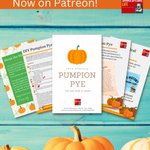


On the podcast this month, we've been exploring Pumpkins and how they were used in Shakespeare's lifetime, including this recipe for 17thC Pumpion Pye. Inside That Shakespeare Society, I've built out an activity guide that shows you how to cook one at home and how Pumpkins connect with Shakespeare's plays. You never knew exploring history would taste this good. Try it out right now inside That Shakespeare Society. patreon.com/thatshakespearel…

Shakespeare actually mentions pumpkins. In The Merry Wives of Windsor, Mistress Ford insults Falstaff as a “gross watery pumpion,” showing that the fruit was familiar for Elizabethan audiences, but perhaps not very much enjoyed. cassidycash.com/ep445

Very pleased to see this map I illustrated for Tudor Places @tudor_places magazine finally out in print! Always a pleasure to work with Sarah and Deb. Explore the Tudor Northeast with your history guide extraordinaire, Sarah Morris, @thetudortravelguide where you'll meet some famous figures including Anne Boleyn, Jane Seymour, and several other recognizable Tudor faces. Along the way you'll stop at some beautiful, storied, locations on a fun journey through an impressive part of the country. Inside Issue 24, here: tudorplaces.com/products/iss…


It's time for Weird Word Wednesday and this week we're exploring the Pumpkin! Well, Pompion as it would have been called in the 16th century.
By my troth, I am amazed, I am flabbergasted, and so very thrilled to share that I am officially the first ever Artist in Residence at the Shakespeare Association of America @SAAupdates conference happening next March. I will be displaying my existing Shakespeare artwork (along with some brand new pieces just for the conference!), there will be castle paintings, a Shakespeare portrait, and some special extras, too. And while you're in the neighborhood, be sure to stop in and check out the workshop @shakeuphistory and I are working on for you on Podcasting the Bard's Global Histories. It's going to be a fun event and I hope to see you there! shakespeareassociation.org/a…
Pumpkins were still relatively new to England in Shakespeare’s lifetime. Native to the Americas, they reached Europe through the Columbian Exchange and were often called “pumpions” in English. cassidycash.com/ep445

STARTS IN 1 HOUR! Join us TODAY for our Quarterly Swan Cup Challenge. Compete against fellow listeners to see who knows the most Shakespeare history and which member walks away with the Swan Cup (and a few surprise prizes I've got in store!) Starts at 2pmCT, LIVE on YouTube and Patreon. patreon.com/live/172166113 or YouTube youtube.com/@thatshakespeare…

NEW EPISODE: Join our guest and author of Pumpkin: The Curious History of an American Icon, Cindy Ott as she shares details of what people in Shakespeare's England thought about pumpkins, what they called them, and how they ate them. cassidycash.com/ep445

In this episode, we're trying out an experiment by Hugh Plat from the 16th century where he describes using a glass bowl to make a regular candle burn three time brighter. Think it will work? Let's find out, right now, on That Shakespeare Life. youtu.be/R_6qNs4aVoc

Join us Monday, October 26, for a Macbeth themed Spooky Night of Shakespeare Trivia. Compete for physical prizes mailed out to the first and second place winners. All questions come from the podcast, so if you've been listening to the show, you'll have a head start! cassidycash.com/member

One of the popular beliefs about dragons in Shakespeare's lifetime included the idea that they hoarded gold and violently defended it. cassidycash.com/ep444

If you'd like to give your students something to color while they listen, or if you'd just like some theraputic dragon coloring yourself, grab this Here Be Dragons Coloring book download on Patreon right now. patreon.com/posts/153785093/

It's time for Weird Word Wednesday, and this time we're looking at Paraquito. You know Shakespeare was the first one to use this word this way.
Shakespeare's descriptions of dragons include the idea that they were fierce winged creatures. This image was included by Shakespeare, but it was not something he invented. It was a popular image of dragons throughout Shakespeare's lifetime. cassidycash.com/ep444

NEW EPISODE: "Swift, swift, you dragons of the night, that dawning May bare the raven's eye! I lodge in fear; Though this a heavenly angel, hell is here." Cymbeline (II.2) What were dragons really like in Shakespeare's lifetime? Explore their habits, their looks, and Shakespeare's versions of them with Rachel Sweeney. cassidycash.com/ep444

SPOILER INCOMING: In Henry V, Falstaff dies. (Sorry, Queen Elizabeth was sad, too). But as part of his death, there's this great speech about how he smells flowers? Or is it something else? And What was Shakespeare talking about when he described Falstaff as a green table? So much to unpack here, so let's find out what's really going on, right now on That Shakespeare Life. youtu.be/BIApqV_bDKk

See images, woodcuts, illustrations, and more that demonstrate what the tools of torture looked like and some of the surviving artifacts of them today. cassidycash.com/ep443

A gibbet could be used to confine a living person, but it was more commonly used after execution to display the dead. The body became a public lesson. Travelers moving from one town to another, or people passing along the Thames, could see what happened to criminals, traitors, or pirates. cassidycash.com/ep443
