United States
Joined April 2009
- Tweets12.3K
- Following2.1K
- Followers383
- Likes3.5K





Carthago delenda est retweeted

The question is not whether Mamdani’s statement is as grotesque as everyone says—of course it is. The question is whether that was its entire point, and that the mayor of NYC is just trying to bait Jews on their day of sorrow. It’s all so deeply pathetic.
Carthago delenda est retweeted
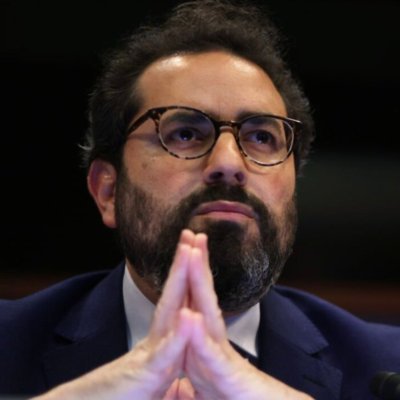
Left: Fateh Sharif, the Commander of Hamas in Lebanon
Next to him: Claudio Cordone, former head of Amnesty International

Carthago delenda est retweeted

The ancient Greeks were often right: character is destiny. Hubris is one’s undoing.
The warning signs in Graham Platner were there in plain sight. Many chose not to see them. Others extended him a presumption of grace they would never have given to their ideological enemies.
This is a moment not for schadenfreude, however tempting, but for self-reflection.
Carthago delenda est retweeted

JUST IN: In late February 2026, two weeks into the Iran war, Mohammed bin Zayed Al Nahyan picked up a phone in Abu Dhabi and called Benjamin Netanyahu. Iran had fired 563 missiles and 2,256 drones at the United Arab Emirates, more than any other country in the region, more than Israel itself. Emirati air defenses were saturated. MBZ asked for help. Netanyahu ordered the Israel Defense Forces to deliver a complete Iron Dome battery, dozens of interceptors, and several dozen IDF operators to UAE soil. The system was operating in Abu Dhabi within days. It intercepted dozens of Iranian missiles. Axios reported yesterday afternoon that it remains in country.
This is the first time in the seventy-seven year history of the State of Israel that the IDF has deployed an active combat air defense system to defend an Arab capital. It is the first time the Iron Dome has been used outside Israel or the United States since it became operational in 2011. The Tamir interceptor, designed by Rafael Advanced Defense Systems to protect Israeli population centers from rocket fire originating in Gaza and southern Lebanon, was built in 2007 to defend Sderot from Hamas Qassam rockets. It was deployed in 2026 to defend Abu Dhabi from Iranian Shahed drones and Fattah ballistic missiles. There is no precedent for this.
The detail that breaks the story open is the timing.
The Wall Street Journal reported on March 27 that Iran’s sustained barrages had pushed Israel’s own anti-missile systems beyond their physical limits, forcing the IDF to ration its most advanced interceptors while Israeli civilians took direct hits. Times of Israel reported today that Netanyahu’s coalition had repeatedly refused to fund interceptor production, with some members arguing for offensive capability over defense. Netanyahu sent a complete Iron Dome battery to Abu Dhabi while rationing the same weapon for Tel Aviv, while his coalition had blocked the production line. The decision was acknowledged by Axios sources as likely to “provoke backlash in Israel.”
That is what an alliance looks like when the diplomatic frame becomes operational.
The Abraham Accords were signed on September 15, 2020 as a normalization treaty. They have now been demonstrated, in combat, against a shared adversary, with Israeli weapons defending Arab cities and Israeli soldiers commanded by an Emirati president’s phone call. Senator Ted Budd’s Abraham Accords Defense Cooperation Act, introduced March 26, would codify what Netanyahu and MBZ have already operationalized. The Accords have transitioned from agreement to architecture inside a sixty-day window.
A senior Emirati official told Axios: “We are not going to forget it.” Tareq al-Otaiba, former UAE national security council official: “It was a real eye-opening moment. To see who our real friends are.”
Three readings of the deployment.
A wartime favor between leaders that ends with the ceasefire. Priced.
Operational normalization that survives the war and seeds further bilateral integration. Narrow.
The first publicly verifiable rewriting of the post-1948 strategic order, in which Israel becomes the security guarantor for the Sunni Gulf against Iran, the Abraham Accords transition from treaty to defense architecture, and Israel’s own civilians wait for interceptors that were sent to Abu Dhabi because the threat there exceeded the threat at home, with Saudi Arabia watching and a US Senate bill already drafted to fund what just happened.
The headlines are pricing the first.
MBZ is calling Netanyahu directly.
open.substack.com/pub/shanak…

Carthago delenda est retweeted

Pink Floyd performing "Comfortably Numb" live at Earls Court, London 1994. Gilmour's solo is one of mankind's greatest achievements.

Carthago delenda est retweeted
I think the fact that there was no sympathy after Oct. 7 for Israel to even squander was the real shock, and it makes a lot of the 'advice' it got afterwards from abroad seem in bad faith.


Carthago delenda est retweeted

Socialist Democrat Analilia Mejia:
“And if [antisemitism] is the worst thing that I could be accused of, then I will stand with it.”
She’s running on the Democrat ticket for the NJ-11 special election in a Harris +8 district. Shes ahead in the polls.
Carthago delenda est retweeted

If a white candidate had a KKK tattoo on his body for 20 years, feigned ignorance of it, and then hosted a Juneteenth celebration to "prove" he isn't racist, I doubt any of these elite liberals would buy it.

Carthago delenda est retweeted

BREAKING: @Politico assigned coverage of Francesca Albanese to a reporter who publicly wonders if “the Jewish lobby” is controlling the U.S. government.
@KarlMathiesen: “Where exactly does that transaction occur? Banks? Stock markets?” nitter.cf/KarlMathiesen/status/4…


.@POLITICOEurope Why did you assign a profile of Francesca Albanese—who says the US is controlled by ”the Jewish lobby”—to a guy who wonders if “the Jewish lobby” controls US policy, asking “Where exactly does that transaction occur? Banks? Stock markets?”
nitter.cf/KarlMathiesen/status/4…


Carthago delenda est retweeted

Operational Success, Strategic Failure in Iran
This is not a matter of opinion. It is a matter of facts.
1. Iran today is weaker than it was before the conflict, but it is also more radical. The Islamic Revolutionary Guard Corps has further consolidated its influence over decision-making, eroding what little internal balance once existed within the regime. Iran was never moderate under Ayatollah Ali Khamenei, but there were previously competing centers of power. That dynamic has largely disappeared, leaving a more ideologically rigid system in place.
2. To be sure, the United States and Israel have inflicted significant damage on Iran’s military capabilities. Their operational and intelligence superiority is unquestioned. But battlefield success does not automatically translate into strategic victory. Iran has demonstrated, time and again, an ability to rebuild. Nowhere is this more consequential than in the nuclear domain. With roughly 440 kilograms of uranium enriched to 60%, Tehran retains a latent capability that cannot simply be bombed away or seized. Counting destroyed targets is not the same as achieving a durable strategic outcome.
3. The regional picture further complicates the narrative of success. Key Gulf actors, such as Oman and Qatar, have pushed for de-escalation and, in some cases, openly criticized Israel’s role in the conflict. Qatar continues to maintain functional ties with Iran. Even among U.S. partners that normalized relations with Israel, such as the UAE and Bahrain, public unease is evident. Saudi Arabia, is unlikely to advance normalization under current conditions surrounding the Palestinian issue. The idea of a cohesive regional alignment against Iran remains overstated.
4. More fundamentally, the campaign’s implicit objective was not merely to degrade capabilities, but to alter the strategic landscape, ultimately by creating conditions for regime change. That outcome has not materialized. Instead, hardline leadership remains in place, now facing incentives to reassess its nuclear posture. A regime that feels both threatened and vindicated may be more,not less, inclined to pursue a nuclear weapon.
5. If the conflict ends under current conditions, Iran may emerge as the strategic winner despite suffering tactical losses. It can claim resilience in the face of sustained pressure from two of the world’s most capable militaries. Meanwhile, global competitors of the United States stand to benefit. Russia gains breathing room and geopolitical leverage, while China watches Washington become further entangled in the Middle East.
6. Even the situation in the Strait of Hormuz underscores the paradox. What was open at the outset of the conflict may now require diplomatic or military effort to reopen—turning a return to the status quo into a perceived achievement.
7. There would be no more positive development for the Middle East than the fall of the Iranian regime. That remains the strategic prize. But it is far from clear that the current campaign, as it stands, has advanced that outcome. If anything, there is a growing risk it has produced the opposite effect.
8. The more immediate question is how this ends. The administration faces a narrowing set of options, none of them particularly good.
One path is a negotiated agreement. But under current conditions, such a deal is unlikely to be favorable. From Tehran’s perspective, the regime has withstood sustained military pressure and can claim a form of strategic resilience. That perception matters. It reduces any incentive to compromise on the core pillars of its security and ideology such as its missile program, its drone capabilities, and ultimately its nuclear posture. A deal reached under these circumstances risks formalizing, rather than rolling back, Iran’s long-term threat.
The alternative is escalation: a broader military campaign, potentially including the seizure of strategic assets such as Kharg Island or contested Gulf or Hormuz straits. But such moves would not be decisive. Iran is not a state that can be coerced into collapse through limited territorial losses. Instead, escalation would likely prolong the conflict, expand its scope, and increase the risks of regional spillover—without guaranteeing a strategic breakthrough.
In short, there is no good option as long as this regime in Tehran remains in place and at present, it is not going anywhere.
9. There is also a second-order effect that deserves attention in Washington. The U.S.-Israel alliance remains a cornerstone of Israel’s security and long-term future. That is not in question. But it is less clear that this campaign strengthens Israel’s standing in the United States. On the contrary, prolonged conflict, especially one that lacks a clear strategic end state, risks deepening political and public friction. If United States is being drawn into an open-ended Middle Eastern conflict without a clear payoff, the political cost for Israel could become significant.
The bottom line is clear - this has been a remarkable operational performance, driven by close coordination between U.S. Central Command and Israel. But if it concludes without meaningful strategic change, it will be remembered as a strategic failure.
The risk is not an Iran that is weakened and deterred, but one that adapts, emerging more determined, more radical, and potentially closer to a nuclear threshold, resembling Pakistan or North Korea rather than the "new" Venezuela for example
#IranWar

I don’t buy any of this — a lot of think tank doublespeak that ignores some basic realities:
1. Iran is dramatically weaker now in every single relevant category of threat.
2. The US and Israel have destroyed large quantities of weapons and launchers, along with defense infrastructure and factories, research facilities and human capital.
3. The war has united the US and Israel with moderate Arab nations against radical Islamists, strengthening an important ongoing alliance.
4. With the internet down and the streets filled with armed thugs, regime change may not be imminent but it is likely inevitable.
Comparing this to the facts and circumstances prior to 28 February, there is no doubt that the free world is better off now. Only a military “academic” could see things so differently.
Carthago delenda est retweeted

The Iran war is not drift. It follows a coercive sequence: terms, pressure, pause, then renewed pressure. After failed diplomacy and rising nuclear risk, Washington saw force as the remaining option. Whatever its costs, the war is reshaping Iran and the regional balance.
Read more:
parpanchi.substack.com/p/the…

Carthago delenda est retweeted

U.S. envoy @USAMBTurkiye, in October 2025, after at least five increasingly urgent visits to Beirut, pressed Lebanon to act before it was too late.
I have informed the President, the Prime Minister, and the Speaker of Parliament that they have one last chance.
Either they learn their lesson and decide to enter into direct negotiations with Israel under U.S. auspices, to establish a timetable and mechanism for disarming Hizballah.
Or Lebanon will be left to its fate, and will remain so for a long time, with no one to care about it — neither in America nor in the region.
And no one will be able to pressure Israel to prevent it from doing whatever it deems appropriate to carry out disarmament by force.”
Iran’s continued funding of Hizballah, despite sanctions, and a divided Lebanese Council of Ministers delivering mixed messages to the Lebanese Armed Forces — who lack the funding and authority to act — have produced a fragile calm without peace, an army without authority, and a government without control.
Early this year, the United States offered the “One More Try” plan, a framework for phased disarmament, verified compliance, and economic incentives under U.S. and French supervision. Lebanon declined to adopt it due to Hizballah’s representation and influence within the Lebanese Council of Ministers.
Should Beirut continue to hesitate, Israel may act unilaterally — and the consequences would be grave.
The United States this month committed over $200 million in additional funding to the Lebanese Armed Forces. Washington was willing to provide diplomatic cover for Hizballah’s peaceful political transition, coordinate regional statements linking investment to progress, and help Beirut present disarmament not as surrender, but as sovereignty reclaimed. All these initiatives have stalled while the rest of the region moves swiftly to expel Iran’s terrorist proxies.
Lebanon now faces a defining choice: to seize the path of national renewal or remain mired in paralysis and decline.
@LOrientLeJour

Carthago delenda est retweeted

A hungry orange cat broke into its owner's slow cooker and stole a brisket straight out of the pot. abcnews.link/VWDknpo
Carthago delenda est retweeted

FBI investigation found Kent leaked details from classified server to a member of the media & had other leaks to Tucker.
That’s why the interview was ready to go when he quit.
FBI plans to release details to show investigation predated resignation.
notus.org/trump-white-house/…

Carthago delenda est retweeted

It’s definitive: there was never famine in Gaza or anything close. No wave of “residual” starvation deaths. IPC fabricated claims every time. 5 months into ceasefire, total claimed starvation deaths in the entire war: 475, close to baseline, most with pre-existing conditions.