

Disciple of Charlie Munger
Delhi
Joined October 2024
- Tweets3K
- Following241
- Followers17.9K
- Likes8.6K



Pinned Tweet
R&D Lessons from China: After Reliance, JSW Halts Battery Mfg Plans
(a) RIL & JSW: “China has weaponized access to battery tech” (b) FACT: Chinese firms failed for 30 yrs doing R&D, while we focused on quarterly EBITDA (c) Renting vs Owning Mentality.
India’s Licensing Mentality
a. On Aug 26, 2026, Parth Jindal (36 yrs) told reporters that JSW has halted its ₹40,000 cr planned investment to manufacture LFP (lithium iron phosphate) battery in India. Parth said: “China is guarding LFP technology like a weapon.”
b. At Reliance AGM 2026, Anant Ambani (31 yrs) told shareholders: “Access to battery tech is being weaponized.” Reliance was forced to halt its mfg plans for LFP battery after China refused to license cell technology.
c. Indian industry prefers non-export items like oil, steel, cement, power, ports, airports because a known playbook exists. Foreign competition disallowed, 100% domestic capture, predictable profits, multi-billion mkt cap, zero R&D.
China’s R&D Mentality
a. China controls 94% of global LFP capacity. Chinese Companies: CATL: 37%; BYD: 23% (BYD became a car-maker); Others: 34%
b. LFP technology did not fall from heaven into China's lap. 30 years ago nobody wanted LFP. LFP was cheap and safe, but it had a failing. Its conductivity was so poor it could hardly deliver current.
c. US researchers gave up on LFP after a long struggle as it looked impossible to crack. But it was obvious that LFP would one day win because it involved abundant, low-cost raw materials.
BYD 2002-2020: Lessons in R&D
18 Years of Blood, Sweat & Tears
2002: BYD was a small battery-maker founded by Wang Chuanfu, an orphan from one of China’s poorest provinces. Wang chose the long and painful road of LFP when everyone else believed it was the road to bankruptcy.
In 2002, BYD’s earliest investor was Charlie Munger. Charlie said: “I invested because Wang was a “chemistry genius” and a “fanatic who worked 70 hrs a week.”
2005: In 2005, BYD developed its first in-house LFP cell.
2008: BYD launched the world’s first hybrid electric vehicle running on its own LFP – three months after Warren Buffett bought $230 million of BYD stock.
2009-2012: Commercial testing was critical to scale up the technology. But car owners were not ready to buy EVs. Chinese govt backed the technology with “10 Cities, 1000 Vehicles” program, which put LFP on municipal buses and taxis.
2016-2018: The Darkest Years: Conventional NMC technology raced ahead due to govt subsidies. Competition intensified. Industry slogan became: “LFP is dead; stop burning money.”
2019: Near-Death Experience: BYD's net profit to shareholders fell to $267 million, while R&D expenses swelled to $1.25 billion. BYD had bet its last shirt on the technology.
2020: Redemption at Last: BYD’s legendary Blade Battery was born. It worked like a dream, having survived years of failures, bottlenecks, countless iterations, rebuilding of entire production lines, and a devastating lab fire.
R&D: How to Conquer the World
a. Dozens of Chinese EV and battery startups living off govt subsidies disappeared. BYD and CATL emerged as the survivors of a domestic bloodbath.
b. In 2025, the world’s largest EV seller BYD spent 9% of its sales revenue (not profit) on R&D. CATL spent 6%. To understand the scale: In 2025, CATL had 20,000 research staff and 43,000 patents & applications.
2025 BYD R&D Expense: $9B
2025 BYD Profit: $4.5B (Half)
c. China has innumerable companies today with such suicidal R&D expense ratios. India has ZERO because with a license raj DNA, the Indian promoter has no mad desire to change the world. He just wants to die rich.
India's Ambani-Adani Equation
The following equation sums up India's economic curse:
When you have zero R&D, your profit becomes:
$4.5B + $9B = $13.5B
India's family-owned conglomerates, thriving on protectionist policies, do not wish to waste even one dollar on R&D and innovation.
Their vision for India is to leave billions to their children. And the children think licensing another's IP is their birthright: “China has weaponized battery technology against us.”
@arabicatrader
BCG Report: IT Firms Lack AI Talent to Capture $200B Opportunity
(a) BCG evaluated 50,000 engineer profiles (b) Only 10% doing Applied AI work at IT firms (c) Urgent need to build Applied AI workforce (d) INSIGHTS for IT engineers:.
Market Is Ready; IT Firms Aren’t
a. Boston Consulting Group (BCG) has published an extensive report on how IT companies can build Applied AI workforce from the people they already employ.
b. Opportunity: BCG estimates in the next 4 years AI will add $400B of new revenue streams for IT services globally, but wipe out $200B of old revenue streams. So, the net gain is $400-$200 = $200B.
c. Problem: IT firms claim to offer “AI-first” services, but in reality they have not built an AI delivery model. These companies only have a fraction of talent needed to capture the vast opportunity.
d. IT companies tag their workforce as “AI engineers,” but in reality only 10-15% do Applied AI work. The rest merely use AI to do old work faster. At AI-native firms (“tech companies”) 90-95% do real Applied AI work.
Infused AI vs. Applied AI
a. Infused AI: It uses AI tools to do existing work faster. An IT engineer’s task is still fundamentally software development, which is now done faster with AI tools.
b. Applied AI: It involves building and operating AI agents that do the work. Examples: enterprise AI agents, agentic workflow automation, production AI platforms, and AI systems for end-to-end business processes.
c. Infused AI eliminates the need of humans for repetitive tasks. If previously 3 engineers worked for 8 hours to develop and test a feature, now only 1 engineer can do the same task. So, two-third of the workforce is gone.
d. Applied AI engineers create new sources of growth & revenue for clients by building and operating AI agents: new services, new products, new customer problems that can be solved economically, and new ways to increase productivity.
e. IT companies lack the capacity in Applied AI. BCG says time is running out, and market opportunity will be grabbed by firms that move fast to build massive “Applied AI” talent.
Applied AI Job Roles
BCG has identified 40 distinct Applied AI roles. Four categories, which IT engineers and IT firms should target are:
a. Forward-Deployed Engineer (FDE): Works closely with the client to design & deliver a working solution.
b. AI Engineer/AI Architect: Builds and scales enterprise AI and agentic systems.
c. Semantic Engineer: Develops data representations, vector embeddings, and knowledge structures that AI agents can use.
d. AI Ops Engineer: Monitors AI systems for performance, accuracy, drift, and bias.
In AI-native firms, 45% of the workforce comprises forward-deployed engineers (FDEs). In traditional IT firms, the share is less than 5%.
5 Questions IT Firms Must Answer
BCG wants IT companies to answer these five questions right now:
a. Has the company selected the AI use cases (agentic systems) it intends to build to solve client problems? Otherwise it may train people in general AI skills without knowing where those skills will be used.
b. Is there consistent role architecture across the company? A common architecture makes job roles, skill requirements, and career paths easier to compare across teams.
c. Has the company made deliberate hiring and training decisions for all 40 Applied AI roles? A blanket hiring and training policy won’t sustain for long.
d. Has the company assessed its existing workforce properly? Accurate assessment prevents the company from overestimating or underestimating its current capabilities.
e. Can the company’s pay and career structures survive competition from AI-native firms? Otherwise the company will lose existing talent or fail to attract top talent.
Endpiece: The Clock Is Ticking
BCG report’s final message is that building AI capability takes time. Winners will be those IT firms that begin early and enable their employees to develop skills and experience before the opportunity matures toward 2030.
Tech/IT Layoffs: A Survivors' Guide
AI-led layoff tsunami is real. Microsoft, Amazon, Meta have begun. Others will follow. AI has infinite payoff. Tech workers are an inefficient cost burden. Capitalism will get rid of you. Jungle Rules for Survival:.
You Are Your Only Friend
1. Be Self-Serving: Your employer pays for skills, not loyalty. Your employment relationship is merely a transaction, lasting only till it improves shareholder returns. The moment AI produces better ROI, your usefulness is over.
2. Stay Ruthlessly Prepared: Treat your job like a one-client business. Update your skills aggressively. Build your personal brand online. Create a strong network. Engage with ex-colleagues & recruiters when you don’t have to.
3. Know Your Exit Math: Read your contract: notice period, severance, RSU vesting, non-compete and moonlighting clauses. Don’t “resign” under pressure in a layoff. Don’t trust verbal assurances. Don’t sign release documents until you know what you are owed.
4. Keep a Private Log: Maintain notes of each project impact, each bottleneck resolution, each outcome. Record measurable gains in revenue, cost savings, and error reduction. Numbers have power. In a layoff, your records will be your edge for the next job.
5. Think the Unthinkable: Assume your access can be disabled tomorrow 6:00 am. Keep personal contacts, portfolio, tax docs, and other pvt info outside company systems. The day you're laid off: get into war mode, mobilize your network, and message 20 people.
6. Search While Employed: Don’t resign without an offer in hand. If there is no skill upgrade happening in your current role, find a new job before your skills become outdated. Do 2-4 job interviews every quarter even if you’re happy (but stagnant).
7. Be Market-Relevant: Keep reinventing yourself. Stay ahead of the curve. Master all three layers: (a) Base layer (b) AI layer (c) Domain layer. Set aside at least 1 hr/day for skills upgrade. Two demonstrable projects are better than 12 certifications.
8. Respect Your Identity: You are not your job title. AI does not reward overwork. It rewards high-leverage individuals. Divide your worries into “controllable” (skills, savings, health) and “uncontrollable” (unrealistic deadlines, stress at workplace). Focus only on the first list.
Endquote: Survival of the Fittest
Every morning in the jungles of Africa, a deer wakes up knowing it must run faster than the fastest lion, and the lion knows it must run faster than the slowest deer in order to survive.
The law of the tech jungle is no different: Run faster than others, or die.
AI Puts India Job Market at Risk
(a) IIT Madras paper shows how AI affects Indian jobs (b) Microsoft India: 6,200 Voluntary Exit Offers (c) India’s IT & Services Based Economy: AI threat dims long-term foreign investor outlook (d) DATA:.
Tech Job Losses Are Real
a. Microsoft India: Yesterday Microsoft announced voluntary exit offers (VEOs) for 60,000 employees (27% of total workforce) in: US, Canada, UK, and India. Microsoft India has 23,000 employees. Avg 27% = 6,200 buyouts in India.
b. Employee Dilemma: If you don’t accept a financial buyout now, you may later be laid off with no benefits. Consider the life of a Microsoft employee who refuses to take the offer now, and lives each day with the risk of a much bigger regret.
c. Oracle India: In June 2026, Oracle cut 21,000 jobs globally, including 12,000 in India. In Sept 2026, Oracle removed another 3,000 employees in India in a second round of layoffs.
d. The Financial Times interviewed an Indian laid-off Oracle employee in Aug. He was lucky to find a job at 25% of his earlier pay. “I have a big WhatsApp group who haven’t got a job. In India, a traditional IT job is totally dead.”
e. In the same Aug report, FT also quoted Karnataka CM DK Shivakumar: “AI will cut a lot of jobs. I can see there could be 50% of job cuts in Bangalore and other parts of the country.”
f. Fitch Report: For global companies, the economic logic of hiring vast offshore engineering teams is becoming weaker. Similar situation also exists in GCCs in India. EIIRTrend projects 25~30,000 GCC roles could be trimmed in 2026.
g. Global banks like HSBC, Barclays, StanChart are weighing deep cuts in back office roles in India. StanChart CEO said: “We do have job role reductions in favour of the machines.”
IIT Madras White Paper
a. Yesterday, Centre for Responsible AI (CeRAI) at IIT Madras published a white paper titled: “How AI Is Reconfiguring Work in India.” The paper identifies the tasks that AI in India is already performing to fully or partially to replace humans.
b. IT Jobs: The paper says: “India’s top IT firms added only 17 net employees in the first 9 months of FY26. AI coding agents have compressed entry-level software roles. System architecture, tech leadership, and resolving complex failures are still handled by humans.
c. BPO Jobs: Voice support in BPO, such as order status queries, appointment confirmations, payment reminders are now handled by voice AI agents. $80B labour costs already cut in 2026; 80% of customer service human jobs going away in next two years.
d. Mfg Jobs: Example: Hyundai’s plant near Chennai has adopted AI visual scanning and digital validation across the assembly process. Quality evaluations using robotic tools, optical 3D scanners, and UHS cameras have replaced manual inspections.
e. MSME Use Cases: Indian MSMEs employ 33 cr people. Several use cases are already commercially deployed by AI vendors. Vendors report substantial gains: reduced downtime (AI does not fall sick), lower defect rates, improved accuracy etc.
f. Bookkeeping, Creative & Research: A human graphic designer costs ₹150-₹3,000 per design asset. AI can do that same job in ₹8-₹10. Similarly, AI legal research tools have reduced need for paralegal work. Routine bookkeeping jobs are handled by AI tools.
Endpiece: For Retail Investors
Institutional investors bet on long-term growth trends; not on taxes.
Indian operators who are daily selling a dream that LTCG tax cut will bring back foreign investors are looking for exit liquidity to offload large positions.
Retail will be big buyers the day tax cuts are announced. But who will be the seller: these same large operators. Retail will become bag holders. That is the original rule of the game.
Hold Cash: Market Tests Greed
(a) Nifty down just 14% from top (b) Not yet a bear mkt (c) 1990-2020: 10 declines of 25%+ (once every 3 yrs) (d) SIPs created Price-Earnings Mismatch (e) Economic excesses will be corrected. DATA:.
After God, Mean Reversion
a. Economic Excesses: Bear markets exist to correct the cycles of speculation, leverage, and over-supply of liquidity. Post-Covid SIP boom, endless IPOs, family offices turning traders, brokers buying BMWs: it will all mean-revert.
b. Recency Bias: It feels like massive market carnage has occurred. In reality, from Nifty peak of 26,373 (Jan 5), market has only lost about 14%. Bear market technically begins at 20%.
c. Valuations: Nifty PE has de-rated 30% from 27x to 19x. Valuations look cheap due to trailing PE. But markets are forward-looking. Job losses, inflation, low demand, high input costs: If earnings slow down, PE will de-rate another 30%.
Those Who Forget History
1990-2020: 25%+ Drawdowns
Nifty: Peak to Bottom
Average: Once Every 3 Yrs
Jan 2008 to Mar 2009: -61%
Feb 2000 to Sept 2001: -56%
Apr 1992 to Apr 1993: -54%
Sep 1994 to Dec 1996: -41%
Oct 1990 to Jan 1991: -39%
Jan 2020 to Mar 2020: -38%
May 2006 to Jun 2006: -29%
Nov 2010 to Dec 2011: -28%
Mar 2015 to Feb 2016: -26%
Aug 2018 to Feb 2019: -30%*
*2018-19: mid/smallcaps -30%
Nifty Distance to 25% Drawdown
a. Best-case scenario for India: Crude returns to pre-war levels. Worst-case scenario: Crude stays above $100 for one year.
b. If you make investing decisions only looking at the best-case, it is the road to bankruptcy. Prudent investors also look at the worst-case, which is: Nifty decline of 25% peak-to-bottom.
Here’s the calculation:
Nifty Peak → 26,300 (Jan 2026)
25% Bear Market → Nifty 19,750
Today’s Nifty Close → 22,600
Potential Nifty Pain Remaining:
22,600 → 19,750 = 2,850 points
What Must Happen to Hit 19,750
To complete the bear market journey down to 19,750 Nifty bottom, two things must happen:
a. Earnings Slowdown: Gradual quarter-by-quarter slowdown in earnings growth across key sectors like Banking, Energy, and IT. That will lead to PE mean reversion.
b. SIP Inflows Decline: Kotak has published monthly SIP data from 2016 to 2026, showing that when Nifty declines more than 3% in one month, SIP stoppage ratio goes up.
It means SIP auto-pay habit does not alter with gradual pain. However, shocking pain moves the needle. Once SIP fatigue occurs, DIIs will not be able prevent Nifty from breaching 20,000 level.
Endpiece: What to Do
This time is not different. Years of economic excesses will be corrected like they always have. Keep patience and don’t come in the way of the coming reset.
@arabicatrader
Market Is a Giant Value Trap
(a) Every indicator is negative (b) SIPs have staggered the fall, pulling in even those who were on sidelines (c) UP elections in Feb; govt has no time or money to waste (d) MTF leverage is the end-game. FACTS:.
Writing is on the Wall
a. Revenues: Fitch Ratings has forecast private consumption growth in India will slow down from 7.7% in FY26 to 6.5% in FY27. Forward guidance of Nestle, HUL, Colgate shows demand moderation, confirming Fitch’s forecast.
b. Margins: Corporate margins are under pressure. ICRA has flagged margin compression of 1-1.5% in the near term due to rising input costs (freight, fuel, raw material). This won't change until crude stays above $100.
c. Credit Costs: Sept inflation was 5.54%. RBI shifted stance to “calibrated tightening” after 8 yrs. Next interest rate hike in Dec. India govt bond yield is 7.43%. Rising interest rates are #1 indicator of a prolonged bear market.
d. U.P. Elections: Amit Shah is kickstarting BJP’s campaign on Oct 30. This is the mother of all fights for the govt. They have to preserve their time & money (voter cash transfers) for UP’s 20 crore farmers & labourers; not for stock traders & FIIs.
Leverage is the Endgame
a. MTF: Margin Trading Book has doubled from Oct 2024 to Sept 2026 (₹1.51 lakh cr). Mkt kept falling, gambling activity kept rising. In Sept 2026 alone Nifty has fallen 6% (biggest drop in 8 yrs), but leverage is still rising.
b. Frothy Valuations: Midcaps are trading at 27.6x PE. Nifty Smallcap 100 is trading at 23.8x fwd PE (34% above 10-yr average). 150 out of 250 Nifty Smallcap 250 index gave negative returns in 2026 till date.
c. Smallcap Leverage: Smallcaps 251-500 (20%) and Microcaps 501-onwards (29%) constitute total 49% of MTF book. It means riskiest stocks with false future guidance are carrying maximum leverage.
d. No Margin of Error: How long will margin investors keep paying high interest rates hoping to exit without loss? Only brokers & lenders are enjoying. Who is responsible for promoting this gambling?
Bear Markets Can Last Long
a. Market cycles legend Howards Marks, who is almost always bearish, said yesterday that AI bubble may not burst soon.
b. He said: The most important indicator of a bubble (crazy euphoria) is missing. Most investors are expecting an AI crash. Crashes never happen when everyone is expecting them.
c. In other words, the AI and semiconductor trade may still keep going for quite some time. That means FIIs may not return to India any time soon.
Endpiece: Avoid Value Traps
Assets look cheap after a price drop, while underlying fundamentals are deteriorating. Price drops keep luring investors back in, creating false rallies.
That’s the perverse nature of markets. Markets exist to trap people. Avoid FOMO. Your mental peace is worth far more than playing one last gamble.
@arabicatrader
China’s Economic Strategy: Insights for India to Reach the Top
"Chinese Warren Buffett" Li Lu is an investing legend. In his recent talk at Columbia, he revealed what sacrifices China is making to become a great economy. IDEAS FOR INDIA:
Prologue:
“When the student is ready, the teacher will appear.” (Chinese Proverb). Indian policymakers are not ready yet. They shall not read or listen or learn or draw inspiration from those who are winning.
Who Is Li Lu?
Few figures in the financial world have earned the level of global respect and admiration as Li Lu. As a self-made billionaire, Chinese-American value investor Li Lu is widely regarded as a disciple of Charlie Munger.
At the 36th Annual Graham & Dodd Luncheon at Columbia Business School, Li Lu shared China’s “strategy” behind the problems Chinese economy has been facing.
EXCERPTS: Ideas for India
a. Li Lu: If you look at the last 10 years, the Chinese stock market has delivered zero returns. What happened in those 10 years is fascinating.
b. Ten years ago, the Chinese govt had a decision to make. By that time, China had achieved a middle-income level. So many countries in history have reached that level and stagnated there forever.
c. This phenomenon of economic stagnation has become so universal & permanent that the World Bank came up with a term for it: “The Middle-Income Trap.”
d. So 10 years ago, the question before China was: How do we avoid getting into this trap? What keeps a middle-income country stagnant and prevents it from becoming a developed nation?
e. The standard path that leads nations into the middle-income trap is: You manufacture, you industrialize, you pursue mid-to-low end manufacturing, but never break away from it.
f. Chinese govt had a decision to make. “If we stay on the natural course, we will fail like all those other countries. Can we do something to perpetuate growth and shatter the middle-income trap?”
g. China embarked on a deliberate, intentional process to migrate its economy from low-to-mid-end manufacturing into mid-to-high-end manufacturing. In 2015, China made a 10-year plan called “Made in China 2025.”
h. The plan listed 10 objectives aimed at transforming Chinese basic manufacturing into advanced manufacturing. Two years into the execution of this plan, in 2017, first Trump administration started a trade war with China.
i. The first Trump administration was followed by the Biden administration, which not only kept the trade tariffs, but also added more technology transfer restrictions against China.
j. For China, this was a validation of the idea that they were on the right path. When other countries fear that you might “break the middle-income ceiling,” they will take steps to constrain you from doing so.
k. Halfway through its 10-year plan, by 2021, the Chinese government began doubling down on the path it had chosen. In addition to migrating manufacturing to mid-to-high-end, it added “technological self-sufficiency” as a key goal.
l. China aggressively went after areas where they had technological bottlenecks: semiconductors, aircraft engines, advanced materials, high-performance computing, space technologies, etc. The goal was to overcome all vulnerabilities in critical supply chains.
Victory Demands Sacrifice
a. When you set out to achieve impossible goals, which so many other countries have failed to achieve, you must be prepared to pay a deep and heavy price. That willingness to accept pain has been China’s development model at every stage of its progress.
b. Real Estate: In the last 5 years, one of the principal costs of achieving China’s industrial goals has been the weakened balance sheets and reduced family wealth of middle-class Chinese families.
c. By 2021, real estate prices in China had peaked. A typical middle-class Chinese family had 70% of its net worth tied up in the home it owned. But that home carried roughly 50% leverage through a home loan.
d. From 2021 to 2026, real estate prices in China have lost about 40% of their value. It means every Chinese family’s fortunes have gone down by 50-60% on average.
e. When that happens, what do people do? They do three things: they consume less, save more, and pay down debt. That is exactly what middle-class Chinese families have done over the last 5 years.
f. Incremental growth in domestic demand is roughly zero today. Savings have gone up to about 120% of GDP. China today has probably the largest savings deposits anywhere in the world @ $25 trillion.
g. But that is one tier of the economy. Now look at the other tier, and you will see a remarkably different picture. Chinese manufacturing has firmly marched into mid-to-high-end. Every single objective of “Made in China 2025” has been hit.
i. In the last 5 years, solving mfg bottleneck issues has made tremendous progress. Take the example of semiconductors. When US chips became harder to access, Chinese industry started buying from local suppliers. It became a blessing in disguise.
j. Local suppliers upped their game to meet booming demand. With more revenue came profit, came R&D, came innovation, came more revenue. That virtuous cycle has happened to the point that in semiconductors China has achieved almost complete self-sufficiency.
k. In the midst all of this, generative AI happened. It is solving some of the biggest problems in mfg bottlenecks in China. In field after field, China has made remarkable progress: new energy, EVs, batteries, biotechnology. You name it and they have become global leaders.
Endpiece: The Development Model
When you are prepared to accept pain, you can compress development of a few hundred years into, say, 40 years.
Today there is a general loss of consumer confidence in China. You have a financial market that has gone nowhere for 10 years.
But you also have some of the greatest companies in the world coming out of China and dominating the global markets.
These companies are currently trading at very low prices. But that pain is temporary. When you focus on global domination, shareholder value will automatically follow.
FM Cites Exit Liquidity (SIPs)
(a) Liquidity does not cause FII selling. It only reduces the seller’s discount (pain) (b) If liquidity is up, prices should rise. But they fell. So what is setting the price: RISK of ₹ fall (c) Here are the FACTS:.
FM Speaks to CNBC
CNBC attributed the following comments to India’s longest continuously serving Finance Minister:
a. Excess liquidity in the Indian stock market has contributed to under-performance and may continue to do so.
b. Capital outflows are one of the biggest risks for India in 2027. Capital flight toward AI is a “concern.”
c. India’s economic fundamentals are “fine.”
Reality Check for Investors
a. Liquidity does not cause FII selling. Liquidity only reduces the discount a seller must accept in order to sell. SIPs are reducing the pain of FII exits.
b. If fundamentals are fine and liquidity is abundant, stock prices should rise. They are falling. So, something else is setting the price: Risk.
c. Risk: FIIs are not willing to bet on India as long as India’s oil import bill remains high, widening the current account deficit (our exports cannot offset excess imports).
d. This single factor (current account deficit) causes ₹ depreciation.
Effects of ₹ fall:
1. Erosion of FII stock holdings
2. Domestic inflation
3. Demand destruction
4. RBI raises interest rates
5. Industry hit by costly loans
6. High FD rates: equities lose
Earnings Rising; Index Falling
Nifty 50 earnings grew 18% YoY in the Q1 FY27, the fastest earnings growth in 10 quarters. Yet, Nifty 50 is falling. Why?
Nifty PE De-rating Is Going On:
FY25 PE: 21.37x
FY26 PE: 19.62x
FY27 PE: 18.66x (fwd PE)
INTERPRETATION:
a. From FY25 to FY27, Nifty 50 PE ratio has de-rated from 21.37x to 18.66x. That’s a decline of 13%.
b. This means, even if the earnings (E) are rising, investors are willing to pay a lesser price (P) for each rupee of profit. (13% less than FY25)
c. Further PE de-rating will happen if ₹ crosses the psychological barrier of 100 in 2027. FIIs won’t keep watching their India stock holdings evaporate.
d. If oil remains above $100 per barrel in 2027, further ₹ fall is virtually unstoppable. India has no export cushion; no defence against oil.
Endpiece: Investor Strategy
The bull case for Indian equities rests on one key assumption: Oil prices will go back to pre-war levels in 2027. But what if they don’t?
Do not go all-in on equities when the odds are so completely unknown. Invest with discipline, and not like a gambler.
@arabicatrader
China Stockpiled Oil While India Failed to Prepare
(a) India + China: 35% of world population (b) Both are world’s largest oil importers (c) China: Prepared for bad times during good times (d) India: Assumed good times will never end (e) FACTS & DATA:.
China vs. India: Risk Profile
a. Both China and India are the world’s biggest oil-import dependent nations. They are both aware that if a black swan event (oil crisis) occurs, nobody in the world will give them a drop of oil in charity.
b. China’s Anticipatory Buildup: During 12 months of 2025 (pre-war), China aggressively maxed out its oil stockpiles by purchasing heavily discounted crude from Russia/Iran (1.1 million barrels injected daily).
During Jan-Feb 2026 (just before Iran war), China stepped up its monthly purchases by another 16%, filling its tanks right before the oil shock hit.
c. India’s Lack of Readiness: In FY25, India had zero budgetary allocation to increase its strategic oil reserves. In FY26, the initial budget allocated ₹5,597 cr for strategic oil stockpiling. In FY26 revised estimates, this allocation was cut down to ₹870 cr.
d. As of Dec 2025, China had 1,400 million barrels of strategic petroleum reserves (SPR). India had 21 million (1.5% of China’s reserves), one of the world’s smallest considering India’s 88% import dependency.
e. As Iran war broke out on Feb 28, 2026, oil’s most opportunistic swing-buyer China held the world’s largest energy cushion. India, on the other hand, was suddenly faced with a diametrically opposite, highly vulnerable economic risk profile.
f. Once the war erupted, 20% of global oil supply was choked off and oil prices exploded. China swiftly slashed its costly imports by 23%, and began using its mega reserves.
Analysts estimate China’s “cut-back on demand” single-handedly depressed crude prices post-war. “China saved the day and helped the world avoid a doomsday scenario,” S&P Global Ratings Chief Economist said at a conference in Singapore.
Notably, the IMF has warned that if China resumes importing oil at its pre-war scale, the drag on global growth would deepen well beyond current estimates.
How China Executed & India Didn’t
In early 2000s, both India and China recognized their oil import vulnerability around the same time. Both countries also made similar initial decisions.
INDIA
a. In 2004, India approved its Strategic Petroleum Reserve (SPR) program, chose the sites, selected the technology, and secured the financing.
b. Building crude storage & delivery is complex. By early 2010s, India’s 3 storage facilities at Visakhapatnam, Mangalore, and Padur, were 90%+ complete, but the pipelines (delivery system) was incomplete.
c. These 3 facilities finally became operational by 2018, constituting Phase 1 (39 million barrels of storage capacity). It took 15 years after the SPR plan was approved.
d. If you think Phase 1 (15 yrs) was slow, Phase 2 is even slower. It remains in the planning stage. The earliest India hopes to add to its Phase 1 capacity is by 2030.
e. Too Much Celebration; Too Little Execution: If you look at the annual reports of ISPRL (India’s SPR agency), each year, including 2025, the report begins by describing Phase 1 as a “celebratory milestone.”
CHINA
a. China’s first storage facility became operational in 2006. In next two years, 3 more facilities followed, holding 102 million barrels.
b. Instead of celebrating, China called Phase 1 a “drop in the bucket” and announced its ambition of 400 million barrels.
c. Phase 2 began in 2009 and added 168 million barrels. When oil prices crashed in 2014-16, China amplified its reserves. By 2017, China had 9 operational sites.
d. Phase 3 targeted 204 million barrels with 3 new sites. By 2025, China’s reserves had reached 1.4 billion barrels (U.S. EIA data). That was 3.5 times its own stated ambition.
e. By 2026, China’s internal ambition and hunger has moved again. Now they want to build reserves of 2 billion barrels, according to global energy analysts.
Building an Anti-Fragile Model
a. In normal times, maintaining such massive oil reserves looks like a waste of investment. But when something breaks in the world, the investment pays off multi-fold.
b. Non-fragile is something that does not break during a black swan event. Anti-fragile is something that gets stronger by an order of magnitude when catastrophe strikes.
On Aug 28, 2026, the Wall Street Journal wrote a headline: “Xi Jinping has turned oil from a weakness into a weapon.” That’s anti-fragile.
c. Margin of Safety: People who assume nothing will ever go wrong max out their credit cards and live lavishly on borrowed time.
Prudent ones rigorously build a margin of safety, knowing fully well that “when sorrows come, they come in battalions.” (Shakespeare)
Endpiece: Ant & the Grasshopper
The hardworking ant stored grain every year for an unexpected harsh winter, while the grasshopper sang and danced. One year, the winter was indeed ferocious. Food became impossible to find. Grasshopper starved in snow. Ant refused to help.
[Aesop’s Fables, 620 BC]

S&P Research Forecasts ₹ at 100/$: Impact on GDP & Markets
(a) Import buffer lowest since 2013 (b) FCNR-B reduces RBI's cover by $200B (c) Oil @ $100 Impact on GDP -1%; CPI +1% (d) NIFTY earnings decline 2-3% Per $10 Above $90 Oil. (e) Here’s the data:
₹ Forecast for Next 12 Months
a. Reuters Report: Reuters spoke to economists & FX traders at 6 banks. They said India has already used up half of $140B it mobilized through FCNR-B and other special measures to create a war chest.
b. Ambit Report: FCNR-B has created forward dollar commitments of $200B. (Means: $200B is now a future debt on RBI’s books, which must be paid back when NRI Fixed Deposits mature.)
This had reduced RBI’s reserve cover, leaving the rupee vulnerable to further depreciation.
c. Nomura Report: There is a sharp fall in India’s usable forex reserves, after adjusting for forward shorts & gold. Meaning:
India’s headline forex reserves are $725B. Out of this, $200B is a debt obligation (raised from NRIs). Another $106B from this pool is gold reserves. So, the net firepower of RBI to defend the rupee is much lower.
d. S&P Global Report: Head of S&P Global Market Intelligence, Asia-Pacific: RBI’s steps cannot fully offset the rupee’s fundamental pressures. S&P Research sees ₹ at 97 in next 3 months, at 98 by mid-2027, and 100 is “not excluded” in 2027.
e. Anand Rathi: Indian businesses should stress-test their forex exposures. NOTE: India’s corporate forex debt (external commercial borrowing) is $273B. This has to be paid back in dollars. This debt gets costlier as ₹ weakens.
Import Cover Lowest Since 2013
Lower import buffers reduce investor confidence in a country’s macro-economic stability. Healthy buffer for emerging markets is 10 months.
a. India’s import cover has declined to 6.2 months. Meaning: India’s forex reserves can only pay for 6.2 months of imported goods (including critical oil imports). This is the lowest economic buffer since the global shock of 2013.
b. India’s $725B forex reserves look impressive on paper, but in reality rising import costs have eroded its purchasing power. Plus, oil consumption has become faster. So, these reserves can cover lesser imports than the headline figure suggests.
c. In 2013, the US Fed had cut down monetary stimulus, triggering investor panic (“Taper Tantrum”). Foreign investors pulled out dollars from India, crashing the rupee. India’s import cover fell below 7 months, and India was grouped into “Fragile Five” economies.
Oil Impact on India’s GDP
Assuming crude oil @ $100 per barrel for the next 12 months:
a. Inflation: RBI’s historical data shows that every 10% jump in oil prices adds 0.2% to 0.3% to headline inflation. At $100 for a year, India’s consumer price inflation (CPI) will go up by 0.7% to 1%.
b. Govt has to fight inflation at all costs. RBI has shifted its stance after 8 yrs from “neutral” to “calibrated tightening” (raising interest rates). This will make FDs more attractive, loans more expensive, and hurt businesses & real estate.
c. GDP Growth: Standard accepted analyst benchmark for India is that 10% rise in oil price causes 0.25% decline in GDP growth. By this measure, India’s GDP growth for next 12 months will decline by about 0.75%.
d. India’s pre-Iran war oil price was $70. At $100, it adds $55 billion to India’s annual oil import bill. This is a direct extra hit @ 1.3% of GDP. Calculating from this metric, transmission to real GDP growth is negative 0.7% to 0.9%.
Impact on Nifty Earnings
a. Consensus EPS growth expectations for Nifty 50 (Motilal Oswal and others) for FY27 were originally in the range of 14-17%.
b. Bernstein Research estimates Nifty earnings decline by 2-3% per $10 oil price increase beyond $90. This decline was about 1% per $10 from $70 to $90.
Assuming oil price of $100 for the next 12 months, the estimated EPS decline will be -4.5%. That leaves India Nifty 50 earnings growth at only 11-12% for the next 4 quarters.
c. If Nifty 50 PE stays constant while earnings (E) decline by 4-5%, the Nifty prices (P) will have to decline by 4-5% from here.
If there is further PE de-rating due to lower growth (forward PE is based on future growth), then Nifty may decline 10% or more.
NOTE: These Nifty calculations assume oil remains at $100 for 1 year.
Investor Strategy: Watch crude prices. In the short run, markets may rise or fall due to any reason. In the long run, only crude will decide Nifty’s destiny.
ENDQUOTE
“Over the long term, it is hard for a stock to earn a higher return than what its underlying business earns.” – Charlie Munger, USC Business School Speech, 1994
@arabicatrader
Markets Will Give One Golden Exit
(a) Markets are perverse; they exist to trap people (b) Black Swan Nassim Taleb: Mkts at most fragile point in 20 yrs (c) JPM: Indian large caps world’s most liquid hedge as AI risks rise (d) What should investors do?
India: World’s Largest AI Hedge
a. Size & Liquidity: JP Morgan says Indian large caps are emerging as the world’s largest liquid “AI hedge,” as global AI trade risks rise.
With India’s high domestic liquidity (SIP inflows), FIIs can exit or enter the market without distorting prices. No other non-AI market offers this liquidity & scale.
b. AI Concentration Risks: In the first half of 2026, JP Morgan and others had downgraded India to Neutral due to booming AI & semiconductor trade.
Now that narrative is getting slightly diluted as global investors seek some hedge & diversification against potential AI bust.
The Mother of All Bubbles
a. Universa founder Mark Spitznagel is the ultimate black swan investor and a protégé (disciple) of Nassim Taleb (author of Black Swan). Taleb is the “Distinguished Scientist” at Universa.
b. Black Swan Events: Universa made billions for investors during 2008 and 2020 crashes, but it is not a perma-bear. It has been extremely bullish for the last 4 years, making money on the way up as AI bubble inflates.
c. Face-Ripping Rally Ahead: Universa says bears like Michael Burry are right about the coming AI bust, but they are going to get the timing wrong. “There is still one more really insane rally to come across equities.”
d. Greatest Bubble in History: In Jan 2026, Universa wrote to its investors that we are witnessing the “greatest bubble in human history.” This bubble arose from years of zero-interest rate policies and unlimited Fed money printing.
The bubble is “now in the final stages, unfolding right on schedule as data shows. It will end in a historic bust that is logically to follow.”
What Should Retail Investors Do?
Sophisticated hedge funds like Universa play both boom & bust. Their annualized returns to investors from 2021 to 2026 are above 100%. Copying their playbook is tough for individual investors.
The best thing you can do is:
a. Exit partially while market is still giving you a chance, and diversify into fixed income & gold. OR: Sell mid/small caps and move into high quality large caps to bullet-proof your portfolio. Same also applies to MF/SIP schemes.
b. Corporate Governance Risks: Every mid/smallcap company now claims they are defence & engineering specialists. When the tide goes out, you will know who all were swimming naked.
c. IPOs are falsely inflated to give exit to private equity. Avoid them even if they are excellent companies. They will lose 50% when a crash occurs.
d. Due to leverage, many small/midcaps will become available at liquidation values when there is blood on the streets. That’s when you enter them. (Tip from: Oct 12 concall of Nimesh Shah, MD, ICICI Pru AMC)
Endquote: Thanksgiving Is Coming
“A turkey is fed by the farmer every day. With every single feeding, the bird becomes increasingly confident and fat. On the day before Thanksgiving, something “unexpected” will happen to the turkey. It will lead to a revision of belief.”
“The feeling of safety peaks when the risk is at the highest.” – Dr. Nassem Taleb, The Black Swan
@arabicatrader
Large Caps are a Contrarian Call Now (Avoid False Multibagger Dreams)
(a) Large Caps: Low PE; Capital Safety; Earnings Quality (c) Sept MF AUM Danger Levels: Small/Midcaps ₹9.3L cr; Large ₹3.9L cr; Profits Nifty50 @ 51% of Nifty 500 (d) Poor Corp Gov in Most Small/Midcaps.
Retail Is Playing with Fire
a. Sept AMFI Data Released: SIP inflows record high @ ₹32,490 cr in Sept. Equity MF inflows up 31% from Aug (67th consecutive month of positive inflows). Over 60% of MF lumpsum and SIP inflows going into mid/smallcaps.
b. Valuations:
Smallcaps – High Risk: Nifty Smallcap 250 is trading 22% above its 5-yr median PE (which include market boom years)
Midcaps – No Margin of Safety: Nifty Midcap 150 is close to its 5-yr median PE.
Large Caps – Undervalued: Nifty 50 is 15% below its 5-yr median PE
c. Mid & Smallcaps are sensitive to interest rates, inflation (input costs), rupee depreciation, and consumption. RBI will raise rates further in December to fight inflation. Impact on mid/small caps is unavoidable in coming months.
ICICI Pru MF: Contrarian Call
S. Naren and Nimesh Shah (MD, ICICI Pru AMC): During Oct 12 concall, Nimesh Shah made a strong case for large caps. He said:
a. “Today we are going on the front foot and telling investors: "Please go and invest in large caps.”
b. “Buy mid & smallcaps only when there is blood on the streets. This is not that time yet.”
c. “Considering risk-reward ratio today, large caps are better than mid & smallcaps. We are saying this in all our communications to investors.”
d. “Historically, whenever we say “Don’t buy mid/small caps,” that is the time when maximum midcaps & small caps have been bought." (Retail investors do opposite of what we say.)
Interpretation of Above Comments
a. Maximum MTF leverage is currently in mid/smallcaps. When there is “blood on the streets,” you will get asymmetric buying opportunities because there will be forced liquidations in these low liquidity; high leverage stocks.
b. Nifty 50 large caps are already de-rated to 19x PE. Super high quality won’t fall much below this level. You can exit those in a crash, and buy mid/small caps at throwaway prices.
In other words: Large caps can serve as a sort of “fixed deposit” if you absolutely must deploy cash in the market right now.
c. Corporate governance risks are currently very high in small & midcaps. Every Tom, Dick, and Harry is repositioning itself as a deep-tech engineering & defence manufacturer. When the tide goes out, you will know who all were swimming naked.
d. IPOs: Some recent & upcoming IPOs are high quality companies. But their valuations are fake. Most of them will lose 50% during a crash. Not because they are bad businesses, but because their valuations are falsely inflated to give exit to private equity.
Why are Large Caps Getting Cheap?
a. Short-Termism: Markets have fundamentally changed globally. Now every institutional investor is behaving like a retail investor and seeking short-term gains. So, FIIs are selling Indian large caps as India gives them a profitable exit and ready cash.
b. AI Speculative Trade: FIIs know AI bubble may burst some day. But they “have to keep dancing till the music is playing” (Citibank CEO Prince said this to FT weeks before Citi went bankrupt in 2008 crash and received a govt bail-out. Prince resigned.)
c. Fund Manager Incentives: Institutional fund managers are given leverage and a tight risk limit. They have to show results before year-end or they lose their job.
So, even if the fund manager knows a certain stock may go down 10% by year-end, but will double in three years, he will not buy that stock. His bonus & job is tied to the year-end result. So, he will choose AI trade instead of Indian large cap.
d. Retail’s Multibagger Dreams: Since 2020, retail and MF ownership in India has gone up five-fold. Retail investor has no patience for 3 yrs or 5 yrs. Even SIPs chase multibagger returns by choosing mandates for small & midcaps, and not large caps.
ENDQUOTE
“The stock market is a device for transferring money from the impatient to the patient.” – Warren Buffett, Letter to the Shareholders, 1991
@arabicatrader
Musk & Trump's Psychological Warfare to Bulldoze Deals
(a) US Experts: Trump & Musk both weaponize social media to publicly shame & disorient others and win (b) India has a historic 2013 PLAYBOOK to teach the US BULLY a lesson they will never forget.
Tribal Psychology on Steroids
a. Psychologists like Jay Van Bevel, neuroscience professor at NYU have highlighted how mass mobilization on social media can be used as a force multiplier in negotiations. Donald Trump and Elon Musk masterfully exploit tribal psychology.
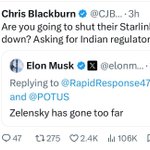
b. Trump shared a social message calling India a “hellhole,” Vance called Indian immigrants “indentured servants,” and Elon Musk humiliated India’s Prime Minister and Mukesh Ambani together.
c. By publicly pressuring foreign governments over their domestic politicies, political & business leaders like Trump and Musk attempt to bypass formal diplomatic channels.
Their aggressive public call-outs energize their home fan base while shaming, disorienting, and testing the resilience of their targets.
d. How should India respond to a bully? The first instinct is to match the bully’s public insults in equal measure and demonstrate that we have “spine.” In reality, bullies like Trump and Musk thrive on engagement.
Joining their mudslinging on social media does not slow them down. It only feeds their algorithm-driven ecosystem, giving them the exact domestic hero-worship and international attention they seek.
India’s 2013 Playbook: A Masterclass in How to Tackle a Bully
a. On Dec 11, 2013, India’s Deputy Consul General in New York, Devyani Kobragade, was charged by the US authorities with visa & wage fraud for her Indian maid. Devyani was arrested, handcuffed, subjected to a “strip search,” and produced before a judge.
b. Action Without Emotion: While US prosecutors tried to justify a diplomatic arrest, New Delhi immediately transferred Devyani to the UN Permanent Mission. (UN post provided immunity.)
US demanded waiver of diplomatic immunity to put Devyani on trial. Indian govt refused and engineered her safe return to India.
c. Removal of US Diplomat: Within hours of Devyani’s safe exit from the US borders on Jan 9, 2014, India asked the US to recall Wayne May, its senior diplomat in New Delhi. India gave him 48 hours to leave the country.
d. Meetings Cancelled: India’s senior political leaders publicly cancelled planned meetings with a visiting high-profile US Congressional delegation to New Delhi.
e. Shutdown of Outlets: India ordered the US Embassy to immediately halt all commercial activities for non-diplomats on the embassy premises by Jan 16, 2014.
f. Closure of Embassy Club Services: India ordered ACSA club within the embassy compound to stop selling tax-free liquor, duty-free imported goods, and commercial services like restaurant, gym, swimming pool to guests & visitors.
g. Duty-Free Privileges Revoked: India froze duty-free import clearances for food, alcohol, and consular supplies meant for US embassy and consulate officials.
h. ID Cards Downgrade: The MEA revoked special ID cards held by US consular officers and family members across nationwide consulates. Standard IDs were issued matching the exact limited immunity the US had applied to Devyani.
i. Airport Access Revoked: Airport entry passes that allowed US diplomats and consular staff to bypass standard security checks at Indian airports were withdrawn.
j. Traffic Laws Enforced: Govt instructed traffic police to strictly enforce traffic rules, parking restrictions, and fines on US diplomatic vehicles, revoking immunity from municipal penalties.
k. Salary Audits: India mandated all US consulates to provide full disclosure of salaries paid to Indian domestic staff to verify if they were complying with Indian minimum wage and tax laws, same as they did to Devyani.
l. American School Scrutiny: India launched tax and work-visa compliance inquiries into teachers and staff working at the American Embassy School in Delhi to determine any tourist visa and tax violations.
m. Security Barricades Removed: Under MEA orders, the Delhi Police deployed bulldozers and tow trucks to haul away concrete security barricades and steel structures that had blocked off public traffic lanes around US Embassy complex.
For years, the US Embassy in Delhi had enjoyed exclusive use of a public road outside its perimeter wall. It was fully reopened to public. US expressed serious security concerns (post-9/11 world). India rejected all requests.
Moral of the Story: Tit for Tat
Choose dignity over drama. No Guts, No Glory.

Economic Sovereignty
Elon Musk’s direct attack on the Indian Prime Minister and India’s top industrialist could not have come without approval of the US govt.
Trump & Vance both have been heaping racist insults on Indians. They have no guts to do it against the Chinese. China owns critical technologies that make America bend on its knees.
India has the same natural resources as China. We are 18% of humanity. But we don’t produce a single thing that the world cannot do without.
The rules of the world have changed. It’s time for Indian policymakers and industry to change their thinking.
Concentration of personal wealth & power and a complete disregard to economic sovereignty and economic opportunity will earn you only disrespect, both inside and outside India.
The choice is yours: A conqueror or a frog croaking in his own well. Either Caesar or nothing.

Microsoft Suspended from H1-B
The U.S. govt is fooling its voters due to forthcoming mid-term elections.
Microsoft in India has 20,000 employees, 10 offices, and its largest R&D center in India outside of Redmond HQ.
All Indians who are refused H1-B will be moved to India. Satya Nadella has announced fresh ₹1.70 lakh cr ($17.5B) investments in India 2026-30.
More employees, more offices are coming. New Noida campus 1.1M sq ft is under construction.
Never forget this: Governments are elected to fool the people. That’s their primary national duty.
India's Telecom Oligopoly Has Pricing Power: Buyer Beware
(a) Elon Musk: Oligarchs have “monopolistic chokehold on Indian people” (b) Airtel/Jio profit margins @ 53-60% are envy of the world: 1.5x of global industry margins (c) Is the Regulator aware?
Extraordinary Pricing Power
a. Mobile and broadband connectivity have become “essential” services. A retired person, a vegetable vendor, and a construction worker may cut spending elsewhere, but they cannot give up their mobile connection.
An airline passenger can switch to trains. A mobile user has no alternative. That gives telecom companies extraordinary pricing power.
b. Duopoly of Jio & Airtel: Telecom Regulatory Authority (TRAI) Data:
Aug 2026 Market Share
Reliance Jio: 39.31%
Bharti Airtel: 38.01%
VI: 15.43% (govt majority owner)
May 2026: Jio & Airtel together accounted for 94% of net subscriber additions.
Exceptional Profits in India
Compared to global telecom industry standards, the Indian duopoly of Airtel & Jio is enjoying exceptional profits on a sustained basis.
Quarterly EBITDA Margins
Global Telco Average: 36.1%
(Twimbit Data; Q2 2025)
US Telcos: 35.6%-39.2%
(AT&T, Verizon, T-M: Q2 2026)
China Mobile: 35.1%
(FY2025)
European Market: 30%-35%
(Deutche Tel; Vodafone; Orange)
South Korea: 23%-31%
(SK Telecom, KT, LG U)
Airtel India: 60.1%
(Q1 FY27)
Jio Platforms: 53.3%
(Q1 FY27)
Airtel India EBITDA is 24 percentage points above global average. Jio is 17. They enjoy more than 1.5x of global industry margins each.
Industry Pricing Power Timeline
2019: First coordinated rate increase 15-40%
2021: Raised the headline prices again 20-25%
2022: Removed cheapest plans in select markets; effective rate hikes
2024: Raised headline prices again 13-25%
2025: Cheap bundled plans altered; low-data users 7-12% effective cost increase
2026: Removed cheaper prepaid options; re-pricing postpaid again
Average Revenue Per User (ARPU)
ARPU growth shows how much more revenue telcos are generating from each subscriber.
Airtel India (Mobile)
Early 2025: ₹245
Late 2025: ₹250
March 2026: ₹257
June 2026: ₹264
Sunil Bharti Mittal says he wants ARPU to go up to ₹300, then ₹350. Reliance Jio is also following the same ARPU growth trajectory.
Indian telcos enjoy massive operating leverage, delivering services to hundreds of millions of users. This drastically lowers their cost per user.
ENDPIECE: Regulator’s Role
a. TRAI should use global industry margins and other international benchmarks as a warning indicator.
b. TRAI should examine whether Indian telcos’ extraordinary margins are driven by technological superiority or by market power.
c. Consumers must not finance Telcos’ abnormal profits simply because connectivity has become an “essential service.”
d. TRAI’s own policy position recognizes that “tariff forbearance” can be considered when there is evidence of monopolization leading to higher prices.