

The Situation Report delivers breaking news, special reports and in-depth stories of critical national issues in the Philippines | [email protected]
Republic of the Philippines
Joined April 2025
- Tweets12.5K
- Following90
- Followers923
- Likes1







TSR-WEEKEND SPECIAL REPORT: Doomsday plan? Higit 30 bansa pinaghahanda ang mga residente sa pinangangambahang emergency | via @ednielparrosa , DZRH News
#TheSituationReportWeekend
LONG LINES AT CHINA VISA CENTER IN MAKATI AS MORE FILIPINOS MAKE CHINA THEIR NEXT TRIP
SITREP/Travel: A Threads user’s photo shows a packed crowd at the China Visa Application Service Center in Makati, days after the user waited five hours to submit and pay.
The photo posted on Friday, November 6, shows dozens of people standing shoulder to shoulder in a tightly packed space, many looking at their phones.
“Ang lala ng pila sa China Visa Application Service Center sa Makati. A few days ago may 371 people ahead of me sa submission. Tapos 170 naman sa payment. Took me 5 hours. Ngayon, ganito naman situation sa 6th floor!” the user, @christerrazola, wrote on the Threads app.
The crowd comes as more Filipinos choose China for their next trip, according to Assistant PRO Kem Aldrich Lim of the Philippine Travel Agencies Association (PTAA).
Lim told @DZRHNews program “Special on Saturday” on October 24 that Filipinos travel to many places, but China and Vietnam have been the trend this year and last year.
“Mga Pilipino kasi kung saan-saan talaga pumupunta, halo-halo talaga. Pero I would say this year, medyo maingay ang China at Vietnam. Of course, hindi mawawala ang iba tulad ng Europe, Korea, at Japan. Pero kung trend ang pag-uusapan, this year and last year is a China and Vietnam trend,” Lim said.
Lim said most China tour packages sold by travel agents allow a group visa, so members of a tour do not have to apply individually.
“Because of these conveniences, medyo nagshi-shift ang passengers natin. Also, cost-wise, sobrang baba talaga ng presyo sa China at Vietnam,” he said.
#TheSituationReport

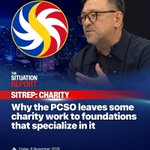
WHY THE PCSO LEAVES SOME CHARITY WORK TO FOUNDATIONS THAT SPECIALIZE IN IT
SITREP/Charity: The Philippine Charity Sweepstakes Office (PCSO) leaves some charity work to foundations because the work is too specialized to do directly, General Manager Melquiades “Mel” Robles said.
Robles told @DZRHNews program “The Situation Report” on Tuesday, November 3, that adoption is a major service to children, and the foundations doing it have long known the bureaucracy.
“Sabi ko nga, ’yung specialty na ganyan, ’yung pag-adopt, malaking serbisyo ’yan sa mga kabataan. Pero kailangan marunong ka sa bureaucracy, at sila, they’ve been doing that for the longest time, alam na alam na nila kung anong gagawin. ’Yung mga social workers nila, specialized diyan. Ang atas namin is to do charity of a national character, ’yung tumulong sa mga nangangailangan na ganito. While we may have the resources, we really cannot do this directly kasi napaka-specialized nito. Kaya ho we enable them na magawa po ’yung kanilang brand of charity,” Robles said.
Asked how PCSO sustains the foundations it supports, Robles said its games are its only source of funds and that the agency does more than issue guarantee letters.
“Wala po kaming ibang sources but our games. Kaya it’s a good opportunity to let all Filipinos know na hindi lang kami guarantee letter, mayroon din kaming hospital assistance at institutional partnerships. Marami po kaming tinutulungan, including PhilHealth, CHED, at Universal Health Care kung saan 40% of our charity goes directly,” Robles said.
Governor Humerlito Dolor of Oriental Mindoro said foundations can be used as fronts without proper monitoring, so the province requires them to liquidate funds before they receive more assistance.
“Kasi minsan po nakakatakot din ’yan, pwede silang gamitin as front kung walang tamang monitoring. Ang mahalaga, maliwanag kung saan napupunta ang binibigay ng probinsya sa mga private organizations. Pinapa-liquidate bago ulit makakuha ng assistance. Napaka-importante na katulong ng national government, GOCC, at local government ang foundation, kasi you cannot do it alone. We need these kawanggawa warriors,” Dolor said.
Sister Maria Aurora Baygan said liquidation is strict at Saint Rita Orphanage, Inc., which has been a PCSO beneficiary for two terms, and assured that the money goes to the children.
“Walang insertion diyan! Mas mahigpit po sa amin talaga ang liquidation,” Baygan said.
“I’m very thankful po talaga. Makakaasa kayo sa amin na kung ano po ang binigay niyo, sa mga bata po talaga napupunta, walang halong hindi maganda,” Baygan said.
#TheSituationReport

WHAT PCSO FUNDS FOR ABANDONED CHILDREN
SITREP/Charity: Abandoned babies at Saint Rita Orphanage, Inc. need newborn screening, hearing tests and laboratory work first, and a Philippine Charity Sweepstakes Office (PCSO) grant helps cover their medical needs, its sisters said.
Sister Melanie Baytan, finance officer of the orphanage, told @DZRHNews program “The Situation Report” on Tuesday, November 3, that it cares for abandoned, neglected and found children referred by hospitals and local governments.
“Sa Sta. Rita Orphanage po nandoon ’yung mga abandoned, mga foundling, neglected or found na mga bata. May mga referrals kami galing sa mga hospitals, LGUs, mga foundling cases na baby. For example, may isang baby na iniwan lang sa parking or sa street malapit sa ospital, ’yun nire-refer sa amin. Kaya malaking tulong po ’yun sa PCSO kasi ’yung first need nila ay check-up. Kailangan ng mga babies ng newborn screening, hearing test, at laboratories,” Baytan said.
Sister Maria Aurora Baygan, assistant directress, said the orphanage admits children aged zero to two and processes their adoption or return to their families through the Department of Social Welfare and Development (DSWD).
“Ang admission po namin na ages ay 0 to 2. ’Pag lumampas na doon, pinapa-process na po ’yung adoption nila. It is either we send them back to their families kung okay po ang family according sa assessment ng aming social workers, or kung hindi naman talaga okay ang family, we will look for adoptive parents. Pinapa-process po ’yun through DSWD,” Baygan said.
Baytan said some children stay beyond age two depending on how long their papers take, and that the oldest child in their care turns 10 the next day.
“Yes po. Actually, may isang bukas magte-10 years old na, ’yun na ’yung pinakamatanda,” Baytan said.
Baygan said the PCSO grant is mostly used for medicines, hospital bills and therapy, including speech therapy that costs a lot for every hour.
“Ang grant po na binibigay nila sa amin is mostly used on medicines po, hospital bills, at mga therapy na kailangan ng mga bata. Kasi as they grow old, kailangan ’yung behavior interventions, may nire-recommend kung ano ang kailangan ng bata, like speech therapy. Mahal po kasi ’yung per hour nito,” Baygan said.
Baygan said the orphanage, a PCSO beneficiary for two terms, budgets its income through the congregation’s central office but cannot refuse a child who needs hospitalization.
“Ang aming financing system ay centralized. Kung ano ang income, submit sa general office and then budgeted po lahat. Kami sa orphanage, budgeted din kami. But then, ’pag dumami na po ang mga bata, at puro hospitalization, hindi namin pwedeng tanggihan. Kung ano ang sinabi ng pediatrician, susundin. Kaya ang partnership po namin with PCSO ay talagang malaking bagay,” Baygan said.
The sisters thanked PCSO and said the support lets the orphanage give children the medical care, nutrition and home life they need while they are young.
“Thank you po sa inyo sa tulong na kawanggawa. Partnership po ito para mabigyan namin ng nararapat na atensyon ang mga bata in terms of medical, nutrition, at home life. ’Yung suporta ninyo ay nagbibigay ng malaking tulong sa orphanage. Habang bata pa sila, naibibigay natin kung ano ang nararapat para sa kanila,” Baytan said.
“I’m very thankful po talaga. Makakaasa kayo sa amin na kung ano po ang binigay niyo, sa mga bata po talaga napupunta, walang halong hindi maganda,” Baygan said.
#TheSituationReport

CARING FOR PALLIATIVE CARE PATIENTS
SITREP/Charity: A grant from the Philippine Charity Sweepstakes Office (PCSO) helped about 83 palliative care patients this year, said Dr. Rumalie Corvera, president and chief executive officer of The Ruth Foundation for Palliative and Hospice Care.
Corvera told @DZRHNews program “The Situation Report” on Tuesday, November 3, that the foundation has served patients for nearly 14 years, sending teams to the homes of people too ill for hospital treatment.
“Basically, what we have been providing over the past nearly 14 years are free visits by doctors, nurses, and our interdisciplinary team to patients na nasa malubha nang stage ng illness, pinapauwi sa bahay dahil mahirap nang gamutin sa ospital. In the vicinity of mainly Muntinlupa and the nearby cities, we send out our teams to visit them free of charge to ensure that they are still given the quality of life that they deserve. Gina-guide po namin sila sa pag-address ng mga sintomas na nagpapahirap sa kanila, kasama ng pagbigay ng psychosocial support and even spiritual support,” Corvera said.
Corvera said the PCSO grant has been given for two years and subsidizes the foundation’s benevolent fund for all of its patients.
“Naku, napakalaki! Over the past two years, since 2024, PCSO has given us a grant to subsidize our benevolent funds for all of our patients,” Corvera said.
Corvera said the fund covers medicines for difficult symptoms such as pain, along with nutritional support and medical supplies, and that each patient receives them every month.
“Ibang bagay na kailangan talaga nila on a day-to-day basis, like their nutritional support and medical supplies. Bawat pasyente, mayroon kaming monthly na binibigay na supplies and medications. Noong 2024, may na-cover na at least 54 patients,” Corvera said.
Corvera said the number rose to about 83 individual patients this year, and that the subsidy also eases the burden on the families of patients.
“As you can see, this not only helps the patients but also eases the burden that the family has to carry. Through the subsidy ng PCSO, natutulungan natin itong mga importanteng needs ng bawat pasyente namin sa bahay nila, and we bring it to them po,” Corvera said.
Corvera said the foundation tries not to turn patients away even with limited resources, and that it connects them with other groups through a palliative collaborative service.
“Definitely limited, but we try our best not to tanggi. We guide them para makahanap ng ibang resources. We have a palliative collaborative service or hotline. We network them with others,” Corvera said.
Corvera said the patients are marginalized and that the challenge is to keep supplying their needs while getting word out to others who need palliative and hospice care.
“They are really marginalized. The challenge is to really be able to continue supplying their basic and essential needs. And even getting the word around, kasi alam naming mas marami pang mga pasyente na kailangan nito pero hindi nakakarating sa kanila that we are able to do this. Kailangan ng access to palliative and hospice care, which is actually a key part of our Universal Health Care,” Corvera said.
Corvera said pain medication is a basic human right for patients, and that the community must learn who can be referred for palliative and hospice care.
“Hindi pa talaga kilala ang hospice and palliative care, at minsan ayaw pag-usapan. But this is something we have to make the general community aware of, para malaman nila kung sinong pwedeng i-refer for this type of service, which is a blessing galing sa PCSO. Napakalaking tulong po especially for pain medications, kasi basic human right ’yun na our patients have dignity even at the end stages of their life,” Corvera said.
#TheSituationReport

KEEPING YOUR MONEY SAFE
SITREP/Cooperatives: If you keep your savings in a cooperative, the government now has a new way of checking that your money is safe, according to Cooperative Development Authority (CDA) Chairperson Alexander Raquepo.
Raquepo told @DZRHNews program “The Situation Report” on Thursday, November 5, that CDA recently approved a risk-based supervisory examination for cooperatives as part of its monitoring.
He said the exam is an international policy adopted in the Philippines, aimed at ensuring that the money members entrust to cooperatives is safe.
“So it’s an international policy which we adopted here in the Philippines to ensure that the money entrusted by members is safe,” Raquepo said.
The CDA chief said a cooperative’s first obligation is to keep that money safe, since all of its funds come from members.
“Well, their first obligation is to make sure that the money they invested is in safe hands. Kasi ang puhunan ng kooperatiba, galing sa miyembro eh. Wala namang pera ang coop eh. Ang pinanggagalingan ng pera ng coop para gamiting i-invest, para gamiting ipautang, o para gamitin sa agrikultura, galing sa miyembro. So they should make sure na ang number one responsibility ng coop is to make sure that the money entrusted by members is safe, well-recorded, and well-accounted for,” he said.
Raquepo said cooperatives also check who they lend to, with background and credit investigations, since a loan from a cooperative is a privilege for qualified members and not a right.
“Kasi in coop, ang pangungutang is more of a privilege rather than a right. So meaning, privilege in a sense na if you’re qualified, you can get it,” Raquepo said.
He said CDA will not issue a Certificate of Compliance to a cooperative that does not report or whose officers have not undergone training.
“Because they cannot be given a Certificate of Compliance ’pag hindi nag-training ’yung mga officers nila. ’Pag hindi ka nag-report, I will not give you a Certificate of Compliance. CDA does that, and we are mandated by the government to issue Certificates of Compliance to coops that are compliant. Eh kung hindi ka nag-training, hindi kita bibigyan ng certificate of compliance, kasi ’yung capacity, ’yung kakayahan, ’yung governance mismo ang pinag-uusapan,” he said.
The CDA chief said cooperatives that stop reporting first receive a show cause order, and can continue if they respond and pass CDA’s evaluation, with a grace period to recover.
“Unless na tugunan nila ’yung show cause order at upon evaluation ay pwede silang mag-continue, we can also consider that. Give them some sort of a grace period or a period to recover,” Raquepo said.
#TheSituationReport

DO YOU WANT PINEAPPLES ON YOUR PIZZA? 🍕
An Italian chef working at a restaurant in Brisbane, Queensland, Australia, was fired after reportedly refusing to put pineapple on pizza, calling it an "insult" to his culture.
Head chef Davide Tamburella was dismissed from the now-closed La Costa restaurant after repeatedly refusing to use the fruit as a pizza topping, a dispute that eventually caught the attention of the country's workplace relations tribunal.
A ruling released by the Fair Work Commission on Tuesday showed that Tamburella was dismissed on the night of May 20 by his boss and the restaurant's managing director, Elliot Ingram, who cited "performance concerns."
In Queensland, pineapples are so popular that a giant monument was built in its honor. It is also known that the state is the country's leading producer of commercially grown pineapples.
WHO WILL ADJUST THEN?
According to the ruling, Tamburella had refused to put pineapple on pizza on three occasions over the past four years.
The former head chef also reportedly discussed the matter with his boss to "check how important it is for Italians not to put pineapple on a pizza."
Other complaints against Tamburella included his use of foul language, communication style, and "escalation of frustration in the workplace," according to reports.
There was also an incident in which he reportedly sustained a workplace injury after striking a metal handrail, fracturing his hand in two places.
The ruling also noted that Tamburella had previously hoped the restaurant would sponsor his visa, which would allow him to pursue permanent residency in Australia. However, following his dismissal, the restaurant did not proceed with the sponsorship.
Tamburella lost his unfair dismissal claim because his application was filed too late, the ruling said.
Meanwhile, La Costa closed in July after its lease expired, with Ingram citing the high cost of doing business at its location.
In an interview with the Daily Mail, Ingram said the story was more than just a pizza topping.
British public broadcaster BBC also looked into Tamburella's whereabouts and found that he is now working at another Italian restaurant in Queensland.
It was found that there is no pineapple from the new restaurant's menu.
#TheSituationReport

SUPPORT PACKAGE FOR TRANSPORT COOPERATIVES
SITREP/Cooperatives: Transport groups asked to modernize are not on their own, with banks, regulators and government offices lined up behind them, according to Cooperative Development Authority (CDA) Assistant Secretary Andy Ortega.
Ortega told @DZRHNews program “The Situation Report” on Thursday, November 5, that the modernization program is a whole-of-government effort rather than the concern of cooperatives alone.
He said the Office of Transportation Cooperatives (OTC), an office under the Department of Transportation (DOTr), helps groups form cooperatives and trains them in financial management, governance and technical matters.
"Luckily, what’s good, other than CDA, ’yung opisina namin, ’yung Cooperative Development Authority, meron din tayong isang opisina under the Department of Transportation, which is the Office of Transportation Cooperatives," Ortega said.
"Sila rin ay isang ahensya that helps these groups form transport cooperatives. Sila rin ay nagkakaroon ng further training, not only in financial management and governance but also in the technical aspect para talagang maging mas buo sila at mas confident in forming their cooperatives, and for them to be able to join the program at mas makatulong,” he added.
The CDA official said Landbank and the Development Bank of the Philippines (DBP) will support vehicle purchases at low interest, and the Land Transportation Franchising and Regulatory Board (LTFRB) will ensure routes are financially positive.
"This is a whole-of-government approach. Nandiyan, tutulong ang CDA. Nandiyan, tutulong ang OTC. Nandiyan rin ang mga banks like Landbank and DBP that will support the acquisition of these modern vehicles at tutulungan sila sa low interest," Ortega said.
"Nandiyan rin ang LTFRB and including the LGUs, to make sure that the routes that will be given to these cooperatives are routes that will be financially positive for them. So it’s an approach na dapat lahat tumutulong," he added.
Ortega said some early borrowers bought vehicles before they were ready, and government has since learned from it as the program moves step by step.
“Siguro by now, we learned from it. Nakita na natin kung ano ’yung mga mistakes. That’s why DOTr is slowly but surely going in the proper direction para talagang matulungan natin sila na maging financially capable at, sabi mo nga kanina, hindi na sila maging palpak,” the CDA official said.
He said Local Public Transport Route Plans (LPTRP) were to reach 75 percent approval this year and 100 percent by the end of 2027, though he could not give the current figure.
"Because Route Rationalization or LPTRP, this is the lifeline ng ating mga kooperatiba for them to know na maayos ba ’yung ruta na ito, kikita ba ako, will I survive when I buy electric vehicles para makasilbi sa ating mga commuters? As per my understanding and information when I was with the DOTr, we were to achieve 75% LPTRP approval by the year 2026, this year," Ortega said.
"That was the objective then, and then by next year we will have the remaining 25%, so makakabuo tayo ng 100% at the end of 2027, like sinabi ko nga earlier. Para by the start of 2028, we now can go with confidence in going for the new and modernized vehicles para sa ating mga kooperatiba dahil naayos na natin ’yung LPTRP,” he said.
Ortega said CDA, OTC and DOTr are assuring transport cooperatives that modernization is a go under this administration, in a program that was originally three years long.
"But these are not things na kailangan agad-agaran in one year magpapalit ka. This originally is a three-year program, dahan-dahan. So from what we see, jumpstart again the program PTMP, we will be reaching what we have to achieve for the commuters," the CDA official said.
"So ’yun ang ginagawa natin dito sa CDA, sa OTC, and sa DOTr, to go back to our clients, to our stakeholders, to give the assurance to our transportation cooperatives that modernization is a program that is a go under this administration," he added.
#TheSituationReport

BIG BROTHER COOPERATIVES
SITREP/Cooperatives: Small cooperatives looking to grow can get a big brother, a billionaire or large cooperative, under a Cooperative Development Authority (CDA) program that starts with technical help, CDA Chairperson Alexander Raquepo said.
Raquepo told @DZRHNews program “The Situation Report” on Thursday, November 5, that the program, called “Koop Kapatid,” has a billionaire or large cooperative adopt a smaller one.
“That’s a big brother concept, na tulungan niyang himukin ’yan na matuto kayo sa amin, kumbaga. Organize lahat ng mga collaboration until part financial assistance, kung tutuusin. Pero basically, it starts with technical assistance,” Raquepo said.
He said 993 cooperatives are considered large, with assets of ₱100 million and up, and the challenge is moving micro cooperatives to small and small ones to medium.
“Definitely, how to graduate this micro coop into small, and then small to medium,” he said.
The CDA chief said the agency is also pushing mergers, with a ₱500,000 incentive from CDA for cooperatives that consolidate when more than three are involved.
“Meron pa kaming financial incentives. ’Pag nag-consolidate, ’pag higit sa tatlo, meron silang half a million na ibibigay ng CDA as an incentive,” Raquepo said.
“To lessen the number of pumapalpak na cooperatives. At saka complementary; ’yung kulang dito, mapupunan nito, makakasama rito, complementary. As well as making sure na tataas ’yung status ng coop kasi i-co-combine mo ’yung tatlong assets ng tatlong coop. Dadami ’yung members. Tapos ’yung management magiging lean. Alangan namang may tatlo kang management doon. Isang management group lang,” he said.
Raquepo said few cooperatives have merged so far based on CDA records, but the agency is taking inspiration from bank mergers and wants small coops to follow.
CDA Assistant Secretary Andy Ortega said the agency must focus on the majority of cooperatives, since around 60 percent of them are micro or small.
“Remember, we have thousands, and a big majority, around 60%, are micro and small. So on the part of CDA, ’yun ang aming kailangang tutukan,” Ortega said.
He said small cooperatives that survive, even without becoming rich or billionaires, are the success story of cooperativism for CDA.
“These are small people that are taking advantage of the cooperative movement para sila ay umangat nang kaunti sa buhay nila. Within their community, within their neighborhood, magsasama-sama sila. So ito ang kailangan naming tutukan para kaya nilang tumayo,” Ortega said.
#TheSituationReport

PERKS OF JOINING A COOPERATIVE
SITREP/Cooperatives: For a share of, say, ₱5,000, a cooperative member can borrow at lower interest and take home dividends the tax collector cannot touch, according to Cooperative Development Authority (CDA) Chairperson Alexander Raquepo.
Raquepo told @DZRHNews program “The Situation Report” on Thursday, November 5, that a member joins by putting in a share, for example ₱5,000, which can be raised depending on what the cooperative can invest.
“When you want to become a member of a cooperative, you have to put out your share, halimbawa, 5,000 pesos. Then for all other members, that’s the same. You can increase your 5,000 depending on the capability of the coop to invest your money,” Raquepo said.
He said a member who puts in more than ₱5,000 also earns a higher dividend rate, and cooperatives return their yearly net surplus to members as required.
The CDA chief said the difference between cooperative loan rates and bank rates is around four to six percent, by his estimate, while banks now charge as high as 14 to 16 percent.
“Ang mga bangko ngayon mga as high as 14% to 16%, mataas na,” Raquepo said.
He said many cooperatives earn, including in agriculture, and one agri-based cooperative recently paid dividends of up to 16 percent.
“Marami. Kahit sa agri, marami. Actually, ’yung latest na sinabi ng aking staff, meron na ngang nagbigay ng up to 16% na dividend,” he said.
Raquepo said cooperative earnings are not taxed, and neither are the dividends and deposit interest members earn, as provided by law.
“Ang kinikita ng coop, hindi nata-tax. Ang na-earn mong dividend at saka interest sa deposit mo, hindi rin nata-tax, and that is provided by our law,” Raquepo said.
The CDA chief said a cooperative needs a certificate of tax exemption from the Bureau of Internal Revenue (BIR), which has its own requirements.
“Pero kailangan lang, may mga requirements ang BIR before they can give you a certificate of tax exemption,” he said.
#TheSituationReport

WHAT THE BEST COOPERATIVES IN THE PHILIPPINES HAVE IN COMMON
SITREP/Cooperatives: Of the Philippines’ 21,188 cooperatives, 138 have passed ₱1 billion in assets, and what the successful ones share starts with books that outsiders audit, Cooperative Development Authority (CDA) Chairperson Alexander Raquepo said.
Raquepo told @DZRHNews program “The Situation Report” on Thursday, November 5, that 62 percent of the 21,188 cooperatives are compliant, based on a CDA monitoring and evaluation assessment.
He said CDA measures success first by financial stability, which it reads from the audited financial reports that cooperatives submit to the agency.
"The basis for being successful sa amin is, first, would be financial stability. It will never be successful kung wala ’yung financial stability. Otherwise, how can they sustain?" Raquepo stressed.
"They cannot sustain their operations; they cannot even sustain their services to the members. So that’s the number one consideration. And those reporting to us are submitting audited financial reports," he said.
The CDA chief said the audited reports must come from a third-party accountant, as policy and law require, and the accountant must be accredited by two bodies.
“By a third party, meaning by a Certified Public Accountant accredited by both PICPA and the CDA. And that is as a matter of policy and law,” Raquepo said.
He said cooperatives share monthly financial reports with officers and annual reports with members, which lets the board make policies that respond to the cooperative’s finances.
“The monthly reports are shared to the officers, and the annual report is shared to members. ’Yun ang nangyayari sa coop. So meaning, ’pag shinare mo ’yan sa members na audited financial statement, malinis na ’yun. That’s why the manager shares it to the board so that the board can also make responsive policies to the financial condition of the cooperative,” Raquepo said.
Raquepo cited Novaliches Development Cooperative, known as Novadeci, as a cooperative that started in savings and credit and added other lines of business.
“Savings and credit sila nag-umpisa, pero market vendors ito. Nag-celebrate lang sila ng 50 years nila just recently. 50 years in existence,” the CDA chief said.
“Diversify. So credit and savings, tapos meron din silang transport and rental. Meron din yata silang grocery,” he said.
The CDA chief said reaching ₱1 billion in assets does not happen overnight, while a cooperative can reach ₱100 million in assets in five to 10 years.
“Ang pinakamatagal na alam ko, siguro 20 to 30 years eh, bago sila na-reach ’yung 1 billion,” Raquepo said.
#TheSituationReport

THREE THINGS TO KEEP A COOPERATIVE ALIVE: CDA
SITREP/Cooperatives: There is a three-part formula behind cooperatives that stand the test of time, and it starts with how they handle money, according to Cooperative Development Authority (CDA) Chairperson Alexander Raquepo.
A cooperative is an organization owned by its members, whose share capital and savings are the money it lends and invests, as Raquepo described it.
Raquepo explained the details in an interview on @DZRHNews program “The Situation Report” on Thursday, November 5.
STRONG CONTROL OF FINANCES
The CDA chairperson said the first is internal control over finances, which he said is inadequate in some cooperatives because of an old tradition of leaving the money with the chair or treasurer.
“Parang ’yung ginagawa na old tradition that the money is handled by the chair or the treasurer instead of depositing it in the bank. Kaya gano’n ’yung recording. So medyo inadequate financial safety nets and recording, number one,” Raquepo said.
GOOD GOVERNANCE
The CDA chief said the second is governance, with some leaders borrowing first and then getting angry when asked to pay, which he said makes them poor role models.
“Number two is governance. Some cooperative leaders, sila ’yung unang nangungutang, at ’pag sinisingil mo, sila pa ang nagagalit. Sabi, meaning, some leaders too are not role models eh,” Raquepo said.
“So meaning, if the members also borrowed, nakita nila ’yung leader hindi magbabayad, so parang naging sindikato. I don’t want to call it that way, but seemingly, it’s self-interest that comes first, and that taints or makes the governance of that cooperative unhealthy and not so good to see,” he said.
MEMBERSHIP SUPPORT
Raquepo said the third is membership support, as some members borrow from the cooperative but do not repay or put in deposits when they have no money.
“Ang nakikita ko, ’pag nangungutang sila, pupunta sila sa coop. Pero ’pag wala silang pera, ’di naman sila nagbabayad sa coop, o ’di kaya hindi man lang sila magdeposito sa coop. So meaning, one of the keys in the success stories of cooperatives is membership support,” he said.
The CDA chief said successful cooperatives have the reverse, with well-recorded money, books of accounts, financial statements, good policies and strong member support.
“Magandang internal control, governance. Transparent ang pag-handle ng pera, well-recorded. May books of accounts, may financial statements. Second, good governance, meaning the measure of good governance is the number of policies that they have because policies control the operations of the coop in a good and excellent manner. And three would be membership support,” he said.
#TheSituationReport

CALOOCAN LOTTO OUTLET CAUGHT RUNNING ILLEGAL NUMBERS RACKET
SITREP/Illegal Gambling: The Philippine Charity Sweepstakes Office (PCSO) and the National Bureau of Investigation (NBI) raided a Caloocan City lotto outlet on Wednesday, Nov. 4, for allegedly running an illegal numbers racket.
The raid was led by operatives from the PCSO and the NBI Fraud and Financial Crimes Division, headed by Chief Palmer U. Mallari, at Block 1, Lot 7 on Camarin Road in Almar.
Undercover operatives caught the authorized outlet using its government license as cover for the racket during surveillance, the PCSO said.
During a test-buy, outlet personnel issued illegitimate tickets and accepted GCash payments instead of standard terminal transactions, and the teller was arrested immediately afterward, the PCSO said.
Authorities seized about P5,000 in bet money, one illegitimate ticket, a phone used for point-of-sale operations, the outlet’s lotto terminal hardware and 25 rolls of thermal receipt paper.
PCSO General Manager Melquiades "Mel" Robles reiterated the agency’s stance against accredited agents who abuse their franchises to facilitate off-the-books gambling.
“The PCSO maintains a strict zero-tolerance policy for illegal gambling and fraudulent operations,” Robles said.
“Every peso spent on legitimate PCSO games goes directly toward funding essential health programs, medical assistance, and charitable services for Filipinos nationwide,” he added.
The PCSO urged the public to place bets only through legitimate terminal networks and to report outlets that use alternative payment apps or issue suspicious receipts.
#TheSituationReport

WATCH: Naka-detect agad ng 10 kaso ng tuberculosis sa Batanes ang portable x-ray ng Philippine Charity Sweepstakes Office (PCSO) sa ginawa nilang medical mission doon.
Ito ang ibinahagi ni PCSO GM Mel Robles matapos nilang magbigay ng nasabing gamit at iba pang medical equipment sa probinsya ng Batangas ngayong Huwebes, November 5.
Ayon kay Robles ukol sa portable x-ray, "Hindi na nga sanay 'yung mga taong bumaba para magpa-check-up. Ngayon po, wala na tayong dahilan para magkasakit sila. Pwede po natin isasakay lang po sa motor 'yan, pwede na pong pumunta. Backpack lang po 'yan."
Panoorin ang video na ito.
#TheSituationReport
ROBLES: 'DIGITAL NA PO LAHAT; WALA NA PO 'YUNG PLATE-PLATE NOONG ARAW'
WATCH: Pinangunahan ni Philippine Charity Sweepstakes Office (PCSO) General Manager Mel Robles ang pamamahagi ng medical equipment sa probinsya ng Batangas.
Kasabay nito, ipinaliwanag ni Robles ang nagagawa ng ibinigay nilang makabago at modernong x-ray para sa nasabing probinsya.
Panoorin ang video na ito.
#TheSituationReport
WATCH: Inihayag ni Philippine Charity Sweepstakes Office (PCSO) General Manager Mel Robles na naiiba ang kanilang ahensya dahil sila lamang ang may charter ng kawanggawa.
Kasabay ng ibinigay nilang medical equipment sa probinsya ng Batangas, sinabi rin ni Robles na hindi na bago sa kanila ang pagtutok sa serbisyong-medikal.
Panoorin ang video na ito.
#TheSituationReport
QUICKEST INFLATION RATE SO FAR
INFOGRAPHIC: The Philippines' inflation rate accelerated to 7.8% in October 2026, marking its fastest pace so far this year.
Data from the Philippine Statistics Authority (PSA) showed that the October figure was also the highest in nearly four years, since February 2023, when inflation reached 8.6%.
During a press conference on Thursday, National Statistician Dennis Mapa said the faster inflation rate was driven by higher prices of basic commodities, utilities, fuel, and transport services, as well as the weakening peso.
#TheSituationReport

BREAKING: Pinili ni Pangulong Ferdinand "Bongbong" Marcos si Justice Rodil Zalameda bilang bagong Chief Justice.
Ang 63-anyos na si Zalameda ang papalit kay Alexander Gesmundo kasunod ng kanyang nakatakdang retirement bukas, November 6.
Panoorin ang anunsyo ni Presidential Communications Secretary Lino Cayetano.
#TheSituationReport
ZALAMEDA IS THE NEW CHIEF JUSTICE
BREAKING: Justice Rodil Zalameda has been appointed as the next Chief Justice, succeeding Alexander Gesmundo, who is set to retire on Friday, November 6.
Communications Secretary Lino Cayetano said President Ferdinand Marcos Jr. chose the 63-year old Zalameda for his "broad experience" in the judiciary.
Cayetano said Zalameda has spent three decades in the justice system, serving under various administrations and holding positions as a public prosecutor, Court of Appeals justice, and eventually, as Supreme Court associate justice.
“His experience across the different levels of our judicial system gives him a comprehensive understanding of the courts and the people they serve," Cayetano said.
#TheSituationReport
