

Strategic CFO™ is a Consulting & Advisory Firm assisting clients with challenges in company accounting & financial management.
Houston, TX
Joined December 2009
- Tweets960
- Following1.5K
- Followers1.1K
- Likes13





Over the years, we’ve seen that the role of “financial leader” extends far beyond the traditional CFO seat. Today, the person driving financial clarity and strategy might come from accounting, operations, or even general management.
No matter the official title, financial leaders play a critical role in shaping an organization’s direction. But to truly influence growth, they must shift from being viewed as overhead to being recognized as income-producing strategic partners.
That’s the core purpose of The Art of the CFO™. This 4-day workshop equips financial professionals with the tools, frameworks, and mindset needed to evolve from number-crunchers into high-value strategic leaders.
Whether you’re a CFO, CEO, Controller, Bookkeeper, or Accountant, mastering these skills will elevate your influence and your organization’s performance.
Join us this February for the first session of 2026! Learn More & Sign Up: strategiccfo.com/financial-a…

1
1
28
CPAs and finance leaders: looking to level up your strategic impact in 2026? Our next session of The Art of the CFO is set for February 2–5th, 2026.
Art of the CFO is a 4-day, NASBA-accredited workshop built for CPAs, controllers, finance managers, and rising leaders who want to move beyond compliance work and into true strategic leadership.
Held in Sugar Land, Texas, this in-person course focuses on practical, real-world tools you can put to work immediately:
• Build rolling forecasts and cash flow models
• Create dashboards that drive better decisions
• Lead strategic financial conversations with executives and investors
• Earn 36 CPE credits in just 4 days
If you’re preparing for a CFO role or simply want to add more value to your organization, this session is designed for you.
Learn more and register:
strategiccfo.com/financial-a…
#CPE #CPAContinuingEducation #ArtOfTheCFO #FinanceTraining #ControllerToCFO #StrategicCFO #AccountingLeadership #SugarLandTexas #AccountingProfessionals #CFOTrack

29
Let’s be honest, numbers don’t speak for themselves. That’s your job.
Every business has financial statements, but only great financial leaders can turn them into a story that drives decisions.
When a CEO asks, “How are we doing?” they’re not asking for a balance sheet. They’re asking for clarity. They want to understand why revenue is up, how margins are shifting, and what the data means for the future.
That’s where strategic finance comes in. It’s not just about reporting history, it’s about shaping trajectory.
If your financials can’t tell a clear story that your leadership team understands, they won’t act on it.
And if they don’t act, the numbers don’t matter. Your real job a financial leader is to make the financial narrative actionable.
Join us for the next session of The Art of the CFO and earn 36 CPE credits before year end: strategiccfo.com/financial-a…
Or check out the virtual Self-Study: strategiccfo.com/financial-a…
24
Business owners wear a lot of hats, but here’s one truth that’s easy to overlook:
Not every dollar you spend grows your business.
Too many companies pour money into back-office work (especially accounting) that doesn’t drive revenue. Yes, your books need to be accurate, but that doesn’t mean you need a bloated accounting department. Great accounting actually uncovers money hidden in your business. Clean books, better processes, and smarter reporting can reveal cash flow opportunities that drive growth
The smartest entrepreneurs are simplifying:
✅ Automate the repetitive stuff
✅ Outsource without loss of control with services like NearSourcing™
✅ Keep your focus (and your spending) on what actually grows the business
Your accounting should support your goals, not eat your profits.
Spend your money where you make money: on customers, growth, and strategy. Learn More about NearSourcing your Accounting Department: strategiccfo.com/nearsourcin…
#Entrepreneurship #SmallBusiness #BusinessGrowth #AccountingTips #CostReduction #StrategicCFO

35
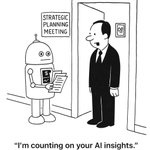
Everyone’s asking: “Will AI replace accountants?”
Sure, AI can:
🤖 Crunch transactions
🤖 Reconcile accounts
🤖 Spit out a P&L in seconds
But here’s what it can’t do (yet):
💡 Tell you why your cash flow is tanking
💡 Decide if you should raise prices or cut costs
💡 Help you prep for an exit or acquisition
That’s CFO-level insight, and it still takes humans who understand your business.
Now, Deloitte and PwC will happily provide those humans… for a price that makes most small businesses choke on their balance sheets. 😅
That’s where models like NearSourcing® come in:
✅ Affordable, without being “cheap”
✅ Real CFO + accounting insight
✅ A team that works like they’re inside your company
AI is changing accounting, no doubt. But until ChatGPT can run your board meeting and negotiate with your banker, you might still want some actual humans on the team. 😉
Learn More: strategiccfo.com/nearsourcin…
#CFO #FinanceLeadership #AccountingFuture #NearSourcing #AIinAccounting

26
Happy Q4. Your calendar says three months left… your P&L says otherwise.
Here’s the truth:
If you haven’t already locked in your budget vs. actuals review, you’re playing catch-up.
If your cash flow forecast doesn’t stretch into Q1, you’re rolling the dice.
If you don’t know which customers drive 80% of profit, you’re flying blind into 2026.
Q4 isn’t just the last lap. It’s the only quarter that decides how prepared you are for January 1st.
Question for you:
Is your accounting team closing the books… or helping you close the year?

24
Businesses call us for many reasons, but two are most common:
1.) They are growing fast and need to strengthen
2.) They are under stress and need a pathway out.
In both cases, one question arises: Is your business bankable? Bankability remains a solid indicator of a company’s financial strength. In 2025, though, it’s evolved: investors and banks expect digital maturity, governance, and resilience along with traditional metrics.
Why does a business need to be bankable? What does being bankable mean? Find out in this WikiCFO Article: strategiccfo.com/articles/ca…

14
As Q3 comes to a close, it’s a critical time for finance leaders to pause and assess where the business stands.
Here are 5 key areas CFOs should review before October:
1️⃣ Cash Flow Health – Is liquidity strong enough to sustain Q4 operations and growth plans?
2️⃣ KPI Alignment – Are your financial metrics still aligned with company strategy, or have priorities shifted?
3️⃣ Expense Optimization – Any non-essential spending that can be tightened before year-end?
4️⃣ Revenue Forecast Accuracy – Are projections realistic, and are you tracking ahead or behind plan?
5️⃣ 2026 Planning Prep – What early insights from 2025 performance should inform next year’s strategy?
💬 Question for you: What’s the #1 financial health metric you’re focusing on before year-end?

20
“My CPA handles everything.” - said almost every Entrepreneur we've met...
That might work when your company is small. But once revenue passes $5M, a CPA, a bookkeeper, and QuickBooks are not enough to support growth.
Accounting is more than taxes. It is about forecasting, financial credibility, and building enterprise value. Too many founders wait until they need funding, credit, or a buyer before realizing their accounting function is underbuilt. By then, delays and messy records can cost them real opportunities.
In our latest article, we break down why growing companies need more than a tax return, and what happens if you wait too long to build the right financial infrastructure.
Read the full WikiCFO Article here: strategiccfo.com/articles/ma…

20
In 2025 and 2026, more companies will lean on outsourced accounting not just to cut costs, but to gain scalability, expertise, and efficiency. Why build a large in-house team when you can access controllers, FP&A experts, and CFO-level insight on demand?
For finance leaders, this is a chance to step into more strategic, advisory roles while driving better decisions for the business.
At Strategic CFO, we see outsourcing as the shift that will define how finance functions are structured over the next two years. The companies that adapt will move faster, plan smarter, and build resilience.
📊 Do you think outsourced accounting will become the new norm? strategiccfo.com/nearsourcin…
#OutsourcedAccounting #FinanceLeadership #StrategicCFO #NearSourcing #Nearshoring

10
In manufacturing, inventory is not just an operational necessity, it is one of the most powerful financial levers a CFO can manage. The method used to account for inventory directly shapes Cost of Goods Sold, gross margins, taxable income, and even how your company is perceived by lenders and investors.
Choosing between FIFO, LIFO, Weighted Average, or Specific Identification is not simply an accounting formality. Under conditions of inflation or volatile raw material prices, the difference between these methods can mean higher taxes, stronger cash flow, or more accurate financial reporting. For manufacturers, where inventory often represents 20 to 60% of total assets, the implications are significant.
In our latest WikiCFO Article, we explore the advantages and disadvantages of each method, highlight regulatory requirements under GAAP and IFRS, and provide a numerical example showing how two manufacturers with the same purchases can report very different results depending on the inventory method applied. strategiccfo.com/articles/ac…

15
Monday in the Accounting Department:
☕ Coffee? Yes.
📊 Spreadsheets? Yes.
🔍 A mysterious $0.12 discrepancy from last Thursday? Oh, it’s personal now.
While most people are easing into the week, our accounting team is already deep in reconciliation battles, depreciation debates, and most importantly, proving that financial peace of mind starts before 9 AM.
At Strategic CFO, Mondays aren’t a drag. They’re a kickoff.
Because whether it’s outsourced accounting, strategic advisory, or CPE training, we don’t just balance books. We help businesses balance everything else too.
Here’s to your accounting department. May your formulas never break, your journal entries always post, and your coffee be stronger than your WiFi. 🙌
#StrategicCFO #AccountingHumor #MondayMotivation #FinanceTeam #OutsourcedAccounting #Nearshoring #CPEThatCounts #AdvisoryWithAnEdge

25
The accounting talent pipeline is drying up, and companies are feeling it. In the past few years, turnover in accounting roles has spiked while the number of new professionals entering the field continues to shrink. Fewer students are choosing accounting majors. Many mid-career accountants are leaving the profession entirely. And the result is a growing experience gap that is hitting small and mid-sized companies the hardest.
We hear it constantly:
“We’ve been hiring for a controller for six months.”
“Our accountant just left, and no one knows how the close works.”
“We keep promoting internally, but no one’s truly qualified.”
This is not just a staffing issue. It is a financial one. When institutional knowledge walks out the door, it impacts your reporting accuracy, your cash visibility, and your ability to make strategic decisions. The risk compounds with every delayed close, messy audit, and reactive hire.
This is exactly why we built NearSourcing™ Accounting Solutions.
NearSourcing gives companies access to full-time, dedicated accountants and controllers who work exclusively for their business. These are experienced professional CPAs, controllers, and accounting managers who operate in your systems, communicate in real time, and meet in person for strategic financial reviews.
You don't need to sacrifice quality to reduce costs, and you don't need to compromise communication to outsource. With NearSourcing, you get continuity, clarity, and expertise embedded in your operations for about half the cost of building an in-house team.
If you are navigating the accounting talent gap, it might be time to consider a new model.

22
Post-Labor Day feels a lot like a new fiscal year for many finance teams. Summer PTO is winding down, the inbox is heating up, and Q4 is right around the corner.
This is the moment when accounting leaders realize what hasn't been working. Whether it’s messy books, a late close, or burned-out staff trying to do too much with too little, the signs are clear.
If your current structure isn’t delivering clean, timely reporting and strategic support for decision-makers, now is the time to reassess. Before the year-end crunch sets in, finance teams need systems that work, data they trust, and a team that isn’t constantly behind.
This season is about preparation. About fixing what’s broken. About ending the year with clarity, not chaos. If your accounting department isn’t operating like a performance engine, it’s not too late to change that.

18
In professional services, time is your inventory and talent is your engine. But for many firms, the way they manage finance doesn’t reflect that reality.
One of the most common issues we see? Firms billing based on what’s easiest to track, not what’s actually been earned. Without clean accrual-based reporting or WIP tracking, leadership is often operating from a lagging view, thinking everything is fine until cash flow tightens and margins slip.
On the other end of the spectrum, we’ve seen firms adopt enterprise-level systems with a level of complexity better suited for global consultancies. Implementation drags on, staff resist adoption, and the firm ends up with more data than direction.
So what works?
Tight integration between time tracking, WIP, and billing
Project-level visibility into margins, not just hours worked
A financial reporting process that supports capacity planning, not just compliance
Systems that match the firm’s scale, not its ambition alone
In service businesses, financial clarity isn’t a luxury. It is what enables growth, retention, and smart hiring. If you want to build a stronger firm, start with sharper data.

26
Many businesses start outsourcing to save money. But cost savings alone no longer drive the conversation. Today, leaders are shifting focus to alternatives that improve talent access, collaboration, and agility, especially for complex finance roles.
NearSourcing™ delivers on all fronts. You gain skilled professionals aligned with U.S. time zones and culture, while avoiding typical pain points like communication delays, misaligned expectations, or high turnover.
In fact, 90% of organizations now operate or plan to operate in Latin America as part of their nearshore strategy. This reflects a clear shift toward smarter and more strategic outsourcing.
As the creators of NearSourcing™, we recognized this trend early. We built the model to meet the real-world needs of growing businesses. And we can tell you from experience that trying to hire directly in Mexico or Latin America without a vetted process, team structure, or financial oversight won't get you the result you're looking for.
Let the experts lead. We’ve already built the infrastructure so you don’t have to. And we're cheap 😉 Learn More: strategiccfo.com/nearsourcin…
#StrategicCFO #NearSourcing #Accounting #Outsourcing #LATAM

14
We frequently observe two common mistakes manufacturing companies make when it comes to accounting systems, processes, and procedures.
The first is underinvestment. Some companies are reluctant to allocate the time and resources necessary to improve their cost accounting infrastructure. As a result, they operate without accurate financial reporting, which limits strategic decision-making. When markets shift or the company experiences high growth, this lack of financial clarity becomes especially painful. Cash flow often becomes constrained in both growth and decline scenarios, particularly when it is not actively managed.
The second mistake is overinvestment without proper planning. In an effort to improve their cost accounting, some companies adopt complex and expensive systems that are ill-suited to their size or operational needs. Often, these systems are chosen based on marketing claims rather than a structured system selection process. Without investing in professional guidance during system selection, companies risk implementing the wrong solution and frequently exceed both their budget and internal capacity to manage the change effectively.
Here’s the smarter approach for financial leaders in manufacturing:
Capture your full cost, but only report what drives decisions
Monitor both direct costs (materials, labor) and indirect costs (SG&A, depreciation, overhead)
Focus your KPIs on what impacts margins, cash, and growth—not every penny spent
Invest in systems, but invest thoughtfully with a proper selection process
Missing one of these is like running your business without a speedometer or a steering wheel. Read more in this WikiCFO Article: strategiccfo.com/articles/ma…

15
There’s a difference between closing the books and closing the gap.
Many accounting teams focus all their energy on getting clean financials out the door. That’s important. But what happens after the books are closed is where strategic value is either unlocked—or ignored.
Financial reporting tells you what happened. But it takes financial leadership to ask:
Why did it happen?
Should it have happened?
What do we need to change next?
If your finance function ends with reporting, you’re not getting the full ROI from your accounting team. Read More strategiccfo.com/articles/ma…

17
If you’ve ever tried to reconcile a mysterious balance sheet discrepancy while someone casually sips their coffee and tells you “it’ll wash out next month,” this post is for you.
Accounting is more than closing the books.
Finance is more than variance reports.
And you? You’re more than the person who “makes the numbers look right.”
You’re the translator between operations and outcomes. The one who spots risk before it hits cash. The one who has to explain why “we made money” doesn’t mean “we have money.”
At Strategic CFO®, we build tools, training, and leadership workshops to help you do that job better and actually be recognized for it.
Join us for The Art of the CFO Course September 15–18
🎓 36 CPE Credits
🧠 Real strategy. Real tools. No fluff.
Register: strategiccfo.com/financial-a…
We’ll help you fix the timing difference.
Just maybe not that $842,000
#FinanceHumor #AccountingLife #CFOLeadership #StrategicCFO #ArtOfTheCFO #CPA #CPE #NASBA #CashIsKing

125