

Exploring decision-making biases in VC & entrepreneurship.
Austin, TX
Joined February 2018
- Tweets3.2K
- Following389
- Followers524
- Likes1.1K




@HowardMarksBook (Oaktree): Choose work that uses your strengths, avoids your weaknesses, and makes you happy.
Source: My First Million
Aram Attar retweeted

It is an uncomfortable truth that 70% of pre-seed funded startups never raise another dollar.
Seneca: we are dying every day, little by little.
So is your company. Quietly. On a Tuesday. While you polish the deck.
Memento mori isn’t morbid. It’s runway math.
The difference between the risks we perceive and reality is often due to one or several of these mental shortcuts we use to understand the world:
- What's easy to imagine or remember (availability heuristic)
- What can be seen or easily predicted (certainty heuristic)
- How much we feel we're in control (controllability heuristic)
For example, traveling by car can seem safer than by plane: we're behind the wheel (control) and we all have in our minds images of terrible plane crashes (availability).
Yet, far more people die in road crashes in the US than in commercial aviation (in the US, the death rate per passenger-mile is about 1,200 times as high for passenger vehicles as for scheduled airlines).
Taking base rates into account and, more generally, pausing to examine our first impressions can help us make better decisions.
People are more afraid of shark attacks than fireworks, even though the latter kill 11x more.
That’s partly because shark attacks are more often portrayed in the media and are easy to imagine, creating vividness.
What’s available is not necessarily more likely. Taking into account base rates can help reduce such biases.
Steve Jobs: The world you inherited can be changed. You can take an active part in shaping it.
Source: BarrancoStudio
Steve Jobs (NeXT): NeXT must deliver something uniquely valuable to higher education. Without that, it has no reason to survive.
Source: Steve Jobs Archive
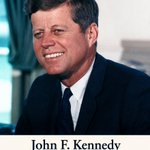
“The essence of ultimate decision remains impenetrable to the observer—often, indeed, to the decider himself.”
— John F. Kennedy, 1963
A striking acknowledgment from a sitting president who was on the analytical side.
Even the person making a decision may not fully understand how they arrived at it.


What sets superforecasters apart (those among us who are consistently better at predicting what will happen) is not just that they’re smarter or more open-minded.
It’s their willingness to recognize that judgment can be trained and to commit, for example, to including probabilities and base rates in their thinking.
They’re also open to being measured.
I wonder how that translates to Power-Law Masters in VC, the rare investors who have generated billion-dollar outcomes more than once.
Don Valentine (@sequoia): Learning to tell a compelling story is essential to raising money.
Source: Stanford Graduate School of Business
Elon Musk (Tesla / SpaceX): Creating OpenAI to counter Google helped accelerate the very technology he was worried about.
Source: The Economist
@HowardMarksBook (Oaktree): Let your children make decisions, including wrong ones. They need the experience to learn how to choose for themselves.
Source: My First Million
Kenneth Griffin (@Citadel): Study your winning investments too. Understanding what you got right can help you repeat it.
Source: Norges Bank Investment Management
“A wealth of information creates a poverty of attention.”
— Herb Simon, 1971
Simon was writing about how organizations could cope with an abundance of information when human attention remained scarce.
His observation feels even more relevant in the age of generative AI: he was one of the founding figures of artificial intelligence.

Martin Eberhard (@Tesla): Building a startup means keeping your team steady through the highs and lows, even when your own confidence is shaken.
Source: Kim Java
Daniel Kahneman: Sounding confident can make someone look like an expert. What matters is whether they actually get things right.
Source: Intelligence Squared
Why do so many investors escalate commitment to a failing course of action, throwing good money after bad into startups with increasingly poor prospects?
The usual explanation is the sunk cost fallacy: they fail to recognize that the old money is gone, and that any new investment needs to be judged on its own merits.
But recent academic work suggests another explanation: persisting has its own rewards. People who stick to their commitments, even failing ones, can be viewed as more trustworthy.
In my experience, other factors also need to be taken into account:
- not wanting to recognize a loss, especially during fundraising;
- protecting a partner’s standing within the firm; or
- keeping their track record looking good when they’re up for promotion.
There’s more going on than just struggling to let go of money already invested.
Steve Jobs: The technology you build will become obsolete. But others will build on your work, even if they never know your name.
Source: BarrancoStudio
Had that exact same thought when I saw the use case @OpenAI advertised for its latest model.


In many cases, we are asked a question about probability (“how likely is this to happen?”) but we answer a question about similarity (“how much does this look like a stereotype I have in my mind?”).
@paulg’s joke “I can be tricked by anyone who looks like Mark Zuckerberg” is a powerful way to illustrate this bias.