

Exploring real American history, the Founding Principles, and what it truly means to be American. Simple/Honest/Thoughtful. You are welcome. #ThisAmerica101
Southwestern US
Joined May 2026
- Tweets207
- Following56
- Followers7
- Likes223






Pinned Tweet
The Declaration of Independence
Fifth in a Series. Text from the Stone Engraving off the parchment (National Archives). Grievances 6-10
After dissolving the legislatures, the King refused new elections, blocked immigration and land settlement, withheld approval for courts, made judges dependent on him alone, and sent large numbers of officials to harass the people and consume their resources.
Continuing:
He has refused for a long time, after such dissolutions, to cause others to be elected; whereby the Legislative powers, incapable of Annihilation, have returned to the People at large for their exercise; the State remaining in the mean time exposed to all the dangers of invasion from without, and convulsions within.
He has endeavoured to prevent the population of these States; for that purpose obstructing the Laws for Naturalization of Foreigners; refusing to pass others to encourage their migrations hither, and raising the conditions of new Appropriations of Lands.
He has obstructed the Administration of Justice, by refusing his Assent to Laws for establishing Judiciary powers.
He has made Judges dependent on his Will alone, for the tenure of their offices, and the amount and payment of their salaries.
He has erected a multitude of New Offices, and sent hither swarms of Officers to harrass our people, and eat out their substance.
7
This America: 101 retweeted

We anticipate the arrival of the Lincoln train within the next 45 minutes. A large crowd has gathered at the Gettysburg Depot waiting for its arrival. This photo was taken this morning.

This America: 101 retweeted

United States Army Sergeant Ted Belcher selflessly sacrificed his life saving his fellow soldiers on November 19, 1966 in Pleiku Province, South Vietnam. For his extraordinary heroism and bravery that day, Ted was awarded the Medal of Honor. Ted was 42 years old & a WWII veteran from West Virginia.
Goodnight. 𝕏 🇺🇸🦅
Remember All the fallen.


This America: 101 retweeted
It was a great speech, but it got one thing wrong: the world has greatly noted and long remembered what he said that day.

OTD in 1863, @POTUS Abraham Lincoln delivered the Gettysburg Address, widely considered to be one of the greatest presidential speeches in American history. It came four months after the bloodiest battle of the Civil War, resulting in approximately 51,000 total casualties.
"Four score and seven years ago our fathers brought forth on this continent, a new nation, conceived in Liberty, and dedicated to the proposition that all men are created equal.
Now we are engaged in a great civil war, testing whether that nation, or any nation so conceived and so dedicated, can long endure. We are met on a great battle-field of that war. We have come to dedicate a portion of that field, as a final resting place for those who here gave their lives that that nation might live. It is altogether fitting and proper that we should do this.
But, in a larger sense, we can not dedicate—we can not consecrate—we can not hallow—this ground. The brave men, living and dead, who struggled here, have consecrated it, far above our poor power to add or detract. The world will little note, nor long remember what we say here, but it can never forget what they did here. It is for us the living, rather, to be dedicated here to the unfinished work which they who fought here have thus far so nobly advanced. It is rather for us to be here dedicated to the great task remaining before us—that from these honored dead we take increased devotion to that cause for which they gave the last full measure of devotion—that we here highly resolve that these dead shall not have died in vain—that this nation, under God, shall have a new birth of freedom—and that government of the people, by the people, for the people, shall not perish from the earth." 🇺🇸

ALT https://www.abrahamlincolnonline.org/lincoln/speeches/gettysburg.htm
This America: 101 retweeted

Shock Troops of the Confederacy
The Sharpshooter Battalion of Davis’s Brigade, Spring 1864
There is a distance at which a man can count the buttons on another man’s coat, and a farther one at which he can no longer say what the face above them looks like. In April of 1864, in the camps along the Rapidan near Orange Court House, the sharpshooters of Davis’s Brigade were taught to know both by heart.
The order came down from brigade headquarters on the sixteenth. Men were to be posted as points for observation at fifty yards, at a hundred, at a hundred and fifty, at two hundred, three hundred, four hundred, and on out as far as eight hundred, and the instructors were to “call attention to the difference in the appearance of men, as the distance increases or diminishes.” At one point, the paper went on, “you can count the buttons or distinguish the features, complexion, etc.” It was schoolmaster’s work, six hours of it every day.
Behind the schooling lay a change in the way the army meant to fight, and it had been a long time coming. Through the first years of the war a regiment sent out its own skirmishers, as armies had done since Napoleon: the flank companies, A and B as a rule, rifle muskets in hand, a few hundred yards in front of the line. When the main fighting began they fell back into their places in the regiment and were skirmishers no more. The practice had changed very little in half a century, and nobody saw much reason to change it.
By the winter of 1863 and 1864 somebody in the Army of Northern Virginia had seen a reason. The army could not match the numbers Grant was bringing, and its material was running down; what it could still do was teach. So the brigades began raising battalions of their own, under a major or a senior captain. These were no detached companies. They were the best marksmen the brigade owned, picked out one at a time and drilled in a trade apart.
On paper a battalion came to a commandant, eight commissioned officers, ten noncommissioned officers, a hundred and sixty privates, four scouts and two buglers, formed in four companies and, within the companies, in fours. A Captain Young, describing the arrangement, said the fours were something like the comrades de bataille of the French army: they messed together and quartered together and were never separated in action except by disability or death. He called the whole battalion “the spike-head of the division.” The scouts carried Whitworth rifles with telescopic sights. The rest drew improved Enfields, the best arms to be had, and they drew them first.
They camped apart from the brigade and were excused from routine picket duty unless the enemy was close at hand. In return they held the places of honor, and every one of them was a place of danger: the right of the column on the march, the front of every advance, the rear in retreat. Veterans said afterward that wherever the danger was greatest, there you would find the sharpshooters, and they said it without boasting. It was only the arrangement.
Joseph Davis’s Brigade formed its battalion that April under Captain O’Neil, with Lieutenant Robert F. Ward of the 42nd Mississippi among the officers commanding wings. It was a Mississippi brigade in the main, the 2nd, the 11th, the 26th and the 42nd, with the 55th North Carolina and the 1st Confederate Battalion attached, the sort of mixture many brigades had become by that stage of the war. Each regiment was to give up one man in ten of those present for duty. That came to about a hundred and seventy, and they were to be excused from camp duty, guard duty and fatigue, so that they might give themselves wholly to learning.
Ward told how it went in the 42nd. He explained what the organization was for and called for volunteers. Of 240 men present for duty, ninety stepped forward. Twenty-four were chosen, on marksmanship and on reliability.
The standards were hard. General Wilcox had instituted for the sharpshooters a regimen modeled on French army practice, and the same pattern ran through the whole of the army: skirmish drill, bayonet exercise, and always the estimating of distances. A man who failed the distance test was dismissed. A man who could not hit a target six feet square at nine hundred yards went back to the ranks. They guessed the range, set the sights to suit, and then paced the ground off to learn how far wrong they had been, and went on doing it until they stopped being wrong. With a rifle that threw its ball in so high an arc, the range was the whole of the matter.
On the fourth of May the marching orders found Davis’s Brigade in the middle of a sermon. Chaplain T.D. Witherspoon had the men gathered out of doors, and every man there was thinking, as men do on such mornings, that it might be the last he would hear. Then the call to arms broke it off.
They went east on the Fredericksburg plank road, and by noon of the fifth they stood in line of battle on the left of it, in country where the undergrowth grew so thick that a man could see thirty yards in many places and no farther. Six hours a day for weeks on the difference between four hundred yards and eight hundred, and now the ground allowed them thirty.
Ward was ordered to put out his sharpshooters. “At the word they stepped out quickly in double rank, in front of the right wing of the regiment, and counted twos,” he wrote, and that was as far as the drill got. Federal sharpshooters were already coming on, and there was no time for anything more. Ward’s men went forward down a slope and up a ridge beyond it and halted about sixty yards ahead of the Confederate line.
Captain O’Neil, who commanded the whole battalion, came up and gave his orders in a sentence. “Lieutenant Ward, take charge of the right wing of the battalion, and don’t retire until you can see the enemy’s colors.” There was a condition built into it. The colors Ward was to wait for would come into view only when the men carrying them were near enough to kill him.
“The sharpshooting was terrific and I could see the approaching dark blue line of battle,” Ward wrote. He held until he saw a Federal color bearer with the flag clinging close to the staff, and then he gave the word to fall back. By that time the main lines had already opened on each other, and the way back was no safer than the way out had been. “There was no straggling on that retreat,” Ward noted dryly.
Company B of the 42nd Mississippi lost ten of its twenty-four, killed and wounded, in four and a half hours of fighting. Of the twenty-four sharpshooters, nineteen were hit inside the first hour. That was what the sixty yards cost.
It was country made for the work. A correspondent of the London Morning Herald, whose account Ward kept in his memoir, called the Wilderness “particularly suited for sharpshooter operations,” and he knew why. Consider it from the Federal side. An artillery gunner there, looking for a field of fire along that front, could find two, the old turnpike and the plank road, and everywhere else the thicket had taken his guns away.
What was left was rifles, and men who could carry them out ahead of a line of battle and find something to shoot at before the line arrived. In open ground such men might have been marksmen, picking at officers and artillerymen. Here they were a screen, feeling forward through the brush, bringing back word of what was coming and buying the main line the minutes it needed. They worked with a freedom few men in that army had, attached to the brigade but deciding for themselves what the moment called for.
Colonel John M. Stone of the 2nd Mississippi had the brigade in Davis’s absence, and he trusted these men with his front. When the Federals attacked on the sixth he told Ward to post videttes thirty or forty yards out. One of them was back in a few minutes, whispering. “The Yankees are right out there.” The brigade had its warning.
Then Spotsylvania. On the ninth the sharpshooters covered the brigade front with desultory fire. On the tenth, during Early’s flanking movement, they crossed the Po River on a footlog while Federal sharpshooters fired at them. Ward remembered afterward that “the fear of being drowned, if wounded, was equal to the fear of being burned to death if wounded, while charging through burning woods in the wilderness.”
On the riverbank they deployed and drove the Federal skirmishers back without help from the main line. In the course of it a lone Federal sharpshooter showed himself at extreme range. Ward turned to Brit Jones, one of the originals, and told him to take the Enfield with the thousand-yard sight. Jones found a rest for the barrel and took his time and fired once. For a moment nothing happened. Then the distant figure slumped, and his comrades came and carried him away. Ward put it at a thousand yards or more and called it the best shot he witnessed during the war. Everything they had been taught on the Rapidan went into that one round.
The twelfth of May was the Bloody Angle. Ward was ordered to advance his sharpshooters against a Federal line that stood very near in front of him, and he did not like it. He believed it would cost men for no purpose. He held where he was. The order came again. It came a third time, and this time he gave it.
He turned to the men. “To my surprise not a single man moved.”
They were the veterans. They had led him through a good many dangerous places, and now they stood and looked at him, waiting to see whether he meant to go. They would go where he went. They would not go where he pointed.
“Boys, we have to go; come ahead!” Ward called, and he walked out ten feet beyond his line. Then they came. Ten feet is no distance. It had taken three orders and a lieutenant on his feet in front of the line to cover it. Within steps, he wrote, the “very earth trembled under us from the shock of Federal musketry. The twigs, bark and leaves rained down upon us.” Jones was wounded, and Campbell, and “it looked like nearly all the men were down.”
Sergeant Abner Myers of the 11th Mississippi’s sharpshooters remembered a day when he reported to General Davis that the Federal line of battle was coming on. Davis answered, “D-n a line of battle; my sharpshooters can whip a line of battle. Forward, my sharpshooters!” It is not the sort of thing a general says about men he expects to spare.
Myers kept the other count as well. The 11th’s sharpshooters lost five commanders during the campaign, and some officers resigned under the hardship and the fatality rates.
By the end of the war the army had a name for battalions of this kind: the shock troops of the Confederacy. It had been earned in broken country and thick woods like Virginia’s, by men who had to make a few count against many. Ward’s own reckoning ran another way. A good many of the volunteers, he believed, had stepped forward for the sake of the exemption from routine duties, “not realizing that they were offering to enter the most dangerous service incident to war.”
Ninety men of the 42nd Mississippi had stepped forward on the Rapidan, and twenty-four had been taken. By the twelfth of May there was one of the twenty-four left, Dan Yocumb, if the spelling in Ward’s account is to be trusted. Yocumb was wounded that same day.
Graphics: 1) Contemporary drawing of a typical skirmish line; 2) Brigadier General Joseph R. Davis, commanding Davis’s Brigade; 3) Colonel John M. Stone (postwar), senior colonel (2nd Mississippi) in the brigade and commanding Davis’s Brigade at the Wilderness due to Davis’s absence; 4) Typical fighting in the Wilderness.


This America: 101 retweeted

The bedroom Abraham Lincoln slept in the evening before the Gettysburg Address.
This America: 101 retweeted

Happy Birthday James Garfield 🇺🇸 born #OTD 1831 - the LAST President born in a log cabin
Garfield 🇺🇸 is also 1 of 7 Presidents born in Ohio:
US Grant
Rutherford B Hayes
Garfield
Benjamin Harrison
William McKinley
William Howard Taft
Warren Harding
#POTUS 🎂🎈
@GarfieldNPS


This America: 101 retweeted

“It is far better to be alone, than to be in bad company.”
- General George Washington


This America: 101 retweeted

Senate “leadership” is lobbying HARD to stop @timburchett from being appointed to the Senate.
@MarshaBlackburn would be a HERO if she listens to the people and gives Burchett the nod!!


This America: 101 retweeted
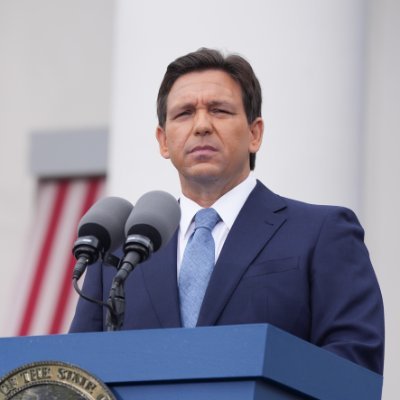
STORM UPDATE:
As heavy rainfall impacts communities across Florida, the state is continuing our active response efforts.
@FLSERT is mobilizing hundreds of @FLGuard and @FLStateGuard personnel and more than 200 @FLHSMV troopers, along with 235 @MyFWC officers, 50 high-water vehicles and 60 pumps. FWC has also readied 28 ATVs and UTVs, 26 shallow-draft boats, 17 airboats, eight swamp buggies and a Fat Truck.
Additionally, 750 @MyFDOT crews are supporting response efforts in impacted communities.
The state has also pre-staged more than 6,000 feet of flood control devices, placed shelters on standby and positioned additional emergency resources, including generators and vacuum trucks, for rapid deployment as needed.
Florida will continue deploying resources and working alongside local partners to protect residents and respond to the needs of impacted communities.
Please continue to follow all guidance from local officials.
This America: 101 retweeted
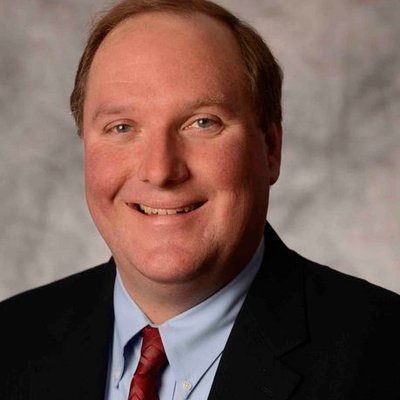
Coast Guard continues to monitor Chinese ships off Alaskan coast as part of Arctic defense justthenews.com/nation/state…

This America: 101 retweeted

In the third and final installment of our series on Black Congregants, explore the potential benefits of church membership alongside the contradictions and hypocrisies that can exist within a congregation.
Read the final installment on our blog. revolutionaryspaces.org/the-…

This America: 101 retweeted

At Mar a Lago last night with Lou Ferrigno. We got awards on Super Hero night celebrating our police officers nationwide.


This America: 101 retweeted

This week in 1776, disaster struck the American cause. Fort Washington fell to the British, thousands of American soldiers were captured, and Fort Lee had to be abandoned.
Privately, Washington admitted to his brother Jack that he was “wearied almost to death with the retrograde motion of things.” And even some of his closest aides were beginning to question his leadership. #ThisWeekinHistory
This America: 101 retweeted
Lincoln, Seward, and others are walking toward the home of Judge David Wills, the gentleman who invited Lincoln to give a few appropriate remarks tomorrow. Wills is hosting them for dinner and the President will overnight there.


Section 4 of the Declaration begins the list of grievances. These are the first grievances: the King blocked colonial laws and kept representatives from meeting.
To prove this, let Facts be submitted to a candid world.
He has refused his Assent to Laws, the most wholesome and necessary for the public good.
He has forbidden his Governors to pass Laws of immediate and pressing importance, unless suspended in their operation till his Assent should be obtained; and when so suspended, he has utterly neglected to attend to them.
He has refused to pass other Laws for the accommodation of large districts of people, unless those people would relinquish the right of Representation in the Legislature, a right inestimable to them and formidable to tyrants only.
He has called together legislative bodies at places unusual, uncomfortable, and distant from the depository of their public Records, for the sole purpose of fatiguing them into compliance with his measures.
He has dissolved Representative Houses repeatedly, for opposing with manly firmness his invasions on the rights of the people.
15
October 25, 1776
Washington’s army is dug in at White Plains, New York, waiting for the British. His military secretary, Robert Hanson Harrison, writes to John Hancock that the troops are concentrated on the heights, wagons are scarce, and British columns under Henry Clinton and the Hessians are closing in. Harrison ends the letter with the line: “most probably some important event is upon the Eve of taking place.”
The Battle of White Plains would come three days later.
21