

Helping tech founders get acquired. Sharing tips on buying and selling online businesses. CEO of @FEIntl
New York, USA
Joined June 2011
- Tweets13.5K
- Following1.1K
- Followers8.9K
- Likes8.4K



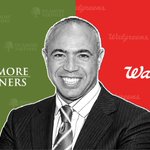

Pinned Tweet
Buying domains on a credit card to selling 8 to 9-figure tech companies.
Here's how it happened:
In 2010, I wanted to start a business. The problem? I was broke.
So I opened a credit card and started buying and selling small websites—using late fees as motivation to close deals.
Today, there are thousands of brokers and platforms for selling small businesses. Back then? There was eBay.
But that gap was my opportunity:
I would help founders sell the small businesses that private equity wouldn’t touch.
The early years were humble, with small-scale clients, but each success led to bigger opportunities. Our deal-size compounded over time.
Over a decade later, our deals went from a few thousand dollars to mostly 8 and 9 figure transactions.
@FeIntl's team has closed over $50 billion in transactions, grown the team internationally and opened offices around the world.
A lot has changed. But the best part has stayed the same:
Helping founders sell their businesses—on their terms.
One investor told Grant Lee his idea was "the worst" they had ever heard.
Gamma is now valued at $2.1 billion on $91 million raised.
Profitable since 2023. Roughly 50 employees.

Buyers pay premiums for businesses that run without constant refueling. They discount the ones that need another round to survive integration.
Most founders chase valuation on the way up and only meet dilution on the way out. By then it is already fixed.
Braze closed Monday at $30.04.
Salesforce is paying $47.50 a share in cash.
That is roughly a 58% premium, about $5.66 billion including debt, and the deal is not expected to close for another two years.
Braze was halted premarket Tuesday, then jumped more than 50% when trading reopened. Salesforce shares fell. The market priced the premium into the target and took it out of the buyer, which is what usually happens when the price looks like control rather than cash flow.
What Salesforce gets: AI tools that decide what message a customer sees, where they see it, and when. Apps, websites, email, SMS. Around 2,770 customers run on it, including Canva, Instacart, Venmo and Urban Outfitters.
The timeline is the part worth reading twice. Expected close in Salesforce's fiscal 2028, pending shareholder approval and regulatory clearance. Fiscal 2027 guidance unchanged. No fiscal 2028 guidance given. No update to long-term targets.
Read those lines together. Nothing changes in the year ahead, and nothing is promised for the year the deal actually lands. A buyer who signs a two-year runway and guides to nothing on the other side is not buying next year's revenue.
Salesforce already owns the customer data. Braze owns the moment the customer actually gets reached. One side knows who the customer is and what they have done. The other side controls the send, the channel, and the timing. Data without the moment is a report. The moment without the data is a guess.
Premiums this size get paid for control of the layer your own product depends on. That layer only gets more expensive once somebody else buys it first. Paying 58% over Monday's close is the cheaper version of that problem.

$200 million. Handed to a company that wasn't even looking for money.
That was OneTrust in July 2019. Three years old, profitable enough to keep growing off its own balance sheet, and it had never taken a dollar of outside capital.
Insight Partners wrote the check anyway, at a $1.3 billion valuation. It tied for the largest Series A in recent history.
The company it tied with? AirWatch. Not a coincidence.
In January 2014, VMware bought AirWatch, the Atlanta mobile security company, for $1.54 billion. 1,600 employees. More than 10,000 customers, including United Airlines, Renault and nine of the top 10 US retailers. Co-founder and chairman Alan Dabbiere reported to Pat Gelsinger. Founder and CEO John Marshall stayed on to run the unit.
The better story started after.
At AirWatch, the product could see which apps an employee was using so IT could flag security risks. As Dabbiere put it, that capability itself presented a big privacy issue.
Kabir Barday, who had worked across consulting, integration, engineering and product management at AirWatch, saw the opening first. He left to build OneTrust. Dabbiere and Marshall came on as co-chairmen, and the exec team ended up largely made up of early AirWatch people.
Then they funded it themselves. For three years.
By July 2019, OneTrust had:
- Around 3,000 customers across 100 countries
- 1,000 employees
- 50 patents filed and 50 more applications in progress
- Revenue, and no need for anyone's money
So why take the $200 million?
Dabbiere: "We didn't need to take capital. When you take that kind of capital, you de-risk a lot of things in the business. Companies still want to ask, 'are you viable?' and when a company like Insight makes a commitment like this it takes that question off the table."
They didn't raise for runway. They raised to delete one question from every enterprise sales call.
Insight's Richard Wells on these two: "They got to this place by spending their own money."
Most founders raise to buy time. Dabbiere and Barday had already bought it with their own cash, which is exactly why the round came to them on their terms.
The leverage wasn't the $1.54 billion exit. It was the three years they spent proving they didn't need the next check.

A LinkedIn DM sent in 2023 just closed as a multimillion-dollar acquisition.
The company that got bought did not exist when the message was sent.
Here's the story.
Billion Dollar Boy cofounders Edward East and Thomas Walters were reading Brendan Gahan's posts about B2B creators gaining traction on LinkedIn. East reached out for an intro call. No pitch, no deck, no company to buy.
They kept in touch. Regular catch-ups. Then the catch-ups turned into takeover talks.
BDB Group now has its first-ever acquisition: Creator Authority, a B2B influencer marketing agency handling contracts, licensing, and campaign management. All cash, multimillion-dollar, with an earnout. Neither side disclosed the number.
What came with it:
- Official LinkedIn Marketing Partner status
- Clients including Amazon, Adobe, and Mastercard
- Gahan himself, joining as SVP of B2B
- A 15-person team growing to 30 to 40, expanding from LA and Austin into New York and London
Gahan's read on the category: "It feels like YouTube in 2010."
East did not screen a market and find a target. He followed an operator's thinking for years, then watched that operator build the exact asset he wanted to own.
If Gahan is right about the category, BDB bought conviction early at a private number.
Pay attention to the content you publish every week. Your future acquirer might already be reading it.

$30 million in annual revenue in under two years, built by two high schoolers.
Their weekly stand-up was Sunday night, because they still had class on Monday.
Then MyFitnessPal came calling.
Zach Yadegari sold his first app, Totally Science, for $100,000 at 16. Then he and classmate Henry Langmack launched Cal AI in May 2024. Over 15 million downloads, according to MyFitnessPal, which spent almost a year in talks before acquiring it. Deal closed in December, reported in March.
Here's the part most founders miss. MyFitnessPal CEO Mike Fisher said the Cal AI team didn't have to sell, so he knew they were happy with the offer.
That one sentence explains more about deal outcomes than any multiple I could quote you. A buyer who knows you can walk has to price the deal against your alternative, which is simply continuing to grow. Growing fast, no pressure, no need for cash. That is the entire negotiating position.
The structure says the same thing. All seven employees retained. Cal AI kept running as an independent app, integrated with MyFitnessPal's database of 20 million foods. Nobody buys a company and leaves it intact unless the people who built it had the leverage to insist.
Yadegari left in June. On October 8 he announced $10 million for Persona, an AI assistant with a $179 wearable band, led by Vine Ventures. He is 19.
His reason for selling: "my life's mission isn't building a calorie tracking app."
Not a cash-flow problem. Not a stalled growth curve. A founder who decided the next thing mattered more, and sold from a position where that was a choice rather than a necessity.
The best sellers are always the ones who could have said no.

A side hustle monetizing a handful of celebrities' Facebook pages just sold for at least $100,000,000.
Ben Hiott was still working a full-time job when he started it in 2016. First clients: Atlanta hip-hop artists, including Waka Flocka Flame and T.I.
It became Get Engaged. It just sold to SAMY in what cofounder Cam Fordham called a "low nine-figure deal."
Stock plus cash.
Here's what the buyer paid for:
- 100+ employees across Atlanta, New York, Nashville and LA
- DoorDash, Perplexity, Raising Cane's, Universal Music Group, EA and Sazerac on the client list
- Revenue up 40% year over year
SAMY brings roughly 1,200 people across four continents and is majority-owned by Bridgepoint. All three cofounders are staying, one of them taking the CEO seat. No layoffs.
Now the part that explains the price.
Linear TV was 41.3% of global ad spend in 2013. It's tracking to 12.4% this year. Social has already passed paid search as the largest ad channel on the planet.
Nobody is buying media-buying muscle anymore. They're buying teams that can make something travel without a TV budget behind it.
Two campaigns in the portfolio prove it better than any deck.
- Alix Earle's "hangover burger" spot for Carl's Jr.
- 50 Cent's "Beef 101" for DoorDash around Super Bowl LX.
Neither one bought a national in-game slot.
Here's what most people miss about this exit.
Hiott was not early to the idea that social would eat television. Everybody predicted that. Predicting it was free.
He was early to the execution. He built real operating capability inside a channel the holding companies still treated as a line item, and he stayed long enough for the market to agree with him.
That's the pattern in most of the best exits we see. The founder isn't first to the thesis. They're first to the capability, and that is the thing an acquirer cannot hire into existence quickly.
So it buys it instead.
Your side project is probably worth more than you think. Especially if it lives in a channel nobody respects yet.

$23 billion for a four-year-old company.
The founder said no.
Then he put it in writing to 1,200 employees.
July 2024. Wiz had raised $1 billion at a $12 billion valuation. Google came in at nearly double, which would have been the largest acquisition in its history.
Assaf Rappaport's memo was blunt: "Let me cut to the chase: our next milestones are $1 billion in ARR and an IPO. Saying no to such humbling offers is tough, but with our exceptional team, I feel confident in making that choice."
He later called it "the toughest decision ever" and admitted he was "super nervous."
Here is the part that gets skipped. Wiz's investors were fully supportive. They actually pushed the founders to decline.
By October 2024, Wiz was at $500 million ARR.
In March 2026, Google closed the acquisition at $32 billion. Same buyer, nine billion dollars more.
Most founders who turn down a number like that never get a second bid. Wiz could hold the line because growth was real and the cap table agreed.
As Rappaport put it: "At a healthy company with a healthy relationship with investors, it's always the founder's decision."
Saying no is not a strategy. It only works if the numbers underneath it keep moving.

$8.2 billion. All stock. Not a dollar of cash.
That is what AMD agreed to pay for World Labs, a company founded in 2024 with one product on the market.
Second-largest acquisition in AMD's history, behind only the roughly $50 billion Xilinx deal in 2022.
World Labs was started in San Francisco by Stanford professor Fei-Fei Li, the researcher behind ImageNet. Her team builds spatial-intelligence models that generate, reconstruct and simulate interactive 3D environments from text, images and video. Its first product, Marble, is pitched at entertainment and at training robots inside simulations before they touch the real world.
Li joins AMD as executive vice president and chief scientist, reporting straight to Lisa Su.
So what does $8.2 billion actually buy here? Not a revenue line.
Su said it plainly: "Building the compute platforms for the next generation of AI requires a deep understanding of how models are evolving."
If you know what frontier models will demand in three years, you can design the silicon for it now instead of guessing from outside.
Here's the part most people will skip, and shouldn't.
AMD was already an investor in World Labs. The two had an inference optimization and training partnership in place. Li was a guest at AMD's CES presentation earlier this year, where she and Su demoed Marble building a 3D scene from a handful of images. On Monday, Li called Su a "great friend."
Deals this size do not get negotiated cold.
Buyer in the cap table, working technical partnership, shared stage, then signature.
The lesson is not "network more." It is that your most likely acquirer should already know your roadmap, your team and your numbers long before anyone sends a deck.
Expected to close by the end of 2026, subject to regulatory approval. AMD is keeping World Labs separate from its chipmaking business until then.

$10 billion to buy Walgreens.
The man who did it almost never talks to the press.
In 2017, Bloomberg called his strategy the loneliest trade on Wall Street.
Stefan Kaluzny. Son of a pianist and a teacher, raised on Manhattan's Lower East Side.
Yale. Harvard MBA. Bain. The clean path.
In 1994 he left to cofound Delray Farms, a fresh grocery chain for low-income Hispanic neighborhoods in Chicago the big supermarkets had abandoned.
It didn't scale. By 1998 it was closing stores and shelving its national plans. The idea survived: find value where nobody else is looking.
He spent the 2000s buying retailers at Golden Gate Capital, then left in 2011 to start Sycamore Partners.
And bought what everyone else was running from.
Talbots, 2012: $193M, after every other bidder walked. Reportedly more than 6x back.
Hot Topic, 2013: $600M.
Belk, 2015: $3B.
Staples, 2017: $6.9B, in a year private equity had all but stopped buying retailers.
When Bloomberg profiled him in 2017, his 2014 fund was underwater. Forbes now puts Sycamore's assets above $13 billion and his net worth at $1.3 billion.
Walgreens shows how he thinks. Five things I'd want every founder to see in it:
1/ He bought the narrative discount. Walgreens was worth over $100 billion in 2015. He paid $11.45 a share, roughly a tenth of that. The "retail is dead" story set the price as much as the numbers did.
2/ He split it on day one. At close, Walgreens, Boots, Shields, CareCentrix and VillageMD became five separate companies. The market saw one struggling chain. He saw parts. If a buyer can carve your business into pieces, know what each piece is worth before they do.
3/ Part of the price is a promise. $11.45 in cash now. Up to $3 more only if VillageMD sells well. Contingent payouts shift the risk onto the seller. Count them as upside, never as price.
4/ He brought his own CEO. Mike Motz ran Staples US Retail for Sycamore. Now he runs Walgreens. A buyer with an operator waiting moves fast and knows your numbers better than you expect.
5/ He kept the biggest insider in. Stefano Pessina, who owned about 17%, rolled his entire stake. When a buyer asks you to roll equity, you are underwriting their plan. Sometimes worth it. Always price it.
Critics have a case too, on the same deals. Belk filed Chapter 11 in 2021 with Sycamore still in control. In 2019 Staples borrowed $5.4 billion and paid Sycamore a $1 billion dividend. Nine West went bankrupt and creditors came after the firm. Walgreens carries about $10 billion of equity under a total value near $24 billion with debt and payouts counted. The verdict comes in five years, not five months.
The dealmakers who move industries are rarely the ones you'd recognize at a conference. Kaluzny built grocery stores nobody wanted, then a firm around a sector everyone had written off, and never once chased the spotlight.

400,000 users. Revenue up 90x in two years.
Fathom was not struggling.
Superhuman bought them anyway.
Here's why both sides said yes.
@Superhuman tried to build this themselves first.
Earlier this year they tested an in-house notetaker with a small group of users. Then CEO @shishirmehrotra bought Fathom instead.
His own words on what the test showed: "It becomes very clear how deep the products in this category are and how much you need to build."
Fathom runs its own fine-tuned AI models with a dedicated team behind them. You do not ship that in a quarter. It takes years.
So Superhuman paid for the years.
Fathom.ai had every reason to keep going on its own.
Founded: 2020, out of Y Combinator
Raised: $30M+
Valuation: $94M (2024)
Backers: Zoom Apps Fund, Reddit CEO Steve Huffman, former Twitch CEO Emmett Shear, Cruise co-founder Kyle Vogt
Deal terms: undisclosed
Richard White sold anyway. His reason was reach.
Superhuman has 40 million users. It already has email, docs, calendar, a database tool and a new AI agent builder.
Fathom fills the one gap that touches every other workflow: the meeting itself.
A meeting ends. Notes become tasks. Tasks become a doc. The doc becomes the follow-up email. All of it on one platform now.
White's words: "I have always thought about M&A in terms of speed."
Standalone, Fathom would have spent years rebuilding what Superhuman already owns. Plugging into that reach was the faster route.
Two lessons for founders.
1/ When a strong acquirer tries to build your product and ends up buying you instead, that is validation you cannot fake.
2/ If the product is strong but distribution is the bottleneck, the right acquirer buys you the reach you would otherwise spend years earning.
Your product works. A platform with 40 million users calls. Do you sell?

$9 billion to $65 billion in revenue.
Seven months.
Anthropic is heading for a Nasdaq listing investors value at $2 trillion.
Price it there and it is the largest public offering ever, past SpaceX's $1.75 trillion June debut.
The case for it:
Revenue growth: about 7x this year
Q2 revenue: $11.5 billion, up from $787 million a year earlier
Operating income: adjusted profit turned positive in Q2, second straight quarter expected in Q3
Enterprise accounts: 6,000 spending $100K or more a year
2028 projection: $190 to $200 billion
Q2 was also the first quarter Anthropic out-earned OpenAI. $11.5 billion against $6.7 billion.
At $2 trillion that is roughly 10x 2028 sales. SpaceX priced at about 96x trailing sales in June. Against the bar the market just set, Anthropic looks cheap.
The case against it sits in the revenue mix.
FT data shows spending on Fable 5, the priciest model, stuck near 11% of what companies spend on Anthropic. Cheaper Opus 5 passed it within weeks of launch.
Enterprises are not paying up for the frontier. They buy whatever clears the job.
That is a margin question, not a growth question. Margin is what public markets price.
Then there is Dario Amodei.
He spent the weekend publishing an essay asking the industry to slow model development, proposing third-party evaluation and shared safety standards. Altman and Musk both backed him.
Asking public markets for $2 trillion while asking your industry to decelerate is a pitch nobody has run before.
The confidential S-1 went in on June 1. The public one has not landed yet. October is the target.
When it does, it is the first look anyone outside the company gets at what this growth curve costs to run.
Every private AI valuation gets marked against that number. Including the ones being set this week.
