

Giving countries the evidence to invest in early childhood development at scale. Focus countries: Bangladesh, Ghana, Kiribati, Sierra Leone and Tanzania
Global
Joined March 2024
- Tweets182
- Following66
- Followers88
- Likes98






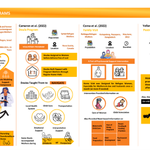
Kidman et al. show Ghana’s universal free pre-primary education boosted maternal employment by 4 percentage points.
The gains were strongest for rural & less-educated women, who face the toughest barriers to work.
sciencedirect.com/science/ar…
A compelling insight by Yahner and Elaraby sheds light on how community health workers, the ‘backbone’ of many community interventions, experience project closures. It highlights the value of well-managed close-outs in donor-funded health initiatives.
verixiv.org/articles/2-199/v…
We’re counting down to our upcoming webinar:
“Bridging the Early Learning Gap: Making the Case for Equitable School and Language Readiness in Tanzania”
30th September 2025| Time: 3:00–4:00 PM EAT
Register now: us06web.zoom.us/webinar/regi…


Sultana et al. studied a large-scale, multi-component parenting program in rural Bangladesh, delivered via the government health system, covering responsive caregiving, early learning, mental health, WASH, nutrition & lead exposure prevention.
They found that caregivers engaged in more play and better understood risks associated with lead exposure. But low attendance (half missed all 18 sessions) shows that barriers remain.
pmc.ncbi.nlm.nih.gov/article…

Beukes et al. reviewed 21 studies (2019–24) on early childhood development in 13 sub-Saharan African countries. Most focused on 1–2 Nurturing Care Framework components, mainly nutrition.
They concluded that multi-component ECD programs face challenges but improve more outcomes than single-focus ones. More context-specific, longitudinal research is needed across Africa to strengthen child development. pubmed.ncbi.nlm.nih.gov/4066…

Gopalakrishnan et al. examine India’s ICDS program, focused on Anganwadi workers — a type of community health worker.
Only 47% of eligible women received growth monitoring, 45% feeding counseling and 52% take-home rations - highlighting major gaps. journals.plos.org/plosone/ar…

Larson et al find that growth monitoring platforms can aid early childhood development in LMICs, but growth measures alone miss individual needs. Screening tools are better for predicting development & supporting frontline workers sciencedirect.com/science/ar… @USCArnoldSchool @IFPRI
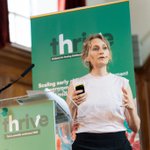
Throwback to the Thrive Conference 2025 #EarlyChildhoodDevelopment #ScalingECD 24–25 June 2025 | over 200 global experts gathered in London to tackle one of the most pressing questions in early childhood development: How do we scale interventions that truly work?
From powerful plenary talks to rich panel discussions and presentations from researchers across low- and middle-income countries—every moment sparked insight and collaboration. A shared message echoed throughout: Scaling starts on day one.
Kim et al. highlight how parenting programs often focus only on mothers, overlooking non-primary caregivers—grandparents, aunts, siblings—who play a big role in child development. They argue broadening support could boost impact. @PLOSONE
journals.plos.org/plosone/ar…
New 4-year follow-up on Rwanda’s Sugira Muryango program: since 2018, trained community workers have coached parents, engaging fathers & reducing harsh punishment—boosting early childhood development & reducing domestic violence in vulnerable families. (1/2)
The program shows promise: parents report more stimulating interactions, dads play more, families use better learning materials & harsh discipline drops. But there were no significant changes in child cognition or behavior.
gh.bmj.com/content/10/6/e017… (2/2)
@bclynchschool @UMass
Priyanka and Sara’s study on the intergenerational effects of Bangladesh’s Female Secondary School Stipend Program has been active since 1994, providing cash stipends and tuition support based on school attendance, exam scores and marital status. (1/2)
Children of women who received 5 years of FSSSP support show a 0.27 SD boost in development by age 4—cognitive (+0.23) & motor (+0.24) gains. Benefits last through age 14, especially in reading.
Read more: sciencedirect.com/science/ar…
(2/2)
Holla & Pan use an ingredients-based approach to estimate costs of Brazil’s PADIN home visiting programme. The estimated cost is BRL 1,597 (USD 438 in 2018) per child/year. Staff costs make up 64% of the total.
thrivechildevidence.org/reso…
Tipu et al. preview research on a year-long psychosocial stimulation programme in Bangladesh: health workers will deliver play-based learning & nutrition sessions to small groups using a curriculum from @reachupandlearn link.springer.com/article/10…
