

Author of Revealed Preference, a whimsical comedy about preference falsification. Excerpts on website.
Berkshire, England
Joined May 2026
- Tweets138
- Following86
- Followers20
- Likes670

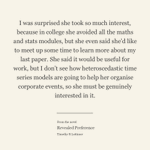

Pinned Tweet
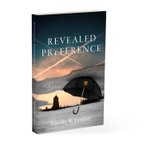
Out now: my debut novel, Revealed Preference.
Superficially, it's a country house mystery, but really it's an excuse for dodgy word reconstructions and silly jokes about mating behaviour and preference falsification. Available on Amazon.
Timothy R Lattimer retweeted
If you still have doubts about Oswald's guilt read @geraldposner book Case Closed. Here is my distillation of the man from Conspiracy.
Lee Harvey Oswald was born in New Orleans in 1939 and joined the U.S. Marines in the 1950s, where he received riflery training. Contrary to what Oliver Stone has one of his character’s say in his film—that Oswald “shot Maggie’s Drawers,” meaning he couldn’t even hit the target—in fact Oswald scored the second highest rating possible in riflery, making him a sharpshooter.
Politically, Oswald was an avowed Communist who defected to Russia in 1959, worked in a radio factory in Minsk for two years, and married a Russian woman named Marina. After he grew disenchanted with the USSR, in 1962 he moved back to the United States, to Dallas, Texas, shortly after telling friends that he wanted to move to Cuba to join Castro’s communist revolution. This background helps establish a motive for killing Kennedy, as the President was avowedly anti-Communist, and after the failed Bay of Pigs invasion of Cuba, also clearly anti-Cuban and anti-Castro.
Temperamentally, Oswald was emotionally unhinged and suffered from delusions of grandeur, telling people he had ambitions to someday do something to make himself famous. He was very likely a sociopath, and quite possibly expressed the personality traits of psychopathy, narcissism, and Machiavellianism—the “Dark Triad”—dark because the combination often leads to malevolent actions.
While in Dallas, Oswald encountered the anti-Communist crusader Edwin A. Walker, a retired general who was himself something of a conspiracy theorist, once accusing the U.S. Supreme Court Justice Earl Warren of plotting to destroy the United States by banning prayer in schools and promoting civil rights for minorities. In April of 1963, just eight months before he assassinated Kennedy, Oswald attempted to assassinate General Walker by shooting at him from around 100 feet outside his home. Walker was struck with bullet fragments to his forearm and survived, and after the Kennedy assassination it was determined that Oswald used the same firearm for both: an Italian-made 6.5 mm caliber Mannlicher-Carcano bolt-action rifle, which he purchased by mail order in March of 1963, along with a .38 Smith & Wesson revolver, leaving a paper-trail investigators later uncovered. That same Mannlicher-Carcano rifle was found among some boxes near the sniper’s nest on the sixth floor of the Texas School Book Depository building, and in the sniper’s nest were three spent Carcano cartridges scattered on the floor.
After Oswald tried to kill General Walker, he told his wife Marina what he had done, and according to her he also planned to assassinate Richard Nixon when the former Vice President (and future President) visited Dallas, but she locked him in the bathroom to stop him. (After the JFK assassination the Warren Commission determined that it was Oswald who attempted to murder General Walker.)
That summer of 1963 Oswald created the New Orleans chapter of the pro-Castro organization called Fair Play for Cuba (he was its only member there), and he was arrested for getting into fights with anti-Castro Cubans, further evidence of his violent tendencies.
In September 1963, after his wife talked him out of hijacking a plane to Cuba, Oswald traveled to Mexico City in order to procure a visa to Cuba, but the Cuban embassy said they would give him a visitor’s visa only if he was returning to the Soviet Union with his family, which he refused. So he went to the Soviet embassy where he encountered three undercover KGB agents, who later reported that Oswald seemed unhinged, so they put him off.
Oswald then returned to Dallas, where on October 16 he started work at the Texas School Book Depository Building. Conspiracy theorists have made much of the fact that the building was on Kennedy’s parade route, but that route wasn’t determined until the week before the president’s visit to Dallas, well after Oswald got the job there.
Co-workers saw Oswald on the sixth floor of the Book Depository building shortly before JFK’s motorcade arrived and saw him exit shortly after the assassination.
The sniper’s nest on the sixth floor of the Book Depository building was constructed out of boxes, which had Oswald’s fingerprints on them.
Three bullet casings were found in the sniper’s nest indicating that he took three shots. This matches what 81 percent of eyewitnesses in Dealey Plaza reported hearing—three shots.
Subsequent tests with the Mannlicher-Carcano rifle, particularly that of the 1977 House Select Committee report, found that three shots can easily be taken in the eight seconds that Oswald had to shoot (and some researchers put it at 10 seconds). In fact, with the first bullet already chambered, it would have taken only 3.3 seconds to squeeze off three shots.
The three shell casings found in the sniper’s nest carry distinct ballistic markings on them showing that they were fired from Oswald’s rifle, and the one recovered bullet at the Parkland Memorial Hospital where Kennedy and Texas Governor Connally—who was also hit by the first bullet to hit JFK—were taken, showed matching ballistic markings indicating that it had been fired from that rifle.
After killing Kennedy, Oswald went home and picked up his .38 Smith & Wesson revolver and left again, shortly after which he was stopped by Dallas Patrolman J.D. Tippet. Oswald shot him dead with four bullets, an act witnessed by ten observers, and the bullet casings at the scene matched his .38 Smith & Wesson.
Oswald then fled the scene and ducked into a nearby theater without paying. The police were summoned to the theater where they confronted Oswald. Oswald pulled out his revolver and attempted to shoot the first officer, but the gun was wrestled away from him and he was arrested, saying, “Well, it is all over now.”
Actually, it was all over for Oswald two days later, when at 11:21am CST on Sunday November 24, a Dallas nightclub operator named Jack Ruby walked into the Dallas Police Headquarters when Oswald was being transferred to the city jail and shot him dead at point-blank range. In yet another eerie coincidence, Oswald was rushed to Parkland Hospital and pronounced dead, two days to the hour after President Kennedy died in that same hospital.

Extraordinary stuff. Our legal system today.

On Thursday I wrote about the 2014 injunction Russell Brand obtained against a woman who accused him of assault.
I've now obtained the final order. It's breathtaking.
She had no lawyer. No trial. Yet she was silenced for life - even barred from speaking to the police.
🧵:

40
Timothy R Lattimer retweeted

Today’s Guardian finds it "astonishing" that Russell Brand, convicted of one count of rape and three sexual assaults yesterday, was “embraced as a serious social commentator” when he returned to Britain in 2013. Embraced by whom, sorry?
The paper gives its own role in promoting brand Brand one single line, noting he had already written columns for it. Yesterday’s big Guardian piece on TV insiders said "Brand’s case has led to difficult questions for the BBC, Channel 4 and the production companies that worked with him." Hilarious...
On an unrelated note Russell Brand's 137 written contributions to the Guardian are still online - 17 of which are after 2013 and which concluded in February 2015.
Long after the Andrew Sachs voicemails, the paper ran his opinion on Thatcher the day after she died, ran a GQ awards column over a large chunk of the front page in September 2013, and ran his column blaming Philip Seymour Hoffman’s death on “extremely stupid drug laws.” Not to mention the fawning praise from Owen Jones and the entire Labour establishment, including the now-Prime Minister...
Today’s piece also sniffs that critics lavished praise on his memoir, quoting its tale of Brand trailing a classmate 200 miles to Wigan as an early warning sign.
That particular book was serialised in the Guardian.
In October 2014 the paper put on a ticketed Guardian Live event, with Owen Jones interviewing Brand. It was broadcast live from the Emmanuel Centre.
That day Jones penned a piece in the Guardian attacking the “all-too-smug, seen-it-all-before snottiness” aimed at Brand. Two months later George Monbiot named him a hero of 2014, calling him “the best thing that has happened to the left in years”.
Alan Rusbridger, the Guardian's editor from 1995 to 2015, claimed in Prospect Magazine in 2023: "I only met him once, when he was writing a popular football column for the Guardian, along with the occasional commentary piece." Funny, seeing as the football column was pre-2010 and there is a photo of them snugly on the sofa together at the Guardian’s morning conference in August 2013...

Timothy R Lattimer retweeted

I haven't been on this site for a bit.
But I haven't seen anyone share the photo the New Statesman staff staged in 2013 of Russell Brand as Christ, and themselves as his disciples. It seems to have been scrubbed from the web.
It made me angry then and it makes me angry now.


Post #4 now available in my newsletter. This includes the Jester's Tear itself - a mathematical inequality that explains Price's Law and everything else that's wrong with the world.
lattimer.substack.com/p/buck…
23


Replies to this are interesting and betray a complete misunderstanding of what intelligence is. Intelligent people are capable of dealing with a much higher level of uncertainty, because uncertainty is mentally taxing: it requires you to keep two different concepts in your head at once.
The rush to judgement on the basis of gut instinct, gossip or herd mentality is not the sign of an advanced mind.
This post is from an account that no longer exists. Learn more
28
Timothy R Lattimer retweeted

Even in the rarified world of virtuoso violinists, her bow technique is extraordinary.
She is playing the original bowing used by Paganini when he performed this.
🌷🎻N. Paganini Caprice no. 5 | Sumina Studer


Timothy R Lattimer retweeted

I still think the fire metaphor for AI is underused:
"Is fire good or evil?" That's a weird question
"Should we give everyone access to fire?" Yes, so they can cook and heat their homes
"Should we give everyone flamethrowers?" Probably not
"Should we give everyone firebombs?" Definitely not
"Should we require companies that produce enormous combustion reactions to do so safely?" Obviously yes
“Should we wait until the city burns down to establish a fire department?” Obviously no, and we should also build in safeguards like smoke detectors


Posted the third part in my series on collective action problems on substack - why dominant assurance contracts don't increase expected revenue.
lattimer.substack.com/p/domi…

48
Timothy R Lattimer retweeted
I asked GPT-5.6 Sol to create the most Claude-y possible parody image and what it came up with is pretty great and dead-on.
🤖 Made with AI

Timothy R Lattimer retweeted

We tell young people in our society that end of the rainbow is retirement at 65.
We ought to tell them that "there is going to be this short but beautiful golden window from roughly age 3 to roughly age 12 where your kids are not only easy (comparatively to bottles & diapers), but are going to be these beautiful little creatures and it will pain your heart to be away from them for too long. So, prepare in your 20's, financially and career wise, to build that flexibility into that chapter of your life".
You don't get another shot at living the "golden window". And, for me, leaning hard into that golden window has made everything else in my life feel fairly insignificant in comparison. I have made plenty of mistakes as a father, but what I won't have is the regret of having been distracted and absent from these formative years. In some cases, that has required financial sacrifices (declining a particular career opportunity that would have required relocation), but I personally have zero regrets.
I also hear from some ambitious & successful people with a 4 year old that say "I've lost my ambition, I am so immersed in fatherhood". At least for me, and a number of my friends, it comes back. You can't keep an ambitious person down and if you have the fire, hanging at a playground on too many Tuesday afternoons is going to feel like torture after too long.
My three boys are approaching 13, 11 & 9, and it's much different than 7, 5 & 3. This summer, for example, they slept until 11am and I hard an unencumbered 6am-12pm to work (being on PT helps), then got another great window 7-11pm, but was able to be present in the heart of the day, then weeks when they were at basketball camp, etc. It gets easier, your time frees up again (there's a sadness to that too), but I'm back to working as intensely as I did pre-kids just because my day to day presence requires fewer hours than it did before (also, my wife is just superbly wonderful). And that is the beautiful gift of entrepreneurship (or at least my sort of business), the ability to deliver still a high level of output but work that around your life rather than the opposite.
TLDR, grind before, and grind after. Prepare for the golden window.


Timothy R Lattimer retweeted

The average “literary” novel today reads like a LinkedIn post with sex scenes.
It's impossible to convey the ease and simplicity of pre-GUI computers to someone that didn't experience it.

Someone I've known for a long time asked if I really wrote essays in vim. I was surprised that he was surprised. So it must be a strange thing to do. But I don't see why it should be. Essays are just text. What else do you need?
135
Timothy R Lattimer retweeted

A couple days ago a founder sat thinking silently for a minute and fifteen seconds before answering a question I asked. (This is an estimate, because I only started timing him after about thirty seconds.) One of the smartest founders I've met too.
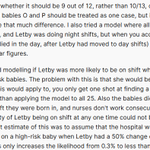
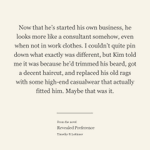
For those following me from my Letby post, I do have a novel coming out. Not much stats in it, sadly, but one of the characters is an econometrician. Excerpts at revealedpreferencenovel.com

1
257
Those interested in my post on the Letby case may be interested in my short review of jury verdicts in high-profile murder cases.
Very few not guilty verdicts, and none without a significant steer from the judge.
themanworthwhile.wordpress.c…

This is a top piece of work by Timothy Lattimer on the competing probabilities and likelihoods in the Letby case.
If for nothing else, explaining the difference between “probability” and “likelihood”!
themanworthwhile.wordpress.c…
