

Optimist, investor. Seeking the forest through the trees.
Austin, TX
Joined May 2016
- Tweets1.8K
- Following363
- Followers4.6K
- Likes1.5K




Pinned Tweet
New blog post:
Lemonade’s Book Value: Regulatory Risks, Growth Constraints, and Valuation
(link in bio and next tweet)
$LMND

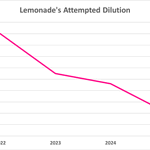
Lemonade's "attempted dilution" has fallen significantly the past four years.
Their share-based comp was a common bear point a few years ago (though part of that was due to $LMND's revenue recognition with reinsurance and how share-based comp is accounted for in GAAP).
Nonetheless, 1-3% dilution for a fast growing tech company is fine and sustainable in my opinion. Happy to see it.

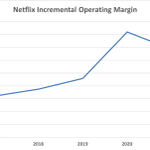
Up until 2021, Netflix was a much more hated investment. There were many bears on Twitter (#Debtflix) and short reports were not uncommon in the preceding years.
Then, seemingly out of nowhere, $NFLX became profitable and started paying down its debt and regularly repurchasing its shares.
But this was inevitable, and had been obvious for years. Netflix had a superior product with a wide moat and a long runway for growth, and revenue that was growing faster than expenses.
Look at the below chart. Profitability is what follows this kind of chart.
A consistent dynamic I noticed then is the bears only focused on GAAP financials. Netflix was consistently unprofitable and they had a lot of debt. That was that.
Bulls focused on the underlying unit economics and could see where those led.
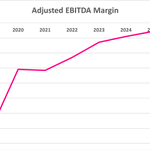
Anyway, this tweet is really about Lemonade's next couple of years. Bears are overly focused on GAAP financials (unprofitable, declining book value) while the underlying trends are clear and inevitable.
In 2027, $LMND will reach profitability and book value will start going up. This will be a surprise to a large portion of the market.


This chart is incredibly consistent. It appears $LMND management has a clear desire to grow the top and bottom lines at this exact cadence.

21
2,099
My thoughts on Lemonade Q4 2025 results
Q4 results were very good. Every line of insurance now has a gross loss ratio <75%. Europe grew >100% for the 10th straight quarter. Car growth continues to accelerate to +53% now. And as a former 7-year shareholder of Trupanion, Lemonade's results in pet continue to blow me away, now growing 55% with a 71% loss ratio.
They talked about some incremental R&D spend that maybe spooked some investors, but they reiterated that non-growth spend will grow flattish to single digits over the longer term. This is great.
For 2026 I expected the adjusted EBITDA guidance to be better, which I suspect is the main reason why the stock is down. But really, this is meaningless to the long-term value of $LMND.
For four years they have said they will hit adjusted EBITDA breakeven by the end of 2026 and that was reiterated. After that will come GAAP income profitability and it's off to the races.
As profitability becomes more obvious over the coming quarters, more of Wall Street will wake up to Lemonade. Whether they lose $20 million or $50 million this year won't matter in a couple of years.
Finally, their IFP guidance and commentary does not add up. They guided to Q1 growth of +31.5% and 2026 growth of +31.8%. Yet they also guided to accelerating growth each quarter "into 27 and beyond".
Given how much control they have over growth and they reiterated numerous times their desire to accelerate growth each quarter, I expect them to beat the Q1 guide a little and then increase growth by maybe 0.5% per quarter. That would put us at +34% growth in 2026 and +36% in 2027.
So, two years from now we have an accelerating business bringing in $2.2 billion of premiums inflecting into GAAP profitability with a much more diversified, proven business. Yes please.
Now, $LMND chart porn:


My thoughts on Carvana Q4 2025 earnings
Zero concerns from me. $CVNA already has a moat that is close to insurmountable in my opinion, now they just have to scale the business up.
They added 10 production locations in 2025 (from 24 to 34), but business is not linear and there is a natural ebb and flow to growth.
Infrastructure is built out and employees are hired, which leads to lower utilization and new inefficiencies. Those get solved and financials improve, then they expand again and the cycle restarts.
This won't be the last quarter with headwinds as they continue to expand to manage 3 million units per year.
More important than some short-term operational headwinds is Carvana continuing to widen their moat and improve their best-in-class customer experience.
Decreasing their average delivery time by a full day in the past year while increasing selection by 20,000 cars and passing on lower shipping fees to customers are all big wins that will spin their flywheels faster.
As Carvana opens more reconditioning centers and inventory pools around the country, they get closer to their customers. Quicker delivery times are a better customer experience that increases conversion rates and sales.
As sales increase, Carvana has more money to invest in logistics, advertising, and inventory. Carvana’s broad selection of inventory leads to higher conversion rates and more sales.
As these logistics flywheels result in more cars sold, Carvana’s billions of dollars of fixed costs get leveraged over more sales. As the fixed cost per unit decreases and Carvana’s incremental variable expenses to sell a car are low, Carvana can price off that lower incremental cost. Lower prices mean more sales and more cars to push through their built-out infrastructure, which covers their fixed costs even more and further lowers the fixed cost per vehicle sold.
Compared to the massive problems that Ernie and his team have solved in the past, I have little doubt they'll get the new reconditioning centers operating more efficiently in no time (3-6 months according to Ernie).
It hit me this quarter that Ernie reminds me a lot of Reed Hastings and Jeff Bezos. All three are very customer obsessed and focused on winning the long game.
This quarter's conference call was another example of Ernie (like Reed and Bezos) constantly bringing short-term analyst questions back to the long-term investments they are making to dominate the industry and improve the customer experience over time. So much of Wall Street can't help but focus on the trees and miss the forest for these types of companies.
Moving on to the risk of the month in the markets, I love how little AI risk there is at Carvana. One, they are the most tech-first used car retailer. I don't think there is any chance CarMax or the thousands of mom and pops implement AI better than Carvana does.
Two, Carvana has a very wide moat that comes from real world assets. This is a physical business that moves 4,000-pound hunks of metal around. No amount of software or AI can get around the fact that facilitating the buying and selling of used cars requires a lot of land to store cars, inspection and recondition centers all around the country, and a fleet of trucks and haulers to move the cars around.
Finally, $CVNA dropped a lot after Q4 earnings last year as well. The market doesn't seem to like Carvana's vague and conservative annual guidance. Then they massively outperformed expectations throughout 2025. I expect the same this year.

White Mirror is my favorite book I've read in years.
It's basically the opposite of Black Mirror: optimistic short stories about the future of tech/AI.
After finishing, I bought five more copies for my friends, which I basically never do.
nitter.cf/TinkeredThinker/status…

I updated my numbers on the below $LMND downside scenario.
18 months later, the stock is up 280%, and I still believe that the pet and renters segments are worth the entire enterprise value of the company.
nitter.cf/TravisWiedower/status/…

My Lemonade downside scenario
Lemonade has a very good core business that is profitable, growing, has a long runway for growth, and is the majority of their business. That core is pet and renters insurance.
The financials of this core business are masked by high loss ratios and operating expenses for their home and auto insurance. The headwinds Lemonade is facing (that I believe to be short-term) and all of their issues are related to home and auto insurance, but mostly home.
Thus, I think the realistic worst-case scenario is that the two co-founders admit defeat on home and auto insurance, shut down those businesses, and focus on being a niche insurer for renters and pet owners. How would their financials look then?
Home and condo combined are ~20% of Lemonade’s total in-force premium, car is ~15%, and life insurance is very small but let’s say 5%. I am confident all three of those numbers are too high, but I want to be conservative. That results in pet and renters insurance being 60% of in-force premium.
In-force premium is more of a look-forward number, so I’m going to say pet and renters make up 60% of trailing twelve-month gross earned premium, which would be $445 million in total premium. Now, what could Lemonade earn as a niche insurer with $445M in premiums?
Both pet and renters are very profitable lines of business. The renters gross loss ratio has been under 75% for many years and has been under 60% as of late. Pet has been under 75% for at least a few quarters. Relative to home and auto, these are simple lines of insurance with very little CAT that can be run very efficiently. I suspect this is already where a lot of their automation has focused.
For those reasons, I think a 10% net margin would be very doable for this new simplified business. This results in $44 million of profit. Lemonade doesn’t break out each line, but these two should be growing 15%+ today with a long runway for that to continue. Pet insurance in the US still has <4% penetration.
For a profitable business with many years of double-digit growth ahead of it, a 25x multiple is very reasonable. That would result in the new Lemonade being valued at $1.1 billion. Compared to its current market cap of $1.5 billion, that is 27% downside.
In reality, I think even in the above scenario Lemonade would be worth more. Their pet and renters premium is closer to 65%, their profit margin could probably be more than 10%, and higher multiples can be justified for their growth runway.
More importantly though, I think the chances of them giving up on auto insurance is very low. Based on management commentary, my best guess is that their auto insurance gross loss ratio has been in the ballpark of 100% the past few quarters. Of course, that is not ideal, but given it’s a new business for them that got derailed by post-Covid inflation and rate increase delays, I think 100% is fine.
Management has said that auto insurance continues to grow well in regions where adequate rate increases have been approved, but large regions like California have been mostly turned off as of late. They have continually said that they expect to launch auto insurance in more states in 2025 and be rate adequate in many more regions, calling 2025 “the year of car.”
I am less confident in home insurance, but again, I think the actual worst-case scenario is not bad. They would probably just offer white labeled third-party home insurance through their app. Consumers wouldn’t know the difference and their app would still have the same great user experience. Lemonade has already been testing this exact thing on a small scale for a couple of quarters in regions like California.
In summary, I think there is very little downside to today’s prices, maybe 25-30% (of course, that doesn’t mean the stock can’t be volatile and trade lower than that in the short-term).
When bears say Lemonade is a zero, I don’t even understand what business they are analyzing. 60%+ of Lemonade’s business is profitable and growing, and they have a bunch of cash with zero debt. Just based on that single sentence, Lemonade can’t have that much realistic downside.
People will think this is an absurd analogy, but in some ways, Lemonade today reminds me of Meta almost two years ago (my last add to $META was in the $120s, but I should have loaded up and I learned a lesson from it).
It seems like forever ago now, but only two years ago Meta was *hated* by investors and on Fintwit because Zuck was incinerating cash in the Reality Labs segment.
But my view was that Meta had an amazing core business that was profitable and growing. If Reality Labs failed, Zuck would cut it off, those expenses would go away, and the core business was worth more than what the market was valuing all of it at. And if Reality Labs worked, the company would be worth much more.
Lemonade’s core business obviously is not nearly as good as Meta’s, but the same concept applies. I think the crux of my adds to $META back then (that were way too small) and my large bet on $LMND today is having high confidence in the founder/CEOs to realize the above dynamic and make the right capital allocation decisions if the new business lines are not working. I thought very highly of Zuck even when he was hated, and today I think very highly of Daniel and Shai at Lemonade.
I think Daniel and Shai are very good managers, have learned from mistakes and adjusted, and have actually proven to be good capital allocators (explained why more thoroughly in my blog write-up from last October).
They both have a very large percentage of their net worth in $LMND stock and I expect they would shut down home insurance if they don’t see a path to profitability (and auto insurance as well, but I think that is significantly less likely to be necessary).
As you can see in the charts below, Lemonade continues to trend in the right direction. And I expect these positive trends to accelerate starting in Q4 of this year and moreso throughout 2025.


1
32
5,251
Lemonade $1 trillion market cap thought experiment:
$1T market cap
/ 30x multiple
= $33B income
/ 10% net margin
= $330B premium
/ $3,000 premium per customer
= 110 million customers needed
ChatGPT estimates that State Farm, which is US only, has 45M unique customers, so 110M isn’t totally crazy given $LMND already has more global reach and ambitions than ~all of the big guys.
$3k premium per customer is less than the US industry average today. Historically the cost of insurance has gone up over time, so by the time $LMND was getting that big in 20 years or whatever the premium per customer could be $5k+ in the US.
On the other hand, Lemonade's premium per customer in other countries will be lower. And AI/self-driving could lower the cost of insurance in some areas, so puts and takes there 🤷♂️
Nonetheless, just a thought experiment I did tonight. The numbers are kinda more reasonable than I expected (as far as 200x predictions go haha), but this is not my thesis or expectation or valuation.
For now, let's see them continue rolling out car insurance, get to profitability, and go from there. One step at a time.
New blog post
Lemonade’s Path to 6x Again: Why Its Future is Clearer Than Ever
(link in bio and next tweet)
$LMND


5 companies that helped me understand the Lemonade investment thesis:
Apple: obsession with design and user experience
Netflix: classic innovator's dilemma, wedge into industry (licensing old TV shows, renters insurance) and then move up market (producing own IP, auto insurance)
Tesla: first new entrant in a large industry in 50+ years
Adyen: the benefits of a single, modern tech platform competing against 100-year old incumbents with cobbled together tech from M&A
Progressive: competitive dynamics, mature economics
$LMND
5
12
1,955
Lemonade punches far above its weight in social media marketing.
$LMND


In four years, from 2021 to Q3 2025, Lemonade’s employee headcount increased 12.5% total, from 1,119 to 1,259.
In that same time, their customer count increased 101% and their in-force premium increased 204%.
All expected to continue. $LMND


Lemonade's Q3 2025 results were fantastic. This is the quarter that $LMND proved car insurance is working as management has been saying.
Car accelerated to +39% growth with a 76% loss ratio. I expect both to get better. And >50% of new car customers are from cross-selling current customers with essentially zero CAC. That is fantastic for unit economics.
“in addition to these customers being CAC-less, they are remarkable in other ways. They tend to have much better loss behaviors. So, they are less costly not only to acquire but to service. They tend to have higher retention rates… it would be more accurate to think about it as negative CAC. These are customers that tend to be profitable in whatever line of business we acquire them through and then they add a car policy on to that.”
I've said many times that pet and renters are worth the entire enterprise value of $LMND, and I still believe that. The market has not believed Lemonade can succeed in more complicated lines of insurance like car. But Q3 put a very large nail in that coffin.
This was Lemonade's first great car insurance quarter, so they have to prove this was not an anomaly, but that will happen and then I think we are a couple of quarters away from the Lemonade bear case being pretty much dead.
Next, the market will start trying to figure out whether $LMND is going to be a $20 billion dollar company or a $100 billion, or more.
Besides car, the rest of their business is doing great as well. Pet continues to grow at 55% with 70% loss ratios. Europe had its 9th straight quarter of >100% growth and hit its lowest loss ratio of 70%. LAE has fallen from 13% to 7% in just two years, and they expect this decline to continue thanks to AI.
Finally, they reaffirmed guidance of 30% IFP growth in 2026 and positive adjusted EBITDA in Q4 2026. In addition to car insurance succeeding, I think Q3 made Mr. Market start to realize that profitability is just as likely as management has been guiding to for years.


New blog post:
Carvana’s Moat is Very Wide and Nearly Unassailable
(link in bio and next tweet)
$CVNA
