

All Is Fair In Love And War
UK
Joined October 2026
- Tweets1.1K
- Following97
- Followers595
- Likes372





NATO bases in Türkiye are "foreign-owned." In reality, NATO facilities in Türkiye sit on Turkish territory under Turkish sovereignty, and major bases such as Incirlik remain Turkish Air Force bases that host allied forces by agreement.
By contrast, several Arab states have allowed long-term foreign military deployments where foreign forces often operate with greater autonomy under separate bilateral defence agreements. In short, NATO installations in Türkiye are generally presented by Ankara as Turkish bases used by allies, not foreign-owned enclaves.
Arabs are owned by NATO. 😂


I bet I mog all men of Iran. 😂
Your men all look like Indians. The only thing going for your nation is that the women are slightly pretty than other Middle Eastern nations.

🇬🇷🇷🇴🇨🇾 Three gypsy nations invented by the British having the smallest pipi size.
Makes sense why these people so angry all the time and crying about Turks. 😂

Turks need to pay close attention to what's going on. The idea that Turks see themselves as Iranian is nonsense. Iran has significant anti-Turkish sentiment among some Armenian, Kurdish and Jewish communities. There are also Islamists in Iran who view Türkiye as an enemy because it is a NATO member. Then you have Pahlavists who see Turks as enemies because they believe Türkiye supports the Islamic Republic. Some Christian Iranians also harbour anti-Turkish sentiments simply because Turks are Turks. And there are Iranians who fear that Pan-Turkism could eventually tear their country apart.
In short, some people are trying to drive a wedge between Anatolian Turks and the Azerbaijani Turks of Iran. Turks need to recognise these divisions and avoid falling for attempts to turn them against one another.

You're an Arab and Indian though. Culturally, racially, historically. Turks are not.
We share nothing with your kind my friend.
By calling you an Indian isn't mean to be an insult. Be proud of what you are.
But don't ever think we'd ever want to be called an India, because for us it is an insult.
Hope this helps.


🇮🇷 Iranian history is all lies?
Take example Shah Ismail I (1487-1524)
As for a poem where Shah Ismail (who wrote under the pen name Khatai/Xətai) explicitly calls himself a Turk, one of the most frequently cited verses attributed to him is:
"Mənəm ol Türk ki, dinimdir məzhəbim haqq yoludur..."
This is usually translated roughly as:
"I am that Turk whose religion and creed are the path of Truth."
"Khata'i-da natiq oldu, Türkistanın piri oldu"
"(The Divine) spoke through Khata'i, who became the pir (spiritual guide) of the Turks (of Azerbaijan)."
Iranians today = Gypsies 😂

Turks in Turkiye have no idea how this works.
Iranians don't care if we Turks think we're European or not. The Iranians are only triggered if Europe wants Turkiye in Europe(even just Turkish in same sentence as Turkiye annoys them). Even Turkiye in European statistics makes them jealous. Because the advanced civilization of Europe is the main prize for Iranians(For acceptance). And they'd hate their eternal enemy the Turk being passed as an European.
The dream for an Iranian is to be an honorary European. But this will never happen, half of the country looks Arab and other half Indian.
Deep down the Iranians know how they're viewed as(by the world). Brown people conquered by Arabs.😂


🇬🇷 According to the Greeks, the whole world would be speaking German if it weren't for them.
But What Are The Facts?
Italy invaded Greece on 28 October 1940.
Instead of collapsing, Greece pushed the Italians back into Albania.
Germany intervened on 6 April 1941.
Athens fell on 27 April 1941.
Crete was captured by Germany by 1 June 1941 after fierce fighting.
Around 13,000-14,000 Greek soldiers killed during the Greco-Italian War.
Thousands more were killed or wounded during the German invasion.
An estimated 300,000-500,000 Greek civilians died during the occupation.
The famine of 1941-42 alone killed tens of thousands, especially in Athens.
Population impact Greece had a population of roughly 7.2 million before the war. Total deaths from military action, occupation, famine, reprisals, and the Holocaust are commonly estimated at around 500,000 to 800,000 people, making it one of the hardest-hit countries in Europe relative to its population.
Looks like failure to me. 😂

THE WORLD OWES THE GREEKS A GREAT DEBT OF GRATITUDE FOR SAYING OXI TO HITLER🚨
If the Greeks had given free passage to Italy, Hitler’s staunch ally 80 years ago, the world as we know it, would be completely different today.
Greece said NO to Hitler
Greece said OXI to his expansionist ambitions
Greece said NO to fascism
Greece saved the world
28 October 1940 “OXI”
🎥 @oxidayfndation
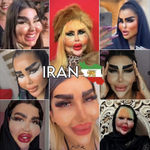
🇮🇷Many Iranian women travel to Türkiye for cosmetic procedures such as rhinoplasty, facelifts, liposuction, and other aesthetic surgeries. Türkiye has developed a large medical tourism industry, particularly in cosmetic surgery, with modern private hospitals, experienced surgeons, and prices that are often lower than those in many Western countries.
I just think, why bother? No amount of surgeries is ever going to make you look any better Iranian women. 😂

When Iranians look in the mirror they see an Indian.
And there's nothing wrong with taking pride in looking like an Indian or related to them.
But, why show Indian memes and make them out to be Turks?
Sorry, we look nothing like your kind.😂
This quoted post is unavailable.
Anything is better than looking like this Iranian Pajeet. You wouldn't look out of place in a Bollywood movie.😂


🇮🇷 Iranian man wishing death on Turks.
Not going to lie, if I looked like that I'd want to die. 😂
This Iranian looks like a mix of Arab and Indian.

This Post violated the X Rules. Learn more
🇮🇷
The unalived Iranians by their father Israel and America if you wanted to visualize them all.😂
Pan-Turkism will always win

Turks are Central Asian.
We might have some shared blood with Balkans, Caucasia, Eastern Europe where many Turk Dynasties settled, conquered and ruled from.
Then you have Mongolia and Central Asia too, yes. But we share not genetics with Mongolians and Chinese people of today.
And Turks want nothing to do with you Persians/Iranians or whatever you call yourselves.
We see you and Arabs, Armenians, Kurds and Indians as all the same loser people with obsession with the Turk race.
And remember. every single Turk is a Pan-Turk.

این ترک های، ترکیه خیلی تعطیلن فکر میکنن ما ها که جوابشون میدیم از استان پارس، شیراز هستیم
ببین من نمیدونم ریشه تون کجاست! خودتون میگید چین و مغولستان، ژنتیکتون اناتولی که برای یونان و ایران و ارمنستان بوده هست و نشون میده.
ولی من پدرم تبریز به دنیا آمده و مادرم اردبیلی است مادربزرگم هم اردبیلی است
یک پدربزرگم اهل شیرازه یکی دیگه ام اهل شمال ایزان، من میگم ریدم دهن پانترک و ایرانی ها ترک نیستند ما ترک زبان داریم.
بیشتر اکانت هایی که ضد پانترک هستند خودشون تبار ترک زبانی دارند. اینقدر گوه ما رو نخورید ما نمیخواهیم شبیه شما دهاتی های قوم و قبیله ای باشیم.
Will Greeks try to steal everything we have?
Ayran: is a traditional Turkish yoghurt drink with roots in the wider Turkic world. Made by mixing yoghurt, water and salt, it has been enjoyed for centuries across Anatolia and Central Asia, where Turkic peoples developed rich traditions of producing and consuming fermented dairy products.
🥮 Baklava: Although layered pastries existed in earlier Central Asian traditions, baklava is most strongly associated with the Ottoman Empire. The imperial kitchens of Topkapı Palace in Istanbul helped refine, standardise, and popularise the dessert across the empire, with Ottoman records mentioning baklava at the palace in 1473. The Ottomans elevated it into a highly sophisticated court dessert, developing the thin filo pastry technique and elaborate preparations that form the basis of modern Turkish baklava. Today, baklava remains one of Turkey's most iconic national desserts and a central feature of Turkish cuisine. "baklava" literally means.. Some linguists believe it may come from a Turkic root related to "tying", "wrapping", or "bundling", possibly referring to the dessert's many folded layers.
🥙 Döner kebab: The modern vertical-spit döner is strongly associated with Bursa, where İskender Efendi is credited with developing it around 1867.
Kebab: Kebap is a Turkish word for a category of roasted or grilled meat dishes, not one single recipe; the word itself has older linguistic connections across the Middle East.
🥛 Yoghurt (Yoğurt): The English word yogurt/yoghurt comes directly from the Turkish word yoğurt, which entered English in the 17th century. The word is generally believed to derive from the Turkic verb yoğurmak ("to knead," "to thicken," or "to condense"), referring to the process by which milk thickens during fermentation. The term itself is attested in early Turkic sources, including Dīwān Lughāt al-Turk, the famous 11th-century dictionary compiled by Mahmud al-Kashgari, showing that yoghurt was already a well-established food among Turkic peoples by that time.
☕ Turkish Coffee: Turkish coffee is a distinctive method of coffee preparation in which extremely finely ground coffee is simmered with water, traditionally in a small copper pot known as a cezve. Unlike filtered coffee, the grounds remain in the cup, creating its characteristic thick texture and foam. Coffee was introduced to the Ottoman Empire in the 16th century, and Ottoman coffeehouses soon became important centres of social life, conversation, literature, and politics. From Istanbul, the Turkish method of preparing coffee spread across the Balkans, the Middle East, North Africa, and parts of Europe. In 2013, the UNESCO Representative List of the Intangible Cultural Heritage of Humanity recognised Turkish coffee culture and tradition, noting its role in hospitality, social gatherings, ceremonies, and customs such as coffee-ground fortune telling. The preparation method remains one of Türkiye's most internationally recognised cultural traditions and has influenced coffee cultures far beyond the borders of the former Ottoman world.
🫓 Gaziantep lahmacun: A distinctive regional Turkish variety of lahmacun, traditionally made with finely prepared minced lamb, garlic, parsley, peppers and spices, then baked in a stone oven. Antep Lahmacunu / Gaziantep Lahmacunu is officially registered as a geographical indication. The word lahmacun itself derives from Arabic elements meaning “meat” and “dough,” while the Gaziantep variety has its own recognised local tradition.
Dolma: is a family of stuffed dishes strongly associated with Turkish and wider Ottoman cuisine. The name comes from the Turkish verb dolmak, meaning “to be filled,” and refers to vegetables or leaves filled with ingredients such as rice, herbs, spices and sometimes minced meat. Popular Turkish varieties include biber dolması (stuffed peppers), kabak dolması (stuffed courgettes) and yaprak sarma (stuffed vine leaves).
Rakı: is a traditional Turkish spirit that took on its distinctive character during the Ottoman period. Its development can be traced back to at least the 16th century, with anise-flavoured rakı becoming associated with Turkish drinking culture by the 17th century. Ottoman sources mention the drink in Istanbul, and the 17th-century traveller Evliya Çelebi described rakı and its producers.
Lokum- known internationally as Turkish delight, developed in the Ottoman world, with earlier forms believed to date back to the 14th–15th centuries. Older recipes used honey or grape molasses and flour; during the late 18th and early 19th centuries, sugar and starch helped produce the soft, chewy confection familiar today. Hacı Bekir opened his confectionery shop in Istanbul in 1777 and played a major role in popularising modern lokum, which became known in English as “Turkish delight” during the 19th century.
Cacık- is a traditional Turkish dish made with yoghurt, cucumber, garlic and herbs, often thinned with water to create a refreshing cold soup or side dish. The word was recorded by Ottoman traveller Evliya Çelebi in 1665, although he described cacık as a type of herb added to food. The recognisable yoghurt-and-cucumber version appears in print in the Ottoman cookbook Melceü’t-Tabbâhîn in 1844.
Pastırma is a traditional Turkish cured meat whose history is associated with the meat-preservation practices of Central Asian Turkic peoples. The earliest documented evidence in Anatolia dates to the Seljuk period, around the 11th–12th centuries; the word appears in Dîvânu Lugâti’t-Türk, compiled by Mahmud al-Kashgari in 1073. Its name is related to bastırmak, meaning “to press”, and the meat is salted, dried and coated with a distinctive fenugreek paste called çemen.
Pastrami - is closely related linguistically and historically to Turkish pastırma, but the two foods are prepared differently. The word is generally traced through Romanian pastramă and Yiddish pastrame, with a likely connection to Turkish pastırma or bastırma. Romanian and Eastern European meat-preservation traditions travelled with Jewish immigrants to the United States, where the modern deli version developed in the late 19th century: beef, often brisket, is cured, seasoned, smoked and commonly steamed. The exact origins are debated, so it is more accurate to say pastırma is an important relative and possible linguistic ancestor than to claim modern American pastrami is simply the same dish.
Sucuk - is a traditional Turkish sausage made from minced meat—usually beef—mixed with garlic and spices such as cumin, paprika and black pepper, then fermented and dried. Its roots are associated with Turkic meat-preservation traditions, and an early form is mentioned in Dîvânu Lugâti’t-Türk in the 11th century under the name sugut, describing meat and other ingredients packed into an intestinal casing. Over centuries, sucuk became established in Anatolian and Ottoman food culture, with regional varieties developing across Turkey.
Patlıcan dolması - is a well-established dish of Ottoman Turkish cuisine, made by hollowing out aubergines and filling them with minced meat, rice, garlic and spices, or with a meat-free rice filling. Its earliest known recorded appearance is at the 1539 Ottoman imperial circumcision festivities for the sons of Sultan Süleyman the Magnificent, Bayezid and Cihangir. German traveller Hans Dernschwam also described stuffed aubergines in Ottoman lands in the 1550s, filled with chopped mutton and garlic and served with yoghurt.


🇬🇷The 219-day statistic is the WW2 equivalent of counting your journey to work from the moment you woke up. "How long did Germany take to defeat Greece?" "About 20 days." "Okay, but what if we also count the months spent fighting Italy first?" "Now we're talking."
Real Facts:
Germany invaded Greece on 6 April 1941 (Operation Marita).
Athens was occupied by German forces on 27 April 1941.
How is that 200+ days?😂
