

@CEGA_UC the Berkeley Initiative for Transparency in the Social Sciences promotes openness and integrity in social science research. ucbitss.bsky #openscience
Berkeley, CA
Joined October 2014
- Tweets3.9K
- Following813
- Followers3.7K
- Likes2.7K



Pinned Tweet
The 2027 BITSS Annual Meeting call for speakers is open until Nov 1! The BITSS AM brings together academic researchers, donors, and policymakers to discuss research transparency, rigor, methods, and ethics.
🗓️ Fri, Feb 26, 2027
📍Berkeley, CA
Apply: cega.submittable.com/submit/…
BITSS retweeted

New working paper: Can AI forecast treatment effects in economics from pre-registration documents?
Answer: Yes. 1/

As new technologies change how we engage with research, how can we speed up evidence synthesis without sacrificing quality?
bitss.org/devidence-building…

📣 1 more month to apply to present at the 2027 BITSS Annual Meeting! Our annual conference on research transparency welcomes submissions on metascience, novel research methods, LLMs in science, and other topics related to research rigor.
Apply by Nov 1: cega.submittable.com/submit/…

BITSS retweeted

Nature research paper: Reimagining research papers as interactive and reliable AI agents
go.nature.com/4AmQVH8

BITSS retweeted

It only took us 5 years, but I4R finally has a newsletter. 🎉
We’ll use it to share new studies, Replication Games, research, events, podcasts, and other updates from the Institute for Replication.
Subscribe here:
i4replication.org/newsletter
BITSS retweeted
1/ What is the prevalence of personally identifiable information (PII) in author-collected data publicly shared in the social sciences?
We audited 327 replication packages from 11 leading journals in economics, political science, and psychology
Answer: surprisingly high 🧵


"Code underlying published findings in the social sciences often fails to reproduce reported results when others re-run it on the original data."
See 4 ways to improve computational reproducibility by team w/ non-resident BITSS scholar Garret Christensen rdcu.be/gqvVA7iZHYma
📣 New BITSS blog post: José Daniel Conejeros and Magdalena Gatsch share their reflections on open science in Latin America.
bitss.org/the-gap-is-not-tec…

How can forecasts make experiments better? See the new VoxDev piece by @sdellavi.bsky.social and @evavivalt.bsky.social sharing findings from 100 projects on the SSPP (@socscipredict.bsky.social):
voxdev.org/topic/education/c…

New BITSS blog post: what can we learn from open science as researchers adopt AI tools?
bitss.org/research-grade-ai-…


New preprint on MetaArXiv with lessons learned from the Brazilian Reproducibility Initiative. What was learned from a nationwide project assessing the replicability of biomedical experiments?
osf.io/preprints/metaarxiv/8…

BITSS retweeted
Registered Reports improve the credibility of scientific claims by rewarding big questions, sound methods and solid analyses. They need to become a standard tool in research.
go.nature.com/3PJyYjq

📈 Excited to share that Pre-Results Review is expanding in economics! AJAE received its first PRR submission last Wednesday. We were happy to share lessons learned in the process after successfully launching PRR with the JDE in 2018:
aaea.org/publications/ajae/a…
For more on pre-results review and how it improves research, see: bitss.org/publishing/prr/

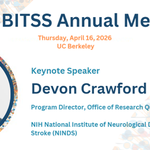
Many thanks to our speakers for a successful BITSS Annual Meeting! One of our main take-aways was the tension between using LLMs in research and reproducibility. Reproducibility remains an important issue in research, and this is a topic we think is important to pay attention to.

Last week, researchers and policymakers shared research to advance transparency, reproducibility, rigor, and ethics in social science research at the 2026 BITSS Annual Meeting, hosted by CEGA’s @UCBITSS + @IBSI_at_Haas.
View slides from the presenters: cega.berkeley.edu/event/bits…


BITSS retweeted

Notes from a great panel on AI + transparency in science from @UCBITSS annual meetings.
this from @evavivalt was amazing.
Basically, for ~150 studies that they had humans predict the coefficients of studies based on the proposed design, LLMs (Opus 4.6) even without too much fine tuning, were really good at predicting results. Average MSE was 0.03.
And no adding human data doesnt help (much).


