

The Accessibility Observatory at the University of Minnesota. Measuring access to destinations for transportation analysis, performance mgmt, and planning.
University of Minnesota
Joined January 2014
- Tweets448
- Following52
- Followers416
- Likes10




Accessibility Observatory retweeted

Transit agencies: Want to attract more riders? Offer better access to jobs.
In Portland, OR: "Daily boardings could increase by 1.8%- 2.1% for every 10% increase in accessibility {# of jobs reachable in 30 min from the bus stop by public transport]."
doi.org/10.1016/j.jtrangeo.2…

Accessibility Observatory retweeted

Accessibility is a better, broader measure of how well the transportation system meets people’s needs. It's not how fast you go, but what you can reach — for work, shopping, school or other activities. naiop.org/Research-and-Publi…
@UMNAccOb @UMNews @UMNresearch #destinationaccess

Accessibility Observatory retweeted
Five new transitways planned for the Twin Cities will improve access to grocery stores, health care facilities, & high schools for tens of thousands of people from diverse demographics, according to @UMNAccOb research: cts.umn.edu/news/2021/octobe… @UMNresearch @MetroTransitMN

Next week we’ll begin reviewing applicants for our two(!) open Researcher positions. If you want to work on implementing and advancing national-scale measurement of multimodal destination access (and, seriously, who doesn’t?) then apply here!
hr.myu.umn.edu/jobs/ext/3431…
JOB ALERT! We have openings for two full-time researchers to support our National Accessibility Evaluation and other projects. Big networks, big maps, big data.
Details & application links: hr.myu.umn.edu/jobs/ext/3431…
Accessibility Observatory retweeted
CTS is looking for two full-time researchers to join our Accessibility Observatory team! Positions will assist with @UMNAccOb research, outreach, & management. Resume review begins Sept. 20: cts.umn.edu/about/jobs @UMNresearch

Trying out a new slogan — “Providing a Sense of the Dismal Results Since 2015!”
This Post is from an account that no longer exists. Learn more
“[Access] may be the single most important thing we should be measuring about our transport systems — but that we usually don’t.”
humantransit.org/2021/03/bas…

Accessibility Observatory retweeted
Measuring access to destinations helps make wise, cost-effective transportation system investments that best serve public needs as they evolve in an increasingly uncertain future, says @UMNAccOb director Andrew Owen. @UMNews @UMNresearch #destinationaccess
aashtojournal.org/2021/02/26…

This spring we’re launching Phase II of our National Accessibility Evaluation project, which will expand our access data beyond jobs to include new destination types like education and healthcare
twin-cities.umn.edu/news-eve…

Accessibility Observatory retweeted
Register to attend our free March 2 webinar to hear from @UMNAccOb researchers about their work evaluating accessibility to jobs by automobile, transit, and bicycle across the US: cts.umn.edu/events/seminar/2…

Accessibility Observatory retweeted

Somehow I missed this @StreetsMN article on the E Line aBRT (coming to @EdinaMN in the next 3-ish years). It will provide access to a *lot* of jobs.
All the while, *reducing the need* for cars & car infrastructure (car lanes, turn lanes, parking, etc.)
streets.mn/2020/12/17/access…

Accessibility Observatory retweeted

People are sleeping on how much the D and B Lines will change accessibility! nitter.cf/alexschief/status/1275…

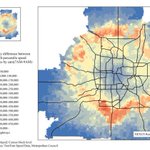
Two maps from @UMNAccOb showing change in access to jobs for workers as a result of MSP transit projects. cts.umn.edu/publications/cat…
SWLRT and the D Line stand out, but for different reasons. The former for bringing transit to new areas, the latter for big service improvements.


Accessibility Observatory retweeted

Shout out to @UMNAccOb graphics.
This Post is from an account that no longer exists. Learn more
Accessibility Observatory retweeted
Though it's uncertain when pandemic will end and riders return to transit, building network of fast, reliable, and efficient transportation is one of the most worthwhile investments we can make now, says @UMNAccOb director Andrew Owen. @UMNews @UMNresearch startribune.com/metro-transi…

Accessibility Observatory retweeted
New research from @UMNAccOb ranks and compares year to year the 50 largest US metros for connecting bike commuters with jobs. This data helps guide investments in biking routes to improve access to jobs in your city. access.umn.edu/research/amer… @UMNews @UMNresearch #biking #cycling

ALT University of Minnesota bike commuter crossing University Ave SE at 15th Av SE in Minneapolis.
Accessibility Observatory retweeted

This is a major advancement in the application of accessibility measures in transport. It is the go to document for any student or professional. Amazing leadership by @trnsprtst and @dk2475 to put this together with contributions from many around the world.
This Post is from an account that no longer exists. Learn more
OpenStreetMap is “critical infrastructure” for us, too. joemorrison.medium.com/opens…
3
Accessibility Observatory retweeted
Access to jobs by transit increased in half of largest U.S. metros in 2019, says @UMNAccOb. Phoenix +8.1% and LA +6.0% due to transit investments and land use. Raleigh +6.8% from job growth and changes in job locations. access.umn.edu/research/amer… @UMNews @UMNresearch #transit

ALT Bus stop photo provided by Metro Transit
Accessibility Observatory retweeted

Different cutoffs are important because they represent different travel needs:
nitter.cf/alex_erath/status/1313…
But when using hard cutoffs without smoothing/decay, the selected time threshold has a large influence on the estimated impact of projects and policies.
nitter.cf/UrbanDemog/status/9871…

3/n The size of the accessibility impacts of the TransBrasil BRT project as well as its distribution across space and across income groups vary substantially depending on the time threshold chosen for the cumulative opportunity accessibility analysis #MTUP

