

Provides knowledge on freshwater use & management, promotes gender equality & sustainability in the water domain through capacity development & policy dialogue
Perugia, Italy
Joined January 2012
- Tweets4.1K
- Following1.3K
- Followers14.2K
- Likes4.9K




Pinned Tweet
We've shifted our focus from X to LinkedIn, where we can better connect, exchange knowledge, and build meaningful collaborations to bring science, policy, and practice closer together.
👉 See you in our new group 'Uniting Science for Water' linkedin.com/groups/13285024…
UNESCO World Water Assessment Programme (WWAP) retweeted

Strengthening Water Governance through #GenderEquality💧
To celebrate #WorldWaterDay 2026, @UNESCO unveiled its latest #WorldWaterReport, delivering a clear message: solving the world’s #water crisis depends on gender equality.👏🌍
➡️ unes.co/oggbw2
#ForThePeople

UNESCO World Water Assessment Programme (WWAP) retweeted

💧 La @UNESCO y el @INRHCuba presentaron en Cuba el Informe Mundial sobre el Desarrollo de los Recursos Hídricos 2026, elaborado por @UNESCOWWAP en nombre de @UN_Water.


📢Progress towards #socialinclusion in the water domain remains stalled or is even regressing in certain regions.
Political will is wavering..
🫵 Join a unique multi-stakeholder movement.
Share knowledge. Shape policy. Amplify impact.🤝
🚀 unesco.org/en/multi-stakehol…
#WaterForAll
UNESCO World Water Assessment Programme (WWAP) retweeted

To mark the first ever #WorldLakeDay, I want to share the stories of two lakes I’ve visited. Two vital ecosystems on two very different paths.
🇰🇪 In Kenya, Lake Naivasha is thriving. Locals describe it as the backbone of their community, connecting fishermen, farmers and families. People spoke of care and responsibility, of protecting the lake so it can sustain life for generations to come.
🇧🇴In Bolivia, Lake Poopó has vanished. Once the country’s second-largest lake, it dried up completely in 2015. Old boats lie stranded, rotting in the dirt. Livelihoods lost, lives altered forever.
Lake Naivasha shows what’s possible. Lake Poopó shows what’s at stake. The choice is ours.


Iraq’s Hawizeh Marshes are a UNESCO World Heritage site and internationally protected by the Ramsar Convention 🪬🐟
This unique ecosystem spanned ~243,500 ha (1970s) but had already shrunk to ~137,700 ha (2013) due to upstream damming, deliberate drainage, droughts, and reduced freshwater inflow.
Now, the remaining marshes — their biodiversity and life-supporting services — are critically endangered by #oil #drilling.
Let's recall: #WaterForLife 🌿💧
#Wetlands #Ecosystemprotection

Globally, a staggering 1⃣/3⃣rd of all food produced goes uneaten (roughly 3 billion tonnes!)🗑️
As roughly 7⃣0⃣% of our water use is destined to farming, this equals wasting massive amounts of water: roughly 7⃣5⃣0⃣0⃣ cubic kilometers (nearly the annual flow of the Amazon River)!🤯
Halving food waste by 2030 is still possible - but only with urgent, coordinated action. We need stronger policies, smarter infrastructure & better data to cut losses. But above all: the change can start with YOU🫵
🔗 bit.ly/3Y0LkA3
#WaterCrisis #FoodWaste #ScienceForWater
Image by freepik.com

2024 goes into history with a record 🌳loss due to #forestfires 🔥🏴
Data shows over 1⃣3⃣,5⃣ million hectares of forest was lost - an area the size of Greece (@WorldResources)
What are some of the water-related consequences? 💧
👉Soil erosion + diminished water regulation
👉Polluted or even toxic runoff water
👉Altered local and regional hydrology (precipitation & river flow)
👉Exacerbated risk of extreme climate effects (droughts, heat, floods)
Read more: bit.ly/4fbItQw
Let's do MORE to protect our forests & water resources! 🌳🌴🐟
#Climatecrisis #Wildfires2024

UNESCO World Water Assessment Programme (WWAP) retweeted

💧 Smarter water use from space! 🌍
This #EUfunded project developed a satellite-powered tool to monitor water use & support compliance – helping regions like drought-hit Australia manage this vital resource fairly & sustainably. 👉 europa.eu/!HcQm6t

ALT Aerial view of the landscape with plains.
Good news for Europe’s waters: #pesticide use in the EU hits record low!
Some facts:
💧Pesticide sales fell to 292,000 tonnes (2023), reducing harmful runoff into rivers, lakes & groundwater
📉 Use & risk dropped 46% since 2011
🔍 Nevertheless, >230 'emergency derogations' (2019-2022) allowed the use of banned pesticides
➡️ Continued efforts are needed to keep headed in the right direction!
#WaterQuality #SustainableFarming #GreenDeal
(Image by freepik.com)

UNESCO World Water Assessment Programme (WWAP) retweeted

No nation owns a river—it flows for all.
To protect transboundary waters like #RiverNoolturesh, we need:
✅ Binding regional treaties
✅ Joint river basin initiatives
✅ Shared data + early warning systems
✅ Community diplomacy & trust-building
#WaterKnowsNoBorders
#DYK?
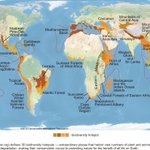
Mountains host 25 of the world’s 34 biodiversity hotspots! 😯
The fact that mountains generally have lower temperature 🌡️ and higher precipitation 🌦️ has much to do with that!
Map of the world's biodiversity hotspots below 🌱

UNESCO World Water Assessment Programme (WWAP) retweeted
I’ve seen what drought leaves behind.
🪣 In Kenya, herders formed human chains to pull water from deep, drying wells.
🌾 In South Africa, a young farmer asked me, “what hope do I have? To pray for rain, or leave my farm?”
🚢 In Uzbekistan, I ran across the dry bed of the Aral Sea, past fishing boats stranded in the dust.
🌉 In Europe, I ran under bridges where water once flowed — the Rhine, the Danube and the Loire were running so low that boats couldn’t move.
🕳️ In Turkiye, overwithdrawal of groundwater left the land scarred with sinkholes.
These stories are unfolding across continents, industries and communities, reminding us that water is not your problem or mine.
Water is everybody’s business.
#DesertificationAndDroughtDay


Happy World Day to Combat #Desertification and #Drought🌏💧
#DYK that desertification is the process that turns fertile land into less productive -often barren- areas through unsustainable use and climate change? 🤔
But here's the silver lining: we can prevent and even reverse it!
How? Here are a few powerful tools:
🍏Embrace sustainable farming - growing delicious food can go hand-in-hand with nature
🌱Support reforestation - this supports ecosystems and provides moisture
🙌(Re)empower local communities - they can benefit while leading the change!
Together, we can turn desertification into lushification! 🫶
(Picture by freepik.com)

Shrinking wetlands on the Iran-Iraq border are triggering dust storms 🌬️🏜️, biodiversity loss 🪹, forced migration 🚶 & rising tensions📈.
The 'Hoor al-Azim' & 'Hoor al-Hawizeh' lifelines are dying due to dams, oil, & climate change.
💧Water scarcity is a key trigger to displacement & conflict!
#WaterCrisis #Wetlands #SDG6 #ClimateAction #WaterAndPeace #UNESCOWWAP

Conflict, migration & hunger!
Some of the consequences of the drying Hoor Al-Azim wetlands in Iran.
I spoke to experts about how this can lead to more sand & dust storms, fires and biodiversity loss in the region.
#Wetlands
#RamsarCOP15
#Khuzestan
context.news/climate-risks/h…

UNESCO WWAP’s Capacity Development Programme helps close the #datagap in water ⚖️🪣💧
Based on our 2019 Toolkit, trainings equip participants to:
✔ Collect & analyse sex-disaggregated water data
✔ Design gender surveys
✔ Integrate 'equality' into water policies & projects
Because better data means more inclusive water governance👍
👀Visit:
unesco.org/en/wwap/gender?hu…
#WaterAndGender #Training #GenderData

DYK that #mountains:
🧬are global hotspots of agrobiodiversity? They preserve large fraction of the world’s gene pools for agriculture and medicinal plants.
🦋harbour more endemic species than lowlands, making them vital for global #biodiversity?
Let’s protect these vital ecosystems- for the planet, for us!
#WWDR
Picture from freepik.com

UNESCO World Water Assessment Programme (WWAP) retweeted

Colombia is the host of this year's Desertification and Drought Day global observance on 17 June in Bogotá.
It will spotlight the country's bold efforts to restore land, unlock opportunities and ensure a better future for all. Learn more ➡️ unccd.int/news-stories/press…
#UNited4Land
