





Uncle Boo retweeted

In 1942, a drunk German officer sat at dinner and bragged about the Jewish woman he had selected from the brothel the Nazis had forced open in town. He said her name out loud. The Tunisian Arab sitting across from him stayed calm, smiled, poured more wine, and finished the meal. Then he drove the officer home, sped through the dark streets, and knocked on a door close to midnight. That night, he hid 25 people for four months. He never spoke about it again.
His name was Khaled Abdul-Wahab. He was 31 years old, a wealthy Muslim Tunisian who had studied art and architecture in New York and spoke fluent German. Nazi officers trusted him. They invited him to their dinners.
Tunisia was the only Arab country directly occupied by Nazi Germany during the war. Jewish families were pushed from their homes. More than 5,000 Jewish men were sent to forced labor camps. Yellow stars marked every chest.
That December night in the coastal town of Mahdia, Khaled listened as the officer boasted. The woman he named belonged to a family Khaled had known all his life.
He left immediately. He drove through the night. He knocked on their door at midnight.
Pack nothing. Come now.
He gathered 25 people — mothers, fathers, cousins, and children — and drove them nearly 20 miles to his family farm, hiding them inside the olive press, stables, and storage buildings.
This was not one brave act. It was four straight months of courage.
He fed them while supplies grew scarce. He kept babies quiet. He trusted his servants to stay silent. When German soldiers arrived to count Jewish families, the hidden people pinned yellow stars onto their clothes and stood motionless. When the soldiers left, the stars came off again.
One night, a drunken soldier wandered onto the farm and discovered them. An eleven-year-old girl hiding under a bed watched him laugh and threaten to kill everyone there. Then Khaled appeared. She remembered him her entire life as a guardian angel. He calmly walked the soldier outside, took away his weapon, and sent him off the property.
Nobody on that farm died.
In May 1943, British forces liberated Tunisia. All 25 people returned home alive.
Khaled went back to a quiet life. He married, raised daughters, painted, and worked in government service.
He never told anyone what he had done. Not his wife. Not his children. No one.
He died on September 4, 1997, at the age of 86. His story was buried with him.
Ten years later, his daughter Faiza was sitting in a café in Paris reading a Sunday newspaper when she came across an interview with an American historian describing a Tunisian Arab who had hidden 25 Jews in 1942.
The historian mentioned her father by name.
She was 45 years old and had never heard the story before.
She contacted the historian. One of the children saved on the farm had left behind 83 pages of testimony before her death. Every detail matched.
“I rediscovered my father,” Faiza later said.
Khaled was nominated for Israel’s highest honor given to non-Jews who saved Jewish lives. He would have been the first Arab to receive it.
The committee declined, saying he had not risked his own life enough.
Faiza answered with a line history should never forget:
“My father opened his home to Jews. They did not open theirs to us.”
Today, the 25 people Khaled saved have hundreds of descendants living across Israel, France, America, and Tunisia. The little girl hidden beneath the bed grew up, moved to Paris, and built a family of her own. None of them would exist if Khaled had stayed silent that night.
He had everything to lose. He acted anyway. Then he spent the rest of his life saying nothing about it.
The world nearly forgot him twice. Now you know his name.




Uncle Boo retweeted

She was called "the most beautiful woman in the world."
Hollywood used her for 18 years. The U.S. government used her invention for decades without paying her 1 cent. She died in 2000 without receiving credit for any of it.
Today, you use what she invented more than 100 times a day. Her name was Hedy Lamarr. She was born in Vienna, Austria, on November 9, 1914, as Hedwig Eva Maria Kiesler. From childhood, she wanted to know how things worked.
At just five years old, she took apart her music box. Not to break it. To understand it. She later left engineering to pursue acting. In 1933, *Ecstasy* made her famous across Europe—and deeply controversial. Then her life changed again. She married arms manufacturer Friedrich Mandl, a man connected to Mussolini and the Nazi regime.
He expected her to stay silent. She listened instead. While generals and scientists discussed weapons, communications, and military strategy, Hedy quietly absorbed every word. At 23, she escaped. Disguised as a maid, she fled to Paris, then London, where MGM's Louis B.
Mayer offered her a contract. She negotiated her own terms. Then she sailed to America as Hedy Lamarr. Hollywood celebrated her beauty. Almost nobody noticed her brilliance.
After exhausting days on movie sets, she returned home to something few people knew she had. An inventor's table. In 1940, as World War II intensified, she met composer George Antheil. Together they tackled a deadly problem. Enemy forces could easily jam radio-guided torpedoes. Hedy imagined something revolutionary. What if the radio signal constantly jumped between frequencies, making it impossible to track or block?
In 1942, they received a U.S. patent for their Secret Communication System. Then they handed it to the government. For free. The Navy rejected it. Instead, they encouraged Hedy to help by selling war bonds. She raised millions. Her invention was ignored. Years later, the military quietly revived the same frequency-hopping concept for secure communications.
The technology eventually became the foundation for modern wireless communication. Wi-Fi. Bluetooth. GPS. The systems connecting billions of people every day all trace back to the idea she developed after long nights in Hollywood.
Recognition came painfully late. In 1997, more than fifty years after her invention, she finally received a major award. Her response was unforgettable. "Well, it's about time."
Hedy Lamarr died in 2000. The world remembered her beauty first. History finally remembered her mind. And sometimes, the greatest genius is hiding behind the label everyone else chooses to see. 🌹

Uncle Boo retweeted

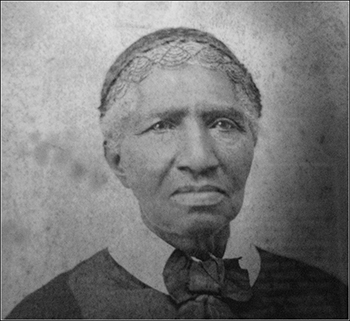
In 1835, at an estate auction in Kentucky, a woman named Clara Brown stood and watched her husband and her three surviving children sold off to different buyers.
She spent the next forty seven years looking for her daughter.
Clara was born around 1800 near Fredericksburg, Virginia, and was enslaved from birth. She was moved to Kentucky as a child. She married a man named Richard and had four children, Richard, Margaret, and twin girls named Eliza Jane and Paulina Ann. Paulina drowned when she was small.
When the man who owned them died in 1835, the estate was broken up and sold, which in practice meant the family was auctioned off in pieces to four different people. Eliza Jane was about ten years old.
Clara never saw her husband, her son, or her older daughter again.
She was bought by a man named George Brown in Russellville, Kentucky, and worked for him for roughly twenty years. When he died, his will freed her. She was in her mid fifties.
Kentucky law at the time required freed Black people to leave the state. So being given her freedom also meant being ordered out of the only place she had ever lived.
She worked her way to St. Louis, then to Kansas. In 1859 news of gold in Colorado came through, and she got herself onto a wagon train heading west by hiring on as the cook, in exchange for the outfit agreeing to haul her laundry kettles. Seven hundred miles.
In Central City she opened the first laundry in Gilpin County and washed for the miners.
And it turned out she was a formidable businesswoman. She saved. She bought property. She put money into claims. At her height she owned sixteen lots in Denver, seven houses in Central City, and property and mining interests in Boulder, Georgetown and Idaho Springs. Somewhere around ten thousand dollars, which is roughly a million now.
She also fed and housed whoever showed up needing it, which is where the name Aunt Clara came from, and the church services she hosted in her own cabin became Colorado's first Protestant congregation.
And the entire time, she was looking.
After the Civil War she went back east, to Kentucky and then Tennessee, trying to find her family. She did not find them.
What she did instead was find other formerly freed people with nowhere to go and no way to get anywhere, about sixteen of them, and pay out of her own pocket to bring every one of them to Colorado.
The money went. Some into claims that failed. Some to real estate men who cheated her. Most of it to people who needed it, and to the search, which she never stopped running, decade after decade.
Then in 1882 word finally came back to her. There was a woman in Council Bluffs, Iowa, named Eliza Jane.
Clara was 82 years old and had almost nothing left. She went anyway.
It was her.
Forty seven years. She brought her daughter and her granddaughter back to Denver with her.
She died three years later, in October of 1885. The governor of Colorado and the mayor of Denver came to the funeral, and the Colorado Pioneers Association, which had voted her in the year before, conducted the service.
She arrived in Colorado with a load of wash kettles and no money, built a small fortune out of other men's dirty shirts, and spent essentially all of it on other people and on one ten year old girl she had been sold away from in 1835.
She found her.
Uncle Boo retweeted

🇺🇸 An American hero
The Army had pulled him out of the infantry.
Two years later, on a Pacific island, thousands of Japanese soldiers broke through the American line and closed on his aid tent.
Inside were more than 30 wounded men. He ordered them to leave. Then he stayed behind.
What American troops later discovered at his position would take the United States 58 years to recognize.
His name was Ben Salomon.
Before the war, he had been a young dentist in California. Drafted as an infantry private in 1940, he qualified as an expert with both rifle and pistol, rose to sergeant, and took command of a machine-gun section.
His commander called him "the best all-around soldier" in the regiment.
But when the Army learned he was a dentist, it transferred him to the Dental Corps. Salomon tried to remain in the infantry. His request was denied.
On July 7, 1944, between 3,000 and 5,000 Japanese troops struck the American lines on Saipan.
Within minutes, Salomon’s small aid tent was filled with wounded men.
Then he saw a Japanese soldier bayoneting one of his patients. Salomon shot him.
Two more burst through the entrance. Four others crawled beneath the canvas. Salomon fought them with a rifle, a bayonet, and his bare hands.
Then he ordered everyone who could still move to leave. He picked up a rifle and stepped outside. That was the last time anyone saw him alive.
When American troops recovered the position, they found Salomon collapsed over a heavy machine gun whose four-man crew had been killed.
Ninety-eight Japanese soldiers lay dead in front of him.
His body bore 76 bullet wounds. Blood on the ground showed that, even after being hit, he had dragged the gun repeatedly to regain a clear field of fire.
He had stayed behind to buy his patients time.
His Medal of Honor was initially rejected because he was a medical officer wearing a Red Cross armband. It was finally awarded in 2002.
The Army had made him a dentist. Saipan revealed the infantryman he had never stopped being.

Uncle Boo retweeted

PLEASE DON’T JUST FEEL FOR KARI. SHARE HIM. 💔
Somewhere beyond our little circle may be the person who can help change the rest of his life. But they cannot help a donkey they never see.
Your REPOST can put Kari on that person’s timeline. That costs nothing.
Please SHARE. Please FOLLOW @tawf_uk. Help us reach beyond the same few people, find more helping hands, and give donkeys like Kari a real way out. 🙏🐾

HE ISN’T ANGRY. HE IS TERRIFIED OF THE HANDS THAT WERE SUPPOSED TO CARE FOR HIM. 💔
When Kari developed a hoof problem, his owner treated it with hot oil — one of the dangerous home remedies commonly used on working donkeys here. When it didn’t improve, he repeated it, eventually pouring extremely hot oil over the hoof. Kari’s pain became worse, yet he was still made to work.
When the owner wouldn’t bring him for treatment, our team went to get him. Even then, he wanted Kari treated quickly and taken straight back to work. We pleaded and managed to buy him only a few days.
Two kind-hearted souls have already sent help towards a motorised cart, but we are still far from the amount needed to secure his freedom.
Please SHARE KARI. Even if you cannot donate, your share may reach someone who can.
HELP US TURN HIS AGONY INTO A LIFETIME OF FREEDOM. 🫏❤️
tawf.org.uk/donate

Uncle Boo retweeted

By David Abbruzzes:
This Australian's reply to Trump's rant about “NATO not being there for America” is perfect.
"Mate. You run a country with 600,000 homeless people sleeping on the street tonight. A country where 40% of adults can't cover a $400 emergency without borrowing money. A country where insulin costs more than a car payment and people are rationing it to survive. A country where medical debt is the number 1 cause of bankruptcy. A country where women are dying in hospital car parks because doctors are too scared of abortion laws to treat a miscarriage.
You lock up more of your own citizens than any nation on earth. More than China. More than Russia. More than North Korea. The land of the free has 2 million people in cages, and a quarter of them haven't even been convicted of anything. They're just too poor to make bail.
Your life expectancy is going backwards. You're the only developed nation where that's happening. Your infant mortality rate is worse than Cuba's. Your kids do active shooter drills between maths and English while you sell the gunmaker's stock to your mates.
Your minimum wage hasn't moved in 15 years. You've got teachers working 2 jobs and veterans sleeping under bridges and you just spent a trillion dollars flattening a country that didn't attack you.
And you’ve got a convicted felon, adjudicating raping, paedophile protecting, porn star shagging insurrectionist running the biggest dumpster fire war campaign since the Taliban thanked you very much for losing again.
And you're calling Greenland poorly run?
Greenland has universal healthcare. Free education. One of the lowest incarceration rates in the world. Nobody goes bankrupt there because they got sick. Nobody dies in a waiting room because their insurance said no.
'NATO wasn't there when we needed them." When exactly was that, champ? September 11? Because NATO invoked Article 5 for the first and only time in history FOR YOU. Soldiers from dozens of countries deployed, fought, bled, and died in Afghanistan FOR YOU. Australia wasn't even in NATO and we still showed up. For 20 years.
And you pulled out at 2am without telling anyone and left them to deal with the mess.
So maybe before you start calling other countries poorly run, have a look at your own backyard, you spray-tanned aluminium siding salesman. The only thing poorly run in this picture is your f----- mouth."
Very well stated.


Uncle Boo retweeted

Netanyahu says Israel should ‘break free’ of US military aid.
Sir, your terms are acceptable.


