

Life Engineering: building local-first AI on my own hardware. Self-hosted agents, Obsidian. Senior AI SWE @MotoSolutions, 10+ YoE. Chess CM.
London, England
Joined November 2009
- Tweets138
- Following624
- Followers130
- Likes1.1K




Pinned Tweet
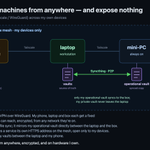
I've been building a local-first setup so I can run agents and reach my own machines from anywhere.
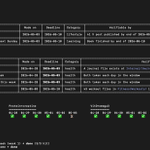
See my setup in 3 diagrams. (I love diagrams!)
1) a private mesh across my devices
2) a way to open my vault from my phone
3) a private channel to text my own AI
It all runs on my own box and laptop over a private network, and right now the only thing that ever leaves is the prompt to the model.
Next I want to run local models so even that stays home, and move my phone onto Syncthing so nothing touches the cloud at all.
I've been calling it Life Engineering.


1
7
417
Exactly. Ideally, everything is owned, and nothing leaves our network.
Intelligence requires data. When we visit a doctor, they examine our specific situation before offering an informed recommendation. Similarly, a financial adviser needs to understand our finances, goals, and risk appetite before providing useful guidance. Data is therefore essential for targeted, personalised intelligence. But personal data is sensitive, and sending it to a startup’s servers is very risky at best.
This creates a fundamental tension between cloud intelligence and security. Ideally, we should move towards stronger security, which can be achieved by greater ownership. Owning our intelligence is a continuous optimisation problem: maximising the intelligence generated for every unit of data exposed.


what does it really mean to "own your intelligence"?
1. can the system compound *on your terms*? the durable advantage is not the model/system at this point in time - it's the flywheel that compounds over time
2. intelligence is no longer just the model - its the system around the model. if the system is opaque or locked away, you are renting intelligence (not owning it)
3. own the harness. integrate it deeply into your systems. make it specific to the task at hand
4. own the context and memory layer. includes user preferences, org knowledge, workflow patterns. if memory is trapped in vendor product, your learning is trapped to
5. own model optionality. you need freedom to route across models, providers, deployment modes. different tasks require different tradeoffs
6. own the economics. intelligence only matters if you can afford to deploy it broadly. sustainable intelligence at scale
7. own the feedback loop. observability tells you what happened, evals tell you if it worked. without this loop you cannot measure the intelligence, you are guessing
s/o @nlarusstone @nfcampos for their thoughts on feedback
1
55
Thank you @hwchase17 @BraceSproul @devstein64 @jeffreyhuber for the LLM Wikis session today, I absolutely loved it!
Really grateful you keep these sessions open and honest about what actually works in the industry. The idea I'm taking home is eventual correctness, where the wiki self-corrects over time until it converges on the truth. That's exactly what I'm chasing with my agents too.
Thanks @LangChain for hosting, can't wait for the next one!
What's the best guide out there to building local AI rigs/inference? Any materials worth sharing?
2
3
841
For a few weeks now a cheap mini PC in my office has been writing me a morning brief. Every weekday at 8:40 it reads my calendar and my tasks and texts a short summary to my phone, before I've even picked it up.
It doesn't just list my events, it also gives me the shape of the day, like two busy blocks and otherwise clear, so I take it in at a glance instead of reading a calendar grid myself.
I still go back and forth on whether I want a machine framing my day before I'm properly awake. Most mornings though, waking up to a short note telling me the day is mostly clear just feels good.

2
216
This is the self-accountability tool I built for myself - my Promise Bank.
I use it mostly for health-tracking now, with writing and reading slowly creeping in.
Every Sunday I plan some commitments for the week. Each day I close out what I did or didn't do. End of the week I do a small retro.
It's also super easy to see what promises I missed.
Since I started, I follow through with my own commitments way more consistently.

1
4
176
So writing is, indeed, very helpful because we expose our thinking to ourselves and force ourselves to put order to our thinking by expressing it. And if we also engage in therapy, there is higher chance we identify the why behind our patterns. And, alongside the daily writing, something new can emerge, with grace to ourselves and patience and trial and error!
1
88
Worthiness wound. Maybe we were constantly talked down to or worse. The lens defaults to "I'm probably not allowed to want this," and it shows up in many small ways. Maybe we developed self-destructive habits because our minds are well accustomed to operating in such an unhealthy space. Maybe we bury our ambition because we don't think we deserve it.
2
2
146
Prioritization wound. We were put second, either directly or the family had more important things to worry about. Now as we grow up we want to be prioritised, are afraid of the wound being reactivated so maybe we become passive aggressive towards others, trying to see which behaviour "works".
1
17
Belonging wound. We grew up not fitting in or not being understood, so the lens defaults to scanning every room for whether we're allowed to be there. Career choices get filtered through "will this tribe still accept me." Public writing gets filtered through "will this offend the people I'm trying to belong to." None of that is really free thought but rather it's permission-seeking.
1
52
Trust wound. Someone in our circle betrayed us, or we watched it happen up close - this would make us biased towards caution. The thinking pattern says: we are just being careful/pragmatic/wise, but actually we are more often than not creating preemptive distance from people who haven't done anything wrong yet or scanning every interaction for early signs of betrayal, building plans that don't depend on anyone else following through etc.
1
19
Safety wound. If we grew up in physical or emotional unsafety, or in an environment where the wider world didn't feel safe, we would tend to reinforce patterns that are risk-averse and avoid conflict, even when it is necessary, or healthy. This is one I carry. Part of it is growing up in Greece during the financial collapse, where the "cultural script" became: "be grateful for having a job, don't expect too much, it's OK to do unpaid overtime" etc. "The safe move is the smart move" - this is what is normalised.
I've played a lot of poker in Greece, and it's so common to see players severely underbluff. When they raise, they have it more often than not. They raise small, to lure people in slowly and not frighten anyone off, trying to "lock in the small win".
1
14
Writing every day delivers what's described here, and I do it because I find real value in it. Even so, there's a ceiling because the way we think now is a direct consequence of what shaped us before. As is the case in almost all physics (well maybe apart from quantum physics where this is still debated i guess), every event has a cause; every event happens because something else pushed, pulled, or acted upon it through a force or field.
Same is true for our thinking lens - we very often establish and reinforce patterns of thinking and behaving as a response to traumas we came in contact with at a younger age. And these causes, these traumas, exert a lasting effect in how we think, and thus it is important to "revisit" our childhood and try to shed some light on those causes. This light that we shed will help us understand our patterns and ourselves and make it easier for us to forge new ways forward, if that's what we want. So we need to keep asking "why", until we reach a deeper understanding of the causes of the patterns that we associate with ourselves - and therapy can be very helpful in that regard; at least it is for me.
Vienna Pharaon's framework in her book "The Origins of You" names 5 wounds that bend the lens before we even pick up the pen.
This quoted post is unavailable.
1
1
171
Chaos Out, Coherence in
I've been reading Getting Things Done while I build my own Promise Bank these last few weeks. I'd always treated a personal organisation system as a doing-more, optimisation-type tool. I had never fully realised so clearly, until now, how much productivity and stress are inversely related. Stress thrives on chaos and confusion whereas productivity thrives on clarity and coherence.
Once I started capturing (all the) things and properly closing the loops, real bandwidth came back online because it was freed from caring about what's next across so many domains. Doing more and being calmer at the same time sounds like a paradox, but in a way it's the same skill seen from different angles.
The whole thing comes down to "chaos out, coherence in". Especially right now, when our X bookmarks fill up faster than we can read them and every other day brings a new AI tool or breakthrough we'd want to actually try, building personal systems that help us digest all of it is more important than ever and only getting more so.
1
119
I've been turning my vague todos into concrete promises for a couple of weeks now. It sounds like a small word change but it isn't.
A todo is something I might do, but a promise is something I owe myself. So before anything goes in, it has to come with two main things: an outcome I can actually check at the end (like "3 workout files logged in Fitness this week" or "the window is cleaned", not "spent 2 hours on it") and a real due date (and some auxiliary ones, like a category etc). If I can't fill those two in, the thing isn't ready to be a promise yet and that's useful information on its own. (I'll need to circle back on it)
The rules are tight on purpose because they make me decide whether I actually mean what I'm writing down. A lot of my old todos turned out to be vague wishes I hadn't really committed to and they didn't make it through the filter, but the ones that did are binding
in a way they weren't before because every promise ends either kept or with a post-mortem about what got in the way.
#ObsidianMD

2
2
178
Digital note-taking is like investing: the earlier you start, the more it compounds; and like investing, it's never too late to start.
High-quality input data drives personalised intelligence that improves over time.
What's smart for me may not be smart for someone else.
#ObsidianMD

5
283


