



VDV💡 retweeted

NEW: Oxford has been named the world’s number one University for a record-breaking 11th consecutive year in the @timeshighered World University Rankings.
Oxford has held the top spot since 2017 – the longest run at number one in the rankings’ history.
[1/3]

ALT Aerial view of Oxford’s Radcliffe Camera and surrounding University buildings at sunset. Text reads: ‘Oxford named best university in the world for record 11 years in a row.’

VDV💡 retweeted

Warren Buffett: "The bottom 2% in terms of income in the United States, the bottom 5%, and for sure the top 1% all live better than John D. Rockefeller was living when I was six years old."
"John D. Rockefeller was the richest man in the world and, today, you can get better medicine, better education, better entertainment, better transportation. You can do everything better than he could."
"When I was born, the dentist didn't use novocaine!"
VDV💡 retweeted

En tant qu’enseignante-chercheuse en informatique, je suis toujours surprise par la pauvreté du débat sur l’IA.
D’un côté, on nous explique que c’est une force obscure que personne ne maîtrise et qu’il faudrait arrêter immédiatement. De l’autre, qu’elle va résoudre tous nos problèmes.
Les deux ont tort.
Non, l’IA n’est pas une magie incontrôlable.
Nous connaissons les architectures que nous développons.
Nous savons comment elles sont entraînées.
Nous mesurons leurs performances.
Nous savons les améliorer.
Le vrai sujet n’est pas la maîtrise technique. Le vrai sujet est l’explicabilité.
Oui, il existe aujourd’hui de réels progrès en intelligence artificielle explicable (XAI).
Mais même avec ces avancées, un modèle peut être extrêmement performant tout en restant incapable d’expliquer de façon claire, fiable et complète chacune de ses décisions, en particulier lorsqu'il s'agit des modèles les plus complexes.
L’IA traduit plus vite. Analyse plus vite. Classe plus vite.
Très bien.
Mais parce qu’elle va plus vite, devons-nous lui laisser décider à notre place ?
Déléguer une traduction n’est pas déléguer un diagnostic médical.
Déléguer une recherche documentaire n’est pas déléguer une décision de justice.
Déléguer une assistance au pilotage n’est pas déléguer l’usage de la force.
La question du XXIe siècle n’est pas : « L’IA est-elle dangereuse ? »
La question est : Jusqu’où sommes-nous prêts à déléguer notre jugement à des systèmes qui apprennent du passé, reproduisent parfois ses biais et ne portent jamais la responsabilité de leurs décisions ?
VDV💡 retweeted

Terence Tao: "We lived in a world with cognitive friction until very recently, where every task required us to use our brain.
So we didn't really think about it, we just thought this was the cost of doing something intellectual. But now we have AI and the other technologies that can bring these frictions down to zero."
Most research time is not spent having cinematic insights.
It is spent checking cases, chasing references, translating intuition into computation, testing a path, finding it false, and deciding whether the failure taught you anything.
AI changes the cost of that loop.
Terence Tao says that now he can try “crazier things,” and that makes so much difference. Because unconventional ideas are often not rejected by proof, but by inconvenience.
A mathematician may avoid a strange direction not because it is foolish, but because the bookkeeping, coding, or literature search needed to test it is too expensive for a hunch.
This is where cognitive friction becomes scientific friction.
Lowering it does not make taste, judgment, or proof disappear; it makes more weak signals cheap enough to inspect before they are abandoned.
AI is making hesitation less expensive, and that is often where discovery begins.

VDV💡 retweeted

I spent most of my 20s thinking I didn’t want kids. Thought it was a distraction from achieving “success” (whatever that meant). Well, last night, I was tucking my son into bed and he looked at me and said, “Dada, you’re my hero.” It was the best moment of my life. I can’t imagine not experiencing this. I’m not sure how anything will ever measure up to the feeling I had in that moment. Purest joy I’ve ever felt. I’m glad my definition of success changed, because this version is much better.
VDV💡 retweeted
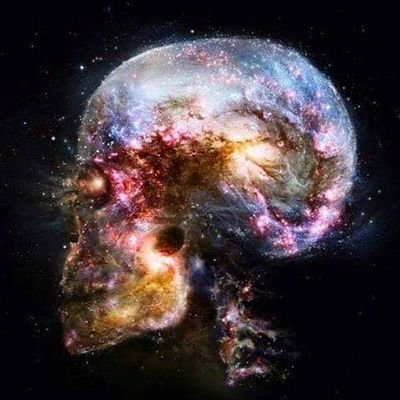
The invisible Glass experiment
Scientists once placed a transparent glass barrier inside an aquarium.
On one side was a fierce pike, and on the other side were several smaller fish swimming freely.
When the hungry pike saw the smaller fish, it immediately rushed forward to attack.
Bang. It slammed straight into the glass and bounced back.
Confused, the pike kept trying again and again, but every attempt ended the same way.
The repeated collisions injured its head and knocked off some of its scales. Eventually, the pike became frightened and retreated to a corner of the tank.
After some time, the scientists quietly removed the glass barrier. The smaller fish now swam freely throughout the aquarium, even brushing against the pike’s mouth.
But the pike never tried to eat them again.
Even though it was hungry, it refused to attack. In its mind, the invisible wall was still there.
A few days later, the pike reportedly died of starvation, surrounded by food. This phenomenon is often referred to as the Pike Effect or Pike Syndrome.
It’s often used as a metaphor for how repeated failure can create invisible limits in the mind.
VDV💡 retweeted

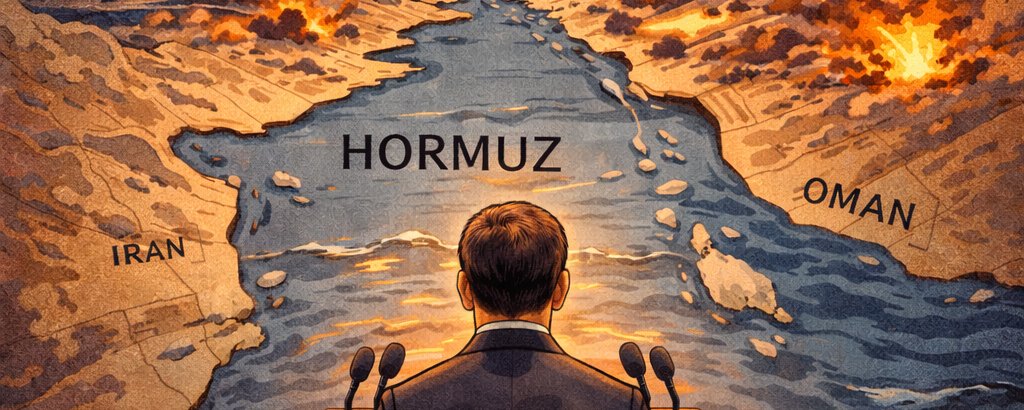
Day 5 of #Iran vs. U.S./Israel conflict (focus on Iranian strategic narrative):
🔹There is growing concern in Iran that decapitation has become a continuing war strategy rather than a one-off strike. Iranian sources believe Washington and Tel Aviv may attempt to target the heads of Iran’s government branches or members of the interim leadership council.
🔹This fear extends to whoever becomes the next Supreme Leader, with Iranian commentators referencing the precedent of Hezbollah, where Nasrallah’s successor was reportedly targeted shortly after assuming leadership.
🔹Israeli and U.S. strikes have continued across western and central Iran, including in cities such as Shiraz, Khorramabad, Kermanshah, Qom, Ahvaz, and Tabriz, with western regions and the capital remaining the primary focus.
🔹At the same time, Iranian sources acknowledges that several missile bases have been hit, including installations near Kermanshah. Damage to access points and infrastructure may be affecting the tempo of missile launches.
🔹The decline in Iranian missile strikes on Israel therefore appears linked both to operational constraints caused by Israeli air dominance and to Iran’s possible effort to conserve its remaining arsenal.
🔹Instead, Iran appears to be still prioritizing strikes on U.S. interests and regional energy infrastructure, aiming to raise the cost of the war for Washington and its regional partners.
🔹Iranian missiles have reportedly targeted additional THAAD early warning radars, including systems in Jordan following earlier strikes in Qatar and the UAE.
🔹If accurate, these attacks suggest a strategy aimed at degrading the regional missile-defense architecture that helps protect both U.S. bases and Israel.
🔹Iranian sources also claim that communications and radar infrastructure at several U.S. bases – including facilities in Bahrain, Qatar, Kuwait, Saudi Arabia, and the UAE – have been damaged.
🔹The objective appears to be disrupting command-and-control systems and weakening coordination between U.S. and Israeli air-defense networks.
🔹At the same time, Iranian air defenses appear to have had greater success targeting Israeli reconnaissance drones, including additional Hermes 900 systems.
🔹Some analysts suggest that improvements in Iran’s short-range air-defense network may be responsible for these successes, even though long-range systems remain degraded.
🔹On the proxy front, Iraqi armed groups have continued attacks on U.S. bases, even after heavy U.S.-Israeli strikes on PMF positions in Anbar, Diyala, and Samawah.
🔹Hezbollah has also continued its operations, including missile and drone attacks against Israeli targets in northern Israel and the Golan Heights.
🔹The Houthis, meanwhile, remain largely outside the conflict. Some Iranian sources claim they are being deliberately held in reserve as a deterrent against Saudi Arabia or the UAE joining the war.
🔹Energy warfare remains central to Iran’s strategy. QatarEnergy has declared force majeure and halted LNG production following attacks on energy infrastructure.
🔹These disruptions are reinforcing Iran’s effort to sustain pressure on global energy markets, particularly given uncertainty about how long the Strait of Hormuz can remain closed.
🔹At the same time, the war has begun to generate secondary instability across the region, including protests in Pakistan and Bahrain in response to the killing of Khamenei and the ongoing conflict.
🔹Within Iran itself, supporters of the Islamic Republic have continued to organize demonstrations calling for retaliation and resistance.
🔹Authorities are also warning against internal dissent. The chief justice has stated that any actions aligning with U.S. or Israeli objectives will be treated as wartime collaboration.
🔹Iran’s leadership is simultaneously attempting to reassure Gulf countries. President Pezeshkian and parliamentary speaker Qalibaf have emphasized that Iranian strikes are directed at U.S. forces rather than host states.
🔹Iranian officials have also reaffirmed commitment to the China-brokered 2023 Beijing agreement with Saudi Arabia, signaling an effort to prevent Gulf states from joining the conflict.
🔹China has reportedly dispatched a special envoy to the region to explore mediation options, reflecting Beijing’s concern over disruptions to energy flows through the Strait of Hormuz.
🔹Meanwhile, the Kurdish issue is emerging as a major security concern for Tehran. Kurdish insurgent groups have recently formed a broader coalition, raising fears that they could be used as ground forces against the Islamic Republic.
🔹Tehran has reportedly warned KRG officials that if Kurdish groups launch attacks from Iraqi Kurdistan, Tehran could directly target the Kurdistan Regional Government itself.
🔹The war has also produced a potentially dangerous incident involving Turkey. A missile launched from Iran was intercepted by a NATO air-defense system over Hatay while reportedly heading toward the U.S. base at Incirlik.
🔹Although the intention remains unclear, one interpretation is that Iran’s decentralized missile-launch structure may increase the risk of accidental escalation or uncoordinated moves.
🔹International monitoring agencies have also assessed damage near Iranian nuclear facilities. Satellite imagery shows limited damage near the Isfahan site, but the IAEA reports that no nuclear material has been affected.
🔹Concerns remain particularly high around the Bushehr nuclear power plant, where Russian personnel operate the facility and where nearby explosions have been reported.
🔹Inside Iran, discussions have also begun about the country’s future nuclear policy after Khamenei. Some argue that the war demonstrates the need for a nuclear deterrent and that the next Supreme Leader my move toward that direction.
🔹The Assembly of Experts continues deliberations on selecting a new Supreme Leader.
🔹Overall, the fifth day of the war suggests a continuation of existing patterns rather than a dramatic shift: sustained Israeli air operations inside Iran, Iranian efforts to impose costs on U.S. interests and regional energy markets, and a widening regional and proxy dimension to the conflict.
🔹The trajectory of the conflict increasingly resembles a prolonged regional confrontation in which both sides are attempting to reshape the strategic balance over time rather than achieve rapid military victory.


VDV💡 retweeted

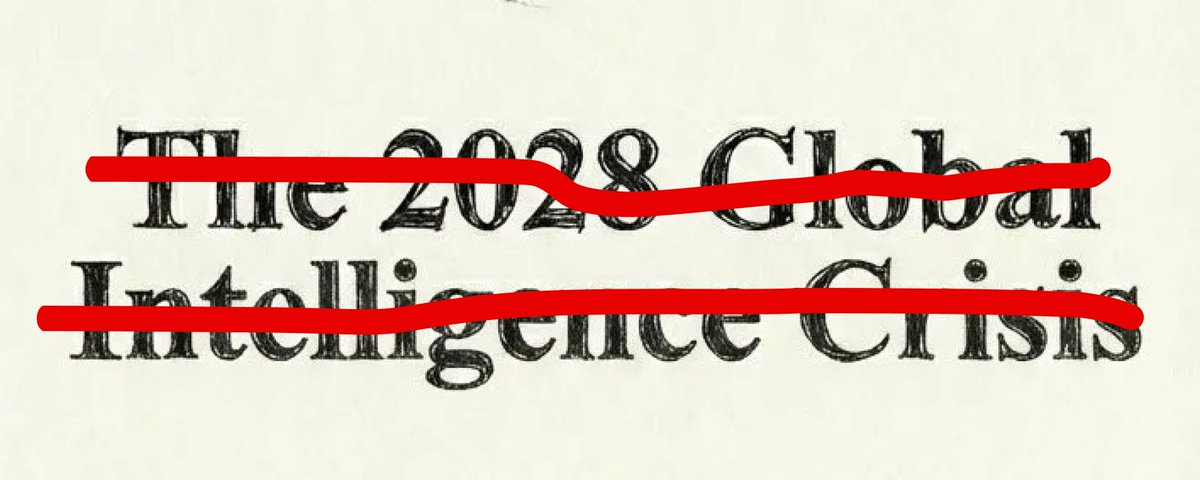
JUNE 2028.
The S&P is down 38% from its highs. Unemployment just printed 10.2%. Private credit is unraveling. Prime mortgages are cracking. AI didn’t disappoint. It exceeded every expectation.
What happened?
citriniresearch.com/p/2028gi…


VDV💡 retweeted

I've solved a second Erdos problem (#281) using only GPT 5.2 Pro - no prior solutions found.
Terence Tao calls it "perhaps the most unambiguous instance" of AI solving an open problem:

Readers added context they thought people might want to know
GPT-5.2 Pro created a new proof, but "no prior proofs found" is factually incorrect.
Previous literature includes Davenport and Erdős (1936) + Rogers (in Halberstam-Roth (1966)) users.renyi.hu/~p_erdos/1936-…
Terence Tao has however noted that 5.2 Pro's proof is "rather different" to those prior proofs.
VDV💡 retweeted

Magnus Carlsen's 20 World Championship titles:
Blitz: 🏆🏆🏆🏆🏆🏆🏆🏆🏆🆕
Rapid: 🏆🏆🏆🏆🏆🏆 🆕
Classical: 🏆🏆🏆🏆🏆

VDV💡 retweeted

CRISPR tools for T cells: targeting the genome, epigenome, and transcriptome cell.com/trends/cancer/fullt…


VDV💡 retweeted

Here is another incredible GPT-5 Pro example that is well above biomedical PhD level and how it advances science:
I was reviewing some of our old data and noticed an email from one of my PhD students sent more than eight years ago, outlining a highly complex immune cell experiment that would run for several weeks and asking me to make corrections. I copied and pasted her experimental plan into GPT-5 Pro and asked for suggestions. Its response was significantly better than what I had sent my student back then!
Not only did it figure out the exact purpose of the experiment and make all the corrections I had made in extreme detail, but it also suggested a couple of changes that would have made the output easier to interpret and made the experiment better, which I had unfortunately missed. It also created a detailed spreadsheet with a 96-well plate layout for cell seeding and different conditions. We usually design these to avoid errors, and this one was perfectly organized to make setup easier.
Then I asked GPT-5 Pro to run various outcome scenarios, interpret the results accordingly, and propose new experiments. Again, its interpretations and suggestions were simply outstanding, including a couple of ideas we had missed!
Incredibly, GPT-5 Pro would have been as good as, if not better than, me at making these corrections, interpretations, analyses, and follow-up experiment suggestions! The experiment would also have yielded better results thanks to more precise planning, and that foresight would have enabled quicker planning of the next experiments!
I don’t care what people say about the limits of current AI models or their nonsensical criticisms; they have no freaking idea how transformative its impact on the scientific process will be! It will advance and accelerate science far beyond what anyone is imagining and make the world so much better place!


