

Official Twitter account of the World Health Organization office in the occupied Palestinian territory.
Occupied Palestinian Territory
Joined November 2012
- Tweets3.1K
- Following245
- Followers17.3K
- Likes78




Three years ago, just a few months into his medical residency, Dr Harara found himself pushed to the limits when the conflict in #Gaza escalated.
Despite loss, fear, exhaustion and multiple displacements, he kept showing up for his patients.
His story reflects the resilience of health workers across Gaza, who carry the same losses as everyone around them while continuing to care for others.
Constant exposure to traumatic events has left everyone in Gaza distressed, underscoring need of mental health and psychological support.
@WHO and partners, in collaboration with the Ministry of Health, are doing all they can to sustain and strengthen mental health services across Gaza.
This includes training health workers, integrating mental health care into health facilities, establishing inpatient and outpatient facilities, provision of medication and ensuring support for health workers. But much more is needed to respond to the scale of the need.
WHO calls for:
🔹Protection of health care.
🔹Unimpeded humanitarian access and an expedited flow of aid into Gaza.
🔹Continued support for the health response, which remains underfunded.
The best medicine is peace.
The mental health needs in #Gaza far exceed what the health system can currently provide.
@WHO and partners, in collaboration with the Ministry of Health, are working to expand access to mental health services.
Screening, trauma counseling, psychosocial support and referral for specialized care have been integrated into nutrition services across several health facilities, so families can receive mental health support alongside treatment for their children.
Between January and May 2026, a contribution from @GreeceInGeneva enabled these services to reach over 250 children and caregivers, a vital step in helping communities begin to heal.

Treating malnutrition remains a core component of the health response in #Gaza. For a child with severe acute malnutrition, timely care can save a life.
Thanks to support from @GreeceInGeneva, @WHO and partners, in collaboration with the Ministry of Health, supported the treatment of 107 children under 12 years admitted to stabilization centers for severe acute malnutrition, providing the medicines and therapeutic products needed to care for them.
24 medical staff were also trained to strengthen malnutrition care. In addition, 885 mothers and caregivers received nutrition education and one-to-one counseling, helping them spot early warning signs, so they know when to seek care, and manage feeding and hygiene at home.
Needs in Gaza remain immense. WHO continues to call for the unimpeded flow of aid into Gaza.

WHO in occupied Palestinian territory retweeted
Three years ago, just a few months into his medical residency, Dr Harara found himself pushed to the limits when the conflict in #Gaza escalated. Despite loss, fear, exhaustion and multiple displacements, he kept showing up for his patients.
His story reflects the resilience of health workers across Gaza, who carry the same losses as everyone around them while continuing to care for others.
Constant exposure to traumatic events has left everyone in Gaza distressed, underscoring need of mental health and psychological support.
@WHO and partners, in collaboration with the Ministry of Health, are doing all they can to sustain and strengthen mental health services across Gaza. This includes training health workers, integrating mental health care into health facilities, establishing inpatient and out patient facilities, provision of medication and ensuring support for health workers. But much more is needed to respond to the scale of the need.
WHO calls for:
- Protection of health care
- Unimpeded humanitarian access and an expedited flow of aid into Gaza
- Continued support for the health response, which remains underfunded
The best medicine is peace.
youtu.be/LFxIwKfx0i8

Eye care has emerged as one of the most severely affected specialties of the #Gaza conflict.
Health facilities are facing near stockouts of medical supplies like specialist eye drops, artificial lenses, surgical sutures and equipment for delicate eye suregry. Waiting lists for cataract surgery continues to grow, with doctors warning that every week of delay risks turning treatable conditions into permanent blindness.
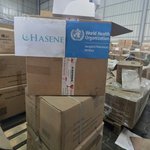
With support from @haseneorg, @WHO is sustaining eye care services in Gaza, with critical medical supplies expected to support around 1,000 patients through cataract and retinal surgeries, preventing avoidable blindness, treatment of conflict-related eye injuries and complications from chronic diseases such as diabetes.

Cardiovascular disease remains one of the leading causes of death and illness in #Gaza. The conflict has severely diminished the health system's capacity to diagnose and treat it, and ongoing supply shortages continue to hold back service expansion efforts.
Blood gas testing, a quick test that checks a patient's oxygen levels and shows how well the heart and lungs are working, has been suspended entirely. For critically ill patients, this is a lifeline that lets doctors catch a crisis before it's too late, yet without it, and with a severe lack of other essential lab and diagnostic supplies, doctors have far fewer tools to detect and manage heart disease.
With support from @haseneorg, @WHO is helping sustain cardiology services in Gaza through the provision of critical supplies, supporting around 2,000 patients with diagnostic and cardiac procedures, including 20 receiving permanent pacemakers.


Mass casualty events can overwhelm hospitals within minutes, and being ready to respond quickly can saves lives in the #WestBank, where the security situation remains concerning.
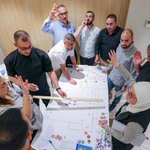
With support from @ROJ_Palestine, @WHO has trained 64 health workers in mass casualty management, certified 6 MoH trainers who can help train other health workers, and supported 11 hospitals update their emergency plans, identifying infrastructure, staff roles, and medical supplies needed to respond effectively to sudden influx of casulities.
Once activated, these plans will help health facilities absorb patient surges, improve coordination between pre-hospital and hospital care, and standardize life-saving triage, projected to cut preventable trauma deaths by 10 to 20% during mass casualty events.
Thank you, @ROJ_Palestine, for this vital support. 🇯🇵🤝

With support from @ROJ_Palestine, @WHO has provided essential medical supplies to cover the health needs of 57,000 people, which will supprot the treatment for chronic disease and emergency and trauma care.
This support has been instrumental in sustaining lifesaving health services in the West Bank as well as enhancing emergency preparedness.
WHO is grateful for its longstanding partnership with @ROJ_Palestine. 🇯🇵🤝
Thanks to support from @ROJ_Palestine, @WHO organized a hostile environment surgical training (HEST) course in Ramallah, training 60 surgeons to strengthen trauma and surgical capacity during mass casualty events.
The course was part of broader ongoing efforts to strengthen emergency capacity and preparedness in the #WestBank.
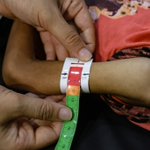
Malnutrition remains a critical health issue in #Gaza, especially for children under five.
With support from @KSRelief_EN, @WHO will deliver essential medical and therapeutic nutrition products for the treatment of severe acute malnutrition alongside baby warmers and breast pumps to support premature and critically ill newborns.

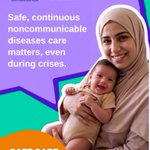
Patient safety isn't only about preventing errors in health facilities. It's about ensuring uninterrupted access to medicines, diagnostics, and follow-up care, especially for the people living with chronic conditions.
With support from partners, @WHO is helping sustain treatment for noncommunicable diseases, including diabetes, hemodialysis, cancer, hypertension, heart conditions, and strokes, among others, despite ongoing shortages and access challenges.
On #WorldPatientSafetyDay, WHO calls for continued support for restoring essential health services in #Gaza and for unimpeded and expedited entry of essential medicines and supplies at scale. #SafeCareForLife

With support from the oPt Humanitarian Fund @OCHAFunds, @WHO has helped enhance rehabilitation care capacity in northern #Gaza, with efforts focused on Hamad Rehabilitation Hospital, the only facility offering prosthetic and advanced rehabilitation services across the entire Gaza Strip.
The hospital resumed services in December 2025, after being rendered non-functional.
Through this support, WHO has provided:
•16 inpatient beds
•Physiotherapy and occupational therapy equipment
•Assistive products, including mobility and rehabilitation aids, tailored to individual needs, benefiting 1,575 patients
Thanks to these efforts, around 5,000 patients have benefited from inpatient and outpatient rehabilitation services and essential medicines.
@CBPFs @ochaopt


With #Gaza's health system devastated by the conflict, strengthening the health workforce is a key part of health system recovery.
With support from the oPt Humanitarian Fund @OCHAFunds, WHO has trained 53 health workers in specialized rehabilitation, post-limb reconstruction rehabilitation, and skills for rehabilitation in emergency setting.
The training strengthened the capacity of rehabilitation providers from Al Amal Hospital, Hamad Hospital, and other national and international rehabilitation organizations operating across Gaza.
Through practical, case-based learning and knowledge exchange, participants enhanced their skills in managing complex trauma, amputations, peripheral nerve injuries, burns, and rehabilitation complications.
The training also contributed toward building a stronger rehabilitation community of practitioners, promoting continuous professional development, peer learning, and collaboration.
@ochaopt @CBPFs


As part of @WHO's ongoing efforts to expand rehabilitation services in #Gaza, with support from the oPt Humanitarian Fund @OCHAFunds, a new transitional rehabilitation unit has been established at Al-Amal Hospital, a dedicated space for patients who no longer need intensive hospital care but still require structured support to recover.
The addition of 40 new inpatient beds has brought Al-Amal's total inpatient rehabilitation capacity to approximately 100 beds, a critical boost for access to specialized care in southern Gaza.
Gymnasium equipment, assistive products, essential furniture, and a generator were also provided to support this expansion.
Thanks to these efforts, so far, over 4,500 patients have already benefited from inpatient and outpatient multidisciplinary services, including physiotherapy, occupational therapy, medical consultations, mental health and psychosocial support and assistive devices.
@ochaopt @CBPFs


An estimated 43,000 people in #Gaza require long-term rehabilitation due to life-changing injuries sustained during almost three years of conflict.
With nearly half of Gaza's hospitals non-functional, and specialized medical care extremely limited, people urgently need care to heal, and with it, the chance to live full, dignified lives, provide for their families, and rebuild their futures.
With support from the oPt Humanitarian Fund @OCHAFunds, @WHO has been able to reach over 9,000 people, nearly half of them children, through the expansion of rehabilitation services at Al-Amal Hospital and Hamad Rehabilitation Hospital, including the provision of assistive devices, essential medicines, and rehabilitation care.
Despite these efforts, rehabilitation needs in Gaza remain immense. More than over 6,600 amputees require prosthetic and orthotic devices along with long-term rehabilitation services.
Only 12% of patients who lost limbs since October 2023 have been fitted with a prosthetic device.
4,200 people remain on the waiting list for assistive devices.
WHO’s ability to expand specialized rehabilitation services continues to be constrained due to the ongoing denial of entry for prosthetics and rehabilitation equipment, which have not been allowed to enter Gaza since May 2024.
WHO reiterates its call for the unimpeded and expedited entry of essential medicines and supplies at scale.
@ochaopt @CBPFs

WHO in occupied Palestinian territory retweeted
Ghazal is one of five child patients from #Gaza whose medical evacuation to Belgium and Romania was supported by @WHO last Monday.
Since October 2023, 13,285 patients, including 6285 children have been medically evacuated from Gaza to receive treatment abroad.
We thank 🇧🇪 and 🇷🇴 for their continued solidarity with critical patients from Gaza.
But as many more children and seriously ill patients need specailsed health care abroad, we continue to call for reopening of patient referral to health facilities in the West Bank, including East Jerusalem, and for more countries to accept patients for medical care not yet available in Gaza.
With European Union's support, @WHO is working in collaboration with the Ministry of Health to enhance cancer care for patients.
As part of these efforts, cancer clinical guidelines have been revised and the oncology medicines list updated, aligning them with international best practice.
Two oncology training placements have also been secured for 12 Ministry of Health staff at Jordan's King Hussein Cancer Center to build health workers' capacity.
Better guidelines and trained staff mean better, more consistent cancer care for patients across the West Bank.
@EUpalestinians 🇪🇺🤝

Five ways @WHO is supporting to strengthen health financing in the occupied Palestinian territory (oPt)
@EUpalestinians

On World Humanitarian Day, WHO Calls for Protection of Health Care
On World Humanitarian Day, WHO honours the memory of health workers who lost their lives in the line of duty and recognizes the dedication of those who continue to provide care in challenging and dangerous environments.
Attacks on health care remain a critical issue in the occupied Palestinian territory (oPt), continuing to threaten the safety of health workers and patients. This year, up to July 2026, 142 attacks on health care have been recorded across the oPt, resulting in 14 deaths and 77 injuries.
In the Gaza Strip, between January and July 2026, a total of 44 attacks on health care were verified. The highest numbers were recorded in February and June, with 10 incidents each, together accounting for almost half of all attacks, followed by May, which recorded 7 incidents.
The attacks in February were mostly linked to obstruction of access to health care, including those associated with the resumption of medical evacuations following the reopening of the Rafah Crossing. In June, the most significant incident included the detention of seven Palestine Red Crescent Society (PRCS) ambulance team members.
Geographically, Rafah recorded the highest number of attacks, with nearly 50 per cent of all recorded incidents, followed by Khan Younis. In both areas, movement restrictions and access constraints around the so-called ‘yellow line’ contributed to prolonged delays in medical missions, including extended wait for authorization to proceed.
In the West Bank, 98 attacks on health care were verified between January and July 2026. July recorded the highest number of attacks, with 37 incidents accounting for nearly 40 per cent of all attacks in the West Bank, followed by March with 15 attacks and April with 13 attacks.
Nablus recorded the highest number of attacks with nearly 50 per cent of all attacks, followed by 24 per cent in Ramallah.
The attacks happened amid increased settler violence, intensified hostilities, and increased closures of checkpoints and gates severely impeding ambulance movement, which led to significant delays in patient transfers.
Notable incidents in July included the death of a four-month-old infant in critical condition after being delayed at the Awarta checkpoint, where ambulance access was reportedly denied. The infant's father was forced to carry the child across the checkpoint on foot, amid the use of tear gas in the area. In another reported incident in July, a woman who was six months pregnant and experiencing severe bleeding was prevented from crossing a checkpoint by ambulance, with the delay in care resulting in the loss of pregnancy.
Other incidents in July included a raid on Nablus Specialized Hospital, during which a patient and their companion were detained, and a raid on the Palestine Medical Complex in Ramallah, which resulted in damage to hospital property and to ambulances parked in the hospital courtyard.
On World Humanitarian Day, WHO reiterates its call for all for the respect and protection of health workers, patients, health facilities, and medical transport, in accordance with international humanitarian law. Protecting health care means protecting lives, ensuring access to essential services, and preserving the resilience of health systems when they are needed most.
