

WSU Cereal Variety Testing Lead and Extension Agronomist
Joined July 2020
- Tweets101
- Following52
- Followers238
- Likes27
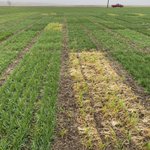




A couple of spring lines entered into the HRW trial didn’t hold up so well to the cold this winter at our Walla Walla trial.


Had to go deep to find some moisture, but I’m feeling much more optimistic about our winter wheat variety trial at Lind this year after seeing good germination everywhere.


Out flagging winter trials today. Moisture levels at each site are quite variable. Ritzville is very good at about 4”, Lind is very marginal at only 8”, and Connell is looking pretty good at about 4”.


Need a refresher on some of the newest winter wheat varieties out there? Check out the latest Timely Topic on the WSU Small Grains website. smallgrains.wsu.edu/a-review…

Enjoyed visiting with growers at the Harrington Field Day today…lots of good interaction. Looking forward to the WSU Lind Field Day tomorrow!


Clark Neely retweeted

Mark your calendars and join us in Lind on June 15!
@WSULindStation @WSUSmallGrains @WSUweeds @WSUVarietyTest @wsucahnrs @WSUExtension @WAWheatGrowers #research #growereducation #WAwheat #WAbarley #smallgrains #endusequality #farmingpractices

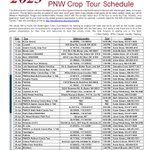
WSU Variety Testing Field Day season starts tomorrow! Here's an updated list of crop tours around the PNW.

Saw these little guys in my Fairfield winter wheat variety trials this week. Healthy, well fertilized wheat can usually outgrow injury due to winter grain mites. While there are chemicals available to treat them, there is no well established economic thresholds.


Clark Neely retweeted

Soilborne wheat mosaic virus was only known to occur in the Walla Walla area in Washington until last year. Three new locations have been documented since 2022. Read about the most recent find:
smallgrains.wsu.edu/new-find…
#wawheat #wheat

Clark Neely retweeted
April showers bring May…spring wheat! 1st photo seeding spring wheat April 6 at WSU test plots near Walla Walla. Second photo, same spot, May 13. #WAwheat #smallgrains #wheatbreeding #research #endusequality @WSUSmallGrains @WSUVarietyTest @wsucahnrs


Clark Neely retweeted

Stripe rust of wheat was observed today @OSUCBARC Notice the orange sporulating blisters, indicated with the blue arrow. Some of the lesion area is necrotic, a plant defense mech to stop infection. Rust is a biotroph; it needs living tissue to replicate osu-wams-blogs-uploads.s3.am…

Clark Neely retweeted

Our caterer for Field Day this year will be Juke Joint BBQ Catering To-Go! We will be serving BBQ chicken, pulled pork sandwiches, mac and cheese, and coleslaw! facebook.com/JukeJointBBQSpo…

Our earliest varieties have begun jointing at our St. John trial. LWW17-5877 looked to be the furthest along, but also found some nodes on SY Dayton and AP Exceed, though I didn’t go through each and every plot, just the tallest.

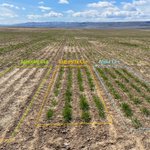
Took the annual trip to Douglass County for snow mold ratings yesterday with @wsuwheat @clubwheat. Snow cover for 150+ days in some areas this year. Thought I would share some visuals from the variety trial.


Noticeable difference in emergence between spring wheat varieties in the cold soil temps we have this spring. “Seahawk” on the left and “Tekoa” on the right.

Not that I needed convinced before, but Zidua (plot on right) sure made a difference on spring weed pressure at some of our trial sites this year. Photo courtesy of @B_randon2014.

Clark Neely retweeted
Please join us in welcoming @WSU_IAREC's Dr. Rui Liu as our newest contributor to the #WeedersOfTheWest forum. Her first article to share features a fan favorite (pun intended) #tumbleweed: Russian thistle. 💨💨💨
smallgrains.wsu.edu/weeders-…
#weedscience #weedscientist

