What would Martin Gardner (1914-2010) tweet today, if he could? Email suggestions to cardcolm at gmail
Joined March 2012
- Tweets5.7K
- Following1.2K
- Followers4.5K
- Likes46


Pinned Tweet
New video: Pádraig MacCarron of the University of Limerick on "Mythematics–Using complex networks to analyse myths, epics & legends" @UL
youtube.com/watch?v=mxgQR_5A…
Martin Gardner tweet retweeted
New video: Pádraig MacCarron of the University of Limerick on "Mythematics–Using complex networks to analyse myths, epics & legends" @UL
youtube.com/watch?v=mxgQR_5A…
Martin Gardner tweet retweeted

In any triangle, the ratio of a side length to the sine of its opposite angle is the same for all three sides.
nitter.cf/MarchUnofficial/status…
Martin Gardner tweet retweeted

Water is densest at 4°C. This property is the reason why lakes freeze from the top down.
💧 water at 4°C is denser than water at both lower and higher temperatures
❄️ as water cools from room temperature toward 4°C, it becomes denser and sinks but as it cools further from 4°C toward 0°C, it becomes less dense and rises
🧊 at 0°C liquid water turns to ice, which is less dense, which is why it floats
So in a cooling lake, the sequence is: warmer water cools and sinks until it reaches 4°C, then the coldest water (approaching 0°C) actually rises to the surface where it can freeze. The 4°C water, being densest, settles at the bottom.

Martin Gardner tweet retweeted
Principia Mathematica takes over 360 pages to prove 1+1=2.
It's not because the authors were unsure of the answer, but because they were trying to prove that all of mathematics could be built from the ground up using nothing but pure logic.


Martin Gardner tweet retweeted

This is a Penrose tiling, a quasiperiodic arrangement that can cover an infinite plane with no gaps or overlaps, in patterns that do not, and cannot, repeat. Atoms in quasicrystals have similar arrangements. quantamagazine.org/quasicrys…

Martin Gardner tweet retweeted
In 1808, the French mathematician Christian Kramp introduced the "!" as the factorial symbol as a convenience to the printer.
Before him, Euler, Stirling, and others, used more verbose notations like 𝑛⋅(𝑛−1)⋅(𝑛−2)⋯1


Martin Gardner tweet retweeted
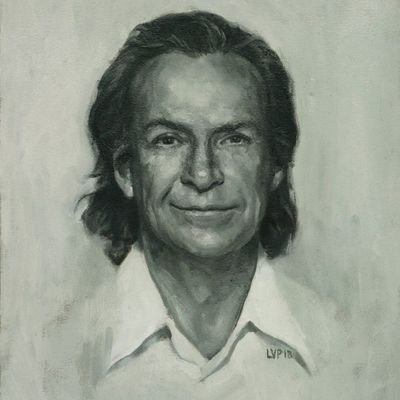
The problem with the world is that the intelligent people are full of doubts, while the stupid ones are full of confidence.
— Charles Bukowski

Martin Gardner tweet retweeted

@WWMGT On Gardner’s columns about paradoxes of nontransitivity: a possible continuation
The puzzle of chess pieces beating one another in “rock—paper—scissors” way
math.stackexchange.com/quest…

Martin Gardner tweet retweeted

Quick “teaser” for a fun #SIGGRAPH2025 project, led by Hossein Baktash, on optimizing a shape to have the desired rolling statistics.
Basically we can turn arbitrary objects into fair dice, or make dice which capture the statistics of other objects—like several coin flips.

Today's G4G Saturday Social on Zoom at 1pm ET will see John Miller discuss ‘Langtominoes’, a new toy concept based on Langford’s Problem.
Do join us! gathering4gardner.org/news-2…
Join us on Zoom on Wednesday, May 21 at 12 noon, Atlanta time, for "Squid Bang Theory" with Alda Carvalho.
More info a gathering4gardner.org/com-20…

New video of Philipp Legner on "Fantastic Folds – The Mathematical Secrets of Origami" youtube.com/watch?v=pQhog1kZ…