

New York, NY
Joined April 2022
- Tweets205
- Following588
- Followers277
- Likes1.2K



Pinned Tweet
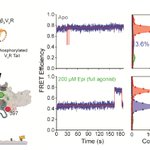
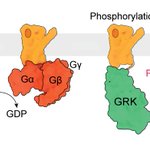
Our paper “GPCR-mediated β-arrestin activation deconvoluted with single-molecule precision” is out today! We use single-molecule FRET imaging and other biophysical approaches to explore the structural dynamics of β-arrestin1 activation upon binding GPCRs. (1/6)

ALT Schematic of β-arrestin binding to an agonist-activated GPCR in the plasma membrane.
Wesley B. Asher retweeted

As a PI, I’ve worked to ban the word “easy” from my vocabulary when talking about research.
Nothing is easy, and the longer we’re out of the lab, the more we tend to forget this.

Wesley B. Asher retweeted

"Reengineering of a flavin-binding fluorescent protein using ProteinMPNN"
Three designs were expressed and possessed the desired properties, including fluorescence and thermostability
biorxiv.org/content/10.1101/…

Wesley B. Asher retweeted

Mitochondria doesn’t have to be mysterious and misunderstood. @MitoPsychoBio is a wizard at explaining mitochondria for all of us to understand!

Healthy #Mitochondria are critical for a healthy body and mind. Mitochondrial expert Dr. Martin Picard explains how mitochondria drive the energy transformation needed for life.
More from @MitoPsychoBio about mitochondria & #MentalHealth: youtu.be/_3dhmMcj17w
Excited to see this in press. Congrats to all involved.

New Research: Methods for automating the analysis of live-cell single-molecule FRET data: Single-molecule FRET (smFRET) is a powerful imaging platform capable of revealing dynamic changes in the conformation and proximity of biological… #celldevbio frontiersin.org/articles/10.…
Wesley B. Asher retweeted

Working on dopamine receptors keeps me happy. Check out our latest paper on Proximity Photopharmacology, again with @IsacoffLab and Prashant Donthamsetti. pubs.acs.org/doi/10.1021/jac…

Wesley B. Asher retweeted

Join us! The Gallo Lab is hiring a #postdoc to study the cellular and circuit mechanisms of impulsive behavior, focusing on ventral striatal acetylcholine and dopamine. To learn more and apply, please visit: careers.fordham.edu/postings…. Friends, please RT!🧠🐭 #postdocjob

Check out this very cool paper. Congrats to all!

SURPRISE ! - 2.gen. GPR40 agonists stimulate cAMP through Gq and #ADCY2! - key to power endogenous #GLP_1 secretion (see👇). Seminal #GPCR @MolMetab paper by @JacobEPetersen, Maria Hauge and Mette @MTrauelsen (first senior authorship) +@Metabolcenter team
doi.org/10.1016/j.molmet.202…

Congrats @alekhyamg and all authors! Excited to read this!

Check out the latest preprint from @CeciMGLab! We isolated & characterized >300 methylotrophic bacteria from soybean leaves in the presence of lanthanides🤩
biorxiv.org/content/10.1101/…

190
Wesley B. Asher retweeted

TransitID is out today in Cell! This is a proximity labeling method for unbiased discovery of endogenous proteins that traffick from a defined “source” location to a defined “destination” location. TransitID uses sequential labeling by TurboID in the source, followed by a chase period (minutes to hours) and then 1-minute APEX tagging in the destination compartment. Proteins tagged by both enzymes are enriched with streptavidin and anti-fluorescein antibody, and identified by mass spec.
We explore 4 intracellular and intercellular applications of TransitID:
- discovery of locally translated mitochondrial proteins (translated at OMM, then imported into mito matrix)
- mapping proteins whose cytoplasm-to-nucleus shuttling is dampened by stress
- discovery of proteins that transit between nucleolus & stress granules during stress & stress recovery
- analysis of proteins that traffic intercellularly bw tumor cells & macrophages
Work of amazingly talented co-first authors @WeiQinChemBio and @CheahJoleen, and collaborators Steve Carr @namude & Paul Taylor
authors.elsevier.com/a/1hKLc…

Wesley B. Asher retweeted

CryoEM structure of the human glutamate receptor heterodimer mGlu2-mGlu3 (PDB code: 8JD0) #scivis #sciart #molecularart #proteinimager
behance.net/gallery/17382475…

Wesley B. Asher retweeted

Take a break from doomscrolling and relax with this dazzling video of the neurotransmitter glutamate being released into synapses, made possible by a new indicator developed by @abhi_aggarwal1, @PodgorskiLab, & team.
Out in @NatureMethods: nature.com/articles/s41592-0…
#NeuroTwitter
Wesley B. Asher retweeted

Check out our latest work on the cryoEM structure of the Leptin receptor complex and the rational design of biased Leptin agonists, out today in @NatureComms!! Another great 🇨🇦 collab with @CaveneyNA nature.com/articles/s41467-0…

Wesley B. Asher retweeted

Announcing our publication featuring Sarah Shelby @ss_shelbs with @leventallab in @nchembio! nature.com/articles/s41589-0… or rdcu.be/c8MrE
TLDR: functional lipid rafts driven by membrane phase separation exist in live cell membranes, but with an unexpected twist!
#lipidtime

Wesley B. Asher retweeted

I am so honored and grateful to have been awarded the #NSFGRFP! I am incredibly
thankful to the people who have helped me
get to this point: @kbath77, @JavitchLab
and @KaramCaline, just to name a few. [1/7]
Wesley B. Asher retweeted

Happy to report that we found what we believe the first ever #GPCR for neurotransmitter glycine. It is an unusual receptor - an orphan GPR158 which couples to RGS proteins instead of G proteins. Thus it is also the first ligand-regulated RGS! Check it out
science.org/doi/10.1126/scie…

Wesley B. Asher retweeted

Neurotensin Receptor Allosterism Revealed in Complex with a Biased Allosteric Modulator pubs.acs.org/doi/10.1021/acs…

Wesley B. Asher retweeted

So happy and honored to be part of this incredible contribution to the field, led by Valerie Panneels and @GSchertler
Ultrafast structural changes direct the first molecular events of vision
nature.com/articles/s41586-0…
Congrats all authors!

Wesley B. Asher retweeted

A true privilege to be a part of such an inspired interdisciplinary team. CFTR Function, Pathology and Pharmacology at Single-Molecule Resolution: rdcu.be/c8ef7
Wesley B. Asher retweeted

📰Check out our latest work from @LabSkiniotis on "Time-resolved cryo-EM of G protein activation by a GPCR" that is now on @biorxivpreprint!👀 #GPCR #cryoEM [a thread w/ videos below] (1/6)
biorxiv.org/content/10.1101/…

Wesley B. Asher retweeted

It's accepted! See our article describing the context-dependent role of Lphn2's tethered agonist in hippocampal assembly. This was available on BioRxiv in Sept. 2022, but now it's in the finalized form! @JavitchLab @ca18240 doi.org/10.7554/eLife.83529
