

Integrated Pest Management, Entomology Serving Tom Green and Runnels, Opinions are my own. No soliciting.
Joined July 2022
- Tweets2.6K
- Following489
- Followers356
- Likes6.2K







Pinned Tweet
Important Recommendations from Extension on New World Screwworm
Surveillance and Reporting
Practice routine surveillance of livestock and monitoring of wildlife whenever possible.
Promptly inspect and report suspected NWS cases.
Report suspected cases in livestock and companion animals: TAHC — Region Office or the Veterinarian on Call 1-800-550-8242, and report suspected cases in wildlife: TPWD – Find a wildlife biologist or call 512-389-4505.
If You Suspect an NWS Case
In all cases, do not move the animal unless directed to do so by TAHC.
Contact TAHC immediately for guidance and response on livestock.
For captured wildlife, contact TPWD immediately. Encourage hunters to inspect their catch and do not move the animal until instructed by TPWD.
Animal Movement Requirements
In designated infested zones, livestock must be inspected for NWS and approved for movement by an Authorized TAHC Certified Inspector before leaving a premise.
Contact TAHC for guidance on arranging an authorized inspector.
Even if you are not in an infested zone, it is a best practice to inspect the animal for NWS before transporting.
Resources
The New World Screwworm Field Guide for Beef Cattle Producers is an excellent resource for communicating these best practices: New World Screwworm Field Guide for Beef Cattle Producers can be found at agrilifeextension.tamu.edu/l….

West Texas Integrated Pest Management retweeted

OPINION: Students should apply to scholarships despite having imposter syndrome or fear of rejection.
thedailytexan.com/2026/11/16…

ALT The illustration depicts a large pile of cash with a sign, “Mt. Scholarship.” There is a person in a UT sweater with binoculars and a thought bubble with green money signs above their head. Illustration by Mia Gomez.
West Texas Integrated Pest Management retweeted
Important Recommendations from Extension on New World Screwworm
Surveillance and Reporting
Practice routine surveillance of livestock and monitoring of wildlife whenever possible.
Promptly inspect and report suspected NWS cases.
Report suspected cases in livestock and companion animals: TAHC — Region Office or the Veterinarian on Call 1-800-550-8242, and report suspected cases in wildlife: TPWD – Find a wildlife biologist or call 512-389-4505.
If You Suspect an NWS Case
In all cases, do not move the animal unless directed to do so by TAHC.
Contact TAHC immediately for guidance and response on livestock.
For captured wildlife, contact TPWD immediately. Encourage hunters to inspect their catch and do not move the animal until instructed by TPWD.
Animal Movement Requirements
In designated infested zones, livestock must be inspected for NWS and approved for movement by an Authorized TAHC Certified Inspector before leaving a premise.
Contact TAHC for guidance on arranging an authorized inspector.
Even if you are not in an infested zone, it is a best practice to inspect the animal for NWS before transporting.
Resources
The New World Screwworm Field Guide for Beef Cattle Producers is an excellent resource for communicating these best practices: New World Screwworm Field Guide for Beef Cattle Producers can be found at agrilifeextension.tamu.edu/l….
West Texas Integrated Pest Management retweeted

🏗️ Raising the roof in Texas! 🙌
Today we celebrated the topping out of the New World Screwworm Sterile Insect Production Facility in Texas.
Reaching this milestone so quickly is a testament to the collaboration among @USDA, the U.S. Army Corps of Engineers, construction partners, and the skilled professionals building this critical facility. 🤝
As the mission continues, so does our ability to combat New World screwworm and safeguard American agriculture!
#BuildingAFlyFactory🪰🛠️ #StopScrewworm


West Texas Integrated Pest Management retweeted

🇧🇷 #cotton Conab Nov: Brazil 2026/27 unchanged vs Oct
Crop: 4.158M t / 19.1M bales (+0.3% y/y)
Area: 2.093M ha / 5.17M acres (+3.7%)
Yield: 1,986 kg/ha / 1,772 lb/acre (-3.3%)
more acres offset lower yields; Brazil stays a tough US export rival. Opinion, not advice.

West Texas Integrated Pest Management retweeted
🚛➡️🪰 Taking the Fight Directly to Screwworm
Ground release teams are delivering millions of sterile flies to strategic locations along the southern border. USDA has released more than 43.9 million sterile flies through ground release chambers in TX, NM, and AZ, reinforcing aerial releases and increasing pressure on wild screwworm populations.
More coverage. More sterile flies. More protection.
#StopScrewworm #FlyMaxxing


West Texas Integrated Pest Management retweeted

Good morning corn farmers and traders.
You’re going to see this guy’s name all day, so let’s compare.
Jensen Huang’s net worth is about $150 billion. His wife in a divorce gets the entire U.S. corn crop. That’s how small we are in today’s money.
Dec corn closed 448 yesterday. Down 12¢ on the year — $600 on a 1-lot.
Thanks for playing.
West Texas Integrated Pest Management retweeted

Does anyone still have salesmen wait in your endrows during harvest to talk to you?
I used to have guys every year try to flag me down.
I bet it's been at least 5 years (maybe more) since I've had that happen.


West Texas Integrated Pest Management retweeted

Cotton yields have been extremely disappointing this year due to the summer drought. No dry land acres harvested. Weak water irrigation acres suffered the most, Pulled into the old home place (drip) & please at its potential. The reason, last year had no crop on it due to hail.


West Texas Integrated Pest Management retweeted

South Carolina, the NEW official Governor-Elect X account is now live!
I encourage everyone to give @GovElectWilson a follow for important announcements, transition updates and the work ahead as we prepare to serve South Carolina families.

West Texas Integrated Pest Management retweeted

Quite possibly the best app I’ve created yet, create drainage and profile views anywhere there is data using USGS Lidar. Try it: senterfarms.com/programs/csr…
West Texas Integrated Pest Management retweeted

Nearly 1200 farmers voiced their opinions on @USDA surveys and reporting. We hope @SecRollins @usda_nass @POTUS pay attention to what they had to say and put the American Farmer first 🧵

West Texas Integrated Pest Management retweeted
Howdy All,
Scouting 101
Bermudagrass Stem Maggot (Atherigona reversura)
Description
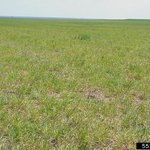
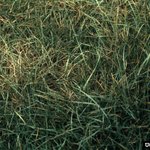
A small yellow fly lays eggs on bermudagrass and stargrass. The maggot hatches, crawls to the top node, and bores into the shoot. The top 2 to 3 leaves die while the rest of the plant stays green, so the field looks frosted when it hasn't frosted. Full grown, the maggot is yellowish and about 1/8 inch long. Egg to adult takes about 2 to 3 weeks, with several generations a year. Fine-stemmed varieties like Coastal, Alicia, Russell and common get hit hardest. Tifton 85 gets hit less, but it can still take real damage late in the season. Grazed pastures rarely have trouble, because the cows eat the eggs and maggots along with the grass.
Preferred Scouting Method
Cut a handful of grass at the base and look over 50 stems at random. Count the stems with dead or dying top leaves and figure the percent damaged. Do this at 5 to 10 spots across the field and average them. Split a damaged stem below the dead leaves to find the tunnel. Don't be surprised if the maggot is already gone. They often finish feeding before the leaves turn.
Economic Threshold
AgriLife says to treat when 20% or more of stems show damage. The newer AgriLife guidelines tie the threshold to hay value and treatment cost. At a $12 per acre treatment cost, treat at 16% or more damaged stems for $140 per ton hay, or 22% for $100 per ton hay. If the field is close to cutting, an early harvest is also an option.
Recommended Insecticide(s) with Labeled Rate(s) per Acre
These kill adult flies only. Nothing labeled for pasture and hay kills the maggots already inside the stem.
Declare (gamma-cyhalothrin). Use the Texas 2(ee) rate. 0 day grazing, 7 day hay. Restricted use.
Besiege (chlorantraniliprole + lambda-cyhalothrin). Use the Texas 2(ee) rate. 0 day grazing, 7 day hay. Restricted use.
Mustang Maxx (zeta-cypermethrin). 2.8 to 4.0 fl oz per acre (EPA label). 0 day grazing, 0 day hay. Restricted use.
Baythroid XL (beta-cyfluthrin). 1.6 fl oz per acre (Miss St). 0 day grazing, 0 day hay. Restricted use.
Karate Z (lambda-cyhalothrin). 1.28 fl oz per acre (Miss St). 0 day grazing, 7 day hay. Restricted use.
Baythroid XL and Karate Z aren't on the AgriLife stem maggot list. Mississippi State uses them at the low armyworm rate. Check that your label covers pasture and hay.
If damage is heavy, cut the hay as soon as the weather allows. The maggots in the cut stems die as the hay dries. Then spray the regrowth 7 to 10 days after cutting to catch the flies coming out of the soil. If the infestation is bad, make a second application 5 to 7 days later.
Sources: AgriLife ENTO-064; AgriLife Bermudagrass Stem Maggot guidelines, 2019; Mississippi State Extension; EPA labels.
Photos: Will Hudson, University of Georgia, Bugwood.org (CC BY 3.0)


West Texas Integrated Pest Management retweeted

🏆 No. 7 in Texas for Regional Universities (West)
⭐ No. 3 in Texas for Top Public Schools in the West
💰 No. 1 in Texas for Best Value for In-State Students
🇺🇸 No. 3 in Texas for Best Colleges for Veterans

West Texas Integrated Pest Management retweeted
Howdy All,
Scouting 101
Hessian Fly (Mayetiola destructor)
Description
The adult looks like a small mosquito, about 1/10 inch long, with dark wings, a black thorax and a dark red abdomen, and it lives no more than 3 days. Females lay about 200 glossy red eggs in clusters of 5 to 12 in the grooves on top of the leaf, and they prefer young plants. Larvae hatch red, crawl down the leaf grooves under the sheath, and park just above the crown or a node, where they suck plant juice and never move again. They turn white with a see-through green stripe down the back. When full grown they form a dark brown case that looks just like a flaxseed, and that's how they ride out the summer on stubble, volunteer and early-planted wheat. In fall and early winter, infested tillers are stunted, less than half normal size, with broader, darker green leaves, and many wither and die. You end up with thin stands, less forage and more winterkill. Spring infestations stunt tillers, make the stand uneven, and weaken stems at the nodes so they lodge or break before harvest. Wheat is the main host, and barley, rye and triticale can get it too. Oats are not a host, so oats are off the hook. It's mostly a Rolling Plains, central and southwest Texas pest, but it has been working west for years, helped along by early September forage plantings and volunteer wheat.
Preferred Scouting Method
Dig seedlings up. Don't just pull them. Then carefully peel the tillers apart. Look for white larvae or brown flaxseeds stuck to the base of the tillers in the crown. In spring, check the crown and also pull the leaf sheaths back at the nodes. When buying or selling wheat hay or straw, look behind the leaf sheaths at the nodes for brown flaxseeds.
Economic Threshold
AgriLife does not set a spray threshold. The guide says to expect significant grain losses when more than 5 to 8% of stems are infested in the fall, or more than 20% in the spring.
Recommended Insecticide(s) with Labeled Rate(s) per Acre
A few pyrethroid labels list Hessian fly, but AgriLife's control advice names only seed treatments plus cultural practices. Seed treatments labeled for Hessian fly can suppress light fall infestations in seedling wheat, but may not hold up under heavy pressure. These rates are per 100 lb of seed, not per acre:
Cruiser 5FS (thiamethoxam). 0.75 to 1.33 fl oz per 100 lb seed (AgriLife).
Axcess (imidacloprid). 0.8 to 2.4 fl oz per 100 lb seed (AgriLife).
Gaucho XT (imidacloprid + metalaxyl + tebuconazole). 3.4 to 4.5 fl oz per 100 lb seed (AgriLife).
The cultural side does most of the work:
Plant a resistant variety. The Texas Wheat Variety Trial results list Hessian fly resistance every year, and the fly can overcome a variety's resistance over time, just like rust.
Plant later where you can. Texas has no fly-free date, because warm spells let flies emerge and lay eggs into December, but later planting still cuts down the fall generation.
Destroy volunteer wheat.
Bury old stubble 4 to 6 inches deep, ideally in August.
Rotate out of wheat and barley. Flies can hang on in old residue for 2 years, and wind carries adults to nearby fields, so they are patient.
Don't haul infested straw or hay to clean ground.
If you have to plant early for grazing, use a resistant variety, or treated seed on fields with a Hessian fly history.
Sources: AgriLife ENTO-084; AgriLife E-350, Hessian Fly in Texas Wheat.
Photos: R.L. Croissant, Bugwood.org (CC BY-NC 3.0 US); Peggy Greb and Scott Bauer, USDA Agricultural Research Service, Bugwood.org (CC BY 3.0 US)


