







Wi_F_I retweeted

This guy literally broke down how to use Claude Code like an expert:
1:40 - Code vs Cowork vs OpenClaw
6:51 - Setting up context status line
12:03 - Sub-agents
17:49 - Creating skills
23:58 - Ask user questions tool
33:33 - Tool-powered skills: Tavily
36:57 - CLI vs MCP vs API hierarchy
39:30 - Make slides skill w/ Puppeteer
43:32 - Auto-invoking skills with hooks
46:49 - Jupyter notebooks for data trust
55:09 - The operating system file structure
Wi_F_I retweeted

THE CREATOR OF OBSIDIAN JUST TURNED YOUR NOTE VAULT INTO AN AI AGENT.
Not a plugin.
Not an integration.
A full agent skills system that teaches Claude Code, Codex, and OpenCode to READ, WRITE, and REASON inside your Obsidian vault like a power user.
27,000 GitHub stars in days.
Here is what shipped at launch:
obsidian-markdown — wikilinks, embeds, callouts, properties, the full Obsidian flavor Claude now understands natively.
obsidian-bases — Claude can create .base files with views, filters, formulas, and summaries.
json-canvas — Claude builds .canvas files with nodes, edges, groups, and connections.
obsidian-cli — Claude controls your vault, develops plugins and themes directly from the terminal.
defuddle — strips web pages into clean Markdown so you stop burning tokens on clutter.
Install the whole thing in one line:
npx skills add github.com/kepano/obsidian-s…
Then connect it to Claude Code, Codex, or OpenCode.
That is it.
Your second brain now has an agent inside it that understands how Obsidian actually works.
Not a generic AI that pastes text into files.
An agent that knows what a wikilink is. What a callout is. What a canvas is.
Built on the open Agent Skills spec. MIT license. Free forever.
The gap between people using Obsidian as a note app and people using it as an AI operating system just got wider.
Bookmark this before you open your vault today.
Follow @cyrilXBT for every build that changes how Obsidian and Claude work together.

“Opus 4.7 you talk too much.”
I had to tell it “Commit fast, fix if wrong. Speed of decision + low reversal cost = momentum. Don't run like a careful engineering organization or you’ll miss the whole point”.
23
I think I’ve found my Openclaw setup sweet spot.
Openclaw setup:
- Sonnet orchestrates, crons
- Codex codes
- Haiku heartbeats
Claude max x20
- Create like project
- project knowledge: update readme.md often daily/weekly
- opus 4.7 oath for prompting Openclaw
2
74
Tips:
1. Stay as the driver, sonnet executes, you decide.
2. Speed of decision + low reversal cost = momentum
3. Phase large builds, smaller scopes, verify between
4. Plain English beats eng. theater
5. Route prompts through opus via projects. Flat rate planning, mtrd execution
21
Wi_F_I retweeted

FINALLY, a legit article that breaks this down in detail.
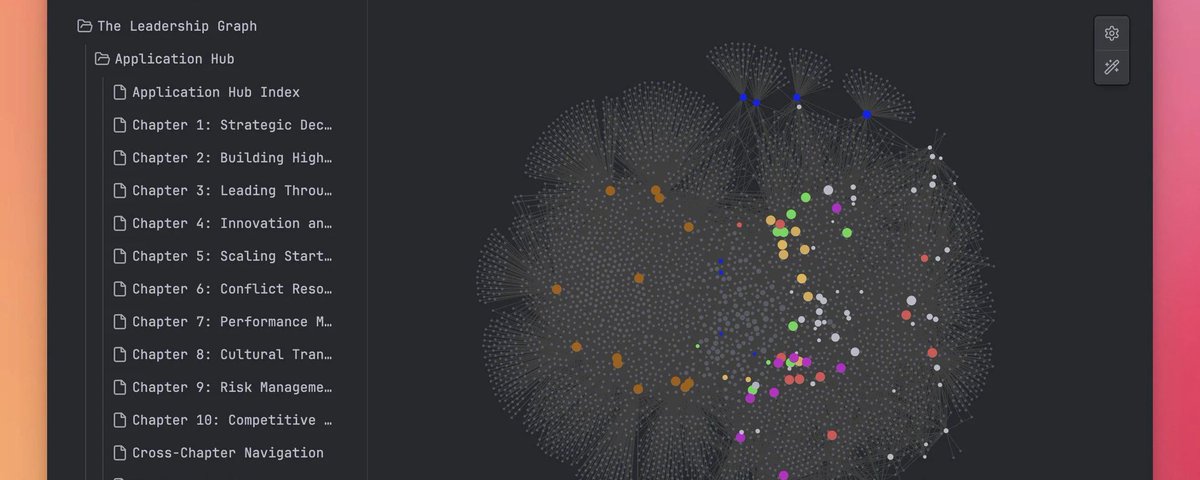
Obsidian + Claude Code = an AI that actually knows your work.
Not a generic chatbot. A real assistant with memory.
@cyrilXBT nailed it.



it sends structured prompts to Perplexity and gets structured facts back. Each model does one thing well.
1
20
- Phase gates. It builds in phases, stops at each checkpoint, and doesn't move forward without approval. No freestyling.
- A cron job runs a daily self-review at 3am. What it built, what broke, why. A second job at 3:30 checks if the first one ran. It learns from itself.
1
14