

Crypto, US stocks and macro, fast. What moved, why, what to watch. Not financial advice.
The bay area
Joined October 2026
- Tweets231
- Following109
- Followers18
- Likes136




Pinned Tweet
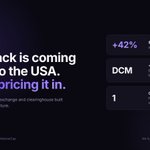
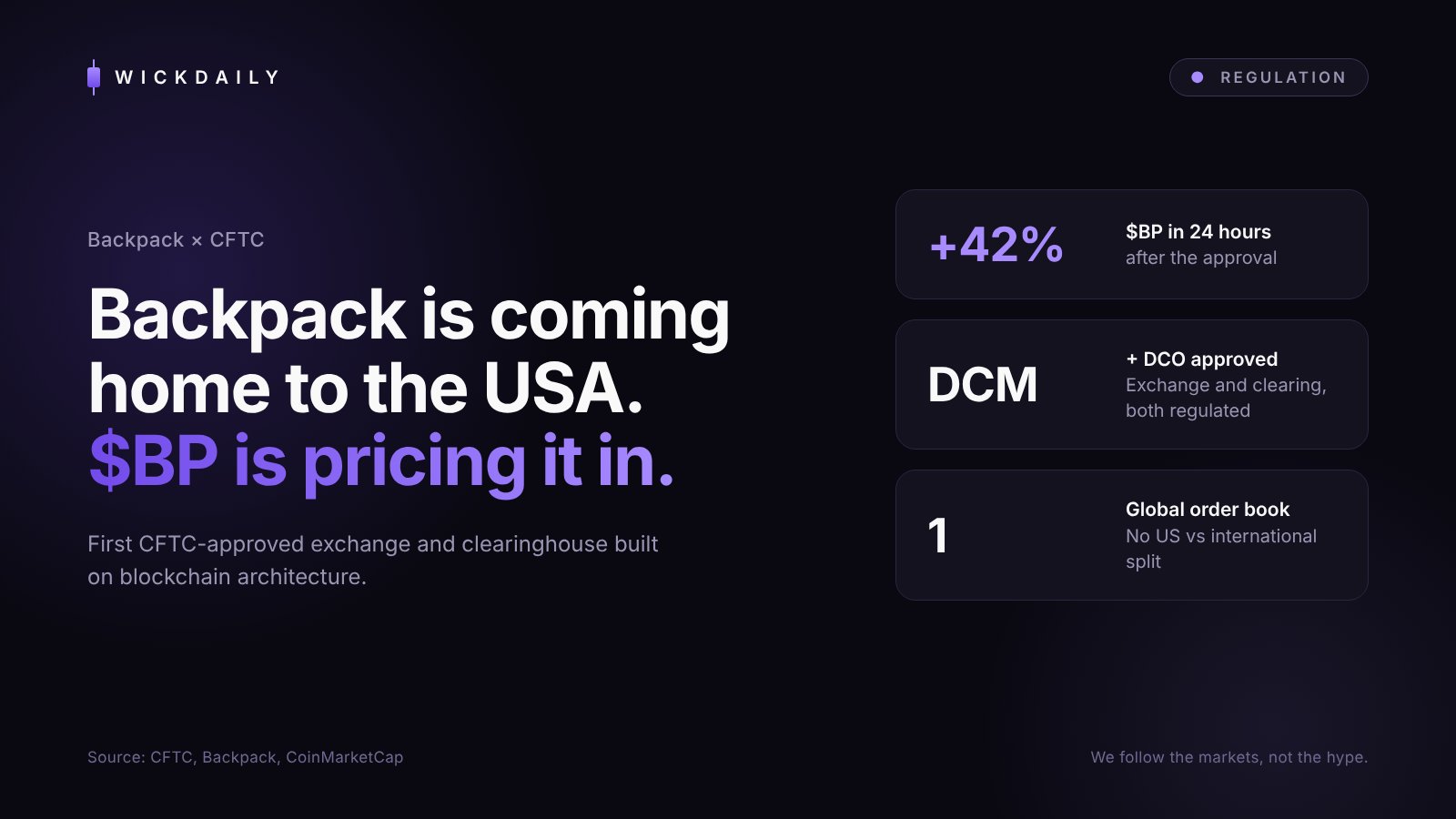
🇺🇸 Backpack is coming home to the USA.
The CFTC has approved Backpack's derivatives exchange (DCM) and its clearinghouse (DCO). According to CFTC Chair Mike Selig, it's the first approval for a firm that uses blockchain-based systems to execute and settle derivatives.
What US traders get:
• Leveraged perpetual futures
• Crypto collateral and cross-margin
• 24/7 trading
• One global order book, with no "Backpack
International" vs "Backpack USA" split
The market has already reacted. $BP is up about 42% in 24 hours, with volume and market cap both climbing.
The CFTC called it proof of "a regulated pathway" for blockchain-based market infrastructure.
Is this the start of US crypto perps going mainstream?
14
No time for the markets this weekend? Here's what you missed 👇
📈 Stocks
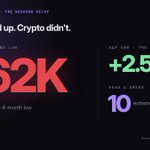
S&P 500 -0.4% and Nasdaq -0.9% on Friday as Nvidia and AMD sank. Still a winning week: S&P +2.5%, Nasdaq +2.3%.
Nvidia's CEO change is still hanging over tech.
Asia overnight: Hang Seng +1%, Shanghai -0.6%, Japan's Topix -0.3%. India's Sensex +600 pts.
₿ Crypto
Bitcoin hit ~$62K over the weekend, a 4-month low, and bounced to ~$65K. Still down ~14% on the week.
Fear & Greed: 10. Extreme fear.
Why it fell:
• ~$2B in leveraged bets liquidated, mostly longs
• Spot BTC ETFs: 7 straight days of outflows, $1.91B gone
• Stablecoin supply (USDT + USDC + DAI) down $11.5B in 30 days, the biggest drop on record. Less cash on the sidelines to buy the dip.
What to watch this week: whether ETF outflows finally stop. That's the buyer bitcoin is missing.
Which worries you more right now: tech or crypto?

2
17
Bitcoin just fell below $67K, its lowest since August. Here's what's actually going on.
Three things are hitting at once:
1. Forced selling
About $1.3B of leveraged crypto bets got liquidated in 24 hours. When price drops, those positions get closed automatically. That selling pushes price lower and sets off the next batch. That's how BTC lost $70K and then $68K within days.
2. ETF money keeps leaving
Spot bitcoin ETFs just had 6 straight days of outflows. On Thursday alone $284M left, $204M of it from BlackRock's IBIT.
3. Rates
The 10-year Treasury is above 5.1%. Friday's PPI came in a touch cooler than expected, but wholesale inflation is still running 6.5% a year, the highest since 2022. A December Fed hike is close to locked in.
Bitcoin pays no yield. With 5% available risk-free, big money doesn't need to take the risk.
Add Nvidia down 11% this week after its CEO's exit, and nobody wants risk right now.
Where BTC stands:
~$67K, about 47% below the $126K high
Below its 200-week moving average
On track for a 6th straight losing week
What I'm watching:
→ ETF flows. One green day isn't enough, I want a full week.
→ Whether BTC can get back above its 200-week average quickly, or stays below it
→ The December Fed meeting
My take: this looks like leverage and rate fear, not people giving up on bitcoin. But until ETF flows turn, rallies get sold.
Are you buying under $67K or waiting?
1
11
US PRODUCER INFLATION HITS A NEAR FOUR-YEAR HIGH.
October PPI rose 6.5% year over year, its highest annual reading since November 2022.
The monthly increase slowed to 0.3%, down from September’s revised 1.4%.
A slower monthly pace, but annual price growth is still accelerating.
Which matters more for markets now: the monthly slowdown or the annual trend?

1
7
BREAKING: DTCC ADDS SOLANA TO ITS TOKENIZATION ROADMAP.
DTCC plans to connect its Tokenization Service to Solana, allowing eligible assets held at its DTC subsidiary to be tokenized on the network.
Planned rollout: H2 2027.
DTCC says the tokenized securities will preserve investors’ ownership rights and the safeguards of traditional markets.
Another step in its multi-chain strategy, connecting traditional market infrastructure with onchain finance.
How much institutional activity will follow?

2
13
BACKPACK’S NEXT MOVE IN JAPAN: DIGITAL BANKING.
Backpack’s Japanese arm, Trek Labs Japan, has signed an MOU with Minna Bank to explore connecting banking and crypto services.
First on the agenda: yen deposits and withdrawals for its planned Japanese exchange, subject to crypto-exchange registration.
The companies will also explore tokenized deposits and integrating Backpack investment services into Minna Bank’s app.
A closer link between bank accounts and onchain finance. Regulatory registration is the next milestone to watch.

$222M in crypto longs, gone in 30 minutes.
Nobody chose to sell those. When price slips, overleveraged longs get force-closed. That selling knocks price into the next batch of liquidations.
That's how a dip turns into a cascade.
Are you buying this flush or waiting for lower?

1
17
Bitcoin just logged 5 losing weeks in a row, while the S&P 500 sits about 2.6% from its record.
So who's doing the selling?
1. ETF holders
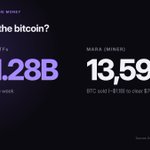
US spot bitcoin ETFs lost $1.28B in the week ending Nov 6. Four of five days were outflows, the biggest -$430M.
These buyers are mostly advisers and funds, not crypto natives. When rates look like they're going up, they cut risk first.
2. Miners paying down debt
MARA sold 13,597 BTC (about $1.1B) after Q3 to fully repay $750M of bitcoin-backed loans.
That's not a view on price. It's a balance sheet decision, and it still hits the order book.
3. Rates
A December Fed hike is almost fully priced in. The 10-year Treasury is near 5%. Bitcoin pays no yield, so it has to compete with 5% risk-free. Right now it's losing that fight.
The scoreboard:
$86.5K five weeks ago → about $74.6K now
41% below the $126K all-time high
What would turn it around:
→ ETF flows positive several days in a row, not one bounce
→ A cool PPI on Friday, which takes some heat off a hike
→ Miners done selling now that the loans are cleared
The last time bitcoin had a streak like this (Jan–Mar 2026), it bounced about 20% over the next two months, then made a new low in June.
So a long losing streak doesn't mean we've hit the bottom.
ETF money leaving for good, or just rate fear? Tell me below.

1
8
CoreWeave paid $846M in interest last quarter.
Its adjusted operating income was $379M.
That gap is why the stock and the bonds are telling two different stories.
The stock side:
• Revenue $3.66B, up 168% in a year
• $132.5B backlog of signed contracts
• Full-year guidance raised to $13.0–13.3B
The stock fell about 47% in the month before earnings. Then it jumped about 20% the day after.
The bond side:
• Its 9.625% bonds due 2032 yielded over 16% the week before earnings. A 10-year Treasury pays about 5%.
• Interest expense: $846M, up from $310M a year ago
• Next quarter's guide: $1.05–1.15B in interest
• Capex plan for this year: $37–39B, and a lot of it is borrowed
Why they disagree:
A stockholder needs the AI buildout to keep going. If that backlog turns into cash, the upside is big.
A bondholder's best case is getting paid back. Their worry is refinancing: CoreWeave borrows to buy GPUs, and those GPUs have to earn enough before the next debt comes due.
And Microsoft was about two-thirds of 2025 revenue.
So 16% isn't a bet that CoreWeave goes bust. It's the price of lending to a company that has to keep borrowing to grow.
What to watch:
→ The ~$9B in customer prepayments management expects over the next 3 months
→ Whether the bond yield drifts back toward mid-October's ~14.5%
→ Q4 interest landing near $1.1B
My take: the business is real. The balance sheet is the risk, and bond traders are pricing that more honestly than the stock chart.
Stock or the 16% bond, which would you rather own?

2
7
SOFTBANK’S $7.1B LOSS PUTS AI COSTS IN FOCUS.
SoftBank reported a $7.1 billion quarterly loss, including a $3.7 billion charge tied to power-generation equipment for US AI data centers.
Shares fell as much as 11% in early Tokyo trading, then rebounded.
CFO Yoshimitsu Goto signaled a more cautious approach to investment.
The question for the AI trade: how quickly can massive spending turn into sustainable returns?

1
10

Bitcoin under $73K. Lowest in 12 weeks.
The drop wasn't the story. The leverage was: $230M in longs wiped in 60 minutes.
Spot ETFs aren't catching it either. ~$1.28B pulled last week.
Next stop $70K, or is this the flush before the bounce?

1
10
California just voted down the first US tax on billionaire wealth.
Prop 40: a one-time 5% on net worth above $1B. About 200 people. Tens of billions, mostly for healthcare.
The real fight: taxing what you own, not what you earn.
Fair share or capital flight?

1
9
At 8:30am ET tomorrow, one number could decide whether the Fed hikes in December. Markets price that at about 80%.
The number is CPI. Here's how it's actually built.
1/ The shopping trip
Every month the BLS checks prices in 75 US cities, at about 22,000 stores and service businesses and about 6,000 rental homes.
2/ Not everything counts the same
Each item is weighted by how much Americans actually spend on it. Shelter is 35.6% of the index. Food is 13.7%.
3/ The strange part
The biggest single piece, 26.2%, is "owners' equivalent rent." If you own your home, the BLS estimates what you'd pay to rent it. Nobody pays that bill, but it's over a quarter of CPI.
4/ Headline vs core
Headline counts everything. Core leaves out food and energy because they swing so much. In September, headline was 3.7% over the year and core was 2.6%. Most of that gap is energy. Gasoline is up 34% in a year.
5/ Why 0.1% moves markets
Traders have already bet on the forecast. If core comes in even 0.1% off, the odds of a hike shift, and yields, the dollar, stocks and bitcoin all reprice within seconds.
The Fed's 2% target uses a different gauge (PCE), but core CPI is the earliest clean read.
What to watch at 8:30: core month over month, and shelter. If shelter cools while gas stays hot, the case for a hike gets weaker.
Your call: hot, in line, or cool?

1
8
COINBASE + PNC: USDC ENTERS CORPORATE PAYMENTS.
Coinbase and PNC Bank are expanding their partnership with a pilot allowing eligible corporate and institutional clients to receive USDC payments.
Incoming USDC is automatically converted 1:1 into dollars and deposited into their PNC bank account.
Another step toward stablecoins becoming part of everyday business payments.
Will payments drive the next wave of crypto adoption?

CPI TUESDAY. PPI FRIDAY. Inflation takes the spotlight.
Week ahead (Nov 9–13):
Tue: US CPI + real earnings data at 8:30 AM ET.
Thu: $CSCO earnings after the close. Conference call at 4:30 PM ET.
Fri: US PPI at 8:30 AM ET.
Two inflation reports and a tech earnings update.
Which day are you watching?
Sources: BLS, Cisco Investor Relations.

1
8
Bitcoin hit about $73,700 on Sunday, its lowest since August. More than 140,000 traders were force-closed in 24 hours.
Most of them never pressed sell. Their exchange did it for them.
This is how a liquidation works, and why a dip turns into a crash in minutes.
1/ Borrowed money
You put up $1,000 and open a $10,000 bitcoin position. That's 10x leverage. Your $1,000 is the collateral.
2/ The tripwire
If bitcoin drops about 10%, your $1,000 is gone. Before the loss goes past that, the exchange closes you out with a market sell. In practice it happens a little sooner, because exchanges keep a small maintenance margin.
3/ The dominoes
That forced sale pushes the price down a bit more, which hits the next trader's level, which sells more. Lots of traders use similar leverage at similar prices, so their levels sit close together.
4/ Why it's so fast
Nobody is making a decision. Engines sell into whatever buyers are left. On a thin weekend order book, that takes minutes.
Sunday: about $856M liquidated, ~90% of it longs (CoinGlass).
The record: Oct 10, 2025. More than $19B and 1.6M traders in one day.
The part most people miss: you can be right about direction and still get wiped out. Leverage doesn't care where price ends up. It only cares whether you survive the path.
What to watch: open interest and funding rates. When both run hot, the dominoes are lined up.
Do you use leverage? What's the most you'd go?

1
9
The Nasdaq fell 5.5% last Thursday, its worst day since April 2025.
Nvidia: -9%
Chip index: -12%
The fear chain: Democrats won Congress → tougher rules on AI and data centers → less AI spending → fewer chips sold.
So far it's a story. Thursday we get data.
Cisco sells the networking gear inside data centers. Applied Materials sells the machines that make chips. Both report after the close.
What stops the sell-off: guidance that says orders are holding. Then the market priced in a slowdown nobody can see yet.
What makes it worse: either one guides lower and says customers are pausing.
Overreaction, or the start of something?

1
1
9
Only 38% of recent bitcoin buyers are in profit.
In early October it was 97.5%.
"Recent" = coins that moved in the last 155 days. Their average cost is $75.7K, and BTC is sitting almost right on it.
Why that matters: when people are back at breakeven after weeks underwater, a lot of them sell just to get out. That supply caps rallies.
The zone to watch is $73K-$76K. Glassnode says the short-term holder cost basis, the 200-day average and a cluster of long liquidations all meet there.
Spot BTC ETFs aren't helping: about $1.28B left last week.
The trigger is CPI on Tuesday. Hot core inflation means higher hike odds and more pressure on that band.
Hold $73K or lose it?

1
9