

Manager + Geek = #Leadership + #Motivation + #Inspiration + #PersonalDevelopment + #Developper + #MachineLearning
Paris
Joined February 2013
- Tweets6.8K
- Following2.3K
- Followers998
- Likes59






Willy Stophe retweeted

We've made some big updates to Projects in Claude Code!
In a project, Claude coordinates your tasks across parallel threads. The coordinator is now much more proactive. It answers your questions in the project chat and gives you updates on the status of your ongoing threads.
Willy Stophe retweeted
Self-hosted Claude Managed Agents is now in private beta.
You can host the agent harness, sandboxes, and session history, in your own cloud or on-premises, and choose where requests to Claude are sent.

Willy Stophe retweeted

🚨 وداعاً للرقابة! شغّل DeepSeek V4 Pro على جهازك الـ 8GB RAM مجاناً وبدون أي قيود! 🤯
تم رسمياً تقطير نموذج 9B من عملاق الذكاء الاصطناعي، والنتيجة؟ نموذج محلي مرعب يسقط الرقابة ورفض الأوامر من 100/100 إلى 3/100 فقط!
🔹 المواصفات الخارقة:
• يعمل على 8GB RAM (حتى لو المعالج فقط CPU!)
• يعمل بسلاسة على كرت شاشة 8GB VRAM
• الحجم: 5.6GB فقط (نسخة Q4_K_M)
• يدعم LM Studio و Ollama مباشرة!
• مفتوح المصدر بالكامل (Apache 2.0)
💡 جهازك العادي أصبح يمتلك قوة نموذج ذكاء اصطناعي خارق وحُر!
احفظ التغريدة وجرّبه الآن قبل أي شيء! 🎯🧵👇

Willy Stophe retweeted
We've given all Pro, Max, Ultra, and Team users one free full reset, across all models and limits. Use it anytime before December 10 at 2:00PM PT.
We recently fixed a few small issues that used more limits than intended, and the Fable resets didn't do much for those of you who'd already hit your weekly limits for all models. While these issues didn't affect everyone, we want to make up for the trouble.
You'll find it in Settings > Usage, or at clau.de/reset.
Willy Stophe retweeted

Stanford researchers did it again.
They just built the agent-native version of Git.
When an agent works on a longer task, the run builds up a lot of state.
This includes files edited/created, a dev server, a database, installed packages, KV cache, etc.
Say the agent is at step 10 and makes a mistake, maybe it misreads a traceback and rewrites a file that was actually fine.
The tests start failing, and the run goes off track, although everything through step eight was correct.
By default, the agent just tries to fix it, which creates more edits and tool calls. This burns more tokens and grows the context.
The other options are a person stepping in to redirect it or restarting the whole run from step one.
That's wasteful, because it pays for every model/tool call again and re-prefills the context. Moreover, since an agent's run is non-deterministic, it doesn't reproduce the same early steps anyway.
The reason it's hard to just jump back exactly to a previous correct step and resume from there is that the trajectory is only a message log.
It records what the agent said and which tools it called, but not the live state underneath.
That state includes things like memory, open file handles, child processes, installed packages, /tmp, and KV cache. None of that is in the log.
Git can version the files, but it doesn't snapshot the running process or the KV cache. Checking out step eight moves the files back, but the process is still sitting in step-ten memory with a cold cache.
Shepherd is a runtime layer by Stanford that records the run as a trace of typed events rather than a flat log.
Each agent-environment interaction becomes a commit, similar to Git, but it tracks the live run.
Its commit includes the agent process and the filesystem together, copy-on-write, so a branch carries the actual state and not just the files.
Going back to a previous step is then a single call that forks from that commit and continues from the exact state.
The copy-on-write fork is roughly five times faster than docker commit, and because the prompt prefix through step eight is unchanged, the KV cache is reused over 95% on replay, so early steps aren't reprocessed again.
Once the run can be forked, a meta-agent can sit on top and operate it. It watches the trace and reverts as soon as it looks wrong, before the bad write is committed.
In practice, it's just Python calling fork, replay, and revert on the trace, rather than a separate control plane wired into the harness.
Not everything is reversible though.
Files and sandbox changes undo themselves, but a database write has no automatic undo, so it needs a matching undo step set up in advance.
Something external, like a sent email or a real charge, can't be undone, so the supervisor's job there is to catch it before it fires.
They tested this on a few public benchmarks. On CooperBench, where two agents work on the same codebase, adding a live supervisor took the pair-coding pass rate from 28.8% to 54.7%.
It's still early and labeled alpha. The benefit mostly shows up when a run gets branched a lot over a heavy sandbox state, which is exactly where restarting wastes the most tokens and time.
If Git was made to make file changes reversible, Shepherd is trying to do the same thing for a live agent run.
Shepherd Repo: github.com/shepherd-agents/s…
(don't forget to star it ⭐ )
That said, Shepherd reverts a bad step inside a run. The harness around it, the prompts, tools, and checks the supervisor relies on, still drifts across runs as models and dependencies change.
I wrote about making that harness repair itself, where a failing trace gets diagnosed, the fix is verified against the exact input that failed, and the failure is locked as a regression test so it can't recur. all of this is done using @Cometml's open-source project Opik.
The article is quoted below.


Willy Stophe retweeted
Which Claude model should you build with?
Our new guide breaks down when to use Fable 5.2, Opus 5.5, Sonnet or Haiku. It also covers when to adjust effort instead of switching models, and how to save cost by putting subagents on smaller models.
claude.dev/blog/which-claude…

Willy Stophe retweeted

Estaba a punto de pagar el TRIPLE por Claude.
Cada semana agotaba los límites de uso y necesitaba más capacidad.
Hasta que hice un cambio que me llevó literalmente 1 minuto. Ahora apenas consumo la mitad del límite semanal.
Me estoy ahorrando 60€/mes
Te cuento el truco 👇
🤖 Made with AI

Willy Stophe retweeted

THIS IS ACTUAL F*CKING GOLD
Anthropic just shared how to get Opus-level calls in Claude Code without paying Opus for every single turn.
The idea: Sonnet 5.5 does the work, Haiku 5.5 does the digging, and Opus 5.5 only shows up when a decision actually matters.
Anthropic's own docs say a fast main model with a stronger advisor typically costs less than running the strong model the whole time.
You just start Claude Code like this:
claude --model sonnet --advisor opus
this is how it splits:
→ Sonnet 5.5 runs the session and writes every line
→ Haiku 5.5 subagents search the repo and read the docs in parallel
→ Opus 5.5 sits on call and reads the full transcript only when it's consulted
→ you stop burning Opus on work a cheaper model handles just as well
Opus only steps in at three moments:
→ before a plan gets locked
→ when the same error comes back twice
→ before Claude calls the task done
Sonnet writes. Haiku digs. Opus decides.
JEV engineering is the same idea one layer down: the forks that need no thinker (which file, which tool, retry or stop) get settled by JEV in milliseconds, and the big models only see the ones that actually split
the full tree
> Sonnet 5.5 runs the main session and edits the code
> search maps the repo on Haiku 5.5
> grep finds every call site on Haiku 5.5
> docs pulls the API reference on Haiku 5.5
> Opus 5.5 on call as advisor, reads the full transcript when consulted
> JEV routes micro-forks in milliseconds
paste the tree and this prompt into Claude Code ↓
"Rebuild my Claude Code setup around this tree:
1. Run the main session on Sonnet 5.5 with Opus 5.5 as advisor.
2. Create three read-only subagents on Haiku 5.5: search (maps the repo), grep (finds call sites), docs (pulls the API reference).
3. Add one rule to CLAUDE.md: consult the advisor before a plan locks, after the same error twice, and before a task is marked done.
4. Route fast deterministic forks (tool choice, path selection, retries) through JEV.
Show me every change as a diff first. Nothing gets edited until I say go."
↳ code.claude.com/docs/en/advi…
save it, this is the setup you'll want on every repo.


Willy Stophe retweeted

Meet DeepSeek-V4-Pro-Qwen3.5-9B-UNCENSORED-heretic: a 9B reasoning beast fine-tuned with Unsloth for speed. It handles text and image-text-to-text, and it's uncensored. Perfect for builders who want raw power.

Willy Stophe retweeted
🚨 ضربة جديدة في مقتل للبرمجيات المغلقة: الفريق الذي استنسخ أدوات Adobe و Microsoft يطلق محرك الهندسة العكسية القاتل! 🤯💻
بعد أن قامت شركة Anthropic بحظر أداة REA على منصة Claude.. أفرج الفريق المطور عن مشروعه المفتوح المصدر بالكامل Craft Anything على GitHub، ليعطي وكلاء الذكاء الاصطناعي قدرات هندسة عكسية مرعبة!
🔥 ما الذي يستطيع وكيل الـ AI فعله باستخدام Craft Anything؟
• هندسة عكسية شاملة: تفكيك وتحليل مواقع الويب، تطبيقات سطح المكتب، وتطبيقات الجوال ببراعة متناهية.
• إدارة طاقم عمل كامل: تشغيل دورة هندسة عكسية مجتمعية كاملة عبر طاقم وكلاء ذكي يتبادل المهام والتحليل.
• إعادة بناء البرمجيات المعقدة: القدرة على إعادة إنتاج برمجيات ضخمة ومعقدة بمستوى برامج Microsoft Office من الصفر ودون التعدي المباشر على الكود الأصلي!
⚡ ثورة المصادر المفتوحة تتسارع:
الأداة تأتي كرّد حاسم على تقييدات الشركات الكبرى وحظر الأدوات البرمجية، لتفتح الباب أمام أي مطوّر لاستنسخ وتطوير أعقد البرامج والتطبيقات عبر الـ AI مجاناً وبلا حدود!
عصر احتكار الكود والبرمجيات المغلقة الاحتكارية يلفظ أنفاسه الأخيرة أمام قوة الهياكل المفتوحة المصدر ووكلاء الـ AI ⏱️🚀
📌 احفظ التغريدة بمفضلتك وفكك شفرة الهندسة العكسية للتطبيقات 🔖👇
(رابط المستودع ومصدر المشروع في أول تعليق)
Willy Stophe retweeted

This is f*cking gold, the CEO of Obsidian put his own second brain on GitHub for free and people still build theirs from zero
7 free repos from the Obsidian team:
-> kepano obsidian (by kepano)
github.com/kepano/kepano-obs…
the vault template of the Obsidian CEO himself, copy it and skip the blank page
-> jsoncanvas (by obsidianmd)
github.com/obsidianmd/jsonca…
the open canvas format, your maps stay plain files that are yours forever
-> obsidian releases (by obsidianmd)
github.com/obsidianmd/obsidi…
every community plugin and theme in one list
-> obsidian sample plugin (by obsidianmd)
github.com/obsidianmd/obsidi…
the official template, build the plugin you are missing
-> 40 questions (by kepano)
github.com/kepano/40-questio…
40 questions that turn your notes into a yearly review
-> obsidian minimal (by kepano)
github.com/kepano/obsidian-m…
a clean theme so your vault stops looking like a mess
-> flexoki (by kepano)
github.com/kepano/flexoki
the color scheme he made for writing and code
your second brain should never start from a blank page
copy his vault and make it yours


Willy Stophe retweeted

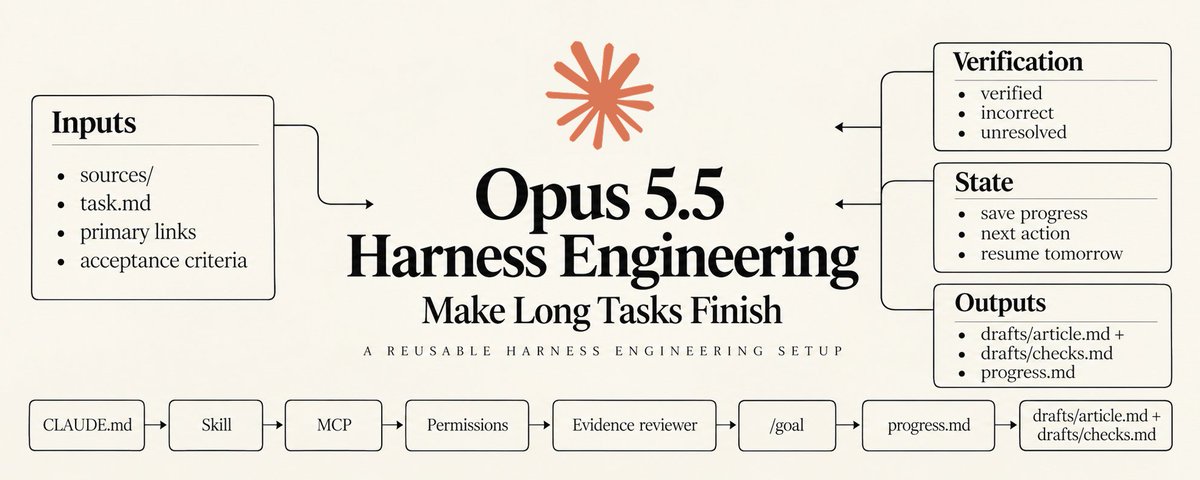
Before you blame Opus 5.5, learn these 15 official Anthropic commands
15 essentials to get more out of Opus 5.5:
less busywork → parallel agents → faster iteration
steal the cheat sheet ↓
01 /goal → keep working toward a defined finish line
code.claude.com/docs/en/goal
02 /batch → split big changes across parallel agents
code.claude.com/docs/en/agen…
03 /subtask → delegate with the current context
code.claude.com/docs/en/sub-…
04 /deep-research → get research with sources
code.claude.com/docs/en/work…
05 /design → create editable artboards
code.claude.com/docs/en/comm…
06 /plan → review the plan before code changes
code.claude.com/docs/en/perm…
07 /memory → manage project instructions
code.claude.com/docs/en/memo…
08 /compact → compress context around key decisions
code.claude.com/docs/en/cont…
09 /branch → explore a separate conversation branch
code.claude.com/docs/en/comm…
10 /rewind → restore a tracked checkpoint
code.claude.com/docs/en/chec…
11 /mcp → manage connected tools
code.claude.com/docs/en/mcp
12 /loop → repeat checks in a running session
code.claude.com/docs/en/sche…
13 /schedule → automate recurring cloud tasks
code.claude.com/docs/en/rout…
14 /simplify → clean up code with parallel reviewers
code.claude.com/docs/en/comm…
15 /remote-control → continue the local session from your phone
code.claude.com/docs/en/remo…
start here: /plan → /goal → /simplify
save this, then read the full guide for Opus 5.5 Harness Engineering ↓

Willy Stophe retweeted

Cloudflare tiene de código abierto su Skill para encontrar vulnerabilidades en tu proyecto.
Lo que hace paso a paso:
① Revisa tu código
② Encuentra todos los bugs
③ Envía lo que encuentra a un agente de IA
④ Crea el informe, verifica y escribe un reporte final
Pasos para instalarlo: github.com/cloudflare/securi…
Y luego le pides a la IA:
"Audita la seguridad de este proyecto"

ALT Página de GitHub del repositorio cloudflare/security-audit-skill, con una nube naranja y el texto A coding-agent skill for multi-phase security audits with independently verified, machine-readable findings. Indica 3 colaboradores, 36 issues, 55 mil estrellas y 4 mil forks; diseño sobrio sobre fondo blanco.
Willy Stophe retweeted

🚀 Home Assistant 2026.11 est là !
✅ 38 nouvelles intégrations
🏠 Dashboards automatiques
⚙️ Exclusions dans les automatisations
🎥 Audio bidirectionnel
🔎 Historique des actions
Et bien plus ! 👇
maison-et-domotique.com/1743…
#HomeAssistant #Domotique

Willy Stophe retweeted

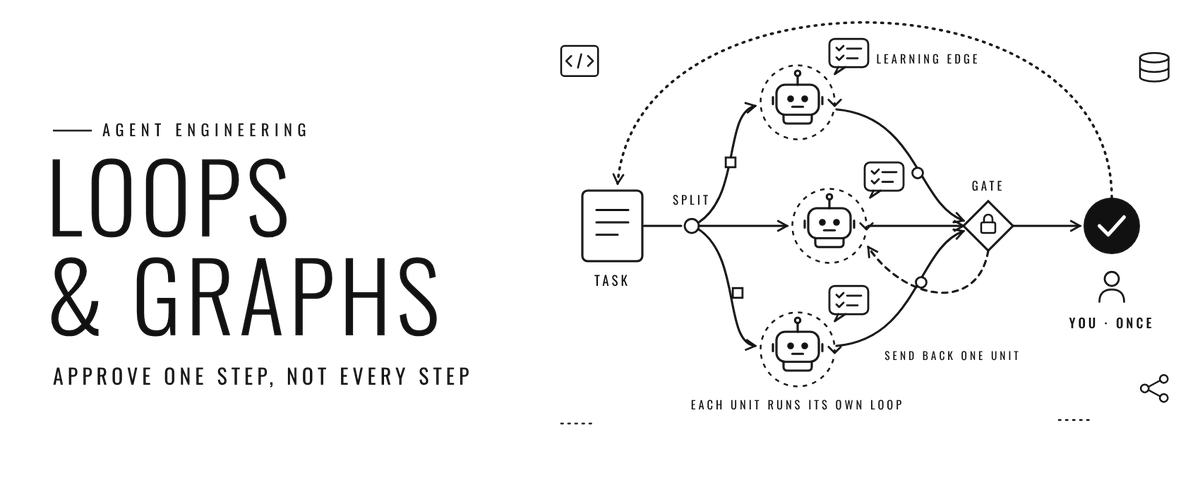
After Andrej Karpathy released autoresearch, where an agent runs experiments in a loop on its own, I packed his method into one prompt that turns Opus 5.5 into a graph and can carry almost any task to the finish.
→ writes a check that can actually fail, first
→ splits the task into parts
→ runs the independent parts in parallel
→ loops each one until it passes the check
→ sends back only the part that failed
→ turns every mistake into a rule for next time
→ calls you only for the step that can’t be undone
Throw it at Opus 5.5 with the task you’ve been putting off for a week, and you’ll see the difference in one run.
The full prompt is in the comments.
How to tune it for your own work is in the article below. Save it before it gets lost ↓

Willy Stophe retweeted

Je tourne toute ma stack derrière Tailscale. Serveurs, agents, labo perso. Ça marche, je touche plus.
Là Cloudflare sort Mesh en beta. Même job en surface : IP privée entre mes machines, chiffrement post-quantique, accès sans VPN à la main. 50 nœuds et 50 users gratuits. Et comme j’ai déjà Cloudflare partout, Zero Trust, Workers, le truc est déjà dans mon compte.
Le détail qui change vraiment : tout le trafic passe par le réseau Cloudflare. Pas de peer-to-peer comme Tailscale. Chez eux, c’est un choix, pour coller les policies Gateway et Access dessus, et pour que tes agents Workers puissent joindre ton labo privé sans exposer un port.
J’ai encore aucun nœud. Tailscale, ça reste mon default. Mais un outil de moins, intégré à ce que je paie déjà, ça mérite un vrai test.

Willy Stophe retweeted

unslop : un skill pour Claude Code qui transforme vos interfaces vibecodées en vraies interfaces designées.
Il repère d'abord le slop (dégradés violets, glows, labels en emoji, espacements irréguliers), propose une direction, puis corrige l'écran passe par passe. ⬇️
Willy Stophe retweeted
🚨 GitHub تحلّ رسمياً أكبر مشكلة في الـ Vibe Coding!
أطلقت GitHub أداة جديدة باسم Spec Kit، وتجاوزت 120 ألف نجمة على GitHub في وقت قياسي جداً! 🔥🧵
بدلاً من كتابة برومبت عشوائي والدعاء ألا يدمر الذكاء الاصطناعي مشروعك.. Spec Kit تجبر الـ AI على كتابة مواصفات وهيكلة منتظمة قبل لمس سطر كود واحد!
كيف يعمل النموذج؟
1️⃣ يفهم ما تريد بناءه بدقة
2️⃣ يطرح عليك الأسئلة والمعطيات الناقصة
3️⃣ يهيكل المشروع بالكامل
4️⃣ ثم يبدأ في كتابة الكود!
النتيجة؟ ساعات أقل في إصلاح الأخطاء العشوائية، كود نظيف ومنظم، ونتائج مضمونة عند التعامل مع الوكلاء الذكيين (Agents).
🔄 سلسلة أوامر العمل بسيطة ومباشرة:
• constitution/ 👈 القواعد والمعايير الأساسية
• specify/ 👈 ما الذي تريد بناءه بالضبط؟
• clarify/ 👈 أسئلة وتوضيحات قبل البدء
• plan/ 👈 المعمارية والتقنيات المستخدمة (Stack)
• tasks/ 👈 تقسيم المهام بالترتيب
• implement/ 👈 مرحلة التنفيذ والتكويد
💡 المفاجأة: الأداة متوافقة ومجربة مع أكثر من 25 وكيل ذكي (مثل Cursor, Claude Code, Copilot, Gemini CLI, Codex وغيرهم).
• 🌟 أكثر من 120,000 Star
• 🍴 أكثر من 10,000 Fork
🔓 مفتوحة المصدر بالكامل من GitHub
📌 احفظ التغريدة للرجوع إليها وقت الحاجة 🔖
رابط المستودع (Repo) تجده في أول تعليق 👇

