

We bring good governance to life with training courses in the skills you need. Delivering quality since 2015. 📞Call 0330 221 0562 ✉️Email [email protected]
London, England
Joined April 2015
- Tweets5.7K
- Following893
- Followers222
- Likes673




A CV. An interview note. A sickness record. A manager’s email.
HR teams handle personal information throughout the employee lifecycle.
Each stage brings decisions about collection, use, access and retention. Here are some practical priorities.

1
12
Did you know our training is rated over 4.9 out of 5 on Trustpilot? If you are looking for GDPR training that delivers both practical skills and ongoing support to apply your learning and ensure data protection consider WuDo Solutions.
Find out more: zurl.co/ikALt

2
Do you need to pay the ICO data protection fee?
“We’re small” or “we’re a charity” does not settle the question.
Your role, how you use personal information and any applicable exemptions determine the answer.
🧵
1
5
“We need this personal information for legal reasons.”
Do you though? Which reasons?
Under the GDPR, relying on legal obligation means identifying a legal requirement that applies to your organisation and explaining why the processing is necessary.
1
14
In the last month we have written about:
👉 how to respond to data breaches
👉 GDPR and employee monitoring
👉 understanding data risk
👉 Recognised Legitimate Interests
👉 data breaches in health and social care
👉 handling data protection complaints
And more... but
1
10
Why keep coming back to find new content? We produce a regular newsletter that showcases all out newest content, answers subscribers' GDPR questions and gives people special offers not available anywhere else. All direct to your inbox. Sign up here: wudo.solutions/about-us/news…

7
What happens if your organisation’s information is wrong, unavailable or disclosed to the wrong person?
Information risk affects decisions, services and the people who depend on them.
Here is a practical approach to managing it.

1
9
Your organisation has changed. Have your GDPR arrangements kept up?
New systems, suppliers, services and AI tools can change how you use personal data.
When did you last check whether your policies and controls still reflect what happens?
🧵
1
14
1/9
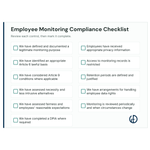
Can employers monitor employees under the GDPR?
Yes, but having a legitimate reason does not justify every method available.
Before choosing the technology, define the problem you need to solve.
1
15
1/10
“We benefit the public, so we can use public task under the GDPR.”
That conclusion needs more scrutiny.
Public task requires a relevant task or official authority with a basis in law, plus necessary processing. Here are the questions to ask.
1
23
1/12
A spreadsheet sent to the wrong person. Sensitive records left accessible. A missing laptop.
What happens next?
Your data breach response process should help staff act quickly, protect people and make sound decisions. Here is what it needs to cover.

1
1
34
1/9
You replace names in a dataset with reference numbers.
Could someone still identify the people involved?
Pseudonymisation can reduce privacy risks, but its effectiveness depends on more than changing the name column.
2/9

1
18
Did you know... our average rating on Trustpilot is 4.89 out of 5?
Here's one of our latest ⭐⭐⭐⭐⭐reviews
If you are looking for training in GDPR or data protection get the practical skills you need from us: zurl.co/SN7Ta

9
Learn about data #breaches on 12 November, #Birmingham. This #event will show you how to:
👉recognise a data breach;
👉 take action;
👉 investigate;
👉 assess harm;
👉 communicate with stakeholders; and
👉 identify actions needed
Find out more: zurl.co/QP9xZ

16
1/9
“We’re a private company, so FOI doesn’t affect us.”
If you work with councils, NHS bodies or government departments, check that assumption.
Three separate questions can help you understand your position.

1
10
Learn about data #breaches on 12 November, #Birmingham. This #event will show you how to:
👉recognise a data breach;
👉 take action;
👉 investigate;
👉 assess harm;
👉 communicate with stakeholders; and
👉 identify actions needed
Find out more: zurl.co/1Hv1i

17
1/6
Would your staff recognise a personal data breach if no hacker was involved?
An email sent to the wrong person. A lost paper file. Records accessed without authorisation.
All can be personal data breaches.
Here is why recognising them matters. 🧵

1
10
1/6
Data protection is part of someone’s job. But is there enough time in their week to give it the attention it needs?
As organisations grow, GDPR responsibilities can outgrow the capacity available internally.
Here are some signs it may be time for support. 🧵
1
7
Learn about #data #breaches on 12 November, #Birmingham. This #event will show you how to:
👉recognise a data breach;
👉 take action;
👉 investigate;
👉 assess harm;
👉 communicate with stakeholders; and
👉 identify actions needed
Find out more: zurl.co/brTT0

20
We answer FAQs in the weekly newsletter sent to subscribers. It also contains news, a first look at articles and free resources, and exclusive subscriber offers. Find out more and sign up here: wudo.solutions/about-us/news…
3
We answer FAQs in our weekly newsletter. It also contains news, a first look at articles and free resources, and exclusive subscriber offers. Find out more and sign up here: wudo.solutions/about-us/news…
3