Astronomer @UWMadison. Likes supermassive black holes in galaxies of all sizes. 🇪🇺🇬🇧 in 🇺🇸. Not always serious. All views my own.
Madison, WI
Joined September 2010
- Tweets2.8K
- Following383
- Followers211
- Likes1.4K
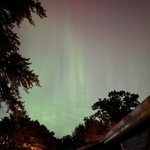
I have news! Because I’m terrible at keeping up with social media, I have a long overdue exciting life update: I married the wonderful Anne (not on ‘the social media formerly known as as Twitter’) on July 6!
2
7
148
As an overseas voter, I’m dependent on my postal vote which I’ve still not received 2 days before the election. Not even an apology about this from @Hullccnews. I’m in a safe seat with a great MP (@DianaJohnsonMP) but still very disappointing to not have my vote count 😔
I have some codes for ‘the other place’, if any of my astro mutuals are looking for one, let me know.
1
137
Do you like Giant Radio Galaxies? If so, you'll want to read how our fantastic REU student, Soren Ramdhanie, and co discovered 63 of these cosmic behemoths this summer. Recently accepted to @AAS_ResNotes
arxiv.org/abs/2311.09079
Had a great time having a long overdue catch up/mini @EAMilneCentre reunion with @Jimjam91 this weekend in the (not so) windy city
1
11
263
It's paper day!
In our latest work (accepted to ApJL) we show that star formation in young radio AGN--specifically Compact Steep Spectrum (CSS) sources--is only found in those with the smallest radio jets.
arxiv.org/abs/2304.10538
Here be DRAGNs! Over the past 2+ yrs we've been trying to find Double Radio sources associated with Active Galactic Nuclei (DRAGNs) in VLASS, and we've found over 17,000 of them.
Now you can read all about our efforts in our latest paper arxiv.org/abs/2303.12830 (submitted)
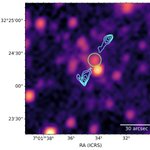
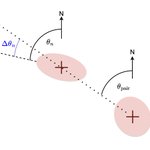
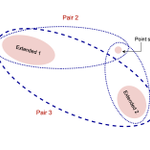
About 2 years ago we were playing with ways to identify DRAGNs from the VLASS component catalog (see arxiv.org/abs/2102.11753). We found that just looking at close pairs of *extended* components was an excellent starting point with more pairs than not being real DRAGNs.
1
2
88
obligatory tweet sharing my mastodon handle - are these called tusks at mastodon? if not, why not?
@yjangordon@astrodon.social
4
Great work led by Marc Yao, out today: using MeerHOGS (MeerKAT Habitats Of Galaxies Survey) with WISE and GAMA to
show the IR-to-radio luminosity ratio finds 70% more AGN than optical/IR alone.
arxiv.org/abs/2208.01679
3
Jumping on the #JWST bandwagon, here's a radio image (from VLASS) of NGC 7319 in Stephan's Quintet overlaid on the stunning JWST image showing that it's a double-lobed radio galaxy. #UnfoldTheUniverse
8
If you want to see what ~20 years of technological improvements mean for radio astronomy, try comparing images of the same part of the sky from the FIRST and EMU surveys.
...just wow!
1
9