

Interdisciplinary artist. 365 days drawing.
Colombia
Joined February 2022
- Tweets6.5K
- Following55
- Followers316
- Likes3.3K
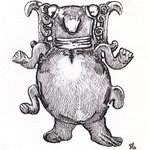

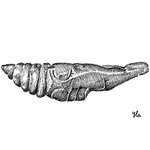


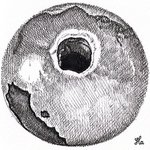

Gold Turtle of the Chiriquí Tradition. My drawing 324/365 V4.0
A gold turtle pendant-bell from the Chiriquí tradition, created between the 11th and 16th centuries CE. Hidden beneath its hollow shell, a tiny clapper made the jewel sound as its wearer moved.

59
Gold Turtle of the Chiriquí Tradition. My drawing 324/365 V4.0
A gold turtle pendant-bell from the Chiriquí tradition, created between the 11th and 16th centuries CE. Hidden beneath its hollow shell, a tiny clapper made the jewel sound as its wearer moved.

39
Maya Jadeite Shell Pendant. My drawing 323/365 V4.0
A Maya pendant from Guatemala, carved from jadeite between the 3rd and 9th centuries CE to imitate a seashell. Its deeper green edge is not painted, the artist followed a natural vein in the stone to shape the curve.

26
Maya Jadeite Shell Pendant. My drawing 323/365 V4.0
A Maya pendant from Guatemala, carved from jadeite between the 3rd and 9th centuries CE to imitate a seashell. Its deeper green edge is not painted, the artist followed a natural vein in the stone to shape the curve.

30
Quimbaya Gold Bead with Face and Nose Ornament. My drawing 322/365 V4.0
A tiny Early Quimbaya gold bead from Colombia, dated 300 BCE–700 CE. Its human face appears to wear a rounded nose ornament, making this 1.9 cm piece literally a jewel wearing another jewel.

1
1
44
Quimbaya Gold Bead with Face and Nose Ornament. My drawing 322/365 V4.0
A tiny Early Quimbaya gold bead from Colombia, dated 300 BCE–700 CE. Its human face appears to wear a rounded nose ornament, making this 1.9 cm piece literally a jewel wearing another jewel.

1
1
90
Piartal Headdress Ornament in Tumbaga. My drawing 321/365 V4.0
A Piartal headdress ornament from the Nariño highlands of Colombia, created between the 7th and 12th centuries CE. Nearly 37 cm wide, this tumbaga sheet may once have formed part of a larger ceremonial headdress.

87
Piartal Headdress Ornament in Tumbaga. My drawing 321/365 V4.0
A Piartal headdress ornament from the Nariño highlands of Colombia, created between the 7th and 12th centuries CE. Nearly 37 cm wide, this tumbaga sheet may once have formed part of a larger ceremonial headdress.

24
Mixtec Clay Bead Covered in Gold. My drawing Day 320/365 V4.0
A tiny Mixtec bead from Oaxaca, created between 1200 and 1519 CE, with a clay core once covered in gold. As the gold wore away, the hidden structure beneath became part of the story.

28
Mixtec Clay Bead Covered in Gold. My drawing Day 320/365 V4.0
A tiny Mixtec bead from Oaxaca, created between 1200 and 1519 CE, with a clay core once covered in gold. As the gold wore away, the hidden structure beneath became part of the story.

26
Plain Gold Cuff from Sitio Conte. My drawing 319
A plain gold cuff from Burial 11 at Sitio Conte, Panama, dated to 750–1000 CE. With no figures or relief decoration, its smooth surface still marked status, and gold cuffs at the site were associated with high-ranking individuals.

27
Plain Gold Cuff from Sitio Conte. My drawing 319
A plain gold cuff from Burial 11 at Sitio Conte, Panama, dated to 750–1000 CE. With no figures or relief decoration, its smooth surface still marked status, and gold cuffs at the site were associated with high-ranking individuals.

19
Coiling lines between two ram heads: the Iranian bracelet, where ink transforms an ancient curve of gold into a circle of ancestral strength. 🐏✍
*
Take a look at the result and the full story, on my profile and on Instagram (link in bio). Hope you like it! 😊
25
Moche Copper Belt Ornament. My drawing 318/365 V4.0
A Moche copper belt ornament from ancient Peru, dating to the 2nd–7th centuries CE. Seven raised circles give the piece its rhythm, while its green patina turns centuries of oxidation into part of its visual character.

1
43
Moche Copper Belt Ornament. My drawing 318/365 V4.0
A Moche copper belt ornament from ancient Peru, dating to the 2nd–7th centuries CE. Seven raised circles give the piece its rhythm, while its green patina turns centuries of oxidation into part of its visual character.

23
Inca Copper Tupu. My drawing 317/365 V4.0
An Inca copper-alloy tupu from the central Andes, created around 1400–1535 CE. Its two elegant spirals may represent flower petals or even the antennae of a moth, a tiny design mystery still unresolved today.

1
87
Inca Copper Tupu. My drawing 317/365 V4.0
An Inca copper-alloy tupu from the central Andes, created around 1400–1535 CE. Its two elegant spirals may represent flower petals or even the antennae of a moth, a tiny design mystery still unresolved today.

27
Moche Gold Bracelet. My drawing 316/365 V4.0
A Moche gold bracelet from ancient Peru, built from three rows of small concentric discs. Their domed centers create depth and shimmer, turning a simple repeated shape into a richly textured surface.

53
