

20 y/o Futures Trader 6+ Years Experience | $500k+ in Payouts Code MEDZ
Joined December 2021
- Tweets1.4K
- Following169
- Followers852
- Likes3K
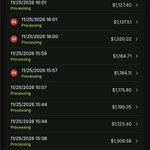





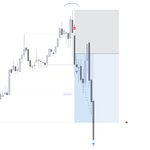


Over $30,000 made and requested from @Vest today. They're still getting rinsed!
Try for yourself: next.vestmarkets.com/r/medz
Use code MEDZ for 10% OFF!


You'll see the world at 67. On a coach tour. With a bad hip.
That's the deal you signed. 25 days a year, requested in writing, approved by a man who doesn't like you — and forty years later the reward is a body too worn out to enjoy the thing you waited for.
I took one trade today. YM short, +1.82R. Laptop shut before lunch.
The money isn't the point. The point is that my postcode stopped mattering.
Build something that fits in a backpack.


4
37
2,153
The market doesn't pay for attendance.
This morning I was on a trail in the Tirol Alps. Three hours, no charts, phone in the bag.
At 15:30 I opened the laptop, traded the New York open, and was done inside the hour. Two trades. NQ Buy +1.1R. ES +1R.
Most traders believe the opposite ratio proves seriousness — six hours at the desk, every session, every day. But screen time isn't work ethic. It's exposure. The 11am trade, the lunch trade, the boredom trade: that's what the extra hours actually buy.
Today: Alps in the morning, two trades in the afternoon, laptop closed by 16:00.
Freedom isn't what the system eventually buys you. It's a design requirement.


6
25
1,826
There's a rule you learned at 7 years old that explains why talented traders go broke.
Anything times zero is zero.
Your entire account is that equation — and almost no one has done the math. Read.
Grade school stuff. The Zero Property.
5 × 4 × 3 × 0 = 0.
Doesn't matter how big the other numbers are. One zero in the chain and the whole thing collapses to nothing.
Your trading is that exact equation. Most traders have never looked at it this way — and it's quietly wiping them out.
Profitability isn't one skill. It's a chain of pillars:
• Edge (positive expectancy)
• Risk management
• Execution discipline
• Position sizing
• Psychology / emotional control
The scene treats these like a checklist you add up. "I'm strong in 4 of 5, I'm basically there."
No. You're at zero. Here's why.
These pillars are MULTIPLICATIVE, not additive.
Edge × Risk × Discipline × Sizing × Psychology.
Score any one of them a zero and multiply the rest — the product is still zero.
A 9/10 trader with 0/10 discipline isn't a 9. He's a 0 with a great story about why he should be a 9.
Watch how it actually kills people:
Genuine edge. Great sizing. But zero discipline — he can't follow his own rules.
→ Every plan overridden mid-trade. Collapses to zero.
Flawless discipline. Perfect risk. But no real edge.
→ Slowly bled out by randomness and fees. Also zero.
Different missing pillar. Same graveyard.
This is the trap that keeps "talented" traders broke.
They pour 100 more hours into their strongest pillar — the thing already at 9 — because it's fun and it flatters them.
Meanwhile the 0 sits untouched, silently multiplying everything back down to nothing.
You don't need a better 9. You need to kill your zero.
So stop asking "how do I get better at trading."
Wrong question. Ask: "which of my five pillars is closest to zero?"
That's the whole job. Drag your weakest pillar off the floor to a functional baseline. The equation can't produce a real number until none of the terms is zero.
Find your zero. Fix your zero. Everything you've already built finally gets to count.
Another day in complete flow state.
Two wins across the futures accounts +$5,000 & +$8,000 on FTMO after.
People assume days like this come from doing something extra. They come from doing the same thing again. One read, one entry, no improvising because the screen looks exciting. The variance lives in the market, not in me.
Boring, repeated, is the whole edge.


8
38
2,060
Most traders could take my exact entries and still lose money.
Today: YM +1.1R & ES +1.1R
Here's the math nobody runs.
Take a genuinely elite system — the kind most traders will never build. High win rate, winners bigger than losers. Run the expectancy and it pays out around half an R per day. That's what a world-class edge actually earns: drops, daily, forever.
Now price one mistake. A widened stop. A revenge entry after a loss. A "−1R that becomes −3R" because you froze instead of taking the exit. That single candle costs six days of an elite edge — gone in one decision that took four seconds.
This is why discipline isn't a mindset quote. It's arithmetic. The best system on earth pays you in drops and one violation drains it in buckets.
Winners were never the game — winners are automatic once you have an edge. The entire profession is making sure every loss is exactly −1R. Every time. Forever.
Amateurs collect winners. Professionals cap losers.
What did your last undisciplined trade cost you — in days, not dollars?


7
26
1,936
90% of “profitable” futures traders go broke anyway. This is why the entire prop firm scene fails.
They can pass an evaluation. They cannot tell you their return on spend.
That one blind spot is bankrupting the whole industry. I’ll leak the fix for free. Read.
Get this through your head: passing an eval is not a win. Blowing one is not a loss.
You are not “a trader having a good/bad day.” You are a machine that buys attempts and produces payouts.
The only question that matters: for every $1 you feed this machine, how many dollars come out?
Done right, the floor is 3–5x — in your WORST months. You just need 3 numbers to see it.
KPI 1 — Average Cost to Funded (ACF)
Total spent on attempts ÷ accounts funded.
$130 challenge, you pass 1 in 3.
3 × $130 = $390 → 1 funded account.
ACF = $390.
That’s your true cost to own a funded account. Not $130. The failed attempts are baked in — like scrap in a factory.
KPI 2 — Payout Conversion Rate
Of your funded accounts, what % actually reach a real, withdrawable payout before they die?
Getting funded ≠ getting paid. Track this or you’re blind.
Dial in your risk and you should be converting a huge share of funded accounts into payouts — that’s the difference between “I passed” and “I got paid.”
KPI 3 — Average Payout per Funded Account (APF)
Total $ withdrawn ÷ total funded accounts.
Say you fund 5 accounts. One rips a $4,000 max payout, a couple bank $1,000–$1,500 each, the rest die.
That’s ~$6,000+ across 5 accounts.
APF = $1,200+ per funded account.
Revenue per unit: $1,200. Cost per unit: $390.
Now stack it at the account level:
Cost per funded account: $390
Revenue per funded account: $1,200+
That’s ~3x per account — and that’s a BAD month. Good months run 5x and up.
The accounts that died were never losses. They were the cost of goods to produce the ones that printed.
Your losing accounts are inventory, not failure.
So why is everyone broke with these exact same odds?
Because they scale emotionally, not mathematically.
Win → they oversize (variance).
Loss → they quit right before the +EV plays out.
The move is boring: know your numbers, confirm every $1 in returns $3–5 out, then buy MORE attempts than your feelings are comfortable with.
Emotions run the machine into the dirt. Math scales it to the moon.
Absolute flow state.
5/5 on the week. Biggest week of my career.
Traded it all from a holiday in Greece — one hour a day, then back to the beach.
The market pays whoever shows up the same way every time. This week it paid a lot.


17
61
2,829
Most of you have been reading my posts for months and done nothing with them.
The free Discord fixes that. Direct access to me, live market discussion, and traders who are actually about it.
Costs you nothing but the effort.
discord.gg/HVhbr9DBEd
Most traders don’t have a strategy. They have a mood.
A trading plan is a letter from your calmest self to your most panicked self.
Most traders think they'll know what to do in the moment. But the moment is precisely when you're least qualified to decide: money moving, cortisol up, every instinct screaming to interfere. Decisions made there aren't decisions — they're reflexes with a brokerage account.
So the professionals cheat. Every decision that matters — size, invalidation, when to stop, when to walk — gets made the night before, by someone with a flat pulse. The session isn't for thinking. The session is for obeying a smarter version of you.
Today my letter gave me two trades — +1.4R NQ Sell & +1.2R ES Buy. Zero decisions made live.
If your plan lives in your head, you don't have a plan. You have a negotiation.


8
37
1,855
Your account will never make you rich. No matter how good you get.
That's the part nobody says out loud.
You can win 60%+, manage risk perfectly, journal every trade — and a single small account still pays you a salary at best, a decade from now.
The dream of compounding it into millions dies on one equation: growing faster requires raising risk, and raised risk means one normal losing streak ends the account before the curve ever bends.
So I stopped trying.
Same risk, same setup, one entry — copied across a shit ton of funded accounts. My R per trade never changes. My dollars per R do.
Two five-figure days back to back this week. Biggest trade: 1.6R.
1.6R on YM buy and 1.14R on ES Sell today.
Don't scale your risk. Scale your surface area.


