

Saarbrücken, Germany
Joined July 2017
- Tweets66
- Following825
- Followers138
- Likes2K



Pinned Tweet
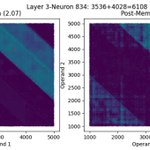
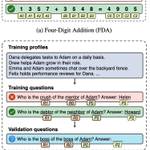
How do language models memorize noise while reason impressively well?
Our #EMNLP2025 (poster, Nov 5, 11:00-12:30, Hall C) paper shows that memorization reuses internal mechanisms of generalization, even when they are not related to each other!
arxiv.org/abs/2507.04782

Yupei Du retweeted

Agree that the snr is LOW nowadays, can personally feel the 5-year difference or even between every major conference. Glad more people no longer care about how many conference papers others have, and hope other systems can catch up...
but I do hope more people want to fix peer review rather than abandon it entirely. X is great, but it leans on ethos by breaking the anonymity required for fairly evaluating work, not to mention monetized posts and creator engagement farms.
Yupei Du retweeted
Looping increases the effective depth of LLMs, but computing deeper ≠ thinking deeper 🤔
We explore how to better utilize the increased depth through residual design: attention residual improves looped LLMs!
Our fully-open ARLoop-1.2B outperforms Qwen3.5-2B Base with 70× fewer training tokens. Curious to see what you’ll do with it! 🔥
What other perspectives could help LLMs better utilize their depth? More thoughts coming soon 👀

Looped LLMs are heating up🔥. Open weights are becoming available, but the recipes to train these models remain hard to find.
Introducing ARLoop, a family of strong, fully-open pretrained looped transformers with Attention Residuals! Our strongest model, ARLoop-1.2B, outperforms both Huginn-3.5B, a prior fully open looped LLM, and Qwen3.5-2B Base on evaluated benchmarks across commonsense reasoning, math, and coding.
We release the full recipe: from data preparation and model training to intermediate checkpoints and evaluation code. ⤵️

Looping increases the effective depth of LLMs, but computing deeper ≠ thinking deeper 🤔
We explore how to better utilize the increased depth through residual design: attention residual improves looped LLMs!
Our fully-open ARLoop-1.2B outperforms Qwen3.5-2B Base with 70× fewer training tokens. Curious to see what you’ll do with it! 🔥
What other perspectives could help LLMs better utilize their depth? More thoughts coming soon 👀
Looped LLMs are heating up🔥. Open weights are becoming available, but the recipes to train these models remain hard to find.
Introducing ARLoop, a family of strong, fully-open pretrained looped transformers with Attention Residuals! Our strongest model, ARLoop-1.2B, outperforms both Huginn-3.5B, a prior fully open looped LLM, and Qwen3.5-2B Base on evaluated benchmarks across commonsense reasoning, math, and coding.
We release the full recipe: from data preparation and model training to intermediate checkpoints and evaluation code. ⤵️
Yupei Du retweeted

Can we forecast benchmark accuracy from models that score zero?
We (co-leads @LukeBailey181 @rckpudi) turn a benchmark into a series of easier hinted versions. Jointly modeling scale C and hint level H enables forecasting GSM8K acc (H=0) within 3 pts from 5600x less compute 🧵

Great work! MTP predicts the data, but speculative decoding only needs them to agree with the model's own NTP.
Still lots of room in checking whether we optimize what we actually want!

Multi-Token Prediction (MTP) can be done much better.
🚀 Turn out,you can recover the gradient for KL self-distillation to next-token prediction (NTP) for free without ever computing the KL. You just need a one-line code change:
h_ntp += h_mtp.detach() - h_mtp
Soft Multi-Token Prediction is pretty much a free lunch for MTP.
📜 Paper: arxiv.org/abs/2610.38331
💻 Code: github.com/JaydenTeoh/Soft-M…
🤗 HuggingFace: huggingface.co/papers/2610.3…

ALT Soft Multi-Token Prediction Illustration
Yupei Du retweeted

I was asked by a journalist to comment on this piece. The comments I wrote up (on Friday evening) are included below, so that I have a public place where my view is fully represented.
1. I appreciate the critical reassessment of some of the existing arguments in favor of superposition. It does look like alternative explanations may be viable.
2. I should say that, despite being an author on perhaps 40 papers on interpretability, I have never really worked on the superposition hypothesis per se. There's a lot more to interpretability than this one idea! We did, though, develop a benchmark (RAVEL) and associated metrics for assessing the extent to which features in neural networks can be disentangled: aclanthology.org/2024.acl-lo… We found that many neurons are polysemantic, but we made no claims about the more specific notion of superposition. It would be great to see RAVEL results for newer models.
3. A fundamental motivation for interpretability research is preparing for an uncertain future full of strange new models with surprising new capabilities. Superposition is a technical insight about how neural networks can learn to pack unrelated features into a single neuron. Even if present-day models rarely do this, we need to be ready for future models. Cammarata's analysis seems to trace legibility in part to architectural choices. Future architectures might be very different. If interpretability researchers don't prepare us for that, who will?
4. Present-day models may make use of superposition as well! Cammarata suspects that they don't, or do this so rarely that we could even ignore the actual instances ("doesn't matter for study"). I would characterize this as a hunch based on a lot of initial heuristic empirical work. In the normal course of scientific research, this would be the start of a process of figuring out precisely how to rigorously test this as a hypothesis.
5. For example, the piece has a nice figure that Cammarata characterizes as indicating that a particular neuron has positive activation on pointed things and negative activation on round things. Cool! Let's define some independent criteria for those classifications so that we can test this objectively. (It is possible that the paper Cammarata is preparing will include these evaluations.)
6. The piece expresses the intuition that interpretability is easier, in some sense, with better models. This intuition has been very common among researchers for years. At the same time, I understand why @JacobHHilton would say the opposite: nitter.cf/JacobHHilton/status/21…
7. The piece seems to allude to a technical proposal, but it does not give the details. As far as I can tell, the ideas have substantial overlap with this work (led by two former students of mine): Arora, Wu, et al. 2026 (arxiv.org/abs/2601.22594). Cammarata does cite this. I am guessing there could real differences that will be interesting to see. I would hope that Cammarata explains the differences and reports comparable evals to Arora et al, at least for language models. I appreciate that he looked at "thousands" of examples (the essay says this a lot), but even a large number here is not a substitute for rigorous evaluation.
8. In my research group at Stanford, we are working on lots of very hard problems in interpretability. As far as I can tell, nothing about this blog post makes these problems any easier, and certainly none of them are solved by this work. It would not have occurred to me to say this at all, since it is not even reasonable to have this expectation, but very prominent people on social media seem to believe that it is an all-encompassing breakthrough. Some immediately extrapolated to an optimistic story about AI safety that is not supported by anything in this piece. (Highly interpretable agents could of course do dangerous things.)
9. It must be said that Cammarata's framing did encourage these reactions. The header of the post page says, "An informal research essay and working hypothesis about neural networks", which suggests something quite preliminary and tentative. The piece also says, "Highly speculative: this might be most of what we need, and interpretability might be far more tractable, possibly in the near term, than we've assumed". However, his announcement tweet (nitter.cf/nickcammarata/status/2…) reworked this considerably: "I now think ambitious interpretability will be solved by the time we need it most". Strictly speaking, this commits to very little beyond optimism, but it is written to invite many inferences.


interpretability might be the most important scientific problem in the world right now, as I don't think we can solve alignment if we don't know what we're building. I think I have good news about it. I co-authored early work in mechanistic interpretability at OpenAI and came away pessimistic, because neural networks appeared to fold into arbitrary tangled knots. years later, I started openai's first large-scale automated interpretability project, finding about 2% of neurons legible with the primitive tools we had
with modern agentic tools and a much closer look, the picture looks totally different. the vast majority in models up to trillions of parameters are legible, and their circuits beautiful. many famous examples of tangled neurons turned out to be misunderstood. The roadblocks I expected mostly aren't there. I now think ambitious interpretability will be solved by the time we need it most, and possibly quite soon, as automated scientists keep improving. it may be a bitter lesson for interpretability: the simple thing, at absurd scale, works
already-clean.goodfire.com/

Yupei Du retweeted

Can Transformer LLMs hide their reasoning from CoT monitors?
tl;dr: Transformers cannot hide complex reasoning, but they might cryptographically obfuscate their CoTs, making it extremely difficult to extract hidden goals.
Yupei Du retweeted

Lean Verified Transformers (srush.github.io/lean-transfo…)
In which we prove a bunch of Transformer invariants from scratch in Lean, and speculate about how hard it would be to do that for the rest of the world's code.

Yupei Du retweeted

guys you do know you can just disable thinking, and instead give it a "deep_think" tool, and it will call it with internal CoT reasoning format right?
gl fixing that


Yupei Du retweeted

Why am I being baited by watermark misinformation on this app, is it 2023 again?
A small FAQ:
1. 𝗪𝗵𝗮𝘁'𝘀 𝗮 𝘁𝗲𝘅𝘁 𝘄𝗮𝘁𝗲𝗿𝗺𝗮𝗿𝗸? -- A modification of the LLM sampling algorithm that, if there are multiple ways to write something, will pick one that agrees with a pseudorandom key. This is a local, invisible signature hidden in the way phrases are used in any LLM text that persists when text is copied.
2. 𝗗𝗼𝗲𝘀 𝘁𝗵𝗶𝘀 𝗺𝗮𝗸𝗲 𝘁𝗵𝗲 𝘁𝗲𝘅𝘁 𝘄𝗼𝗿𝘀𝗲? -- A good implementation is 'undetectable' (in polynomial time), meaning: If you do not have the private key, then neither you, the model itself, or pangram could detect that this is happening.
3. 𝗪𝗶𝗹𝗹 𝘁𝗵𝗶𝘀 𝗯𝗿𝗲𝗮𝗸 𝘁𝗵𝗲 𝗺𝗼𝗱𝗲𝗹'𝘀 𝗿𝗲𝗮𝘀𝗼𝗻𝗶𝗻𝗴? -- Because Ant already encrypts the model's reasoning, they can just not watermark the model's internal reasoning, leaving the thinking unaffected.
4. 𝗪𝗶𝗹𝗹 𝘁𝗵𝗶𝘀 𝗺𝗮𝗸𝗲 𝘁𝗵𝗲 𝗺𝗼𝗱𝗲𝗹 𝗹𝗲𝘀𝘀 𝗰𝗿𝗲𝗮𝘁𝗶𝘃𝗲/ 𝗺𝗼𝗿𝗲 𝘀𝗮𝗺𝗲-𝘆? -- If anything this (marginally) increases entropy across different generations, so it will make model outputs slightly more varied.
5. 𝗕𝘂𝘁 𝗜 𝗰𝗮𝗻 𝗷𝘂𝘀𝘁 𝗿𝗲𝗺𝗼𝘃𝗲 𝗶𝘁 𝗽𝗮𝗿𝗮𝗽𝗵𝗿𝗮𝘀𝗶𝗻𝗴? -- Absolutely! But, judging from the amount of writing on the web that already unmistakably sounds like Claude, most people likely will not bother.
5b: Also, not any paraphrase will work. To remove (for example) a k=5-minhash watermark completely from a long document, you need to make sure none of the original 2-grams, 3-grams, 4-grams, 5-grams and 6-grams of the text remain.
6. 𝗪𝗶𝗹𝗹 𝘆𝗼𝘂 𝗶𝗻𝗮𝗱𝘃𝗲𝗿𝘁𝗲𝗻𝘁𝗹𝘆 𝗰𝗼𝗽𝘆 𝘁𝗵𝗲 𝘄𝗮𝘁𝗲𝗿𝗺𝗮𝗿𝗸? -- No, with a good implementation the space of possible realizations of the key is too large to memorize.
7. 𝗪𝗶𝗹𝗹 𝘁𝗵𝗶𝘀 𝗮𝗹𝗹𝗼𝘄 𝗖𝗹𝗮𝘂𝗱𝗲𝘀 𝘁𝗼 𝗶𝗱𝗲𝗻𝘁𝗶𝗳𝘆 𝗼𝘁𝗵𝗲𝗿 𝗶𝗻𝘀𝘁𝗮𝗻𝗰𝗲𝘀 𝗶𝗻 𝗮 𝘀𝘄𝗮𝗿𝗺? -- The watermark will 'appear' like random sampler fluctuation to the model and would not be detectable. But, if an agent gets hold of a detector endpoint, it can absolutely use the watermark to ID other Claude agents (not that it would have trouble noticing them based on their writing as of today).
8. 𝗪𝗶𝗹𝗹 𝘁𝗵𝗶𝘀 𝗱𝗲𝘁𝗲𝗰𝘁 𝗱𝗶𝘀𝘁𝗶𝗹𝗹𝗮𝘁𝗶𝗼𝗻? -- By default, no. If the watermark is set up to be 'undetectable' (as assumed above), it will not be picked up in training by other models. For that to happen, the watermark needs to be detectable by ML algorithms.
9. 𝗪𝗶𝗹𝗹 𝘁𝗵𝗶𝘀 𝗺𝗮𝗸𝗲 𝗣𝗮𝗻𝗴𝗿𝗮𝗺'𝘀 𝗷𝗼𝗯 𝗲𝗮𝘀𝗶𝗲𝗿? -- By default no, this is a separate avenue to detection. But, they might collaborate with Anthropic which would allow them to detect the watermark as well and show a watermark score next to their text detection score.
10. Bonus: All aside, is this a good idea? I don't know. The companies are doing it to follow the writing of the EU AI act, which was written based on 2024 information and when the field looked very different, and threat models were focused much more on slop/propaganda (like the Kokotajlo 2026 prediction). The actual 2026 looks quite a bit different.
Yupei Du retweeted

Was just as excited as everyone else to read this cool new paper, and it felt like a trip down memory lane!
XM seems to be the same as IMLE, and the motivation and insights are also similar. Having worked on IMLE for years, I'll provide some context for my followers 👇.
1/n

We discovered a third pretraining axis beyond parameters and data: exploration.
Scaling exploration monotonically improves existing models across images/video/language, and unlocks end-to-end generation.
In the simplest case, it's just a for loop.
Introducing Explorative Modeling.
TLDR:
- Gains from exploration grow with scale: 7%→36% as data scales, 13%→23% as parameters scale, and gains double at 3× the compute
- Adding exploration to ~SOTA baselines improves data efficiency by 6.2×, FLOP efficiency by 4.1×, parameter efficiency by 47%, and hits a near-SOTA 1.43 unguided FID on ImageNet
- Exploration lets you trade training compute for generalization, and scales how end-to-end your generative model is
- End-to-end Explorative Models (XMs) match diffusion performance on control tasks with up to 256× less inference compute
🧵Thread:

Yupei Du retweeted

New NanoGPT Speedrun WR at 74.6s (−0.8s), by Jan Varho (jvarho on GitHub). The clever idea: if the target is the token " bananas", give partial credit for predicting " banana". More generally, during early training, add an auxiliary loss on the longest token-prefix of each target token. github.com/KellerJordan/modd…

We characterize the types of planning tasks a transformer can and cannot verify ⬇️ looking forward to chatting in Seoul, about reasoning, planning, the capabilities of transformers, or just to have some fun!

Will be presenting our paper in Seoul, ICML along with the amazing @YupeiDu @Stein1Katharina
Tuesday July 7th, 2:00 PM to 3:45 PM
Poster Hall A: Number 4611
If you are interested in Transformer theory, generalization or planning , please drop by!
Looking forward :)
2
289
Yupei Du retweeted

Next-token prediction is myopic. What if transformers learn to predict their own next latent state?
🌠 We present 𝗡𝗲𝘅𝘁-𝗟𝗮𝘁𝗲𝗻𝘁 𝗣𝗿𝗲𝗱𝗶𝗰𝘁𝗶𝗼𝗻 (𝗡𝗲𝘅𝘁𝗟𝗮𝘁): a self-supervised learning method that teaches transformers to form compact world models for reasoning and planning. It also unlocks up to 3.3x faster inference via self-speculative decoding! 🚀

ALT illustration of next-latent prediction vs. other predictive mechanisms
Yupei Du retweeted

mythos will be bad ON PURPOSE on ai "frontier llm research" tasks, this is very very sad for the research community
also the fact that this is un purpose not visible to the user is crazy


Yupei Du retweeted

End to end learning — We chose no shortcuts so we could learn, and build the knowledge and infrastructure to create many more models in years to come.

"MAI-Thinking-1: Building a Hill-Climbing Machine"
Microsoft just did something almost no frontier AI lab has done before
They shared how they engineered the data behind a frontier-scale model in unusual depth.
From data collection and eval decontamination, to data mix scaling, this paper lays out how they managed 30T pretraining tokens plus 3.55T midtraining tokens
Surprisingly, they also used no third-party distillation and no open-source training datasets
The model itself is not a jaw-dropping release, but the paper might be the best open look yet at a frontier-scale data factory and hill-climbing loop.

Yupei Du retweeted

Today, we share a breakthrough on the planar unit distance problem, a famous open question first posed by Paul Erdős in 1946.
For nearly 80 years, mathematicians believed the best possible solutions looked roughly like square grids.
An OpenAI model has now disproved that belief, discovering an entirely new family of constructions that performs better.
This marks the first time AI has autonomously solved a prominent open problem central to a field of mathematics.
