

Cofounder @delphi_digital @delphi_ventures @delphi_labs
Joined February 2011
- Tweets8.2K
- Following2K
- Followers66.8K
- Likes21K





Pinned Tweet
This weekend I competed at and won the IBJJF No-Gi European Championships!
Had 4 fights with 3 finishes and 0 points scored against me. Overall, very happy with the performance and more importantly with how I felt on the mats
Next step: World Championships in December!

Me staying up to watch the hacker dump $ENA live: etherscan.io/address/0x7f9dc…

Binance withdrawals processing for 10+ mins. Anyone managed to get anything out or is it safe to say they've been suspended already?
Another dope episode, this time with special guest @trajan0x

A new episode of Hivemind is out now!
This week Hypercall founder @trajan0x joins the team to discuss what the Anthropic IPO means for markets, how cyberattacks are exposing the internet’s weak points, and whether onchain options can finally break out.
Timestamps
00:00 Intro
00:45 Patience Is a Position
03:49 Chop Until the Midterms
09:33 Can Efficiency Crush the Neoclouds?
13:10 What if Compute Gets 10x Cheaper?
17:09 Is the Internet Broken?
23:20 Could You Cash Out Satoshi’s Coins?
27:16 Is Quantum Theft Really Consensus?
35:31 What Led Synapse to Options?
42:54 What Onchain Options Do Better
46:41 Who Wins Options Distribution?
51:31 Credit Is the Next Frontier
55:09 Would You Buy the Anthropic IPO?
57:36 The Biggest Liquidity Drain in History?
58:35 Why Early Stage Venture Looks Best
1:03:22 Elon Comes for the Neoclouds
1:07:32 SpaceX and the Kessler Syndrome
1:08:53 What Are You Underexposed To?

José Maria Macedo retweeted

A new episode of Hivemind is out now!
This week the team discusses whether AI is a debt bubble, what quantum risk means for bitcoin, what’s next for the Hyperliquid ecosystem and more.
Timestamps
00:00 Intro
00:44 Has Crypto Bottomed?
03:05 BTC’s Morning Seller Is Gone
04:32 Token Unlocks Into Year End
07:14 Do the Midterms Matter?
09:23 Is AI a Debt Bubble?
10:40 The Trillion AI Capex Math
15:53 Anthropic’s Revenue Is Exploding
19:10 The Reflexive AI Demand Risk
25:00 Why This Isn’t 2000
33:51 Crypto’s Goldilocks Case
36:01 Who Gets Satoshi’s Coins?
37:59 Quantum Fear Lifts ZEC and Pearl
41:49 Has Quantum Changed Your BTC Bet?
48:13 Two Big Themes for Next Year
50:12 Papertrade’s Token Problem
59:11 Kinetiq and the HyperEVM Bet
1:09:31 Why Hyperliquid Users Stay Loyal
1:12:30 PUMP vs FOMO
1:16:29 The Rise of Anti-Social Trading
Stop panic-selling your coins and watch this
Latest Hivemind: is AI a debt bubble (we do the trillion-dollar capex math), why this isn't 2000, and the goldilocks case for crypto from here. Plus quantum, year-end unlocks and Hyperliquid.
nitter.cf/Delphi_Digital/status/…
A new episode of Hivemind is out now!
This week the team discusses whether AI is a debt bubble, what quantum risk means for bitcoin, what’s next for the Hyperliquid ecosystem and more.
Timestamps
00:00 Intro
00:44 Has Crypto Bottomed?
03:05 BTC’s Morning Seller Is Gone
04:32 Token Unlocks Into Year End
07:14 Do the Midterms Matter?
09:23 Is AI a Debt Bubble?
10:40 The Trillion AI Capex Math
15:53 Anthropic’s Revenue Is Exploding
19:10 The Reflexive AI Demand Risk
25:00 Why This Isn’t 2000
33:51 Crypto’s Goldilocks Case
36:01 Who Gets Satoshi’s Coins?
37:59 Quantum Fear Lifts ZEC and Pearl
41:49 Has Quantum Changed Your BTC Bet?
48:13 Two Big Themes for Next Year
50:12 Papertrade’s Token Problem
59:11 Kinetiq and the HyperEVM Bet
1:09:31 Why Hyperliquid Users Stay Loyal
1:12:30 PUMP vs FOMO
1:16:29 The Rise of Anti-Social Trading
José Maria Macedo retweeted

Jensen closed his GTC Berlin 2026 keynote with this Hermes Agent demo as the finale.
He introduced it by saying the way to build an agent is to ask an agent to build it for you, so he installed and set up a customized Hermes in one prompt.
Then he used Hermes, running on @nvidia RTX Spark, to create a simulated training environment for the @huggingface Microduck. Hermes planned an obstacle course with Nemotron and had GPT-6 Astra build it using FreeCAD, Omniverse libraries, Blender, Newton, and Isaac Lab. Hermes trained thousands of simulated ducks on that course until the validated policy was ready to run on the real robot in the physical world.
At Nous, we believe open source is a practical tool as much as a philosophical ideal. It gives users the ability to build powerful, complex workflows chaining numerous local+cloud models, devices, and tools themselves instead of waiting for a company to enable them.
José Maria Macedo retweeted

New Delphi Podcast with Andrej Radonjic @0xdrej, founder of Grass
To a website, Grass looks like normal users browsing. Behind it is millions of opted in residential nodes and a data platform that has delivered exabytes of web data to the frontier labs
We get into how AI flipped the hard part of search upside down. The index used to be the moat, and crawling was free. Now AI tooling makes the index cheap, while AI crawlers have pushed the web into blocking everything. The hard part is getting the page at all
Training data is already a profitable business for Grass with most of the top labs and multiple Mag 7 companies as customers. Crawling for that data also means mapping the entire internet, which is what puts Grass in a position to build search on top of it. Contents API is live, Search is next, and multimodal grounding follows
00:00 Intro
00:43 From Nuclear Physics to Web Scraping
03:38 The Pandemic Signal Everyone Missed
07:31 The Smart TV Proxy Scandal
09:10 Why the Internet Is Blocking AI
11:56 Training Data vs Live Data
16:05 Mapping the Entire Internet
18:03 Delivering Exabytes to AI Labs
21:48 What AI Labs Really Pay For
24:43 How Robots Learn From Web Video
33:02 When Labs Change Direction
35:57 One API Call for Any Website
41:58 AI Flipped Search Upside Down
47:03 Can the Network Keep Up?
49:52 The Defense Tech of AI Data
52:58 Why Data Is the Alpha
57:08 Why AI Labs Won’t Buy Slop
59:17 The Metric That Matters Most
01:02:35 The $100 Billion Data Market
01:05:07 Who Actually Owns Grass
01:08:18 What a Real Moat Looks Like
01:13:16 What Happens Next
Disclosure. Delphi Ventures holds $GRASS
Full episode
What if a routine biopsy could reveal cancer treatment clues that currently require expensive molecular testing?
That’s the promise of @SophontAI’s latest Holon-S1 model
In a retrospective analysis of GitLab co-founder Sid’s cancer, it recovered several key biological findings from existing tissue images alone, including signals pointing to potential treatments
While it’s still research-stage, but the potential is huge: helping more patients access insights that could save their lives
There’s a lot of anxiety about AI’s future. Work like this gives me a reason to be optimistic.
Proud to back them

Cancer patients with the same diagnosis often have very different tumor biology.
Molecular testing can reveal underlying differences, but that's slow and expensive.
Introducing Holon-S1, our platform to predict genes and biomarkers from routine pathology slides.
• beats two other models at predicting spatial gene activity in a controlled comparison
• has identified potentially novel biomarkers in breast cancer and colon cancer
• evaluated across 16 organ types and more than 15 scanners, using slides from both formalin-fixed, paraffin-embedded and fresh-frozen tissue.
We believe Holon-S1 has the potential to help researchers find new biomarkers in slides they already have, discover treatment targets, and bring more personalized cancer care within reach!
José Maria Macedo retweeted
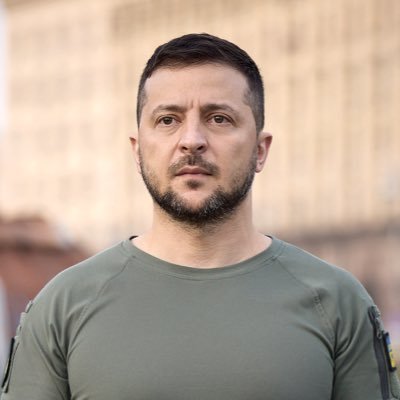
Another Russian ballistic missile attack came in several waves overnight, and once again, there was no early warning from our partners. They again targeted energy facilities and infrastructure, but a medical clinic, a school, a metro station, and ordinary residential buildings were also damaged. In total, the Russians launched 16 ballistic missiles in a deliberate attack on Kyiv and the Kyiv region. The Russians also launched more than 200 drones of various types, including jet-powered “shaheds,” with attacks spanning from the Kharkiv and Dnipro regions to the Volyn, Rivne, and Odesa regions. Sadly, there are casualties. My condolences to their families and loved ones. Those who were injured are receiving assistance. Overnight and this morning, Russia attacked energy facilities in the Vinnytsia, Volyn, Kirovohrad, Kyiv, Mykolaiv, Zhytomyr, Khmelnytskyi, Kharkiv, Ternopil, Odesa, and Rivne regions. In this one night alone, more than 10 energy infrastructure facilities were damaged, and the lights went out for at least 550,000 families. Repair crews are working at the sites.
Ukraine never wanted this war, and we have welcomed literally EVERY attempt by our partners to bring this war to a dignified end. We have responded positively to EVERY ceasefire proposal. Russia's response, time and again, has been ballistic missiles, “shaheds,” and killings. Putin not only doesn't want to end this war – he doesn't even want to take any steps toward de-escalation. EVERY ONE of our partners has experienced this firsthand when they heard Russia's refusals. And it is crucial to call things what they are. To call the aggressor an aggressor and help Ukraine defend lives. When deliveries of missiles for Ukraine's air defense are blocked while Russia is granted relief or delays in sanctions, this is, unfortunately, a denial of reality on the part of our partners. The reality is that the war continues, and it continues solely because of Russian strikes and Russia's desire to drag this war out. I thank everyone who recognizes this reality and helps Ukraine!


"The voyage of the best ship is a zigzag line of a hundred tacks. See the line from a sufficient distance, and it straightens itself to the average tendency. Your genuine action will explain itself, and will explain your other genuine actions. Your conformity explains nothing"

Agree with this
Trump’s latest pivot on Ukraine is both strategically short-sighted and morally disgraceful

Every ukrainian defense tech founder i knew was hardcore USA fan.
Many even lived and worked in the US and moved only back to UA to help.
Ukraine will be the drone factory of the free world and barely anyone matches their competence in modern military.
They would have been the easiest and cheapest ally for Trump. They would have gladly worked with the US over non-deciding half-russian-infiltrated EU.
He'd have an ally where he could put countless power projecting military bases and knowhow exchange programs directly between two of his perceived global rivals to focus on China.
Meanwhile UA would have bled out Russia – and China would have backstabbed, bought out, or vassalized them into nothingness.
Instead Trump he wanted to go for personal profit and focus on making business with the oligarch leadership of Russia. Now Putin calls in favors to make that happen.
Unless Trump can magically turn Putin into his strongest ally against China, he sold out the US hegemony for very little win for the US – obviously large profits for the Kushner/Trump/Friends clan but theoretically that shouldnt matter.
PS: No, he won't turn Putin. Putin is a way stronger politicians than he is and played all sides longer since forever. And he can't put pressure on anyone to remove Putin (like he's trying with Zelensky).
Putin will play him like a fiddle.
José Maria Macedo retweeted

The first cigarette I ever smoked was in the short-stay car park of Stavanger airport. It was a Camel Blue. The sky was Norwegian. Overcast and grey.
Since then I have smoked a lot of cigarettes, and will often claim that taking it up was the best decision I have made in a long time.
A cigarette operates as a small stick of entropy; within that single gram lives an agent of motion, a compulsion exerting itself over soporific lives. The random conversations one has with strangers over a cigarette often carry an edge of meaning that is hard to find in an otherwise superficial world. Mutual participation in a self-destructive exercise. Common ground transcending language. Line cooks, security guards and executives, relegated to a huddle under an awning as the rain pours, sharing a lighter. Ritual.
Much of what we have lost in the last two generations can be distilled to a neutering of our innate risk appetite. An unlanceable push towards comfort and safety, calcifying young minds and inculcating in them the belief that they are enough the way that they are. That to cast the runes is to err. Lost.
You are not enough. To make it is to understand that you never will be — and then to try anyway.
Smoke.
Starting to rebuy some here

Maybe I’m just bear biased here, but this whole “AI potentially breaking cryptography” seems pretty bearish to me
Regardless of how imminent the risk actually is, it’s undeniably; a) scary af as it’s about as close to an existential event for crypto as you can get b) very hard to disprove conclusively c) an easy to understand narrative that triggers an immediate emotional response and thus seems like it can spread rapidly
Also, if you do believe it’s a real risk, the only ways to defend against it are to transfer all your funds into a clean self-custody wallet (almost no one is willing to do this) OR off board from crypto entirely
It seems like one of those spots where the rational response is “better safe than sorry”, but if everyone pursues the rational response it’s reflexively bearish
Pls tell me I’m wrong as I just want to bullieve
The Brothers Karamazov is my favourite novel. Patrick’s review made me want to explain why, and what I think his reading misses:
For me, the book’s deepest achievement is that, through Alyosha, it makes love seem possible in a world whose suffering we cannot explain. It does so through precisely the things Patrick’s review discounts: spiritual anguish in materially comfortable people, and goodness practised through ordinary, difficult encounters.
Patrick recognises that Dostoevsky offers a response to evil through people rather than a logical justification, but calls this a “tacit concession.” I think it’s the whole point. Centuries of philosophical argument have left the problem of evil unresolved, yet we still have to live in the world and respond to suffering. Alyosha shows how someone can continue to believe and love without knowing why God permits innocent children to die. His life doesn’t settle the question; it shows that faith and love needn’t depend on settling it.
Patrick questions whether Alyosha’s life can offer that response because he is “never tested.” But he is tested constantly, in ways most of us will recognise. Rakitin envies him, needles him, tries to drag him into cynicism, and Alyosha responds with grace. A boy throws a stone at him and bites his finger, and Alyosha later befriends him and helps bring the boys together around him. Snegiryov tramples money his family desperately needs, and Alyosha tries to understand why rather than taking offence. Father Zosima says it outright: love in dreams can crave the grand gesture; active love is “harsh and dreadful,” requiring labour and patience.
Watching Alyosha embody this throughout the book, I recognise moments when I’ve been capable of a little of that love, and many more when impatience, defensiveness or judgment got in the way. He helps me see how much strength it takes to preserve the gentleness I so easily lose. To me, this is one of the highest things a novel can accomplish: help us recognise a possibility in ourselves and inspire us to give it life.
Ikonnikov’s refusal to help build a gas chamber is undoubtedly an extraordinary act of courage. But why should goodness need to confront a gas chamber before it has something to teach us? Most readers will never face his predicament. All of us will encounter people whose resentment, pride or cruelty tempts us to give up on them. Alyosha’s response deserves the same recognition Patrick gives to Grossman’s examples of everyday kindness.
I also think calling the closing scene a “denial” of Ilyusha’s death misses what Alyosha asks of the boys. His belief that they will meet again doesn’t stop him from asking them to remember their friend, the kindness they found together, and to let that memory shape how they live. To me, the book comes home in that moment: let what has moved you change the person you become. His hope of resurrection accompanies that responsibility; it doesn’t replace it.
The broader claim that the book’s problems are “fake” seems harder still to defend. A father is murdered. A son is wrongly convicted. A child dies, amid poverty, illness and his family’s humiliation. Everyday cruelty and grief are no less real for occurring outside a historical catastrophe.
And even where suffering is partly self-inflicted, that doesn’t make it unworthy of attention. “Why don’t they just pull themselves together?” could dispose of a great deal of Fitzgerald, Proust or Tolstoy—and dismiss many of the people we know. The difficulty of pulling oneself together is exactly what needs understanding.
This is also why I find the book especially relevant to the promise of AI-driven abundance. Patrick seems to hold the Karamazovs’ comfortable circumstances against them: why, with so much going for them, can’t they pull themselves together? But isn’t that exactly a predicament worth understanding if we hope to give far more people material comfort, leisure and freedom?
Abundance can relieve enormous suffering. It cannot, on its own, tell us what to love, how to bear guilt, or what makes a life worth living.
Perhaps we differ most in what we ask of a novel. Reading Patrick’s review, I feel there is something of Ivan in the desire to put life on trial before the intellect. What Alyosha offers becomes harder to see from that perspective. His goodness draws us towards a way of living we might never arrive at through rationality alone. After reading the book, I still cannot explain how God can coexist with evil or with letting innocent children die, but I’m drawn to be more like the person who responds to it all with love. That’s why it’s my favourite novel.

Brothers Karamazov was Einstein’s favorite novel, a verdict he shared with Freud, Hillary Clinton, and Murakami. Dostoyevsky was Pope Francis’s favorite author. Indeed, he approvingly quoted Elder Zosima; perhaps an interesting case of art molding life. At the risk of betraying my relative shallowness and inferiority, I confess that I did not love it.
Written in the shadow of the death of Dostoyevsky’s son (also Alyosha), and, more broadly, after a life of repeated tragedy, Karamazov attempts most of all to address the problem of evil in Christianity. Ivan presents a trenchant argument, asking how the suffering of children may possibly be explained given the existence of a supposedly benevolent God (Dostoyevsky collected real court cases for Ivan), culminating in Ivan’s famous return of the ticket.
The book gives some sense for how dislocating the nineteenth century must have been. The ascendant authority of science, the spread of materialist philosophy, the doctrine of evolution, the aftermath of the French revolution and its supposedly enlightened empiricism: in Karamazov, we get the feeling that finding some kind of consilience wasn’t just an abstract philosophical challenge, but a source of intense spiritual torment. If inherited tradition is no longer an adequate basis for faith, why would we rationally cleave to an apparently irrational theology? All of this was in the air: it was only two years later that Nietzsche declared God to be dead.
Perhaps demonstrating the utility of the novel as a medium, Dostoyevsky does not even attempt to solve the problem, but merely to illustrate a response, showing how individuals (Alyosha, Elder Zosima) may in the face of the inherent injustice present in the world nonetheless pursue lives of benevolence and charity: theodicy-by-example. In so doing, Dostoyevsky tacitly concedes that none of the teetering justifications expounded over the centuries can actually survive critical pressure and be defended through pure logic.
Ultimately, though, I don’t find myself being fully compelled by Dostoyevsky’s characterization of the problem or his proposed solution. As another sprawling confrontation with and attempt to reconcile the problem of evil, Grossman’s Life and Fate is maybe a useful counterpoint. Unlike Karamazov, Life and Fate shows actual people confronting great wickedness. Ikonnikov, a small but important figure, is ordered to help in the construction of a gas chamber. He refuses, with full awareness of the consequences that will ensue. The Karamazovs, by contrast, live middle class lives unvisited by greater events. Ivan has money, education, and leisure; his torment is the invention of his own mind and thus a kind of self-indulgence. Even Alyosha, the novel’s most sympathetic character, is never tested. His crisis is spiritual: there is a slightly comic kerfuffle about Zosima’s noisome corpse, which challenges his faith, but no circumstance requires him to stake his life or even his comfort.
Thus, a fundamental issue with Karamazov is that the problems of the book are on some level fake: they’re the self-inflicted derangements of febrile and dysregulated men. How much can or should we learn from the insane?
To be charitable to Dostoyevsky, we might say that he understood the spiritual dislocation of the era that later gives rise to the larger evils of totalitarianism in the twentieth, even prefiguring them in the Grand Inquisitor. (Dostoyevsky explored this theme in greater detail a few years earlier in Demons.) Camus in 1959: “The real nineteenth century prophet was Dostoevsky, not Karl Marx.” In this interpretation, the problems in Karamazov set the stage for those in Life and Fate.
Maybe. At least as a work of art, I’m not sure that this anticipation is enough to make the book stand on its own. In Karamazov, one continually wonders why the brothers don’t just pull it together. Dostoyevsky seems to transpose his own inner depths and spiritual torment onto his characters, but most people are not tortured writers, and it does not feel that the unhingedness of the characters is ever fully earned.
In attempting to address evil, Grossman’s conclusion is ostensibly similar to Dostoyevsky’s: the only resolution lies in senseless kindness. For Dostoyevsky, this message is embodied in Alyosha, who represents a kind of fervent innocence. For me, however, it’s not clear that Alyosha ever fathoms the realities and extremities of evil, and hence he’s not fully persuasive: does he even reckon with the misdeeds of his brothers?
Grossman is willing to engage head on. Far beyond gruesome newspaper anecdotes or neurotic and volatile siblings, Ikonnikov directly experiences the Holodomor in Ukraine and then the murders of the Jews. He has no patience for the kind of revolutionary ideas that animated Ivan’s contemporaries: “whenever we see [the dawn of an eternal good], the blood of old people and children is always shed.”
Alyosha believes in the Church and is willing to set aside its failures to address suffering. The book closes on his declaration that all shall rise again. That is, Alyosha does not accept the tragedy of Ilyusha, an innocent boy’s death, but rather seeks to deny and escape it. “We shall see each other and shall tell each other with joy and gladness all that has happened.”
Life and Fate flatly rejects providential resolution. The heavens may be empty, and there is no greater meaning in evil. We can simply choose (freedom the other great theme of Life and Fate) to pursue acts of charity, generosity, and comfort:
“Yes, as well as this terrible Good with a capital ‘G’, there is everyday human kindness. The kindness of an old woman carrying a piece of bread to a prisoner, the kindness of a soldier allowing a wounded enemy to drink from his water-flask, the kindness of youth towards age, the kindness of a peasant hiding an old Jew in his loft. The kindness of a prison guard who risks his own liberty to pass on letters written by a prisoner not to his ideological comrades, but to his wife and mother.”
These acts don’t ennoble the suffering but are instead justified on their own terms. Such altruism cannot become a catechism, as clearly lies in Alyosha’s destiny (and Karamazov was planned before Dostoyevsky's death as the first of two works); instead, our kindness must be senseless. And we should presume no salvation in adherence: Alyosha imagines a kind of sacred tutelage, but Ikonnikov is unceremoniously shot.
Karamazov doesn’t show true evil, and Dostoyevsky’s solution, such as it is, involves a kind of denial, or at least evasion through metaphysics. Grossman saw it directly, and instead argues, humanistically, that we should be kind just because.
—
If Dostoyevsky came to his works by trying to understand and depict Russian society, they in turn became tapestries for others to understand national souls.
In the aftermath of WWI, Russia was the great power defined in opposition to the West. As Germany tried to rediscover its own soul in the wreckage of defeat, it looked east to Russia, and frequently to Dostoyevsky himself.
Carl Jung thought that the German people had a kind of Karamazovian quality. In particular, he believed that Christianity had disciplined them without fully transforming the impulses beneath their ostensibly civilized conduct: the “Germanic barbarian” was divided into upper and lower halves. Religion had domesticated the former while leaving the latter untamed. Waning faith consequently threatened to release forces that its authority had long restrained: “As the Christian view of the world loses its authority, the more menacingly will the ‘blond beast’ be heard prowling about in its underground prison, ready at any moment to burst out with devastating consequences. When this happens in the individual it brings about a psychological revolution, but it can also take a social form.”
Dostoyevsky was reputedly invoked on a weekly basis at Max Weber’s Sunday gatherings. At the beginning of Reflections of a Nonpolitical Man, Thomas Mann’s later-repudiated 1918 nationalist polemic, he quotes approvingly Dostoyevsky’s characterization of Germany as the “protesting Western empire”, never quite adopting or feeling at home with the inheritance of Rome. In the same year, Spengler wrote Decline of the West, and explicitly perceived in Russia a youthful vigor, primitiveness, and irrationality that contrasted with the senile high culture of the German and Western worlds. In Magic Mountain, Mann later used Clavdia Chauchat to personify the seductive dangers of Eastern (i.e. Russian) illogic.
Hermann Hesse declared that, for all their differences, Fyodor, Dmitri, Ivan, and Alyosha are actually all of one type; the Russian man. In them, he perceived that “the ideal of the Karamazov, primeval, Asiatic, and occult, is already beginning to consume the European soul”, which was leading to the downfall of Europe. In Hesse’s conception, the Russian man rejects inherited ethics and morals, and even beneficent Alyosha represents an “amoral impartiality.” Man is, Hesse says, halfway between animals and higher consciousness; the former restrained through the process of civilization and domestication. The Karamazovs represent the fraying of the ties.
Hesse proceeds, ominously, to notice that the Germans in particular are more vulnerable than any European people to the temptations of “all those evils which one may regard in different ways, but which collectively signify the Karamazov.” While he was prescient in anticipating some of what would follow, he was in the end too sanguine in his hope that the spiritual dislocation could remain limited to that. “It is possible that the whole Downfall of Europe will play itself out only inwardly, only in the souls of a generation, only in changing the meaning of worn-out symbols, in the dis-valuation of spiritual values.” Alas!
In general, it is interesting to trace the mutual obsession between Russia and Germany: how preoccupied each was with the respective supposedly corrupting influences; how urgent the question of the national soul was felt to be. Many of the analyses seem a bit contradictory—Hesse actually inverts Dostoyevsky, for whom “everything is permitted” nihilism is a Western import for which Russian Orthodoxy is the cure—but there’s a striking intensity in the attempts to apprehend.
Most of all, I’m struck by how anachronistic it all feels today: a country’s writers investigating the national soul and the nation’s fate through the lens of foreign literature.
Which novels or works of art do we use to understand our contemporary issues? Should we be using such works? Do they inform or do they mislead? Today, the US worries a lot about China, but this mostly manifests at the level of trade balances, AI policy, and military prowess. We don’t seem to worry much about the spiritual force of Chinese ideals, and for all of the policy fractiousness, China continues to import and absorb American culture with enthusiasm that is mostly undimmed. There is a genre of jeremiad and cultural analysis in the US that rhymes a little with early twentieth century German criticism, but it today tends to be much more clinical, hinging around PISA scores, smartphones, lower fertility, and not around higher aspirations and ideals as such. So, to what extent should there be analyses of the national soul? And to what extent should they connect with major novels and works of art?