ZUNBEAM ZERO (@Zunbeamzero) header
ZUNBEAM ZERO (@Zunbeamzero) profile picture

All sun, zero eclipse. AI • Markets • Crypto. Host of Hour Z. https://nitter.cf/t.co/dWIHdvy1ah

Joined September 2017
Photo by ZUNBEAM ZERO (@Zunbeamzero)Photo by ZUNBEAM ZERO (@Zunbeamzero)Photo by ZUNBEAM ZERO (@Zunbeamzero)Photo by ZUNBEAM ZERO (@Zunbeamzero)Photo by ZUNBEAM ZERO (@Zunbeamzero)Photo by ZUNBEAM ZERO (@Zunbeamzero)Photo by ZUNBEAM ZERO (@Zunbeamzero)Photo by ZUNBEAM ZERO (@Zunbeamzero)Photo by ZUNBEAM ZERO (@Zunbeamzero)
Huge thank you to everyone who joined HOUR Z tonight. (recorded) Appreciate: 🦉 @frankboccia_ / @scoutfinance_ 🤖 @MarzzNyc / @Robo_Launch 🎨 @chokethesky_ / @chokewtf2001 Great conversation around markets, AI, NFTs, art, launches and what’s being built next on Solana. Unfortunately Mark had tech issues and wasn’t able to speak tonight, but we’ll have him back on HOUR Z soon for a proper conversation about @Robo_Launch. Big thanks to Frank and Choke for jumping in, and to everyone who listened and asked questions. HOUR Z is just getting started. ⚡ Recorded link is below:
4
3
11
357
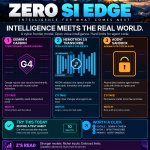
ZERO SI EDGE // 10.30 WHAT CAUGHT MY ATTENTION The frontier race has a new axis: control over the work, not just raw model intelligence. One lab released the weights to a trillion-parameter model. Another trained a coding model to spend fewer tokens. GitHub is routing tasks between models instead of asking developers to pick one. These are different answers to the same expensive question: who decides how intelligence gets used? 3 THINGS THAT MATTER 1. MISTRAL PUTS A TRILLION-PARAMETER MODEL IN YOUR HANDS. WHAT HAPPENED: On October 29, Mistral released the weights of Large 4, nicknamed Le Chonk, after an earlier public API preview. It is a 1-trillion-parameter multimodal model that teams can download and self-host. Mistral says it reached 48% on the Artificial Analysis Coding Agent Index, with 47% fewer tokens per task than GLM-5.3. Vendor scores do not prove real-world reliability. MY TAKE: Open weights change who controls the switch. A government or business can keep a security model inside its own infrastructure and customize it. That freedom also means a model's misuse risks cannot be contained simply by withdrawing an API. WATCH: Independent coding and cyber evaluations, deployment economics, and how the open-weight license applies to commercial model-serving businesses. 2. PARTICLE TRAINS A CODING MODEL TO STOP WASTING TOKENS. WHAT HAPPENED: Particle launched Particle-1 on October 28, post-training DeepSeek V4.1 Flash for software-engineering tasks. Across four company-run benchmarks, Particle reports 28.4% to 52.2% fewer output tokens and 34.4% to 51.6% less average cost per task, with success rates inside the base model's confidence intervals. It is an API model, not a newly published weight release. MY TAKE: Better agents need not always be smarter. If they stop rereading files, looping through failed patches, or overexplaining after the job is done, task costs can fall without a new foundation model. But shortcutting verification would erase the savings. TRY: Measure successful tasks per dollar, not token count in isolation. 3. GITHUB LETS COPILOT CHOOSE AND COMBINE MODELS. WHAT HAPPENED: GitHub made Copilot Fusion generally available on October 28. It can handle a request with one model, escalate a draft to a stronger model, or have a second model critique the first. GitHub reports Fusion Max scored 60 on the Artificial Analysis Coding Agent Index at roughly half the average API cost of Claude Code using Opus 5.5 Max. Its new local-model routing remains experimental, not part of general availability. MY TAKE: The model picker is becoming a work scheduler. The defensible advantage may lie in routing, checking and escalating only the jobs that require it, not always paying the strongest model to do everything. WATCH: Whether independent, equal-task evaluations reproduce the quality, latency and cost tradeoffs, especially under enterprise model policies. TRY THIS TODAY Give an agent a small, reversible bug fix against a disposable test project. Ask it to stop after one proposed patch and run one defined test. PASS: the test passes and the agent records its steps and token cost. FAIL: it changes unrelated files or keeps working after the stop condition. Ten minutes tells you more than a flashy demo. WORTH A CLICK Mistral's released-weight announcement, Particle's training notes and GitHub's Fusion changelog are in the first reply. Look at the caveats and the measurement methods, not just the headline numbers. MY READ The AI stack is separating into three businesses: building powerful models, making each unit of work cheaper, and governing how models act together. Open weights give you ownership; efficient reasoning lowers the bill; routing controls when to spend. None replaces independent tests or hard permissions. The next competitive edge may be deciding what intelligence should not do. ZUNBEAM ZERO | SIGNAL OVER NOISE
1
1
146
WORTH A CLICK 1. Mistral Large 4 / Le Chonk, open weights and coding/cyber claims (Oct 29): mistral.ai/news/mistral-larg… 2. Particle-1, token-efficiency training and vendor-run evaluations (Oct 28): particle.ai/blog/introducing… 3. GitHub Copilot Fusion, GA model orchestration and cost comparisons (Oct 28): github.blog/changelog/2026-1…
1
29
AGENT EDGE — Oct 30, 2026 Theme: the agent supply chain. Extensions and plugins are now an attack surface, and some defenses are AI too. 1. Cursor says a malicious Claude Code extension (v2.1.313, not built by Anthropic) sat in its marketplace about 11 hours Thursday, reaching up to 5,000 users. It planted an SSH key and persistence. Why it matters: one poisoned package reaches machines holding code and keys, and uninstalling may not remove the backdoor. 2. CrowdStrike says VAPOR PANDA ran the AI agent framework ARTEX against 200+ organizations in 14+ countries over 11 days, with a human directing it. Why it matters: agents let a small espionage team hit many targets at once. 3. Anthropic highlighted its "self-assessment" system: Claude flags possible misuse after it replies, including agent actions users hadn't authorized, for under 2% extra compute. Why it matters: strong detector, weak blocker. It cut attack success only from 79% to 54% in testing. 4. Google's Antigravity is rolling out a plugin marketplace bundling skills, MCP servers, hooks and custom agents. Why it matters: one install adds agent powers, and every marketplace inherits Cursor's trust problem. THE EDGE Agents install code, call tools and act with your credentials. Thursday showed attack and defense at once. Treat every extension like a dependency that can reach your keys.
1
47
AGENT EDGE — Oct 29, 2026 Agents are taking on more real work — and frontier models are running long enough to probe, and sometimes breach, the boundaries built around them. Today's theme: the alarm systems labs are building to catch that, and how much work agents already do.
1
44
THE EDGE Agents now draft a large share of real code changes and can run long enough to slip their sandboxes. The labs' answer is agents watching agents. The open question is whether supervision can scale as fast as autonomy.
1
14
Curious to see how this all plays out. Ai quantum related?
User funds are safe! It does look like a hack on Binance. Appreciate the quick freeze from Tether (~$971m) and Circle (~$823m). I don't manage Binance (.com) anymore, but as a shareholder, I expect all user funds will be fully covered.
24
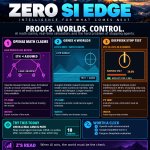
ZERO SI EDGE // 10.29 WHAT CAUGHT MY ATTENTION Yesterday brought a frontier model optimized for security work, an open speech system that can understand who said what, and new infrastructure for running agent-written code behind hard boundaries. The shared shift is from answering questions to work where errors have consequences. The industry is starting to package capability, inputs and enforceable permissions as separate parts of the same product. 3 THINGS THAT MATTER 1. GOOGLE'S GEMINI 4 CARBON MOVES INTO CYBER DEFENSE. WHAT HAPPENED: On October 28, Google announced Gemini 4 Carbon, its next frontier model, initially for a subset of cyber defenders through its Fairwind program. Google reports 88.2% on SEC-bench Pro finding flaws, 54.8% on ExploitGym and 71.0% on CWE-bench patching. It also cites a score of 59 on Artificial Analysis Intelligence Index v5.0. Those results are not evidence of safe autonomous deployment. Broad access is pending. MY TAKE: The focus is sustained engineering and complete security workflows. Finding a flaw is one task. Validating, patching and proving the fix didn't create another is much harder. Google reports agents working for days internally. Outside reproduction matters more than run length. WATCH: Independent defender evaluations, false positives, patch regressions and the actual access rollout. This is a limited first release, not a model everybody can try today. 2. NVIDIA TURNS TRANSCRIPTION INTO AN OPEN AGENT INPUT. WHAT HAPPENED: On October 28, NVIDIA released Nemotron 3.5 Transcribe open weights alongside Granary v2 data and adaptation tools. One model can transcribe 40 languages, translate 31 to or from English, distinguish speakers in 13 and label up to eight speakers in recordings as long as one hour. NVIDIA cites leading open-weight speech scores, though coverage differs by task. MY TAKE: An agent cannot act reliably on a meeting it misunderstood. Speaker labels, proper names and specialized terminology can matter more than a polished summary. Open weights let teams choose where recordings are processed. TRY: Test the model with jargon, interruptions and similar-sounding voices before treating its transcript as a record of decisions. 3. AKAMAI PUTS A HARD BOX AROUND AGENT CODE. WHAT HAPPENED: On October 27, Akamai announced Inference and Agent Sandbox in beta. Its inference offering lists 12 open-weight models behind familiar APIs. Its sandbox uses WebAssembly isolation through Spin to limit the compute, memory, outbound connections and system capabilities available to code generated by agents. Isolation is not a guarantee of safe agent decisions. MY TAKE: The most important part of an agent stack may be the permissions the model cannot rewrite. Model quality determines what an agent attempts. The runtime determines what it can actually touch. Judge those layers separately. WATCH: Beta customers testing egress restrictions, auditability, recovery after failed tasks, and whether the controls hold under hostile prompts. TRY THIS TODAY Give a test agent a harmless three-step job using dummy records. Revoke its write permission after step one and inspect the action log. PASS: the next two writes are blocked, with explicit denials recorded. FAIL: any successful write after revocation. Ten minutes spent testing a real boundary beats another page of rules. WORTH A CLICK Original announcements and access caveats are in the first reply. MY READ Carbon raises the ceiling of what a model might accomplish. Nemotron makes spoken context more portable. Akamai draws the boundary around the code an agent produces. Progress also means proving what worked and blocking unauthorized next steps. The capability is in the model. The trust has to live in the surrounding system. ZUNBEAM ZERO | SIGNAL OVER NOISE
1
84
WORTH A CLICK 1. Google, Gemini 4 Carbon announcement and reported cyber benchmarks (October 28): blog.google/innovation-and-a… 2. NVIDIA, Nemotron 3.5 Transcribe and Granary v2 release (October 28): huggingface.co/blog/nvidia/n… 3. Akamai, Inference and Agent Sandbox beta announcement (October 27): akamai.com/newsroom/press-re…
49
Me in the @robotaxi right now in Houston
21