

Research Fellow and Gibbs Scholar at the Mercatus Center at George Mason University. Former Director of Policy Research at Philanthropy Roundtable.
Washington DC
Joined August 2019
- Tweets3.1K
- Following840
- Followers1.7K
- Likes1.5K




Thank you @adamnmichel and @CatoInstitute for convening such a great discussion.
Subsidizing Hollywood with taxpayer dollars is a bad idea, especially given our fiscal trajectory. Seems like an odd priority for Congress.

Thanks to @gordontrac and @_JackSalmon_ for helping us explain why Congress should be skeptical of plans to send billions in new subsidies to Hollywood.
And thanks to the congressional staff who packed the room!
@mercatus @TaxPolicyCenter


Jack Salmon retweeted

Nearly 20% of federal tax revenue went toward interest on the national debt in FY2026, more than double the share in 2022.
That's nearly 20 cents of every tax dollar collected.
@_JackSalmon_ examines the growing cost of debt at The Unseen and The Unsaid: bit.ly/3VRJojN

ALT Chart: Jack Salmon, Mercatus Center at George Mason University Source: Monthly Treasury Statements, U.S. Treasury
Blanchard believes that the hard work and genius of innovators and entrepreneurs is down to “luck”, and that they don’t own their wealth, but that it belongs to the state.

What amazes me is the attitude of so many of the centibillionaires.
A 5% tax will not make any difference to the way they live. Their spending may be extravagant, but it is still much less than their (correctly measured) income.
They know that, as gifted as some of them indeed are, they have benefited from extreme luck (and the help of the state, and, to speak like an economist, monopoly rents).
They know that their effective tax rate is low, relative to what many others pay.
They know that extreme inequality is extremely unpopular, and can lead to political unrest, backlash, or worse.
They must admit that, morally, it is hard to argue for a society in which some become obscenely wealthy, while so many are poor and see their income stagnate.
They typically have not indicated that they are building their wealth to eventually make the world a better place.
But they are still willing to fight the tax, spending hundreds of millions in California to avoid paying the tax. Why?
They simply think what is theirs is theirs, end of story.
They believe in the slippery slope, and if they do not take a stand on this levy, the government will come back for more.
They hate the state and the notion that their money will be misused?
Or?
Jack Salmon retweeted

Amazing that a person who has produced so many estimates doesn’t even know how budget scoring works.
@joshrauh is right here, and @gabriel_zucman once again wrong.
See for example scores of repatriation holidays.

Now, the crucial flaw is that Jaros and @joshrauh simply ignore this.
They assume that billionaires will leave permanently, frightened by the prospects of an annual wealth tax.
But they just count the revenue from the one-time wealth tax. Not the revenue from the annual tax.
The annual tax that triggered the “exodus” Jaros and @joshrauh imagine never materializes.
The billionaires upended their lives for nothing.
Jack Salmon retweeted

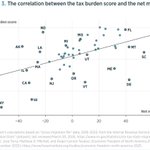
🧵In 2019, California billionaire tax crusader Gabriel Zucman made an astonishing claim to the NY Times: billionaires pay a lower avg tax rate than poor people in the US.
I noticed something fishy though: Zucman's NYT chart did not match his own published data from a 2018 paper

1) Spain enacted a one-time wealth tax in 2022 (covering 2022 and 2023). Now it’s permanent.
2) Prop 40 amends the state constitution establishing a precedent for taxing accumulated wealth. It’s opening a door. Reason enough to move out, regardless of one-time arguments.
Crucially, moving to another state doesn’t allow one to avoid the tax, since the tax would be owed by billionaires who lived in California at the beginning of 2026.
Not 2027 — but beginning of 2026.
There is no incentive to move to another state. One cannot avoid the tax by moving. This is one of the main reasons why it was structured as a one-time tax.
Stostad's very first point is: assuming 10% evasion.
Brülhart et al., 2022:
"Exploiting rich intranational variation in Switzerland, we find a 1 percentage point drop in a canton's wealth tax rate raises reported taxable wealth by at least 43 percent"

Jakobsen et al., 2019:
Reductions in the wealth tax increased taxable wealth by 31 percent among the very wealthy. Their estimates incorporate saving, portfolio and asset-composition responses, legal avoidance, and possible evasion of self-reported assets.
Jack Salmon retweeted

California's Billionaire Tax Act would collect roughly $30 billion. Accounting for lost income taxes from departures, the mean Net Present Value is negative $39 billion, from Benjamin Jaros and Joshua Rauh nber.org/papers/w35899

We're past the point where the Iran War is adding 0.9 ppt to headline inflation and approaching the point where it is adding 1.1 ppt.

"Even under a cautiously optimistic scenario in which the closure of the Strait of Hormuz lasts for one quarter, after which oil exports resume gradually, the surge in oil prices is expected to raise US headline inflation by 0.6 percentage points"
cepr.org/voxeu/columns/quant…

Jack Salmon retweeted

People mock GDP per capita and economic freedom at their own peril.


The Quarterly Ledger:
A Review of the Nation’s Balance Sheet: Q4 FY 2026
open.substack.com/pub/unseen…

Jack Salmon retweeted

1/4 With Election Day still weeks away, we cannot say for sure what American voters will do in the 2026 midterms. Dozens of key federal, state, and local races remain too close to call. Still, Democrats appear likely to take the U.S. House as well as several state governorships and legislative chambers. Republican control of the U.S. Senate is also endangered.
Among the hundreds of signatories to the Freedom Conservatism Statement of Principles are campaign professionals, political activists, and former elected officials — including mayors, school-board members, state and federal lawmakers, governors, and even a former vice president. Most have a rooting interest in partisan politics. Some remain personally involved in campaigns.
But the @FreeConTalk project itself is nonpartisan. Our goals extend far beyond one election cycle or the fate of any particular candidate.
We believe that unless there is a healthy, vibrant American Right committed to individual liberty, federalism, free enterprise, free speech, free trade, civic virtue, equal opportunity, and the rule of law, any hard-won electoral victories will prove fleeting. And if our movement tolerates cranks, bigots, and other reactionaries, fewer such victories will occur in the first place.
Unless conservatives offer real solutions to the problems voters care about most — such as affordability, fiscal responsibility, family formation, and broad access to the American Dream — voters will seek them elsewhere. That voters are destined to be disappointed by populists, progressives, and socialists is true but beside the point. You can’t beat something with nothing.
And American greatness is impossible without American freedom.
That will be one of the themes explored at three post-election events in battleground states: FreeCon Phoenix on November 16, FreeCon Philadelphia on November 17, and FreeCon Raleigh on November 18. At each summit, #FreeCon signatories and allies will discuss the lessons of the midterms, the challenges and opportunities we will face in 2027 and beyond, and how a rejuvenated American Right can meet those challenges and seize those opportunities.
Please join us! RSVP links to follow in the thread.

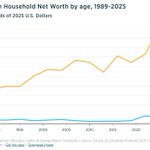
If you solution to Social Security insolvency involves raising taxes on the blue line to give more benefits to the orange line, you should at least acknowledge the profound intergenerational injustice involved.

Jack Salmon retweeted

This @WSJ piece on the UK's runaway disability benefits is something else. Great color from @MaximColch & @davidluhnow

Jack Salmon retweeted

May come as a bit of a surprise to those of us who were following Paul's writings in the 2010s when he was railing against Eurozone "austerity craziness".
With interest rates at the zero lower bound, he argued that fiscal consolidation in a depressed economy was self-defeating: multipliers were large, so cutting deficits deepened the slump and did little for debt ratios. France was one of his recurring examples. It turns out that French policymakers were listening to him. In every big recession, they massively increased spending. But the multipliers were not as big as advertised. Deficits didn't pay for themselves.
Government debt/GDP is a persistent state variable. Bond yields are not. If the only reason you're changing your mind is because yields are up, then your advice wasn't that good to begin with.
Op-eds and blog posts arguing against French austerity (list generated by Claude)
“Franc Thoughts on Long-Run Fiscal Issues,” blog post (Conscience of a Liberal), August 11, 2011. Argues there are limits to deficits but they are not relevant now.
“Those Revolting Europeans,” NYT column, May 2012. Welcomes Hollande’s election as a rejection of austerity. (Title and date from memory; please verify before citing.)
“The Plot Against France,” NYT column, November 11, 2013 (online November 10). Attacks the S&P downgrade; calls French fiscal prospects “distinctly nonalarming.”
“France by the Numbers,” blog post, January 2014. Mocks French elite pessimism after Hollande’s supply-side turn.
“Scandal in France,” NYT column, January 17, 2014. Calls Hollande’s embrace of austerity and supply-side doctrine scandalous.
“The Fall of France,” NYT column, August 29, 2014 (print, p. A23). Says Hollande folded to austerity demands; France “isn’t Greece” and not fragile.
Related: defenses of the French model, not explicitly about austerity
7. “What’s the Matter With Europe?”, NYT column, May 2017. Argues France is a fairly successful economy that gets bad press from welfare-state critics.
8. Twitter thread, November 5, 2019. Argues France gets bad press not borne out by the facts.


Nobel Prize-winning economist Paul Krugman warned that France’s deteriorating public finances are on an “unsustainble path” and at risk of unleashing a debt crisis across the euro area bloomberg.com/news/articles/…

Jack Salmon retweeted

We do not assume the tax is annual. We estimate the revenue of the measure as written: a one-time wealth tax that could generate long-term income tax losses. We see 30% of the wealth tax base already eliminated pre-2026 and apply litigation-survival probability to the rest. 1/2 conference.nber.org/conf_pap…
The Hoover Institution, in a deceptive study, claimed the tax would end up costing more than it brings.
To reach that conclusion, the authors of the study assumed that the tax would become annual. Hence, on the cost side, some billionaires would leave California.
However, on the benefits side, if the tax becomes annual it would generate revenue annually.
But the Hoover economists did not take that into account.
You read that correctly: they assumed the tax would be annual, leading to some outflows, but that it would bring revenue only once.
This makes no sense – but usefully fuels the anti-tax ads. nitter.cf/gabriel_zucman/status/…