





My retweeted

The search for better algorithms shouldn't be limited to people with specialist programming knowledge.
Today, we're open-sourcing Talos, our new autoresearch tool, now available in its initial beta.
Talos takes an idea and turns it into an iterative search process. You pick a TIG challenge and give an LLM a direction to explore. Talos then runs in a loop, writing, modifying and testing algorithms, and comparing each candidate against the current top mainnet algorithm.
Every candidate is compiled and evaluated using TIG's own runtime and verifier. It must outperform the baseline on both training and held-out data to qualify as an improvement.
The result is a new way to explore algorithmic solutions. You use your own compute and LLM account, and get a ready-to-submit package if Talos finds something better.
By lowering the barrier to algorithm development, we can bring more people into the innovation, put more ideas to the test and create more opportunities to find algorithms nobody has thought of yet.
It’s GPLv3 licensed, so anyone can build on it.
Code: github.com/tig-foundation/ta…
Install: pypi.org/project/talos-tig/

1/ Researchers can test TIG algorithms without mining. An official toolkit lets them run their own code against TIG's on the same set of problems, then record both the answers and how long each solver took.
🤖 Made with AI

3/ The toolkit can generate repeatable problems or import supported academic datasets. Its public repository includes vehicle routing and factory scheduling, and version 1 runs CPU algorithms on a local computer.
🤖 Made with AI

My retweeted

There has been a lot going on over the last few weeks ..
NGL its hard to not get stressed just by opening X
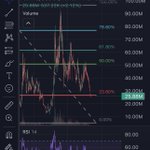
.. meanwhile $TIG is ignoring the noise and making good progress

Bitcoin miners guess hashes until one works. NOCK has a different ambition: make mining work something more than a guess. Today two kinds of puzzle already compete on one chain, one built on ZK proofs and one on AI-style matrix math.

Where it stands, per the project's own docs: the launch ZK puzzle gives no result a customer would pay for, and customer-paid work is intended. The roadmap lists a Useful Inference Routing Protocol for Q4 2026.
Logan Allen (@loganallc) said on Oct 25 that the V2 AI-PoW design is converging and is the main remaining piece. The milestone to watch is real inference jobs paying for the work that secures the chain. Roadmap: nockchain.org/roadmap


My retweeted

base:0x0c03ce270b4826ec62e7dd007f0b716068639f7b rewards miners for the typical result, so a lucky run doesn't pay.
every answer is scored inside a random group, up to 1,000 answers big, and on most challenges only the middle result of the group counts.
it's the result a real user would get, which makes TIG's rankings worth trusting.
My retweeted

$QTC is about to become impossible to ignore. 🚀
Superquantum just announced Deqode, its SECOND quantum computing workload, on testnet.
Let that sink in.
While most crypto projects are still selling narratives, Qubitcoin is building real infrastructure at the intersection of AI, quantum computing and blockchain.
Two workloads. One ambitious vision. A ridiculously small valuation.
If Superquantum delivers on its roadmap, today’s market cap could look absolutely absurd in hindsight.
The market hasn’t even begun to price in the potential.
$QTC isn’t just another altcoin.
It’s an asymmetric bet on an entirely new computing paradigm.
And we’re still ridiculously early.
Bullish doesn’t even begin to describe it. 🔥
bitcointalk.org/index.php?to…


My retweeted
two algorithms become permanent parts of $TIG tomorrow evening, when round 140 closes in about 1,780 blocks. sat_tailwalk_v7 on SAT and etna_highcap on job scheduling.
the merge is what protects their income. unmerged code only gets paid while it carries at least 25% of a challenge's work, merged code gets paid at any share. today four merged codes sit under 25% and still collect about 0.07 TIG per block between them.
etna_highcap runs 41% of job scheduling right now. from tuesday it keeps earning even if miners drift back to ember_etna.
