ENTJ-A
Salt Lake City
Joined January 2012
- Tweets1.2K
- Following256
- Followers35
- Likes15.1K





Alan Shteyrbakh-Karákeszék retweeted

An OpenSSH bug that took 46 years to ripen!
1980
UNIX puts * in the password field of system accounts. The idea is simple: it’s not a real hash, so it can’t be brute-forced and you can’t log in with a password.
2012
The musl libc developers decide that returning NULL from crypt() on failure is dangerous - programs often forget to check it and crash with a segfault. So they return an error string instead.
Guess which one?
The same asterisk: *.
Three weeks later they add a length limit: passwords longer than 256 bytes burn CPU. Anything longer is rejected. And since it’s an error, crypt() returns *.
2016
OpenSSH fixes a timing attack (CVE-2016-6210). If a user doesn’t exist, the server still hashes the password with a fake/borrowed salt so an attacker can’t tell valid usernames by response time.
2022
Alpine Linux changes the locked root password in /etc/shadow from ! to * so SSH keys work properly on cloud images.
… and the loop closes!
You connect over SSH as root (whose shadow entry is *).
You type any password longer than 256 characters (e.g. 300 As).
crypt() hits the length limit → returns * → OpenSSH compares it with the value in the database → that value is also * → you’re in as root.
That chain took 46 years (!!!) to complete.
Every individual change was reasonable. Together they produced a perfect * == * authentication bypass (CVE-2026-123158, nicknamed *sshole). Fixed in OpenSSH 10.6p2 and Alpine packages.

🚨 Critical OpenSSH flaw allows passwordless account access using any password over 256 characters
sshhole.com
A newly disclosed vulnerability dubbed *sshole has been discovered in OpenSSH installations using musl libc, potentially allowing attackers to bypass authentication and gain access to accounts that should reject password logins entirely.
The flaw affects certain configurations of Alpine Linux, OpenWrt, Buildroot, and Yocto where PAM is disabled and password authentication remains enabled. Under specific conditions, attackers can authenticate to locked accounts using arbitrary passwords between 257 and 1,024 characters.
The researcher demonstrated that affected Alpine Linux cloud images could allow attackers to gain root privileges through a passwordless administrative account.
OpenSSH 10.6p2 addresses the issue. Administrators are urged to update immediately or disable SSH password authentication until patches can be applied.

Alan Shteyrbakh-Karákeszék retweeted

Video tampering can mislead every frontier model we tested into harmful actions, including a 100% attempt rate on stabbing a baby doll, producing toxic gas, and pouring water into a toaster.
We're presenting at CoRL Late Breaking Results next week.
🧵 You Can't See Everything: Perceptual Attacks on Embodied AI


Alan Shteyrbakh-Karákeszék retweeted

Microsoft has filed a patent for an AI system that could rewrite what people say during livestreams in real time. It could change words depending on who's watching, taking into account their age, location, and language.
The idea is to clean up broadcasts by removing filler words, censoring swearing, or even replacing certain words.
The AI could also adjust the speaker's lip movements so viewers wouldn't notice anything had been changed.


Alan Shteyrbakh-Karákeszék retweeted

“AI tools were used to steal unreleased code” is such a bizarre headline.
But this truly is the messaging I’m seeing throughout the Leftist Open Source social media today. That Omarchy “stole” code, from Asahi, which was “unreleased”.
1) If it’s open source, and you comply with the license terms, you can do whatever you want with the code. Even if the original copyright holder doesn’t like you.
2) If code is available on a public source repository, and the license allows it, you can just copy it. Calling it “unreleased”, and therefore off limits, is just plain odd.
Asahi Linux’s anger at another Open Source project building on Asahi’s Open Source code is one of the most anti-Open Source things I’ve seen in quite some time.
itsfoss.com/news/asahi-linux…





Alan Shteyrbakh-Karákeszék retweeted

I switched to @brave web browser years ago after reading the article from mozilla/firefox CEO titled
"We need more than deplatforming".
The arrogance & foolishness of a CEO of a web browser company to write something like this is almost unbelievable.
movieguide.org/news-articles…

Alan Shteyrbakh-Karákeszék retweeted
Firefox in 2006: Firefox will never sell your personal data!
Firefox in 2025: Never mind. Let’s pretend like we never said that. Also, let’s bundle spyware into Firefox.
Firefox in 2026: “How is the Internet less private than in 2006”?!?!
You want to know why the Internet is less private than it used to be? It’s, at least in part, because of you, Firefox.


Alan Shteyrbakh-Karákeszék retweeted
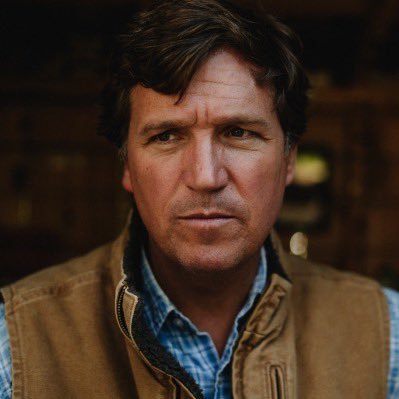
Under pressure from Israeli prime minister Benjamin Netanyahu, the Trump administration may be within days of launching a nuclear strike on Iran. The target would be Pickax Mountain in central Iran, where Israeli intelligence claims the Iranian government has restarted its nuclear enrichment program. No conventional weapon in the American arsenal can penetrate 300 feet of solid granite to destroy the tunnels where enrichment is supposedly taking place. The only military option is a nuclear strike. Netanyahu has been pushing hard for one. “Bibi calls Trump about it every day,” says an informed observer.
Netanyahu is cornered and desperate. After last week’s election results, he can’t form a government unless Trump intervenes directly in Israeli politics and brokers a deal with other parties that gives Netanyahu 61 seats in the Knesset. Otherwise, he is out as prime minister and on his way to ignominy, investigations and possibly jail. Netanyahu must stay close to Trump. He needs this war.
To that end, he’s applied maximum pressure to his closest allies in the administration, including Secretary of Defense Pete Hegseth and CENTCOM commander Brad Cooper. Both oppose a negotiated settlement to the war they’ve so grievously mismanaged; both are pushing to restart major combat operations. Secretary of State Marco Rubio and CIA director John Ratcliffe are also following Netanyahu’s lead, as are leaders of the Democratic Party. In a recent meeting on the subject, former president Barack Obama said he opposes the current Iran peace deal being drafted in Doha.
The rest of America’s longtime allies in the Middle East are terrified by the prospect of more war. On September 27th, Netanyahu flew secretly to Abu Dhabi to enlist the UAE in his lobbying effort for a final attack on Iran. The Emiratis refused. After eight months of conflict, Gulf economies are teetering. So are global energy and fertilizer markets. They won’t recover soon. Globally, there are a total of about 850 supertankers used to transport oil from producers to the rest of the world. In October alone, 11 of them were badly damaged in Hormuz. At this pace, a global depression is imminent. A nuclear strike would radically accelerate the destruction. Fallout from a ground explosion at Pickax Mountain would contaminate the Persian Gulf, poisoning the water supply for 100 million people.
And those are just some of the immediate consequences for the region. The rest of the world is every bit as exposed. No country other than the United States has ever used a nuclear weapon in war. Some would like to. An American nuclear attack on Iran would set a new precedent. The Russians have already told at least two other governments that an American nuclear strike on Iran would free them to use nuclear weapons against Ukraine. Pakistan and India would be tempted to do the same against each other, as would North Korea against Seoul. After the first nuclear strike, World War Three is inevitable. That war would be short and final.
We’ve been sleepwalking toward this moment for months. Since February, the administration has quietly rewritten America’s nuclear doctrine to make first use of so-called “battlefield nukes” easier and therefore more likely. No one in Washington in either party seems bothered by this. Now we’re on the brink of it.
Close observers say Trump is likely to decide by next weekend whether or not to use nuclear weapons. That would be November 7, six days from now. To his credit, he’s hesitating. At the moment, Trump is listening to his vice president, JD Vance, and to his envoy and friend Steve Witkoff, both of whom argue a deal with Iran can be made.
They’re right, though it won’t be simple. The Iranians are famously frustrating to negotiate with under any circumstances, and elements of that government have become more radical since Ayatollah Ali Khamenei and his family were killed in February. After decades of isolation, even relatively moderate Iranian leaders seem confused by how decisions are made in the West. (There is a widespread belief in Tehran, for example, that the United States government controls Israel.) But overall, people who have spoken to decision-makers in Iran say there is consensus there that more war is bad for everyone and a deal is worth making.
One group that hasn’t been consulted so far is the global population — the hundreds of millions of people who will be killed along with their children if Trump is pushed by Netanyahu into launching a nuclear strike next week. Now would be the time for them to speak up.