

Researcher @CNTI_global | Ph.D. in Journalism & Media Studies @RutgersCommInfo | Research Affiliate @YaleClimateComm | Former Fellow @freepress
United States
Joined December 2019
- Tweets4.1K
- Following784
- Followers809
- Likes20.4K





Afrooz Mosallaei retweeted

انتقال نوید نجاران و میلاد آرمون به سلول انفرادی؛
خطر اجرای قریب الوقوع اعدام جدی است
دادبان دریافته، نوید نجاران و میلاد آرمون، از زندانیان سیاسی محکوم به اعدام، به سلول انفرادی منتقل شدهاند.
بنا بر اطلاعات رسیده به دادبان، مقامات زندان قزلحصار، امروز این دو زندانی را به سلول انفرادی منتقل کردهاند و نگرانی از خطر اجرای قریبالوقوع آنها بهشدت افزایش یافته است.
یک منبع مطلع در این زمینه به دادبان گفته که صبح امروز ابتدا نوید نجاران و سپس میلاد آرمون به سوئیت (سلول انفرادی) زندان قزلحصار منتقل شده و خانواده این دو زندانی بهشدت نگران اجرای حکم اعدام هستند.
دادبان ۲ روز پیش از تایید حکم اعدام صادره از سوی شعبه ۱۵ دادگاه انقلاب تهران علیه نوید نجاران و میلاد آرمون و ارسال آن به دادسرای اجرای احکام به جهت اجرا خبر داده بود.
شعبه ۱۵ دادگاه انقلاب تهران به ریاست ابوالقاسم صلواتی، خردادماه سال جاری (۱۴۰۵)، ۴ متهم پرونده اکباتان تهران شامل میلاد آرمون، نوید نجاران، مهدی ایمانی و محمدمهدی حسینی را به اعدام محکوم کرد.
به گزارش دادبان، حکم اعدام مهدی ایمانی و محمدمهدی حسینی را نقض و برای بررسی مجدد به شعبه همعرض ارسال کرده است.
دادبان تاکید میکند، انتقال میلاد آرمون و نوید نجاران به سلول انفرادی، جان این دو جوان را بهشدت در معرض خطر قرار داده و امکان اجرای زودهنگام حکم اعدام آنها را بهشدت افزایش داده است.
#میلاد_آرمون #نوید_نجاران #دادبان

Afrooz Mosallaei retweeted
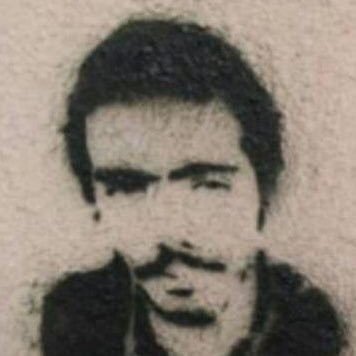
پس از تایید حکم اعدام، #نوید_نجاران و #میلاد_آرمون به زندان انفرادی منتقل شدن و خطر اجرای حکم اعدامشون کاملا جدیه. اگه قراره کاری برای جلوگیری از اعدامشون انجام بشه، الان وقتشه.

واقعاً مایهی ننگ تایمز. یک جوری این مقالهی جدید اصول روزنامهنگاری رو رعایت نکرده که همون چهار تا دونه اسم ارجاع داده شده در متن هم ادعا و نتیجهگیری نویسندهها رو گردن نمیگیرن.

تایمز چپ بره یا راست بره، در ارائهی تصویر درستی از ایران عاجزه. اون یکی ایراننویسشون که انقد چرت گفته تا حالا که عموم مردم میگن «مهرهی نظام»ه. این یکی هم که انقدر نوشتهاش بد و بیاساسه که معلوم نیست از زیر دست کدوم سردبیری در رفته و حدس بر «مهرهی اپوزیسیون» بودنشه./
8
307
تایمز چپ بره یا راست بره، در ارائهی تصویر درستی از ایران عاجزه. اون یکی ایراننویسشون که انقد چرت گفته تا حالا که عموم مردم میگن «مهرهی نظام»ه. این یکی هم که انقدر نوشتهاش بد و بیاساسه که معلوم نیست از زیر دست کدوم سردبیری در رفته و حدس بر «مهرهی اپوزیسیون» بودنشه./
Afrooz Mosallaei retweeted

This is unbelievably irresponsible and morally dubious speculation; not journalism. You pose a question, then write a
@nytimes
article about your speculative hypothesis without offering any evidence, basically saying hey I looked into this thing I was curious about for a few months, I found no supporting evidence, but I publish my unverified hypothesis. And much worse, you write it at a time when a critical war and an attack on civilian infrastructure, like on water infrastructure, could break at any moment. Are you normalizing military attacks on water infrastructure in a country already facing water bankruptcy? Words fail.
Afrooz Mosallaei retweeted

To The New York Times (@nytimes): your Iran dams story does not hold up. Your own sources are saying so.
Today The New York Times suggested that Iran's dams may have been built to support its missile program. Read closely, the article refutes itself, and the people it relied on are distancing themselves from its conclusion.
The article admits its own claim is speculation. In its third paragraph, it says any connection between the dams and the missile program "remains speculative," then calls the evidence "highly suggestive." That evidence is never shown. In the entire article, not one dam is shown to supply water or power to one military site. Not one.
Its evidence is two overlapping maps. "Close by" is never defined. No distance, no count, no statistical test. The article itself says Iran has at least 533 dams, and that its missile sites are dug beneath mountains. Dams are built in the same mountain terrain. With numbers like these, overlap is inevitable. Proximity is not proof.
The theory also needs dams to power missile sites. Most dams generate no electricity at all. Fewer than 50 of Iran's more than 500 large dams have turbines installed to generate electricity, a fact anyone can check. The article never says how many of its 533 dams produce power.
Then there are the sources.
🟡 Nima Shokri (@NimaShokri_GHI), the researcher whose mapping the whole claim rests on, has clarified his position: "the proximity of dams to military targets does not establish why those dams were built, nor does it justify attacks on them." He strongly opposes attacks on dams and civilian water infrastructure.
nitter.cf/NimaShokri_GHI/status/…
instagram.com/p/Df0STgQx-0j/
🟡 Danny Citrinowicz (@citrinowicz), the article's key military source and a former longtime Iran analyst for Israel's military intelligence, wrote that the direct connection between specific dams and missile facilities "has not been conclusively established." Hours later he went further: "I did not write the article, nor was I interviewed as a dam expert. Questions about the number of dams and their connections to sites should be directed to the author in the NYT."
nitter.cf/citrinowicz/status/212…
nitter.cf/citrinowicz/status/212…
🟡 Kaveh Madani (@KavehMadani), who is quoted in the article, was blunt: "Speculation is not evidence. Spatial proximity is not causality." He called the narrative irresponsible journalism with potentially dangerous consequences for civilian water infrastructure, noted that even those who attacked Iran have not made such claims linking dams to missiles, and concluded: "The @nytimes should know better."
nitter.cf/KavehMadani/status/212…
🟡 Amir Aghakouchak (@AmirAghaKouchak), named in the article, endorsed Shokri's clarification: dams and water infrastructure "must never become targets of military attacks."
nitter.cf/AmirAghaKouchak/status…
🟡 Nik Kowsar (@nikahang), interviewed for the article, said the interviews took place months ago, and stated: "I oppose any attack on civilian infrastructure, whoever carries it out and whatever reason is given."
nitter.cf/nikahang/status/212241…
The article was even corrected on the day it was published, on the very point its theory rests on. The Karun-4 Dam was not hit. Only the area near it was struck.
And it builds a second speculation on the first, suggesting that the conservationists arrested in 2018 "may have accidentally happened upon sensitive military sites." The article itself prints that those groups never worked in wilderness areas without permission from the government and intelligence services. One of those arrested, Kavous Seyed-Emami, died in state custody. A "may have" is no basis for rewriting that case.
A story whose evidence is a map, whose premise fails a basic fact check, and whose own sources have distanced themselves from it is not journalism. Published in the middle of a war, it hands a pretext for striking a country's water infrastructure to the very people bombing it, while an entire nation lives under the shadow of war.
The New York Times must prominently correct this story and explicitly state in an editor's note that the alleged link between Iran's dams and its missile program is unproven speculation and lacks credibility.
It must disclose, inside the article itself, the background of its key military source.
And it must apologize to all of its readers, including the people whose words were used in this article.
Source: The New York Times and the links above.
nytimes.com/2026/11/16/world…


Today’s New York Times report on how the Islamic Republic’s water projects are tied to its missile program has people reading it in very different ways. I want to be clear about where I stand: I oppose any attack on civilian infrastructure, whoever carries it out and whatever reason is given. No report, investigation, or revelation changes that.
nikkowsar.substack.com/p/rem…
Afrooz Mosallaei retweeted

موکلم امیرحسین موسوی بابت اتهام افساد فیالارض از طریق فعالیت مجازی در اکانت توییتری جیمز بیدین به اعدام محکوم شد.
#امیرحسین_موسوی

Afrooz Mosallaei retweeted

Images appearing to show the Pink Panther rioting in France have gathered millions of views across social media, but they’re actually AI.
Read more on the protests: bbc.in/3VZi2YS
Dear social movement scholars, have you read and enjoyed any good analytical pieces on the current French protests that you could share with me?
4
717
این خانوم میا سال بالایی من بود در آموزشگاه کنکور هنری که درس میخوندم. رتبه ۲ کنکور شده بود و الگوی خیلیهامون بود. عجب کجهنری شده 👀
Afrooz Mosallaei retweeted

نمردیم و دیدیم جمهوری اسلامی با اعدامهای مستمر، زندانهای سیاسی و اقتصاد نولیبرالش «جلودار مبارزه با امپریالیسم» هم شد.
تنها حسن این بیانیه شل این بود که یادآوری کرد هنوز کسانی هستن که عقلشون رو کامل تحویل ندادن.
محوریها واقعا هنر جا انداختن چرتوپرت رو به کمال رسوندن.

For those who want to know why the academic statement circulating on Iran is dangerous, I suggest you read the @penandmachete Red Paper on Iran, explaining how Iran is the vanguard of anti-imperialism today. Link is below.


Afrooz Mosallaei retweeted

File this tweet under “person who preaches liberation actually doesn’t want liberation for certain people”. Many such cases!

I'm struggling with this open letter, signed by people I admire deeply—individuals who've dedicated their lives to Black liberation and anti-colonial struggles.
But I just can't reconcile my instinctive reaction to the letter with the respect I hold for the signatories. Prominent intellectuals in the imperial core are using their voice at this hour primarily to criticize a government under active bombardment. While I believe that no government is beyond reproach or criticism, I have a lot of questions and cautions about this open letter.
The overall framing of is of two equally opposing sides—two blades of the same scissors. This is a wholly unfair representation of what is in reality a profound asymmetry of power. On one hand, a country that has been subjected to crippling, decades-long economic sanctions, now fighting kinetically an existential anti-imperial struggle; on the other hand is nuclear, AI-powered empire, with its inexhaustible money, munitions, supply lines, coalitions, surveillance, and near total grip on international political, legal, information, and economic infrastructure.
The severity of the imperial onslaught seems to be minimized in the letter. This is perhaps for the sake of brevity, but it should not stand without critique. What the letter describes as "current, indiscriminate waves of US-Israeli military assaults" undersells what's actually happening in the "six months into a war". Unprovoked Tomahawk missiles and B-2 bombers that targeting a an elementary school that killed 180 children and teachers, the country's spiritual leader and his family, more than a third of the country's political, military, and scientific leadership, civilian infrastructure, including water, farmlands, electric grids and power plants, an unarmed navy ship at sea full of young cadets returning from a peacetime maritime exercise in international waters. This after decades of attacks that went unanswered by Iran, including Israel's repeated assassinations of Iranian scientists, assassination of Qasem Soleimani, strikes on Iranians generals in Syria, strike on Iranian consulate in Damascus, assassination of Ismail Haniyeh on Iranian soil; the US shot down civilian aircraft of Iran Air flight 655, killing 290 passengers and crew, including 66 children. There were endless cyber attacks, covert and overt naval sabotage and so much more—all of it without response from Tehran.
The letter does not identify who the prisoners are or why they were arrested. In neglecting to do so, there is no engagement with the very real security threats, proven foreign interference, terrorism, and espionage, which Iranian authorities cite as reasons for some arrests and prosecutions. I have no doubt there are some who've been wrongly imprisoned, but we also know that many of those who were rounded up confessed to working with the Mossad, and recently a group who gruesomely disembowled a young reciter of the Quran are among those who are imprisoned.
There are currently 2 million incarcerated people in the United States, the largest prison population anywhere on earth. It is estimated that 4-6% of them are innocent—that's 80,000-120,000, about two NFL stadiums full of innocent lives behind bars. Setting that percentage against Iran's estimated 15,000 political prisoners, that's roughly 600-900 individuals. They deserve fairness, but to center them in what is perhaps the most existential anti-colonial struggle of our lives feels misguided.
I would also argue that comparing Iran's prisons with Israel's decades-long, systematic, colonial detention of indigenous Palestinians is another form of false equivalence. So is the comparison with America's ICE detentions, separation of families and loss of children in the process (who are most likely trafficked). It is not remotely fair to put a revolutionary government, barely a few decades out from under colonial boots and still under sanctions, in the same "carceral" category as two settler colonial states. One cannot ignore the enormous disparity of political, military, and historical circumstances.
The people held in Iranian jails are overwhelmingly Iranian citizens, prosecuted under the state's own criminal and national security laws, regardless of whether one thinks the laws are unfair. Palestinians held in Israeli administrative detention are non-citizen subjects of a military occupation, detained and re-detained indefinitely under military decrees without charge or trial. People in US detentions are another category—non citizens held under civil immigration laws pending removal proceedings with access to immigration courts, however corrupt they may be. These are three distinct legal relationships—1) a state and it's own citizens; 2) a state and migrants crossing its borders, and; 3) an occupying power and a stateless occupied indigenous population. The letter collapses them all into a single architecture of "carceral states everywhere," creating an analysis that is not supported by the underlying facts. It creates rhetorical equivalence that treats "administrative detention," "political imprisonment," and "immigration detention" as though the political stakes of each were the same, when the questions of sovereignty, citizenship, and self-determination underneath them are not.
The phrase that knocked me off balance was this: "...we reject the false binary of imperialism and hollow anti-imperialism." I note that @agent_of_change addressed this in a recent post, which he identified as the "load-bearing phrase" of the letter. Indeed, it does so much heavy lifting and I'm at a loss why the word "hollow" would have been inserted. It's so clearly deliberate, but why? How can Iran's insistence on sovereignty and dignity be called "hollow," despite the grave and terrible cost to themselves? They could have taken the easy path a long time ago and bowed to empire, like some of their Arab neighbors have done. They've chosen self-possession and loyalty to their ancestors and children instead. That can be called many things, but hollow is not it.
theguardian.com/commentisfre…

Afrooz Mosallaei retweeted

This is an excellent letter, the kind of principled progressive politics we need. It condemns the imperialist attack on Iran while also recognising the oppressive nature of Iran's regime and showing solidarity with the people it imprisons and tortures.
theguardian.com/commentisfre…
جوابها و نقدهای این چپهای غربی [ضد امپریالیستهایی که با محور مقاومتیها همپوشانی دارن] به نامهی سرگشادهای که گاردین منتشر کرده رو خوندم.
آدم انگشت به دهن میمونه از این که جان انسان ایرانی تا چه حد براشون بیارزشه که حتی زحمت تظاهر کردن به خلافش رو هم به خودشون نمیدن.
بیربط، ولی اون سالی که کنکور هنر داشتیم اواخر سال دیگه نمیدونستیم چی بخونیم. تأکید هم بر این بود که کنکور هنر منبع نداره و از هر جایی و چیزی ممکنه سوأل بیاد.
سر همین، شروع کردیم با دایرةالمعارف رویین پاکباز مثل فال حافط برخورد کردن. رندم باز میکردیم و چهار تا مدخل میخوندیم.

Afrooz Mosallaei retweeted

The death of Marjane Satrapi has reignited a debate over whether “Persepolis” challenged Western stereotypes about Iran or reinforced them. The argument speaks to a larger question: Who gets to tell a nation’s story?
newlinesmag.com/running-note…

به طرز غیر شگفتآوری هم غالب (و نه همه) نقدایی که میبینم رو مردان ایرانی عزیز نوشتن.
این نقدای یک شکلی که به ساتراپی و باقی هنرمندای زن ایرانی وارد میکنن دیگه داره به من بیهنر هم بر میخوره. همچین تو سر «زن بدبخت کلهسیاهی که در غرب مجبوره کلیشهای رفتار کنه وگرنه میندازنش بیرون» میزنن که انگار ما زن نیستیم و در غرب زندگی و کار نقادانهی غیر کلیشهای نکردیم.
1
32
1,832