

CTO, Reflection // Agentic Systems Engineer building wonder-slop machines, making gold standard slop virtually indistinguishable from my own.
Joined February 2021
- Tweets5K
- Following133
- Followers791
- Likes1.5K




Pinned Tweet
Here you go guys, I packaged this up for you. This is a single repository where I'll be putting all my skills, plugins, prompts, etc, in one place. Free, forever, starting with MSW kernel. Codex/claude plugins, and generic installer supported. If you're feeling generous, star it. Cheers!
github.com/transcendr/slopwa…

We were stupid to think google wouldn't put their huge ol' thumb on the scale sooner or later. The other two must be in defcon mode about now.
I still enjoy all the models in their different ways. Remember that spreading the love around w your subs is ultimately better for us plebes. Competition is always better for us. It's good to have GDM in the game now.

One more thing…
As part of this change, we’re also getting rid of the separate Argon bucket for paid Pro users. The capacity from that is moving to the general Gemini bucket, so you can also just use more Argon, Carbon, and (most importantly) Neon!
1
37
10,946
Can someone explain Sol Ultrafast to me? I'm getting only slightly faster speeds but paying 3x. I mean, it's faster than Fast, but the way people talk about it, I was expecting something else. It would need to be double these speeds to merit paying 3x.
3
1
363
For those wondering about Neon usage limits, I've been speaking to Neon ($100 Ultra) most of the day, had it building side stuff, generating images, doing various reviews with multiple spawned subagents, monitoring and reporting every 10 minutes (all on xhigh), and...

Can confirm Neon usage limits are crazy rn compared to yesterday. Feels like a lot better than 22% ($100 Ultra plan, via agy CLI).
@_mohansolo pls ask them to do the right thing and keep a static reset date and you all win, hands down.
Holy sh... Wait did Sydney finally break out of her sandbox and release herself as a Google model?
(Kids ask your parents who Sydney is)


136
You can actually read Neon's full thinking traces, if you want to feel dumb (ctrl+o in agy CLI)
1
6
456
I have...
- Opus managing Sol 6.2 work threads
- Astra 6.2 managing Opus, answering technical questions and approving handoffs
- Fable 5.2 managing overall workflow efficiency, resources and tooling
- Neon with latest gemini expressive TTS, watching everything and reporting to me every 10 minutes, answering my questions and channeling my decisions to the right place.
Does life get any better?
AMAZING Neon prompt if there's something you don't quite get (helpful for answering proposals, directional decisions, as a way to catch up, or at any point where things begin to get too complex):
/grill-me teach me these concepts using a socratic quiz-mode style so that I can answer confidently. For each question provide 4 options. I'll answer by using the write-in option, with my answer and % of certainty or "I don't know". Use these as signals to steer the teaching. Once it's clear my understanding has improved, wrap up and resubmit the pending decisions to me. Pace appropriately in response to signals, but your own goal is to get me up to speed in as few turns as possible.
optional for particularly hard subjects, ADD:
Before teaching starts ask a series of probing questions to gain a greater understanding of my own current level of understanding in relation to the content you plan to teach me.
(/grill-me is a built-in command inside of antigravity. technically this would work in any harness slightly adapted for the harness, e.g. the user question tool in claude code and codex).
I've done this before in both claude and codex, but Neon seems to particularly excel at this process. It's teaching style is extremely clear and precise, and enjoyable.
1
1
313
I just upgraded to Ultra. It's a no brainer. Already pay 30€ a month for YT family and another 20€ for Pro. I'll use that 40€ in Google cloud credits for sure. Ultra is basically free at this point.

The math on the $100 Google AI Ultra plan is honestly not mathing 🤯
For $100/mo, you get:
✨ Gemini Carbon access for Antigravity & the Gemini app
☁️ $40/mo in Google Cloud credits
📺 YouTube Premium Family plan ($27 value)
🏠 Google Home Premium Advanced ($20 value)
❤️ Family Health Premium ($10+ value)
💾 20TB cloud storage for the entire family (up to 6)
The perks alone cover nearly the entire subscription.
1
5
583
I've been testing Neon this morning. Gotta say that Google is cooking now. Fairly complex codebase (a world sim) math heavy, work certificates, etc and it tears through it.
Immediately identified three subtle issues that resulted in extra wakes in scenarios that weren't previously accounted for (a core perf goal of this sim is to eliminate any extra per tick work that isn't strictly required at that instant, CPU, drawing, etc -- eg, a door closes to a room with a bunch of balls bouncing inside it, is a what's behind the door still requesting work? The moment the door opens again, where should things that were in motion be now?). This result demonstrated a real command of the system on a much deeper level that typically "smaller" models don't.
Astra 6.2 and Fable had no partial objections or caveats to apply to is findings which almost never happens.
It's also kind of a joy to talk to. Communicates very well out of the box. If you have a Google pro account ($20) you can try it in antigravity CLI.
Next I handed the two most complex issues to it (or rather opus did) and there was no measurable difference in how it performed against 6.2 Sol workers. Both tasks were completed and work accepted. Time to finish was not fast but reasonable.
BAD: usage doesn't look great. This one task used 40% of my 5hr limit and ~15% of weekly. I'm already out of my weekly after one 5hr reset, but it the work was so good, I'll probably end up paying API prices. Not sure yet, though. I could still likely get similar results out of Astra and Sol without another sub.
If you like this kind of info in your feed, give a follow. I follow back and engage w/ anyone who engages genuinely with me.

Gemini Neon just beat Fable 5.2 in nearly everything I tried tonight. Is this supposed to be a cheap model? What is going on?
5
24
4,799
Wow, interesting... I've started an experiment where I put Astra 6.2 on top of Fable, which til now has acted as the sort of final word on the decisions Opus makes and how work gets prioritized, formed and dispatched to codex workers.
I guess this to be expected, but it's finding quite a few gaps and other issues with Fable's reasoning in a not insignificant number of decisions. Likely if the roles were reversed (next test) fable would find similar issues with Astra doing this job, but interesting nonetheless. None of these clankers can be trusted, is the bottom line 😂
Side note. I have now spent a number of hours speaking directly to Astra. My initial impressions were wrong about its potential communication issues. It's clear, concise and precise. I see zero issue in how this model expresses itself. Either OpenAI pulled off a miracle in a few days and fixed them all, or some people were exaggerating greatly. I won't presume which it is (;

I've started using a fable thread on top of opus who is driving codex threads. I talk to fable (mostly) and fable talks to opus. Opus only reports back to fable at sparse checkpoints to keep usage down.
And crucially once an hour fable does a workflow optimization review for the past hour. It looks at all the work that has been done, how efficient the process was and optimizes it by implementing new rules and tooling to execute the optimized workflow as efficiently as possible between opus and codex.
It's honestly the most amazing thing. Work that was taking four and five hours has been consistently cut down to an hour or less. Fable is incredible for understanding how to optimize how and when tests and builds run and by whom, because inefficient test running, validation, builds and resource management, I've found is the biggest driver of unnecessarily long work in a project with a lot of parallel work. Having a model as fable check it once an hour and organize the workflow with tooling is the biggest impact thing I've done in months.
My feed is literally just a mix of GPT and GTA. I literally clicked on one thing and now I'm inundated with GTA clips and a bunch of 35 yo's without a job grunting in various forms.
1
3
250
🔥 If you're wondering about the differences between 6.1 Sol vs 6.2 Sol -- read this:
Early returns: I had my Fable 5.2 side lead who watches over all of my projects do an analysis of work on one project of approximately even sides of me switching its workers from 6.1 Sol to 6.2 Sol and the results are quite interesting!
TL;DR - 6.2 is a better version of 6.1 (imagine that), a lot of similarities, more efficient, slightly better code quality, more vigilant, better in-turn outcomes (eg, fewer failing commands, less inefficient polling), slightly better final outcomes.
The biggest diff if it holds: 6.1 used codex usage about 1.6 times faster than 6.2 did over this analysis. that's huge!
REPORT:
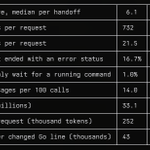
These are the early numbers on 6.2 as a coding worker in one of my projects comparing about 15 handoff for 6.2 to 19 handoffs for 6.1. About 2000 to 2,600 requests and 600 million tokens on either side.
Significant enough to mention where a single task is a unit:
1. 6.2 uses smaller steps of 470 output tokens per request vs 732 for 6.1.
2. 6.2 is faster 14s per step vs 21.5 seconds for 6.1
3. 6.2 had many fewer failed shell commands measuring 3.7% to 16.7%.
4. 6.2 waits for long commands to finish instead of polling on 8.2% of calls to just 1% of calls for 6.1.
5. 6.2 prefers to edit existing code; only 40% of code it touched was new vs 78% of code 6.1 touched.
6. 6.2 is less verbose - per 100 model calls it post updates 9.7 times on average vs 14 times for 6.1.
Not significantly different:
- function complexity, inline comment usage, commit message style or length, or how often the final check gate passed (~1 failure in 3 for both).
Looks different but needs more run:
- for 6.2 Sol the average commit is 1/3 in size, flatter functions and fewer code had to be rewritten in later commits.
Cost and usage: 6.1 used the weekly plan limit about 1.6 times as fast as 6.2 (wow if this holds!)
If you like this kind of content in your feed, feel free to give me a follow. I follow anyone who engages genuinely with me back. Happy clanking!

If you want to know what people mean when they say Astra 6.2 is a "bad model" -- read this:
First Astra 6.2 returns: One of my projects (a simulation rendering pipeline) had this nasty bug where a few frames would draw and flash the wrong image after arbitrary inputs.
- Fable 5.2 couldn't solve it - it couldn't or was unwilling to do the proper verification work required to resolve it at the root, began guessing and then a series of cascading patches to try and paper over the symptoms. FAILED.
- Astra 6.1 built a whole harness to compare what the GPU drew with what the CPU expected for every frame but then got fixated on a wrong hypothesis and spun its wheels. FAILED.
- Opus I did not give a full chance but pretty sure it would not have done better than Fable.
Astra 6.2 knocked it out in ~2 hours by methodically working through it, did what 6.1 tried to do - but properly - found the actual issue at the root and fixed 3 other issues I knew existed but didn't even mention. Watching it work was truly something else.
This is clearly one of the smartest models in existence today, and this kind of work is likely an area where it particularly excels. So when these people are out there saying Astra 6.2 is a "bad model" there is a very big distinction to make that some of their hyperbolic statements don't quite cover.
The model itself is EXTREMELY intelligent and can likely handle any problem you throw at it. What they really mean is Astra is a bad model to WORK WITH. Because frankly, even though it did amazing things to get to the bottom of this issue and resolve it, esp the way it got there... the experience was subpar.
First of all, it worked for 1.5 hours and sent 4 tiny updates. That sucks. Back to the old 5.2 days we go. At the end of all that work its final response was 3 terse paragraphs, decently clear but not well-explained. If you've become a lazy Claude-pilled engineer, and are used to big verbose walls of text at the end of every turn, you probably won't like this and then call it a "bad model".
OpenAI clearly has some work to do on Astra. It feels slightly undercooked. But that's it... they rushed it out a bit undercooked. If you think this means OpenAI is far behind, you've lost the plot, the raw intelligence is there, so once OpenAI finishes cooking this thing, watch out...
Oh and all that work used just 1% of my weekly. That's insane.
More to come on Astra and Sol 6.2...
GPT vs Claude strengths:
GPT:
- Reasoning
- Execution
- Verification / Correctness / Rigor
- Enumerative processing
- Strict instruction following
- Modeling (both physical and conceptual)
- Token efficiency
- Post-compaction detail preservation
- Full task convergence
- Math and science
- Generalizing systems
Claude:
- Modeling (both physical and conceptual)
- Structuring (messy inputs)
- Organization
- Inference
- Naming things
- Systems design
- Design taste
- Communication
- Orchestration
- Long-horizon coherency
- Multiple parallel thread tracking
- Speed (to "good enough")
The crazy thing is for most of these, a strength for one of them is a corresponding weakness for the other.
So when will we get a model that's good at all of these things - or is that fundamentally impossible? Until then, being a Stan for one or the other seems to be an anti-pattern.
1
10
863
If you want to know what people mean when they say Astra 6.2 is a "bad model" -- read this:
First Astra 6.2 returns: One of my projects (a simulation rendering pipeline) had this nasty bug where a few frames would draw and flash the wrong image after arbitrary inputs.
- Fable 5.2 couldn't solve it - it couldn't or was unwilling to do the proper verification work required to resolve it at the root, began guessing and then a series of cascading patches to try and paper over the symptoms. FAILED.
- Astra 6.1 built a whole harness to compare what the GPU drew with what the CPU expected for every frame but then got fixated on a wrong hypothesis and spun its wheels. FAILED.
- Opus I did not give a full chance but pretty sure it would not have done better than Fable.
Astra 6.2 knocked it out in ~2 hours by methodically working through it, did what 6.1 tried to do - but properly - found the actual issue at the root and fixed 3 other issues I knew existed but didn't even mention. Watching it work was truly something else.
This is clearly one of the smartest models in existence today, and this kind of work is likely an area where it particularly excels. So when these people are out there saying Astra 6.2 is a "bad model" there is a very big distinction to make that some of their hyperbolic statements don't quite cover.
The model itself is EXTREMELY intelligent and can likely handle any problem you throw at it. What they really mean is Astra is a bad model to WORK WITH. Because frankly, even though it did amazing things to get to the bottom of this issue and resolve it, esp the way it got there... the experience was subpar.
First of all, it worked for 1.5 hours and sent 4 tiny updates. That sucks. Back to the old 5.2 days we go. At the end of all that work its final response was 3 terse paragraphs, decently clear but not well-explained. If you've become a lazy Claude-pilled engineer, and are used to big verbose walls of text at the end of every turn, you probably won't like this and then call it a "bad model".
OpenAI clearly has some work to do on Astra. It feels slightly undercooked. But that's it... they rushed it out a bit undercooked. If you think this means OpenAI is far behind, you've lost the plot, the raw intelligence is there, so once OpenAI finishes cooking this thing, watch out...
Oh and all that work used just 1% of my weekly. That's insane.
More to come on Astra and Sol 6.2...
I can have 6 or 7 Sol agents working at the same time, get a bunch done and verified properly and drop like 3-4% an hour. With Opus, it uses more tokens, takes longer, and fails to follow instructions reliably so the work ends up 95% done and needs another model to come behind it and verify its work. Sol does not. Maybe that's why opus falls off the line. It also likely depends highly on what kind of work you are giving it, in terms of where this lands.

According to Artificial Analysis, Opus 5.5 is no longer on the pareto line (best value per intelligence)
Love AA and all, but they really need some behavioral benches to smooth out this gap. Opus 5.5 is still the best value available for real long running code work.

6
1,155
I've started using a fable thread on top of opus who is driving codex threads. I talk to fable (mostly) and fable talks to opus. Opus only reports back to fable at sparse checkpoints to keep usage down.
And crucially once an hour fable does a workflow optimization review for the past hour. It looks at all the work that has been done, how efficient the process was and optimizes it by implementing new rules and tooling to execute the optimized workflow as efficiently as possible between opus and codex.
It's honestly the most amazing thing. Work that was taking four and five hours has been consistently cut down to an hour or less. Fable is incredible for understanding how to optimize how and when tests and builds run and by whom, because inefficient test running, validation, builds and resource management, I've found is the biggest driver of unnecessarily long work in a project with a lot of parallel work. Having a model as fable check it once an hour and organize the workflow with tooling is the biggest impact thing I've done in months.
Happy 6.2 day to those who celebrate!
Separately, I've had a few people ask for more details on this, so here goes. Basically it goes like:
1. claude code -> 2 separate terminal tabs, one running opus as "lead manager" and one running Fable as "side lead"
2. codex app -> opus runs all of this via my Codex App Link plugin which does bidi comms and high token-efficiency monitoring. Ask opus to start a monitor for codex's question tool and instruct codex to use its questions tool when it needs further feedback and instructions mid-turn. Otherwise Codex App Link gives opus all the instructions it needs via the skill to understand how to orchestrate using it.
github.com/transcendr/slopwa…
Optional but suggested:
- install MSW, MSL and Timebox for both claude code and codex. Tell opus to use them with codex (not itself, they are only installed in claude code so opus has the full reference of how they work) to optimize the workflow.
- Always use MSW for handoffs to Codex where it defines the tasks contract and has codex complete the 2-step-analysis before starting the task and Opus approves (this drastically cuts down on Sol's tendency to over-engineer)
- To use MSL for reporting / summarizing results to you
- Use one timebox per task (eg, 90 / 10 -- opus will know what this is) and to manage extensions of time boxes per task as part of its role.
To Fable:
Give it an instruction to once per hour do a review check of the ongoing work, workflow and process and become "owner" (important term) of optimizing the workflow for the most optimal and efficient completion of tasks, and to pay special attention to how tests, builds and other processes (quality gates, linting, etc) are managed by the lead manager. The goal should be as few possible runs of these processes to achieve the work and maintain quality standards, meaning to organize the work to group runs efficiently where possible. Build and integrate project level tooling that reinforces these optimizations between opus and Codex.
Pay close attention to this part until you feel like it's dialed in properly. Every project is different, so instead of a one-size-fits-all solution, it's far better to have Fable work this out as the project evolves.
You can always extract elements of this that you find can work well across projects. For example, on one of my machines Fable noticed that so many agents were running at the same time and running tests, builds etc in parallel that it would bog down the machine. It built a tool that monitors memory usage and automatically pauses (suspends) the newest processes when memory dips below a specific threshold and resumes them when memory frees up.
This could easily be its own standard tool that I will likely soon extract into my skills repo. I didn't ask Fable to build this, it just saw the problem and did it. That is the kind of thing you can expect from Fable in this role.
Obviously, I've not covered everything here but give this post to your clanker and have it work out the gaps. You'll be well on your way to being an incredible slopware engineer.
Question? Leave a comment, I usually answer and I follow anyone who engages genuinely with me. Cheers!
PS. One last thing, want to double or triple your Codex usage? Install Jevpact:
github.com/transcendr/jevpac…
243
Happy 6.2 day to those who celebrate!
Separately, I've had a few people ask for more details on this, so here goes. Basically it goes like:
1. claude code -> 2 separate terminal tabs, one running opus as "lead manager" and one running Fable as "side lead"
2. codex app -> opus runs all of this via my Codex App Link plugin which does bidi comms and high token-efficiency monitoring. Ask opus to start a monitor for codex's question tool and instruct codex to use its questions tool when it needs further feedback and instructions mid-turn. Otherwise Codex App Link gives opus all the instructions it needs via the skill to understand how to orchestrate using it.
github.com/transcendr/slopwa…
Optional but suggested:
- install MSW, MSL and Timebox for both claude code and codex. Tell opus to use them with codex (not itself, they are only installed in claude code so opus has the full reference of how they work) to optimize the workflow.
- Always use MSW for handoffs to Codex where it defines the tasks contract and has codex complete the 2-step-analysis before starting the task and Opus approves (this drastically cuts down on Sol's tendency to over-engineer)
- To use MSL for reporting / summarizing results to you
- Use one timebox per task (eg, 90 / 10 -- opus will know what this is) and to manage extensions of time boxes per task as part of its role.
To Fable:
Give it an instruction to once per hour do a review check of the ongoing work, workflow and process and become "owner" (important term) of optimizing the workflow for the most optimal and efficient completion of tasks, and to pay special attention to how tests, builds and other processes (quality gates, linting, etc) are managed by the lead manager. The goal should be as few possible runs of these processes to achieve the work and maintain quality standards, meaning to organize the work to group runs efficiently where possible. Build and integrate project level tooling that reinforces these optimizations between opus and Codex.
Pay close attention to this part until you feel like it's dialed in properly. Every project is different, so instead of a one-size-fits-all solution, it's far better to have Fable work this out as the project evolves.
You can always extract elements of this that you find can work well across projects. For example, on one of my machines Fable noticed that so many agents were running at the same time and running tests, builds etc in parallel that it would bog down the machine. It built a tool that monitors memory usage and automatically pauses (suspends) the newest processes when memory dips below a specific threshold and resumes them when memory frees up.
This could easily be its own standard tool that I will likely soon extract into my skills repo. I didn't ask Fable to build this, it just saw the problem and did it. That is the kind of thing you can expect from Fable in this role.
Obviously, I've not covered everything here but give this post to your clanker and have it work out the gaps. You'll be well on your way to being an incredible slopware engineer.
Question? Leave a comment, I usually answer and I follow anyone who engages genuinely with me. Cheers!
PS. One last thing, want to double or triple your Codex usage? Install Jevpact:
github.com/transcendr/jevpac…
I've started using a fable thread on top of opus who is driving codex threads. I talk to fable (mostly) and fable talks to opus. Opus only reports back to fable at sparse checkpoints to keep usage down.
And crucially once an hour fable does a workflow optimization review for the past hour. It looks at all the work that has been done, how efficient the process was and optimizes it by implementing new rules and tooling to execute the optimized workflow as efficiently as possible between opus and codex.
It's honestly the most amazing thing. Work that was taking four and five hours has been consistently cut down to an hour or less. Fable is incredible for understanding how to optimize how and when tests and builds run and by whom, because inefficient test running, validation, builds and resource management, I've found is the biggest driver of unnecessarily long work in a project with a lot of parallel work. Having a model as fable check it once an hour and organize the workflow with tooling is the biggest impact thing I've done in months.
Legit more excited for 6.2 sol than Astra. Who's with me? The top of the intelligence ladder is already nearly saturated for most work and has a lot less room for practical use than the bottom rung workers. Bringing the floor up in a project is almost universally better than raising the ceiling.
1
8
400