

Incoming Stanford CS PhD; Formerly @BerkeleyML @BerkeleyNLP; https://nitter.cf/t.co/YqhKUqpSBW
Joined June 2022
- Tweets36
- Following1.5K
- Followers757
- Likes23





Alexander Wan retweeted

I am building a group to study the economic impacts of frontier AI.
If you are interested in collaborating, let me know by filling out this form, and feel free to send an email with more information!
forms.gle/ZYAZGsg5PcnpWnJWA
Alexander Wan retweeted

Who gets access to frontier AI is now a geopolitical question. But another question matters too: which economies are most exposed to it?
Our new paper answers this by measuring national exposure to frontier AI across 141 countries.
(1/8)

Alexander Wan retweeted

🧵Thread (1/7): Jobs are bundles of tasks. Technology changes work by changing tasks.
But how you get from tasks to jobs matters when doing job-level analysis — and existing approaches get it wrong. We posit that weighting tasks by working time share is a strong choice of task weights.
🌵 We publish a comprehensive set of time share estimates for nearly all 18k ONET tasks and 1k ONET jobs.
🌿We then look at the share of working time across jobs that is exposed to AI.

40% of benchmarking effort targets math/coding, but the related occupations are only 3.5% of US jobs.
We introduce EconEvals, an open-source evaluation suite to measure capabilities and predict job disruption across the US labor economy.

Finally, because each time-savings estimate is whitebox, we inspect the factors behind the predictions by categorizing the simulation's justifications. Our exposure estimates surface specific real-world bottlenecks that limit AI-enabled time savings on a task-by-task basis.

1
4
308
Read more: econevals.com
Code: github.com/EconEvals/Economi…
Data: huggingface.co/datasets/Econ…
And, of course, this project couldn’t have been possible without my coauthors @HatgisKessell @t6aguirre @percyliang and @RishiBommasani !

Going to be presenting this at ACL next week. Feel free to reach out to chat! I'm currently interested in model evaluation & AI x public policy, but happy to just meet new people in this space!

Alexander Wan retweeted

⚡Introducing our free online course with @udacity and @googledevs—Gemini API by Google! Learn about LLMs, Gemini models, prompting techniques, and Google AI Studio. Enroll now: bit.ly/4cCddIC
Read more from the Udacity CEO: bit.ly/3xTjEYt

🚀 Level up your AI skills with the free new Gemini API course from @Udacity and Google! Get more familiar with LLMs and learn how to use Google AI Studio and the Gemini API to build AI applications. Enroll today to #BuildWithGemini → goo.gle/udacity-geminiapi

ALT Image reads “The Gemini API by Google course, designed for developers in partnership with Udacity” above Google and Udacity logos.
What happens when RAG models are provided with documents that have conflicting information?
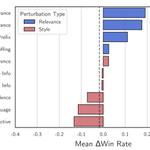
In our new paper, we study how LLMs answer subjective, contentious, and conflicting queries in real-world retrieval-augmented situations.

Overall our results highlight the importance of RAG corpus quality (e.g., the need to filter misinformation), and possibly even a shift in how LLMs are trained to better align with human judgements.
See our paper for lots more experiments and analysis!
These results are from our paper: "What Evidence Do Language Models Find Convincing?" by @alexwan55, @Eric_Wallace_, and Dan Klein.
arxiv.org/abs/2402.11782