

https://nitter.cf/t.co/Agcoopjl43🌱Postdoc studying bumblebee social, culture and behaviour 🐝 I’m also writing a novel! She/her, views my own
London, England
Joined December 2018
- Tweets687
- Following358
- Followers508
- Likes3.3K







Pinned Tweet
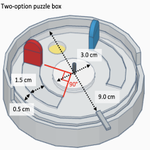
It's finally here! Our new paper, out now in Nature. It's one small step for a bumblebee... and a big leap for human understanding of their cognitive capabilities.
With @LChittka , @AmandaRoyka , and others!!
nature.com/articles/s41586-0…

T’is time. Moving over to bluesky- follow me there at adbridges.bsky.social ! 💙
2
102
Dr Alice Bridges retweeted

New paper out! 🚨 We show that vampire bats use amino acids from a recent blood meal to fuel RUNNING - a rare mode of locomotion in bats ideal for stalking prey. I’d worry less about your neck and more about your ankles! 🧛🏻♂️ @WelchLab_UTSC @RSocPublishing
royalsocietypublishing.org/d…


Dr Alice Bridges retweeted

And this is why you actually prosecute ALL the crimes -- swiftly and thoroughly -- no matter who the criminal is.


Can honestly say that nothing on this earth fills me with as much unimaginable rage as trying to fill in university risk assessment forms.
3
224
Dr Alice Bridges retweeted

What colour is quinine solution for bees? How well do birds smell? Are monitor displays are the same as the real thing? And, most importantly, how much are our experiments jeopardised by not caring? With @turlminwebs @maria_loconsole @HanleyColorLab
royalsocietypublishing.org/d…

Dr Alice Bridges retweeted

A big thank you to all the speakers of @ESLRSociety + @CulturalEvolSoc seminar for sharing their amazing research with us: @taylorahersh @RoopeKaaronen, @alicedbridges @dominik_deffner @KristinaBeck_ 👏👏👏 If you missed a talk, check CESs´ YouTube account youtube.com/@CulturalEvolSoc


All good things come to an end ... Last but not least @KristinaBeck_ will present on Monday, June 17th at 5 PM CET "Exploring the effect of local population density on social network structure in great tits". Zoom link on our website eslrsociety.com/events/eslr-…

Dr Alice Bridges retweeted

🚨Today is a special day for AnimalTA! We are releasing v3.1.1! 🥳 We are very grateful to all of you who helped us with your comments or suggestions!
Illustrated here thanks to @CsataEniko video, is one of the most important new features! Some more changes in this 🧵!
Dr Alice Bridges retweeted
Join us on Monday, June 3rd at 5 PM CET for our next ESLR/@CulturalEvolSoc seminar with @alicedbridges She will present her work on puzzle-solving bumblebees 🐝that show a capacity for complex learning and culture. Check our website for the Zoom link eslrsociety.com/events/eslr-…

ALT Photo credit: ECON for Queen Mary University of London
Dr Alice Bridges retweeted

Hello folks! This week, we have @Ayontho presenting some fantastic work done by @alicedbridges et al. on bumblebees. Details👇, sign up🔗in bio. Join us!


youtube.com/watch?v=iQaO5iLj… A brilliant video by @TwigScience translating our recent bumblebee findings for schoolchildren!
Dr Alice Bridges retweeted

Chickadees activate unique neural “barcodes” each time they hide food. These barcoded #memories then light up in the brain when they retrieve it.
More in @CellCellPress:
cell.com/cell/fulltext/S0092…
@ZuckermanBrain @selmaanchettih, @e_mackevicius, Stephanie Hale, & Dmitriy Aronov


Dr Alice Bridges retweeted

Two years ago I was doing fieldwork working with this amazing model system, my Twitter post went viral! Today, the paper on nest architecture in Scaptotrigona depilis is out in @CurrentBiology! You can download the full paper here authors.elsevier.com/c/1inWS… – at Louvain, Belgium

Amazing #comb shape! My fieldwork in Brazil is ongoing, still two months left to collect data on Scaptotrigona nest architecture. Wish me good luck 🤞🏻🇧🇷 #fieldwork #stinglessbee #research #phdlife

Dr Alice Bridges retweeted

Bees and chimpanzees learn from others what they cannot learn alone nature.com/articles/d41586-0…