

Official Twitter account for All Purpose Geek We do #DonationOptional #TechSupport and #TechNews. Just @ us.
Florida, USA
Joined June 2009
- Tweets1.8K
- Following141
- Followers662
- Likes1.5K






Pinned Tweet
For anyone who has not been following this: a recent BitLocker bypass reportedly abuses Microsoft’s own Windows Recovery Environment, known as WinRE, to gain access to a protected drive under certain conditions.
That matters because BitLocker is supposed to be one of Windows’ hard security boundaries.
Encrypt the drive. Protect the key. Without the proper unlock conditions, the data should stay out of reach. That is the promise Microsoft has sold to businesses, governments, and everyday users for years.
But this recent bypass cuts directly into that promise.
If Microsoft built recovery tooling that could be manipulated into unlocking a BitLocker-protected volume, then the problem is not merely a bug. It is a fundamental design bypass.
The practical security model was apparently not just "no key, no data." It was closer to: "no key, no data, unless Microsoft’s trusted recovery environment can be convinced to do the unlock work."
That is exactly why security experts have opposed golden keys and backdoors in encryption systems for decades. Once you build an alternate path around the lock, you do not get to guarantee that only the "good guys" will ever use it. Eventually someone else discovers it, abuses it, leaks it, or weaponizes it.
People love to dismiss those concerns as paranoia right up until something like this happens.
Maybe this was reckless architecture. Maybe it was an intentionally preserved recovery pathway. Maybe it was built under pressure from the same government and law enforcement forces that have repeatedly argued for "lawful access," exceptional access, and other sanitized terms for encryption bypasses.
I cannot prove which one it was.
What I can say is this: when the vendor’s own privileged recovery tools can become the path around the encryption boundary, the public has every right to question whether that boundary was ever as absolute as advertised.
BitLocker’s encryption math may not have been broken.
The trust model around it was.
Microsoft needs a feature where Entra admins can see which users have personal accounts associated with their business email addresses.
57
Microsoft's September Windows 11 update is a perfect example of how completely backwards its update process has become.
This update shipped with:
- Remote Desktop failures, hangs, and instability
- RDS-related tools and Windows components becoming unresponsive
- Hyper-V/Linux VM shared-folder failures
- USB audio devices failing with Code 10 or producing no sound
- Multichannel USB audio breaking
- Reports of File History suddenly refusing to recognize working backup drives
Then Microsoft had to turn around and release an out-of-band update to fix several of the problems it had just pushed onto production machines.
At this point, what exactly is the purpose of the Windows Insider program, preview rings, staged deployments, telemetry, and Microsoft's enormous testing infrastructure?
Because apparently it is not to stop broken updates from reaching everyone else.
Nobody expects Microsoft to catch every obscure driver conflict on every weird hardware combination ever made. But Remote Desktop? Hyper-V? USB audio? Windows management tools? These are not fringe features. These are basic, heavily used parts of Windows.
Microsoft has access to more telemetry and more pre-release testing data than almost any software company on the planet. Yet somehow customers are still routinely finding major regressions after the update has already been declared ready for mass deployment.
That leaves two possibilities, and neither makes Microsoft look good.
Either Microsoft's testing process is incapable of catching obvious regressions in major Windows functionality...
...or it is catching them and Microsoft is shipping the updates anyway.
Both are an indictment of the process.
Patch Tuesday is supposed to be the point where tested fixes reach production. It should not be Microsoft's monthly "let's push it out and see what catches fire" event.
An emergency out-of-band patch should be an exceptional response to an extraordinary problem. It should not feel like the second half of the normal update cycle.
Microsoft keeps telling businesses to modernize, stay patched, trust automatic updates, and move everything onto its latest platforms. Trust has to work both ways.
You cannot demand that administrators deploy updates quickly for security reasons while repeatedly giving them reasons to fear what those same updates are going to break.
Microsoft already has preview rings.
Microsoft already has staged deployment.
Microsoft already has telemetry.
Microsoft already has millions of willing preview testers.
Use them.
Production users are customers, not Microsoft's unpaid QA department.
The general public should not be the final Windows Insider ring.
@Microsoft .. why?
1
2
206
Do not purchase smart interactive displays from @Promethean if security and long-term support matter to your organization.
We were troubleshooting a Scholastic website that teachers need to use. It works properly on the newer ActivPanel 10, but not on the ActivPanel 9. We traced the difference back to the ActivPanel 9 running an ancient version of Chromium.
That is not just a compatibility problem. It is a security problem.
These devices are still under an active support contract, yet Promethean is refusing to provide a reasonably current Chromium build. Their response was essentially "that website doesn't work on Android," despite the same site working on their newer Android-based panel.
If a vendor chooses to build its hardware around Android, that is perfectly fine. But doing so should come with the expectation that the underlying software stack will actually be maintained, especially while the product is still being sold as "supported."
Schools should not have to accept obsolete browser engines, missing security fixes, and broken compatibility on hardware that is supposedly still under active support.
Yes, we love having a digital library. The problem is losing the choice.
With physical games, I can buy a discounted used copy years later. I can buy a physical copy of a game I really love. I can lend it, sell it, trade it, collect it, or keep it on a shelf for 20 years. Developers and publishers can also sell games without the entire transaction being permanently tied to Sony's storefront.
Kill physical media entirely and all of those options evaporate.
If Sony wants a digital-only future, then build some of those ownership rights back into the digital ecosystem.
1. Allow digital games to be gifted, transferred, or traded through PlayStation accounts.
Sony can manage the license transfer and revoke it from the original account when ownership changes.
2. Allow users to create an offline archival copy of a purchased game on USB or external storage.
Include the version they actually bought and a device/account-bound license that does not require Sony's servers to remain online forever.
3. If a game is being delisted or the publisher no longer intends to sell it, shift it into something closer to a GOG-style preservation model.
Let existing owners download a complete, self-contained copy with the required patches and an offline license that no longer depends on continuing storefront authentication.
At that point, Sony and the publisher have already decided they are no longer making money from new sales of that title. Allowing legitimate owners to preserve what they already purchased is not cannibalizing revenue. There is no sale left to cannibalize.
4. Create a digital resale marketplace.
Let players sell eligible licenses to other players, with Sony and potentially the publisher receiving a small transaction fee. You get the convenience of digital while restoring some of what consumers lose when physical discs disappear.
5. Guarantee that purchased games remain downloadable for existing owners even after they are removed from sale.
If Sony eventually wants to stop hosting those downloads, that should trigger the same GOG-like end-of-life process: provide the owner with a permanent offline copy before the servers disappear.
6. Separate "ownership" from "store availability."
A publisher deciding that it no longer wants to sell something should not retroactively affect people who already paid for it.
7. Provide an end-of-life policy for consoles and storefronts.
When a platform reaches the point where Sony no longer wants to maintain its authentication infrastructure, legitimately purchased games should transition to permanent offline licenses rather than becoming dependent on servers Sony has already decided to abandon.
The argument that "games already download patches anyway" completely misses the point. Nobody is claiming a Blu-ray contains every future patch. The disc is a transferable physical license and, in many cases, contains enough of the game to preserve or play some version of it without asking Sony's storefront for permission.
Digital is convenient. I prefer digital for a lot of things too.
But convenience should not require surrendering resale, preservation, competition, offline access, and long-term ownership.
If physical media is going away, give us a digital system that replaces what we are losing instead of pretending we weren't losing anything.

Former PlayStation boss Shuhei Yoshida thinks Sony’s decision to stop making physical discs is not a big issue
"Personally, I'm a totally digital consumer," "I don't want to manage discs or swap discs. I want all my games on my dashboard, and I just select a game and play it. So, I'm completely digital."
He also questioned whether the end of physical games is really such a big issue “Even with physical disc games, in most cases, developers are constantly updating and adding game data anyway.”
He says physical players still need to download “new patches, DLC, or updates,” so he said, “not having a disc, I don't understand if it's such a big issue.”
He also understands why some players are worried “It would be a shame if physical games were no longer available to collect.”


171

@msPartner Exactly this. Those MSDN-style downloads were valuable because they gave developers and IT professionals legitimate access to the same production-like bits we actually had to develop against and test with.
We used them for application compatibility, deployment testing, migrations, OS builds, and especially in-place upgrade testing in pre-production environments. The evaluation ISOs are not a replacement because they specifically do not support in-place upgrades, which immediately rules them out for a major real-world testing scenario.
In many of these labs we did not even need to activate Windows. We needed clean, legitimate RTM media that behaved like what would eventually be deployed into production.
Removing that access does not eliminate the technical need. It just removes the legitimate source.
Developers still need production-like environments. IT professionals still need to validate upgrades before touching client systems. Now Microsoft is making both groups work harder to obtain the exact software they are supposed to be developing for and supporting.
That is a baffling direction for a company that should be encouraging people to stay inside its development and licensing ecosystem.
There is nothing "complicated" about consumers wanting basic ownership rights over products they paid for.
This is bigger than gaming. As more of what we buy becomes dependent on servers, accounts, authentication, and digital licensing, we need a reasonable standard for what happens when a company decides to shut those systems down.
No one is demanding that a company operate servers forever. The point is that shutting down a service should not automatically mean destroying the consumer's ability to use something they already purchased.
There needs to be an end-of-life pathway. That could be as simple as providing a final downloadable version and leaving it to the community to preserve or restore functionality, without threatening those efforts with DMCA claims for circumventing dead authentication or abandoned server dependencies.
Companies can stop supporting a product. Consumers should not automatically lose the product with it.

Legal expert Dr Celia Pontin says Stop Killing Games' idea of having laws protecting gamers is "complicated"
"There's a mismatch between what people might be calling for and what is possible ... when it comes to how existing legislation works"


Readers added context they thought people might want to know
Dr. Celia Pontin directs policy at Flux Digital Policy, part of Wiggin LLP which advises games companies and lists Sony as a key client.
fluxdigitalpolicy.com/celia
wiggin.co.uk/businesses-pro…
legal500.com/rankings/ranki…
72
All Purpose Geek retweeted

Good news everyone I have confirmed with Msi that this is an international giveaway ❤️❤️ thank you @msiUSA 🥹👌 your the real goat! FYI this is a 10k Pc giveaway. We are just filming the YouTube video now, so the giveaway will be up next week ❤️

If physical media truly costs more to produce and distribute, then digital games should logically be cheaper. One of the biggest complaints from consumers is that an $80 physical game costs exactly the same as the digital version, despite the digital copy eliminating manufacturing, packaging, shipping, warehousing, and retail overhead. Publishers are clearly capture those savings rather than passing them on to consumers.
You also characterize physical media supporters as spoiled or selfish, but I don't think you've spent much time engaging with the broader conversation. Many of us have said repeatedly that we'd be willing to pay a premium for physical copies if that's what it took to keep the format alive. Collectors already pay more for steelbooks, collector's editions, vinyl soundtracks, statues, and limited-run releases. The idea that physical buyers categorically refuse to pay more simply doesn't reflect reality.
You also describe physical buyers as a niche, but Sony doesn't actually have the data to fully support that conclusion because they're only measuring first-party sales. They know how many physical copies they sell. They do not know how many people intentionally wait for a used copy, borrow one from a friend, rent one, purchase it from a secondhand retailer, or share games within a household. Those behaviors are part of the value proposition of physical ownership, yet they are largely invisible in Sony's sales metrics.
Ironically, that's one of the reasons people value physical media. Ownership doesn't end with the initial transaction. A physical game can circulate for years through resale, lending, collections, preservation, and bargain-bin purchases that introduce entirely new players to a franchise. Sony sees the first sale, but they don't see the ecosystem that exists afterward.
The discussion also isn't simply about manufacturing costs. It's about consumer rights, ownership, preservation, and market dynamics. Physical media creates competition between retailers, allows consumers to recover some of their purchase through resale, gives families the ability to share games, and ensures games remain accessible even if a digital storefront closes or licensing agreements change.
The irony is that your own argument supports charging more for physical media if that's what the market ultimately demands. I don't think most physical media advocates would reject that outright. What they reject is paying the same price for a digital license that provides fewer rights while simultaneously being told they're selfish for wanting an ownership model that has benefited consumers for decades.
This isn't just about the cost of pressing a Blu-ray. It's about asking consumers to accept fewer ownership rights, less competition, fewer preservation options, and less flexibility, all while paying exactly the same price. That's why this debate exists, and reducing it to "physical buyers just don't want to pay" completely misses the broader issue.

There is a clear, yet never discussed omission in the cries over PlayStation ending physical media. And it also reveals how self-centered these players are – even as they claim Sony to be some hive minded capitalist evil.
As is now well known, when a physical game is sold both the publisher and platform receive less than when a digital entitlement is sold.
At the same time, the players spend the same – and as they say, players actually get more than when buying digital.
Where is the “missing” money? It’s spent on manufacturing a disc, shipping a disk, managing costly returns, defective disks, stolen disks, etc. And that’s before accounting for grey market sales.
What happens normally when a version of the same product is less profitable than an otherwise identical good? It is sold for more.
What happens normally when a version caters to a hyper-passionate niche? It is sold for more.
What happens when a version – again, to the claims of its ardent buyers – has more value than the (allegedly) inferior alternative? It is sold for more.
This is point number one. The very players who are offended by the loss of an option that they, a self-professedly valuable customer group that is actually marginal on the whole… refuse to actually pay for their preference.
In fact, they expect everyone else to pay for that preference.
Gamers will whine saying “it’s good business to practice to do well by your fans.” Sure.
But it’s not “good business” to monetize your most passionate players the least, divert profits to disk makers and retailers not gamemakers or platform subsidizers, let alone offer the “best” version of your product at the worst economics.
If Sony were the capitalist evil physical media fans claim it to be… well, there’s an easy answer!
If Sony could make as much, or more money from those goods, well then by definition… they would do so!
If these customers were, in fact, as valuable as they profess… Sony wouldn’t do this. But these players are in fact Sony's lease valuable customers. And those who purchase a physical disc via resale aren't even Sony's customers.
If these customers valued physical as much as they profess… they would pay more! The issue is players want their cake and to eat it to. They refuse to put their wallets where their mouth is. Instead, they want Sony to pick-up the check.
And it’s not just Sony. Small studios don't do physical because it is expensive. Even CDPR has to PAY publishers like WB to make and distribute physical discs on their behalf, meaning their margins are even worse than those of Sony or WB with their own games. But again, players just want to say – "deal with it!" Indefinitely!
And that’s the problem .
There is a global omni-industry (and omni-consumer) abandonment of physical media. Games used to be a tiny fraction of a very large global disk manufacturing and global disk drive manufacturing business.
It’s all going away.
That means games hold more and more and more of the cost burden.
Sony didn’t abandon Blu-Ray (a format they pioneered) in 2024 to screw gamers, they abandoned it because not enough people bought Blu-Rays.
And that same dynamic means ALL the factories that built Blu-Ray drives and Blu-Ray risks sit mostly unused, costlier per unit than ever.
But gamers? Again, unwilling to cover their share. Happy to receive the subsidy of the global supply chain of the 2000s and 2010s, but now that it disagrees with them, they still refuse to pick up the tab. What narcissism.
Do you want to be pro dev? Then tell Sony you will cover the extra costs of physical in your own pocket. If you're unwilling to do this, you're selfish, demanding the rest of us cover the cost of your hobby.
1
127
Vote with your wallet. A week of not playing or buying games should be worth it.
If you must buy a game, buy it secondhand or used and be sure you tag @PlayStation with your purchase. They have no eyes to the metrics of used or second hand sales, might as well give them those numbers.
Some PlayStation players are planning a PSBlackout from August 23–30, but a lot of fans don’t think it’ll make much difference.
The idea is don’t log into PSN, don’t play online, and don’t buy anything from the PlayStation Store for a week.
Some gamers think not enough people will join for Sony to notice and they wont do anything


1
97
All Purpose Geek retweeted

What Sony executives don't seem to see is the resale market. None of the metrics they're looking at will ever show the portion of their player base that relies on buying used physical copies of popular titles. That's a complete blind spot in their data.
You can almost guarantee there's a hybrid model at play. A lot of users buy some games digitally directly through PlayStation, especially multiplayer titles or games they want on day one, while filling out the rest of their library by picking up used discs months later when prices come down. Sony sees the digital purchases. They don't see the used disc purchases because they don't receive a penny from those transactions.
That doesn't mean those sales aren't influencing console purchasing decisions. The ability to buy, trade, borrow, lend, or resell games absolutely adds value to the disc version of the console. Just because that activity exists outside Sony's ecosystem doesn't mean it isn't a major factor in why people choose that hardware in the first place.
I know a lot of you will argue that Steam is all digital and people typically don't complain. The difference is that the PC ecosystem isn't a closed storefront the way PlayStation is.
Steam has long supported redeeming game keys purchased from third-party retailers. PC gamers also have an entire ecosystem of legitimate stores competing on price, often selling Steam keys at a discount. Competition helps keep prices in check because Valve isn't the sole gatekeeper for how consumers acquire digital games.
With PlayStation, Sony largely controls the digital marketplace. If physical media disappears, so does one of the biggest sources of price competition. Those discounted physical copies, used game sales, borrowing from a friend, trading games in, or buying a launch title months later for half the price all become far less viable or disappear entirely.
That's the distinction I think these executives are missing, and it may very well become a major factor in the next console generation.
There are already persistent rumors that the next Xbox will function as more of a PC hybrid, potentially with access to storefronts like Steam. If Microsoft continues moving in that direction, it fundamentally changes the value proposition. Microsoft already embraces this philosophy with Xbox Play Anywhere. Buy a supported title once digitally, and you own both the Xbox and PC version. Your library isn't tied to a single device.
Sony, by comparison, appears to be moving in the opposite direction. Historically, many of its first-party games eventually made their way to PC after a period of PlayStation exclusivity. That at least gave consumers confidence that their purchases and Sony's franchises would eventually exist beyond a single platform. Reports now indicate Sony is pulling back from that strategy and intends to keep future single-player first-party titles exclusive to PlayStation instead.
So if Sony eliminates physical media while also reducing eventual PC releases, they're locking consumers into their ecosystem more than ever before. You're giving up the used market, price competition, physical ownership, and now even some of the long-term flexibility that previously existed.
This isn't just a debate over discs. It's a debate over consumer choice.
Sony's executives say they don't see any negative impact in their data from this decision, but of course they don't. The value of the used market, the pressure it puts on pricing, and the confidence consumers have in an open ecosystem aren't metrics that show up on a quarterly earnings report. They show up when someone is deciding which console to buy next.
If Microsoft offers a platform where I can buy once, play on Xbox and PC, shop across multiple storefronts, and still benefit from competitive pricing, while Sony asks me to buy exclusively through their storefront and remain locked into their hardware indefinitely, that's no longer just a hardware comparison. It's a consumer value comparison.
I think Sony is underestimating just how much that difference could matter in the next console war.

The plan to kill off disc games for the PlayStation platform has been getting a lot of backlash, and Sony today gave a response to the "strong views" from fans. #PS5 #PS6 #Sony neowin.net/news/sony-gives-u…

I facepalm every single time I see how @GetSpectrum connects their backup cellular wifi at client offices.
60
"No impact on business?" That's an incredibly shortsighted view. Businesses rarely feel the full impact of negative consumer sentiment immediately. Brand damage has latency. It affects future purchasing decisions, customer loyalty, and long-term sales.
Physical media also hasn't disappeared yet. Consumers can still choose the ownership model they prefer. Remove that choice, and some portion of those customers will simply stop buying your products altogether.
Referring to players' concerns as mere "attachments" is perhaps the most tone deaf part of this response. These "attachments" represent ownership, permanence, preservation, resale, lending, and the confidence that a game will still be accessible years from now regardless of licensing disputes, server shutdowns, or changes to your terms of service.
This isn't nostalgia. It's consumer protection. Calling those concerns "attachments" fundamentally misunderstands why people continue to value physical media in the first place.
I almost hope the delayed consumer response is substantial enough to finally prove this assumption wrong. Negative sentiment doesn't always show up immediately, but when it does, it shows up in sales. If that happens, perhaps they'll stop referring to legitimate consumer concerns as "attachments" and start recognizing them as purchasing decisions.

Sony CFO responds to backlash over ending physical discs for PlayStation:
"At this point in time, we are not seeing any impact on our business, as of now… a large part is already digitized. And therefore as a result the discontinuation of discs, we don't see that there will be any negative impact on our business.
However, as I already said, the users, the players have attachments and we have to think about how to respond to those feedbacks."


1
72
All Purpose Geek retweeted
@TMobile @ATT @Verizon
As I have been telling you, it's time to train your customer service representatives to ask one simple question during every phone upgrade or device swap:
"Have you verified that your MFA apps work on your new phone before we deactivate your old one?"
Google and Apple backups do not migrate every authentication method. Apps such as RSA Authenticator, Duo Mobile, and Microsoft Authenticator often rely on device-specific enrollment, especially for push notifications. Restoring a phone backup does not guarantee those credentials will work on the new device.
As an IT consultant, I have helped far too many people who were permanently or temporarily locked out of critical accounts because they traded in or wiped their old phone before confirming their MFA was working on the new one. In many cases, this could have been prevented with a 30-second conversation.
This issue is about to become even more important as Microsoft and others move away from SMS and phone calls as fallback authentication methods in favor of more phishing-resistant authentication.
Why are your CSRs, the very people handling device upgrades every day, still not being trained to warn customers to test their MFA apps before deactivating their old phone? That simple step could save countless customers from losing access to their banking, email, work accounts, and other critical services.
For context on where authentication is heading
microsoft.com/en-us/security…

The very same people who are angry that Microsoft will not undo 2FA/Security info changes on personal accounts when its changed or updated would also be pissed if a hacker socially engineered their way into your personal account by going through a Microsoft rep to bypass or reset a user's 2FA.
There is a big reason why Microsoft's policy is as such.
71
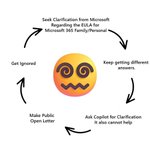
Joshua, I saw your story and I am genuinely sorry. Losing 25 years of data, photos, purchases, and memories is devastating, especially when you are being told there is no path back after proving the account was yours. Anyone reading this should understand how brutal that outcome is.
That said, this is unfortunately part of the harsh reality of personal Microsoft accounts and modern account security. I have seen a similar situation happen to a client before. Someone got into their account, changed the 2FA and personal recovery information, and at that point Microsoft treated the account as no longer safely recoverable. Exact same story.
As awful as that feels, the reason @Microsoft generally will not "override" changed 2FA data on a personal account is that doing so would create another attack path. If support could simply reset 2FA after someone claims ownership, attackers would try to socially engineer Microsoft representatives into handing over other people's accounts. The policy exists to protect users from that kind of abuse, even though in cases like yours it can produce a heartbreaking result.
Your story is a painful cautionary tale about how important it is to protect 2FA access and maintain multiple recovery options. If someone only has Microsoft Authenticator as their 2FA method, with no recovery codes, no backup email, no phone-based recovery, no secondary sign-in method, and no other trusted device, then losing or having that 2FA method changed can effectively lock them out permanently.
The scary part is that this same kind of lockout can happen even without an account compromise. I have had multiple clients run into this after simply buying a new phone. They used the normal Apple or Google transfer process, assumed everything moved over, and only found out too late that their Microsoft Authenticator data did not transfer in a usable way. By the time they realized it, the old phone was wiped, traded in, or gone.
That does not make your situation any less awful. It absolutely sucks, and I understand why you are angry. Years of family photos, purchases, and personal history should not just disappear from someone's life.
But the lesson for everyone else is clear: secure your account before something happens. Add multiple recovery methods. Save your recovery codes somewhere safe. Make sure your email and phone recovery options are current. Use a password manager. Protect the email account tied to your recovery process. Test your authenticator access before changing phones. Do not rely on one device or one app as the only way back into your digital life.
Just as importantly, do not rely on one cloud provider as the only home for irreplaceable data. Cloud storage is convenient, but it should not be your only copy of photos, documents, family memories, tax records, business files, or purchased content. Keep an independent backup outside of that provider, whether that is another cloud service, a local external drive, a NAS, or ideally a mix of both. If your Microsoft account, Google account, Apple account, or any other cloud account becomes inaccessible, your data should not disappear with it.
Your situation should be a wake-up call, not because you deserved this, but because nobody else should have to learn this lesson after the damage is already done.
While I am on this topic, it is also important to distinguish personal Microsoft accounts from Microsoft business accounts.
A personal Microsoft account is usually controlled only by the individual user and Microsoft's consumer recovery process. If the recovery information is changed, lost, or compromised, there may be no administrator, organization, or alternate authority that can step in and vouch for the user.
A Microsoft business account is part of a tenant. That means there are administrators, delegated controls, audit logs, conditional access policies, identity verification processes, and recovery paths that do not exist in the same way for personal accounts. Even then, business recovery is not magic, but the structure is very different. There is an organization behind the account, not just one individual user and a consumer recovery form.
That distinction matters. Personal accounts do not have the same kind of administrative backdoor that business tenants have, and that is by design.

Microsoft DELETED my account AND OneDrive!!?? After ACKNOWLEDGING that I’m the owner of the account and that it was compromised???
25 fucking years of data, thousands of euros spended on games?? My son’s baby pictures? GONE!
All because MICROSOFT couldn’t bring back a compromised account??
One of the biggest companies ever coulnd’t do that so they just deleted that shit like it was nothing?? Fucking shame on you!! @microsoftnl @MicrosoftHelps @MicrosoftHelpt @Microsoft
#microsoft #hacked

186
So @NeowinFeed posted an article that touches on something that I keep clamoring about. Client's getting locked out of their accounts regarding losing 2FA apps.
nitter.cf/NeowinFeed/status/2077…
A key takeaway from this article, and something I wish phone providers like @TMobile would take seriously, is that losing access to 2FA is not a minor inconvenience. For some accounts, it can mean being permanently locked out.
To be clear, in this article's case, the issue was an account compromise where the attacker changed the 2FA information. That is different from a phone trade-in or upgrade gone wrong.
But the core problem is still very apparent:
When access to 2FA is lost, changed, wiped, or not properly transferred, the user may have no practical way back in.
With Microsoft personal accounts, if a user loses access to their 2FA method and has no backup recovery options configured, such as SMS, email, recovery codes, or another trusted sign-in method, they may be locked out for good.
That is why this matters during phone upgrades.
When a customer is told "everything transferred," they may believe that includes their authenticator apps. In many cases, it does not. If they trade in or wipe the old phone before confirming their authenticator apps work on the new phone, they can lose access to email, banking, work accounts, cloud storage, medical portals, social accounts, and years of personal data.
This problem is only getting more serious as more services push users away from SMS and phone-call based 2FA toward app-based authentication. Some providers are dropping or limiting SMS 2FA entirely, often citing cost, abuse, or security concerns. X/Twitter is an example of this, since SMS-based 2FA is no longer available unless you have a paid account.
Phone carriers do not need to turn every CSR into a cybersecurity expert.
They just need to train them to ask one simple question before a customer trades in, wipes, or gives up their old phone:
"Do you use an app on your phone to approve logins or get security codes?"
That is it.
If the answer is yes, then the customer should be told to test those apps on the new phone before giving up the old one.
For the details, carriers could provide a simple pamphlet or counter flyer listing common authenticator apps, such as Microsoft Authenticator, Google Authenticator, Duo Mobile, Authy, Bitwarden, Proton Authenticator, 2FAS, RSA Authenticator, and others.
A 30-second conversation, a checkbox, or a simple flyer could save a customer from losing access to their digital life.
Two things not enough people do, securing online accounts and reading the terms and conditions, just cost one user 25 years of data. #Microsoft #OneDrive neowin.net/news/user-loses-2…

Hey @TMobile Dealt with yet another customer locked out of their accounts because your CSRs, who helped transfer info from his old Samsung Phone to his new one, did not bother to tell him to test his 2FA applications on how new phone before turning in his old one.
Client is now locked out of several accounts, some can be recovered but its going to be a long process for them to verify their ID and get back in.
How hard is it for training to be updated to address this pain point?

Who is going to be the first carrier to step up and actually care about customers getting locked out of their services?
@Verizon @ATT @TMobile @BoostMobile @MetroByTMobile @CricketWireless @Visible @Xfinity @GoogleFi @USCellCenter @StraightTalk @Tracfone @SpectrumMobile @noblemobile @Ting @ConsumerCell @Net10Wireless @RedPocket @MintMobile
This does not have to be complicated.
It could be a quick conversation at the counter.
It could be a checkbox in the trade-in process.
It could be a simple flyer that lists common authenticator apps like Microsoft Authenticator, Google Authenticator, Duo Mobile, Authy, Bitwarden, Proton Authenticator, 2FAS, and RSA Authenticator.
The point is simple: before someone turns in or wipes their old phone, ask them if they use an authenticator app and have them test it on the new phone first.
Because when this step gets missed, customers can lose access to banking, email, work accounts, medical portals, business platforms, social accounts, and anything else protected by app-based MFA.
Your reps are often the last line of defense before a customer gets locked out of their digital life.
As more companies move away from SMS-based MFA, this problem is only going to get worse.
So who is going to be the first carrier to actually treat this like customer protection?
Train your teams. Add it to your checklist. Hand out the flyer. Start the conversation before the old phone is gone.
126