2x Founder | IIT Kanpur Alum
- Tweets568
- Following70
- Followers127
- Likes487








ALT Data integrity companies have spent years helping enterprises understand whether data is accurate, consistent, classified and traceable. AI introduces another operating boundary to the same model. Let’s consider a scenario - a model rarely receives an entire governed source. A retrieval service selects fragments, assembles context and passes a smaller information set into the reasoning process. The integrity question therefore continues into the AI workflow. Enterprises need to know which information was selected, what access rules applied and what evidence can support the action. I see a natural partnership opportunity emerging between solutions of different players in the data and AI space. Established data platforms bring trusted metadata, quality and lineage. An Enterprise AI Control Plane can carry those governance assets into the context used by AI. That extends the value of the existing data investment. It also gives AI teams a stronger foundation than rebuilding governance ins


ALT Scope a control to the stage it covers The location of a control matters when you assess an AI system. Take an assistant that answers an insurance employee's questions from internal manuals. In a retrieval-augmented generation workflow, or RAG, the system retrieves source text and supplies it to a language model to help compose the response. Kynexa, Produktiv's enterprise AI control plane, applies runtime policy filtering in its unstructured-document RAG workflow. Only authorised retrieved text segments are supplied to the language model for the response. That describes the control at a specific stage: selecting the retrieved material that reaches the model. It should not be read as a claim about every downstream processing arrangement. A deployment review should separately establish the chosen model service's processing and retention terms. For an AI platform team, this distinction makes a product claim easier to examine. Name the stage, identify the control, then record the rem

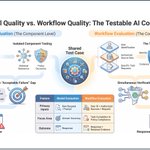
ALT A RAG is an AI assistant that first retrieves relevant enterprise information, then uses that information to generate an answer. For a financial institution, evaluation must include more than whether the answer is relevant. The workflow also needs to consider who is asking, which content they are allowed to use, and what evidence is available after the response. Kynexa is Produktiv's control plane for enterprise AI in production. Its current services include identity-provider integration, metadata management, RAG, policy enforcement, audit logging, connectors, file processing, and language-model catalogue management. These components provide the building blocks an enterprise needs to assess a RAG workflow: context that the user is authorised to use, consistent policy handling, and recorded events for review. The product should be evaluated against the customer's use case and approved capabilities. It does not claim to certify an AI workflow or guarantee a regulatory outcome.

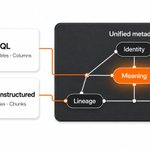
ALT An AI assistant can only retrieve and explain enterprise information as well as the metadata that describes that information. Metadata includes details such as the source, category, sensitivity, and business context of an asset. It helps an application decide what information is relevant, what a user can access, and what needs further review. Kynexa currently extracts syntactic and semantic metadata and supports custom metadata extraction. It also supports SQL and unstructured data through a common metadata schema. For a testable AI workflow, teams can use this metadata to prepare approved sample assets with clear expected behaviour. They can check whether the application retrieves the intended material and avoids material outside the test scope. This is a practical way to connect data preparation with quality checks before an AI application is used more widely.


ALT When several AI applications use the same data, policies, models or services, those shared components become part of each application's operating risk. Kynexa's control plane approach is based on a common governance layer rather than rebuilding controls separately inside every application. Current capabilities include unified metadata for SQL and unstructured data, role and label based policy controls, runtime filtering for RAG, model catalogue management, identity integration and audit logging. A common layer can give teams a more consistent place to manage shared controls and review the events those controls produce.