

Wild bees in anthropised landscapes 🐝 » InsEvEc: https://nitter.cf/t.co/U0vk7MNbe6 » https://nitter.cf/t.co/oX3j2wWhbv
Italia
Joined May 2015
- Tweets429
- Following368
- Followers255
- Likes12.7K




Pinned Tweet
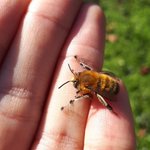
Climate change and urbanisation shape the distribution of the common wild bee species Halictus scabiosae.
@TheOldUncleTap #bees #climatechange
link.springer.com/article/10…

5
236
Andrea Ferrari retweeted

🆕Original Article: Urbanisation homogenises the functional trait space and reduces body size of an arboreal ant species (Hymenoptera: Formicidae) Ferrari, A., López-Collar, D., Gil-Tapetado, D., Nalini, E. & Polidori, C.
#urban #green @andreaferrari54
myrmecologicalnews.org/cms/i…

Andrea Ferrari retweeted

🧵 How to clean data like a pro with dplyr and tidyr in R
If you're still struggling with messy datasets or spending hours on manual cleanup…
This thread is your shortcut to clean, tidy, analysis-ready data 👇
#rstats #DataCleaning #DataScience

Andrea Ferrari retweeted

How urban spaces support #pollinators – a new study just published
#ecology #bees #biodiversity
jeffollerton.co.uk/2025/02/2…

Andrea Ferrari retweeted

PhD position assessing the impact of extreme climate events on bumblebees at @BristolBioSci
Position with me, @englishse & @HugoBHarrison
Fully funded position for students of black heritage. #blackinSTEM
Please RT and circulate.
shorturl.at/Iv1Yc
Andrea Ferrari retweeted

Las ciudades pueden ser refugios para algunas abejas, pero no pueden substituir la función de zonas naturales. elpais.com/ciencia/2024-09-2…


Andrea Ferrari retweeted
Urban bees are often early bees says a new study:
jeffollerton.co.uk/2024/08/2…
#bees #pollinators #ecology #urbanecology
@StevenFalk1 @B_Strawbridge @BeeBabette @apiculturalLdn

Andrea Ferrari retweeted

One cool thing about insect wing evolution is that the oldest winged insects are Mayflies (Ephemeroptera) and Dragonflies (Odonata), both of which have aquatic larval stages. Wings may have evolved from gills, meaning insects had to learn to swim before they could fly!


Current agricultural soil improvement practices involve the use of sewage sludge. The sludge may contain trace toxic elements. Here we present one of the first studies to investigate the effects of such practices on #honeybees.
sciencedirect.com/science/ar…
4
297
Andrea Ferrari retweeted

The weird world of wasps and why we should worry if they are on the wane theguardian.com/environment/…

Andrea Ferrari retweeted

New interview with a social insect scientist! 🎙
@andreaferrari54, a third-year PhD student, discusses his research on how urbanisation affects wild bees, and his passion for football.🐝
insectessociaux.com/2024/08/…
#insectessociaux #socialinsects #wildbees #italy #urbanecology #phd

Andrea Ferrari retweeted

Le isole di calore sono un fenomeno che si verifica quando le aree urbane diventano significativamente più calde rispetto alle periferie.
Questo aumento di temperatura è causato principalmente dall’alta densità di edifici, strade e altre superfici che, a causa del loro colore scuro e altre proprietà fisiche, assorbono e rilasciano la maggior parte dell’energia solare che ricevono.
Come si vede nella mappa di Roma che indica l’intensità dell’isola di calore urbano (UHII), più ci si sposta verso i quartieri centrali, più il fenomeno si intensifica.
Le conseguenze delle isole di calore sono molteplici e includono l’aumento del consumo energetico per il raffreddamento degli edifici, il peggioramento della qualità dell’aria e l’incremento dei problemi di salute, come colpi di calore e disidratazione.
Una delle soluzioni per contrastare questo fenomeno è aumentare le opere di verde urbano, come viali alberati, parchi, boschi urbani, siepi e tetti verdi.
Oltre all’effetto ombra che producono, infatti, le piante abbassano le temperature grazie al fenomeno della traspirazione: le foglie rilasciano piccole goccioline d'acqua che, evaporando, assorbono energia termica dall'aria sotto forma di calore.
In termini di copertura arborea, Roma si trova al di sotto della media delle capitali europee. Ma ci sono tante altre città italiane che avrebbero bisogno di ampliare il verde urbano nelle aree più urbanizzate, come Messina, Bari e Palermo, che secondo l’Istat sono le 3 peggiori in termini di superficie di verde urbano per abitante.


Andrea Ferrari retweeted
New research article! 📰
@andreaferrari54 et al. sampled wild bees and found that greater road cover is linked to increased midgut histological damage.
doi.org/10.1007/s00040-024-0…
#insectessociaux #socialinsects #histology #midgutepithelium #wildbees #urbanisation #halictus

Andrea Ferrari retweeted

BeeCon is back for another year!
Friday, Aug 2 is the deadline to submit your abstracts for #BeeCon 2024, a free, hybrid conference for bee researchers around the world. Learn more about BeeCon: yorku.ca/bees/beecon-2024/

Andrea Ferrari retweeted

Want to do a PhD on why buzz pollination evolves? I will be recruiting a PhD student this Autumn (4 years, fully funded). The official ad will come at the end of summer. if you are interested in the studentship please email me so I can send you the full ad when available.

Andrea Ferrari retweeted

Still a few days left to apply for the PhD position!

Excited to announce that I am joining the Dept. of Genetics and Evolution @genevunige at @UNIGEnews as a tenure-track Asst. Professor! We'll be exploring the gut-brain axis of insects. I am currently offering a fully-funded PhD position! drive.switch.ch/index.php/s/… Please RT #newPI


How do bees and wasps perceive stimuli across an urbanisation gradient?
Find it out here:
nature.com/articles/s41598-0…
#bees #waaps #urbanisation @LaStatale
2
115
We studied how pigmentation patterns in Polistes dominula change along urban and geographical thermal gradients!
#Wasps #Urbanisation #AcademicTwitter
sciencedirect.com/science/ar…
1
115