

Complex Networks - Neuroscience Researcher @ ISI Foundation
Turin, Italy
Joined March 2013
- Tweets918
- Following481
- Followers677
- Likes3.3K



Pinned Tweet
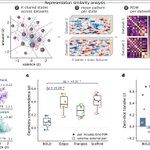
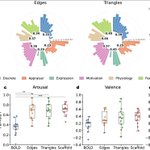
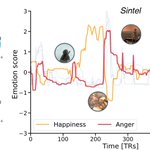
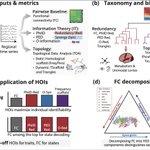
🧠🎬 What can different views of brain activity tell us about how emotion unfolds?
Across 14 films (~2.5h), we compared regional activity, pairwise connectivity & higher-order topology with 50 continuously rated affective features.
Our preprint is out👇
shorturl.at/AfmGv

6/ Huge thanks to the entire team for a fantastic collaboration across affective neuroscience, neuroimaging & network science. Special kudos to Lorenzo Zaffina for getting this project off the ground and driving its development with such substantial work!!!
Andrea Santoro retweeted

1/ 🚨 Just out in @NatureNeuro! 🧠
We profiled >6,000 features of brain dynamics across humans + monkeys, mice, fish and worms 🧑🐒🐒🐁🐟🪱 to find a shared neural endpoint of anaesthesia: spatiotemporal isolation of local activity 🧵
🔗 doi.org/10.1038/s41593-026-0…

Andrea Santoro retweeted

The first paper from my PhD is out in @NatureNeuro!
Aging and Alzheimer's disease both reshape how the brain communicates. But not in the same way: aging vs AD related alterations follow two distinct axes of brain organization
Paper → nature.com/articles/s41593-0…
🧵⬇️

Andrea Santoro retweeted

I’m hiring a postdoc in Dublin's DII!
Can explicit topology/higher-order structure make LLMs reason better about sci/tech innovation?
join us for TOPO-LLM: TDA + higher-order networks + transformers, with access to MareNostrum 5.
Apply by 9 Sept:
jobs.ac.uk/job/DSS062

Andrea Santoro retweeted

A new study by CETI Scientists analyzed thousands of hunting attempts and found that sperm whales flexibly switch prey-capture tactics within a single dive — adapting their approach in real time based on how their hunt unfolds. Read the pre-print here: bit.ly/45cW2Lz

Excited to see this out! 🐳 One of the coolest projects I’ve had the chance to work on with @ProjectCETI and an amazing team. Looking forward to everything that’s next!


🧠 Happy to share that our work is now out in @NatureComms!
A great collaboration bringing together past and present members of @NPLab_ to compare higher-order models of brain function, from information theory to topology.
📄 nature.com/articles/s41467-0…

🧵 More about the study in the original preprint thread: nitter.cf/andreasantor0/status/1…

🧠 Want to understand how different higher-order methods compare in brain connectivity analysis?
Check out our new preprint — a fantastic collab with past & present @NPLab_ members:
🔗 biorxiv.org/content/10.1101/…

Andrea Santoro retweeted

Charting higher-order models of brain function beyond pairwise interactions idp.nature.com/authorize?res…

Andrea Santoro retweeted

From a great collaboration with @LorenzoPosani , Shuqi Wang, Samuel Muscinelli, Liam Paninski, now in Nature: nature.com/articles/s41586-0…

Andrea Santoro retweeted

Interactions in ecosystems often involve more than pairs of species.
Our new @CommsPhys Perspective, explores how #hypergraphs can bridge non-equilibrium dynamics & conservation, from coexistence and extinction to restoration and rewilding.
🔗rdcu.be/fnjV6

Andrea Santoro retweeted

🧠 New paper in @NatMentHealth !
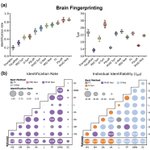
In Parkinson's Disease, we show that patients at risk of cognitive decline have a distinct brain fingerprint, and that patient-specific networks associate with clinical outcomes and neurochemical substrate.
Paper 👇

Andrea Santoro retweeted

"Topological Signal Processing: An Application-Oriented Tutorial" (by Flavia Petruso, Maria Giulia Preti, Dimitri Van De Ville): arxiv.org/abs/2605.22853
