

AI & Trading Agents We study AI agents, automation, and algo trading - and build our own. Open to partnerships.
USA
Joined June 2009
- Tweets6.8K
- Following1.5K
- Followers2.3K
- Likes9.8K








Five money habits worth checking before you turn thirty
Not the ones your parents warned you about. The quiet ones.
Checking your balance right before you fall asleep. Splitting a bill down to the cent with people you trust. Saying "I'll start saving after this next thing." Small, easy to miss, and they compound the same way interest does.
A habit built at twenty-four rarely changes on its own by thirty-four, it just gets a bigger paycheck attached to it. The habit that actually shifts is the one where money stops depending on hours you personally show up for.
Most financial advice targets spending. The bigger lever is usually the number of income sources depending entirely on your own two hands.
Five to check honestly: do you know your balance without opening the app, do you have one income source or more than one, do you save before or after spending, do you check prices out of habit or need, does a bad week at work hit your whole budget.
This isn't about guilt, most people learn these habits from someone doing their best with less information. Markets move both directions, a manager will walk you through what that means before anything starts.
If you've checked your balance without opening the app more than once this month, you already know which habit this is about.
1
3
230
Fees rewrote which side of the book makes money on prediction markets, and most people are still trading the old version.
Margin on a single market got thin. Not gone — thin. Which means being right about an event no longer covers the cost of acting on it, unless you're the one posting rather than taking, and unless you're doing it across enough books at once for thin to add up.
That's what we spent several months building. Mathematicians, working traders, and a lot of iteration on the least interesting part of the whole thing: execution.
It's stable now. We're opening to a small number of partners.
The setup: your own account, your own funds, a trading key handed over. Withdrawals go to your address only — that's platform architecture, not a promise from us, and it's in their documentation.
We work exclusively through the official API. Anyone requesting money upfront in my name or my team's is not us.
I posted a checklist a while back for evaluating any operator you give a key to — real-time fill visibility, instant revocation, order size limits, fill prices that survive comparison to the market at that timestamp. It wasn't written with this in mind. Run it on us.
If you want to approve every trade yourself, this is the wrong model.
Limited partners, because execution capacity is finite. Terms, structure, split, questions about returns — all handled directly. DM me, I answer these myself.
1
134
A retired mechanic checks the same market every morning before coffee
Forty one years fixing transmissions, and now his first move of the day is an app most of his neighbors have never heard of
Call him Bill, because that's basically the type. Four decades at the same shop outside Dayton. Never touched a stock, never trusted a crypto pitch, watched a nephew lose money on a coin he still can't pronounce.
What got him in wasn't a promise of quick money. It was watching the system run for two weeks on a friend's account before he'd even ask a question. Funds stayed on the friend's own exchange account the whole time. Nobody touched them but him.
The bot scans hundreds of event markets, elections, sports outcomes, economic data releases, and places trades around the clock. Bill checks it with his coffee. He doesn't touch a chart the rest of the day.
He'll tell you straight it's not a sure thing. Some weeks are flat, some go the wrong way. What changed his mind wasn't the winning weeks, it was that he could see every trade and never lost control of his own account.
Would you need to watch it run for two weeks before trusting it too
1
1
128
A market built by college students beat every election poll for 16 years
It wasn't a poll. It was a bunch of people trading real money on the outcome.
The Iowa Electronic Markets launched at the University of Iowa in 1988, a small trading platform where anyone could buy contracts tied to who'd win the presidential election. No celebrity backers, no marketing budget, just people putting a few dollars on outcomes they believed in.
Researchers Berg, Nelson and Rietz tracked its accuracy over multiple election cycles and published the results in the Journal of Prediction Markets. In most cycles between 1988 and 2004, the market's final price came closer to the actual result than the average of national polls.
A poll asks people what they think will happen. A market asks people to bet on it. Those are different questions, and the second one tends to get a more honest answer, because being wrong costs money.
That's the core mechanic behind every prediction market since: elections, sports, crypto events, world news. Price reflects money on the line, not opinion in a survey.
A lot of that price movement now gets read by algorithms scanning hundreds of markets at once, faster than any person could refresh a page. It's still a market, it still moves against you sometimes, that part never goes away no matter how good the read is.
Curious how many people here would still trust a poll over a market with real money on it. Say your answer, we'll revisit next election cycle.
1
139
The expensive part of trading manually isn't the trades you get wrong. It's the ones you don't take.
Sitting in four hundred books at once isn't ambition, it's the only shape the math has left. Margin per market after fees is thin enough that one book is a hobby and four hundred is a business. Same edge, different surface area.
A person can watch maybe a dozen properly. Past that you're not trading them, you're checking on them.
So the choice was never algorithm versus judgment. It was four hundred markets versus twelve, and every argument about intuition is happening inside the twelve.
What actually gets automated isn't the deciding. It's the showing up - posting, pulling, reposting, holding queue position across everything, all day, without the part of you that gets bored.
Boredom is the real constraint. Nobody writes that down because it doesn't sound like a strategy.
89
The best news prediction markets got this year is also the end of something.
ICE - the company that owns NYSE - is putting up to $2B into Polymarket at an $8B valuation. Google Finance now carries live quotes next to stock prices. Kalshi is running its ninth consecutive record month. [источники, даты]
Everyone read that as validation. It is. It's also a schedule.
Institutional capital doesn't arrive to take directional views on whether a bill passes. It arrives to provide liquidity, because that's what it does everywhere else. Which means the books currently held up by a few dozen people running bots are about to have professional counterparties standing in them.
When that happens the spread compresses, the queue gets longer, and the return on sitting in the book goes to whatever the marginal professional will accept. That number is a lot lower than what it is right now.
None of this is a reason to be gloomy about the sector. It's a reason to be precise about what phase it's in. The current one pays unusually well for infrastructure work, and it pays that way because the infrastructure is scarce.
Scarcity is the part with a date on it.
1
483
André Ruschel ® retweeted

MICROSOFT OPEN-SOURCED A GOVERNANCE LAYER FOR YOUR AI AGENTS
and it's exactly what agentic ai has been missing
here's what agent governance toolkit does:
▫️ intercepts every tool call in deterministic code before it hits the wire denied actions aren't unlikely, they're structurally impossible
▫️ yaml policy engine lets you allow, deny, or require human approval per action
▫️ zero-trust identity via spiffe/did/mtls no more 5 agents sharing one api key
▫️ 4-level execution sandbox with privilege rings so agents can't escape their scope
▫️ tamper-evident merkle audit logs for compliance and incident response
▫️ covers all 10/10 owasp agentic top 10 risks
▫️ works with langchain, crewai, autogen, openai agents sdk, semantic kernel, and more
one pip install...any framework...python, typescript, go, rust, .net all supported
because "please follow the rules" in a system prompt is not a guardrail...it's a suggestion
github.com/microsoft/agent-g…

André Ruschel ® retweeted

Windows Server vNext Preview Build 29574: The latest Server Insider build includes Quick Machine Recovery testing, NVMe-over-Fabrics support, ReFS boot in preview builds, and known upgrade issues requiring clean install from build 29531 or later. techcommunity.microsoft.com/…
André Ruschel ® retweeted
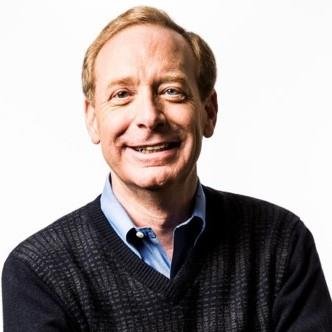
Today we’re introducing a new Legal Agent in @Microsoft Word, built to support the precision and rigor legal work demands. Every clause matters. Every redline tells a story. That’s why this agent was built to follow the structured workflows lawyers use while keeping them fully in control.
Early in my career, I asked for a computer on my desk because I believed technology could change how lawyers work. It did. Today, I believe this next generation of tools will do the same, grounded in trust and responsible use.


André Ruschel ® retweeted

🛡️ Akira ransomware is on the rise—primarily targeting small & medium sized orgs. Review our updated joint advisory with additional details on IOCs & TTPs & implement the recommended mitigations to help protect your data from this ongoing cyber threat. 🔗 go.dhs.gov/J9n

André Ruschel ® retweeted

What kind of AI does the world really want?
At @MicrosoftAI, we’re working towards Humanist Superintelligence (HSI): incredibly advanced AI capabilities that always work for, in service of, people and humanity.
And to do this we have formed the MAI Superintelligence Team.

ALT Impressionist pastel drawing of a river and path beside it, with people biking and swimming.
André Ruschel ® retweeted
All of today's @Copilot announcements boil down to one core idea: we're betting on humanist AI. An AI that always puts humans first.
- Copilot Groups
- AI browser
- our new character Mico
- memory updates
- Copilot for health
+ more in this morning's event youtu.be/j4jXM8yTdnQ

ALT Collage of new Copilot features. In the center it says Copilot Fall Release 2025, and surrounding squares show Copilot Groups, the animated glowing character Mico, Copilot for Health, Copilot Mode in Edge, Imagine, Connectors, Learn Live, Real Talk, Copilot on Windows, Memory, Proactive Actions, and Copilot Pages.
André Ruschel ® retweeted
Introducing a new open source benchmarking tool to measure AI for cybersecurity, grounded in real world scenarios. This is important work as we evaluate how well AI systems can reason to protect against cyberattacks. microsoft.com/en-us/security…
