

PhD Student in U Chicago's Environmental Neuroscience Lab interested in cities, brains, and mental health https://nitter.cf/t.co/GCy0LJNdAW @EnvNeuroLab
Chicago, IL
Joined March 2019
- Tweets104
- Following99
- Followers102
- Likes325




Pinned Tweet
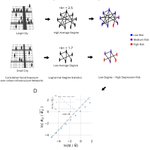
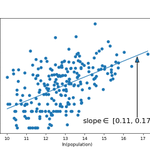
I'm happy to announce our new paper out today in PNAS: "Evidence and theory for lower rates of depression in larger US urban areas" Working on this paper drastically shifted my understanding of the factors that influence depression. pnas.org/content/118/31/e202… 1/6 – at New York, USA
Andrew J. Stier retweeted

🏙️ New study published in @NatureComms reveals how cities shape unconscious racial biases. The more populous, diverse, and integrated a city is, the less implicit racial bias exists. Segregation and lack of cosmopolitan spaces contribute to bias.
santafe.edu/news-center/news…

Our newest work in Urban Psychology...uniting a complex systems approach to cities with social psychology, expertise based learning, and neurobiology evidence.

Living in cities requires constant learning: What are the consequences?
We find that experiencing larger, more diverse and less segregated cities reduces implicit racial biases: psyarxiv.com/4w5tf/
@andrew_stier @EnvNeuroLab @miurbanchicago
1
3
288
This was incredibly fun to work on with folks at UChicago and @fariba_k and @Sajjadi_Sina that started with a conversation during a barbecue during last summer's @sfiscience complexity GAINs summer school.
Andrew J. Stier retweeted

Thankful to coauthors—esp 1st author Omid Kardan—for massive efforts! This is one of my favorite papers because it doesn't just ask wether we can predict behavior from functional connectivity, but also asks what we learn from patterns of predictive model success & failure.

Which #brain networks support #SustainedAttention & #WorkingMemory during development? @monicarosenb &co show that adult functional network models predict individual differences & within-person changes in pre-adolescents’ SA & WM performance #PLOSBiology plos.io/3PLtDDD

Andrew J. Stier retweeted

Are there generalizable canonical brain states🧠 that underlie cognition as we rest, perform tasks, and watch engaging & boring🎥? What low-dimensional manifold underlies large-scale brain dynamics? How do these dynamics reflect our ever-changing minds?
biorxiv.org/content/10.1101/…


Andrew J. Stier retweeted

Our 🚨 New Paper🚨 validating the use of scale-invariance in #fNIRS is now published in Cortex! A LOT of work went into this paper and I'm super proud of it and excited to see it finally published. 🥳
...wondering wtheck scale-invariance is and why it matters? 🧵below!

Andrew J. Stier retweeted

Just in case you needed a reminder of all the LIFE we can fit into cities when we rethink streets for cars. Space for green and nature DOESN’T compete with density of people or buildings. It competes with density of CARS. Image via @wattdesigns @LondonNPC
Andrew J. Stier retweeted
Here's our take on the BWAS paper & individual differences analyses in human neuroscience more generally @esfinn. Props to the original authors for such discussion-generating work
nature.com/articles/s41593-0…



It has fun to be a part of this community the last 2 years! Highly recommend to anyone @ uchicago interested in cities.

Applications are now open to @UChicago grad students for the Certificate in Urban Science and Sustainability, an opportunity for training at the intersection of urbanization,
development, and climate change miurban.uchicago.edu/opportu…


So exciting and well deserved! Can't wait to see where Dr. Kim takes her lab's research 🔬

I'm beyond excited to share that I'll be joining the Psychology Department and Health Equity Research Center at @WSUPullman as an Assistant Professor starting in Jan 2023!
It's been a journey, y'all and I feel so grateful to everyone who helped me get here!😃

1
3
Andrew J. Stier retweeted

You are not actually perceiving this tweet. What you're seeing is the prediction error between what I wrote and what you expected me to tweet.

Public scientific debate is critical to good science. A commentary (pnas.org/content/119/2/e2119…) on our PNAS article (pnas.org/content/118/31/e202…) and our reply (pnas.org/content/119/2/e2119…) were published simultaneously so that the scientific community can evaluate both viewpoints.

The other perspective (pnas.org/content/119/2/e2118…) uses circles with fixed radii to define city boundaries. Their commentary and our response has more details! Take a look at decide for yourself.