

Husband, Father, Student, Educator, Investor, Author, Basketball Enthusiast. Visit my link for a free copy of my latest book.
Joined December 2010
- Tweets1.6K
- Following141
- Followers23.4K
- Likes858


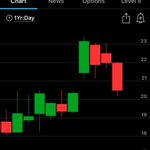


Technical traders try to pick a bottom with support and resistance levels and any number of indicators that do their best to give insight into how other traders feel. When investing, I prefer to buy based on fundamentals, which help tell me what I’m getting in exchange for what I’m spending.
I don’t need to buy at the absolute lowest price, as if I could see into a crystal ball. More often than not, trying is a fool’s errand. When I buy based on fundamentals, the price might drop below my buy price after I purchase. I expect that it often will, and I can live with that.
A good deal doesn’t become a bad deal just because, in hindsight, waiting one more day would have brought a great deal.
2
15
671
When it comes to AI, I think we’re wise to think years ahead, rather than be distracted by a market that’s thinking only weeks ahead.
The data shows that the race for AI dominance is a bet on leverage and risk-taking, and that creates volatility in stock prices. For businesses, it means there will be winners and losers. But when the dust settles, can there be any question that AI will change the landscape of production: our access to materials, efficiency and cost in transportation, and perhaps most importantly, labor? So the question I keep asking is, how will AI impact labor?
The race is being funded two ways. The giants, Amazon, Alphabet, Meta, Microsoft and Oracle, are borrowing. US companies have sold $1.88 trillion of investment-grade bonds this year, breaking the record set in 2020, and those five account for more than $370 billion of it. I think the choice to borrow tells us something. A company that sells shares hands over a piece of itself at today’s price. A company that borrows keeps every piece, because it believes those pieces will be worth more tomorrow.
The newer developers, like Anthropic and SpaceX, are selling shares, because they don’t yet have the profits to borrow against. Their IPOs raised a combined $156 billion, the two largest in history.
Either way, the developers are betting that the productivity they build will pay for the race. That’s a gamble. Some will be right and some will be wrong.
My view is that the developers are in the risky position, because on the other side of that risk are massive rewards, and so they will fight it out with each other. The users of AI are in a safer position. Whichever developer wins, established businesses deploy the technology that emerges. When the dust settles, I believe the users win either way.
I’m keeping my eye on two trends.
The first is employment versus deployment. Employment is the work done by humans. Deployment is the work done by technology, like robotics and AI. Rather than creative destruction, I see AI as comparative advantage: the cost of employment against the cost of deployment. As technology gets more capable and less expensive, workforces shrink.
The early numbers point that way. Through October, companies cited AI in more than 121,000 announced job cuts, more than double all of last year. In the second quarter, output grew 1.7% while hours worked grew 0.3%. Labor’s share of output is at a record low. More technology, fewer humans. That isn’t good news for many people, and our emotions may want to resist it. I think it’s a reality to face with honesty.
The second is issuance versus buybacks. The newer developers are issuing stock to get into the race, and equity issuance is at a record of around $700 billion this year. Established companies, the giants included, are still buying back shares, more than $1 trillion this year. As AI drives efficiency into their operations, buybacks give each remaining share a larger slice of the profits.
The data that settles this isn’t in yet. Economists can’t yet tie today’s productivity gains to AI, and Federal Reserve research says adoption is still spreading. So this is my bet: AI makes existing businesses dramatically more productive over the next decade. The data will tell me whether I’m right or wrong, and it won’t arrive for years.
In the meantime, my thought is that volatility can create opportunity, with great companies going on sale. The Nasdaq fell 78% from March 2000 to October 2002. The bottom of that bust was a chance to own the companies that survived, and the Internet went on to transform productivity, sales, and operations in nearly every business.
The news will focus on share prices. Price is what we pay. Value is what we own.
Those are the two trends I’m watching: deployment versus employment, and issuance versus buybacks.
If you’d like to know how I’m preparing and positioning for the new world of artificial intelligence, I have a webinar that goes into detail. Message me if you’d like a link.
13
671
My mentor Robert Kiyosaki always says that investing is a team sport. This includes a team of bookkeepers, tax advisors, attorneys, teachers, coaches, and more. I meet with my team regularly to discuss the market. Corey brought up an important point yesterday. Perhaps you'll find it interesting.
1
18
1,124
Nobody ever asks me, "Andy, what are you studying right now?"
They ask what to buy.
One question treats investing as a place to park money. The other treats it as a skill you build.
Only one of them compounds.
16
582
In 2020 I took a large position Exxon. I bought it around $45 during COVID.
This week on Nvidia, I sold a handfull of puts.
Why the difference in position size?
Graham and Dodd.
At $45, Exxon was under 8 times its ten-year average earnings and trading right about book value. They'd raised the dividend 37 years in a row, and I was getting almost 8% just off the dividend. Even after Exxon lost money in 2020, it was still under 10 times its ten-year average. And Exxon wasn't changing leadership.
Nvidia is around 55 times its average earnings for the last three fiscal years. Earnings per share went from 17 cents to $4.90 in three years. That's an incredible run, but it's a short history. Graham wanted years of earnings. The forward P/E looks cheap, but that's an analyst's estimate, not what they've actually earned. And Nvidia's CEO just resigned.
So on price, by Graham's standards, Exxon looked like an investment. Nvidia looks more like speculation.
Graham said there's such a thing as intelligent speculation. First on his list of the unintelligent kind: "speculating when you think you are investing." Also on it: "risking more money in speculation than you can afford to lose."
I'm speculating here. So I'll participate in smaller size.
So why speculate at all? Well, I like it compared to the S&P 500. Nvidia trades at about 21 times what it actually earned over the last twelve months. The S&P is about 26. And while the dividend is smaller, about 0.6%, the covered call potential is attractive in tech.
I think this can cash flow.
But whether investing or speculating, owning a company or trading an option, it's the four pillars that give the guidance to find positions that I'm comfortable with. The most important pillar being risk management. It's so important to me because things change. One could argue that the defining characteristic of the market is that it's unpredictable. So I can't predict what will happen with Nvidia with certainty. Principles of risk management help me make moves with confidence.
What can you learn from an investing billionaire?
Today I recorded a conversation with David Booth. He founded Dimensional Fund Advisors in 1981, studied under Nobel laureate Eugene Fama, and is the namesake of the University of Chicago Booth School of Business. He helped turn academic research into one of the largest investment firms in the world.
This episode comes out soon. Subscribe to The Cash Flow Academy Show now so you don’t miss it:
podcasts.apple.com/us/podcas…

4
409
In November 2019, McDonald’s fired its CEO over a workplace relationship. The stock dropped 2.7% the next trading day. A year later, it was up 14.7%, beating the S&P 500.
Intel went through something similar.
Nvidia has shed more than $300 billion in value.
Leadership is part of a fundamental analysis, and Jensen is hard to replace. Strictly by the numbers, though, this is a company growing revenue over 100% a year, guiding for 70% growth next year, and trading around 13–14 times forward earnings. From where I sit, that’s well priced.
For investors who see it the same way, moments like this open a few possibilities beyond simply buying shares. Selling a cash-secured put pays a premium up front for agreeing to buy at a lower price. A put credit spread collects a smaller premium, with the risk defined from the start. Either way, the investor gets paid while waiting to own a business they’d want at a discount.
The key is not predicting the future, but rather risk management. Even if you wanted to trade it rather than invest, an entry with a stop would make sense to me at a price like this.
1
6
635
Ignorance doesn't mean stupid.
Most people in my workshops have college degrees and higher IQs than mine. My grades were average at best.
They just never pointed that intelligence at investing.
Effort is the great equalizer.
9
603
Is the Anthropic IPO hype a cash flow opportunity? Corey and Noah join me on The Cash Flow Academy Podcast to share our plans.
thecashflowacademy.com/podca…

4
531
Most people think risk means the market might drop.
Risk is about control.
I can't control a hurricane. I can control whether I carry insurance.
I can't control the market. I can control whether I have an exit.
List what you actually control in your portfolio. Short list.
7
623
In the 1950s, psychologist Julian Rotter gave us the idea of locus of control. People with an external locus believe outside forces decide their results. People with an internal locus believe their own choices do.
Election season shows which one most of us lean toward. People get deeply invested in candidates and policies: the hope, the anger, the late nights watching returns. Often that is more energy than they put into their own growth.
Public policy matters, and I’ll vote on Tuesday. But I don’t feel a great victory when my candidate wins or a great loss when they lose. My personal policies, the rules I set for how I live, learn, and invest, have shaped my life far more than any election.
If it is to be, it’s up to me.
Noah is hilarious!
Hot Crazy Matrix...But For STOCKS!
youtu.be/g8_lVSAnP5Y?si=aN_n… via @YouTube
3
10
2,008
Its not about predicting as much as its about preparing. You don't put on a seatbelt or buy car insurance because you are predicting a car crash. That said, my team and I held an event last August specifically designed to prepare our students for the events we are seeing today. If you missed it, we did record the event - it's never too late to learn. cf.thecashflowacademy.com/ar…
Andy Tanner retweeted

The performances by Herriman tonight deserves two posts.
We will get to Cale Barclay's heroics in a bit, but Cale's heroics may not have happened if it hadn't been for the first half by Zach Tanner.
When Dane Stewart gives you a nickname, you know you had a performance to be proud of and 'Z-23' did just that as he kept Herriman within striking distance of Corner Canyon after the Chargers got off to a hot start!
@kslsports @dane_stewart @dustylitster @HerrimanBBUtah @coachdmeach @CaleBarclay24 @cmulfy02 @ZachTanner023 @S_Blanch12 @jj_tomsick
Andy Tanner retweeted
[INSERT Cale Barclay Heroics Here]
@kslsports @dane_stewart @dustylitster @HerrimanBBUtah @coachdmeach @CaleBarclay24 @cmulfy02 @ZachTanner023 @S_Blanch12 @jj_tomsick
I don’t put much credence in the Fed’s guidance. They’re not market leaders; they react to it. They can say rates won’t drop, but what choice do they have if unemployment rises? Stagflation leaves them choosing between inflation and recession—they are not equipped to fight both.
If you haven’t taken the A.R.M.O.R. class, it’s worth considering. Just saying.
Andy Tanner retweeted
The Herriman Mustangs began the year as the #1 team in 6A and they show no signs of letting go of that title!
In a battle against Lone Peak today the Mustangs closed out all of the first 3 quarters with buzzer beaters and then locked down the Knights to close the 4th as Herriman remains undefeated to start the year!
@kslsports @HerrimanBBUtah @coachdmeach @CaleBarclay24 @cmulfy02 @ZachTanner023 @S_Blanch12 @jj_tomsick
Great example of a volatility crush today. When an unknown becomes known, the market becomes less fearful and more greedy.
Warren Buffett is holding true to his mantra of being fearful when people are greedy. The amount of cash he His building up is remarkable.

Bickering politicians often hype every election as an existential threat, branding each one “the most important in history.” But as an investor, my confidence lies in American business, not political outcomes. I expect markets to return to normal after the election.
I view the election much like an earnings report—a Known Unknown. We know change is coming, just not its exact form, which fuels temporary volatility, potentially elevating the VIX and making protective options pricier until the event passes. The energy spikes before, not after.
If election-driven market shifts worry you, consider collaring vulnerable positions to balance the high premiums on puts with those received on calls.
For me, I’ll focus on real market threats, not election results. In my opinion, the bigger threat isn’t tomorrow’s outcome but what’s already happened over the past two decades. U.S. fiscal policy has become a problem so significant it may be beyond repair.
If I’m wrong, I’ll adjust as needed. But I’m not trading on pre-election ghosts.