











very clever!

Been running Opus 5.5 agents over the notebooks of Gauss, Riemann, Hilbert and Grothendieck. around 12,000 pages so far. Heres the best finding so far:
Riemann's 1860 shock wave paper is famous for getting the energy part wrong however his unpublished sheets at Göttingen have it right the Rankine Hugoniot conditions a decade or two before Rankine and Hugoniot plus results usually dated 19061937, all in his own notation. A second sheet in another folder has the same physics.
There are probably thousands of potential undiscovered stuff in the research papers of the smartest ever to live imo all of them should be made public and reviewed by ai years of work can probably be transcribed by agents in days


4
180


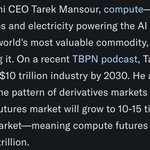
compute 😳

Kalshi just raised an additional $1B, valuing the company at $40B. This will help us expand into stocks, compute, indices, and institutional.
Tomorrow marks 8 years since we got accepted into YC and the journey began.
The odds of a kid from Lebanon getting here were pretty low.
Growing up there was great, but very challenging. We went through war. We had bombs explode in front of my house. I watched brilliant people’s lives destroyed for reasons beyond their control.
Lebanon is an unpredictable country. That unpredictability made it hard to plan for success. And yet despite it all, my mom sacrificed everything to give me and my brother the chance to go back to the US.
I found my refuge in two things: anime and math. Especially math.
I loved math because it calmed me. It was the opposite of unpredictable: clear, deterministic, orderly, and consistent. The proof is either right or wrong. I find that elegant and beautiful.
I was lucky.
I made it to my dream school, MIT (largely thanks to my mom), and my love for math quickly translated to a love for statistics, probability, and markets.
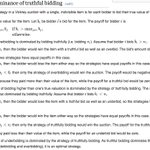
I love markets for a lot of the same reasons. Their incentives are clear: you get rewarded for being right and for pursuing knowledge. They are effective weighting machines for people’s opinions. They provide an incentive to be truthful, because they separate good information from bad information. They let people challenge the consensus and be rewarded for being right.
IMO, Hayek, Surowiecki, Hanson, Tetlock were the founding fathers of prediction markets. The more I read them, the more obsessed I got with the idea of applying market-based pricing to more things.
Markets bring rigor and critical thinking to more questions. And in an increasingly polarized and information-positioned word, I believe we need that more than ever.
Markets would also let people predict and manage more things outside of their control. And the world was becoming increasingly more unpredictable, and more like Lebanon, not less.
That love for markets got Luana and me to build Kalshi.
At first, it was mostly an idea we couldn’t stop talking about. We didn’t have much money. Luana’s sister bought the Kalshi domain name for us (for ~$1.7k). We moved to SF to get started, and embarked on a long, uncertain journey to build a regulated exchange.
The paranoia and anxiety from my childhood never left me. Even when things are going well, I think about what could go wrong. When people trust you with their money, that instinct serves a purpose.
I wanted us to build something that would hold up under pressure.
The first principle we defined at the company: regulatory-first. We worked with regulators for years before we listed a single market. We took every step to do things the right way and always asked for approval before proceeding. It was very hard at times, especially when we were being overtaken by competitors, but we believe doing things the right way matters.
Luana and I aren’t the only ones.
Our team put years of their lives into something far from certain. That’s especially true of Lior, Brandon, Rainer, Luis, Xavier, and Josef, who stuck with us for years. They believed when there was little to point to. And they stuck with us no matter how long it took. Kalshi is the result of an arduous journey through a long desert where, at times, most people didn’t understand why we were making the walk.
Many people still don’t understand what we’re doing and some disagree with us. Markets have historically taken time to be understood and accepted by some. But while not always obvious, their benefits are vast: capital markets help allocate capital and derivative markets help predict and manage uncertainty.
I firmly believe in these benefits, and that’s why I am dedicating my life to building this market.
Markets have caused issues many times in the past, and they certainly can present harms (manipulation, insiders, and addictive behaviors). These harms are more acute for certain types of markets (sports, short-term options, etc.) than others. It’s why I believe that guardrails need to exist and why we have taken the approach we have taken. We have consistently prioritized thinking critically about the risks and building the appropriate safeguards, sometimes beyond what the regulators require us to do. Many believe more needs to be done, and that’s a conversation I welcome.
Over time, I believe more people will see what we see: markets can help us get smarter and manage the future with more rigor, more precision, and more certainty than we have today.
To our tens of millions of users: you have made Kalshi bigger than anything Luana and I could have possibly imagined. Thank you for trusting us and thank you for coming along on the journey. I feel a strong responsibility to build a company worthy of that trust.
I am so lucky to spend my life building something I love. I hope everyone finds something they care about that much. Something that keeps you curious. Something that pushes you to your limits. Something that may put you at odds with the status quo. Something worth the hard days.
For me, it’s still markets. The more I learn, the more I want to understand.


7
213
a detailed answer to how and why $NBIS is pricing their idle GPUs:


3
207
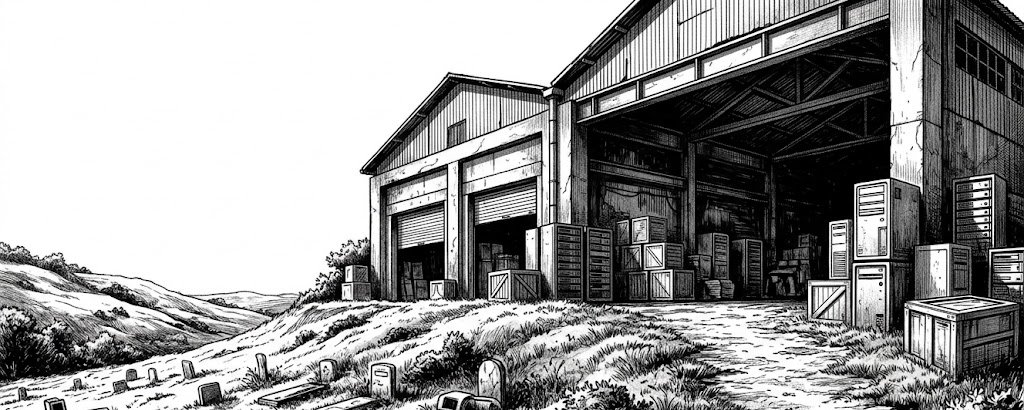
the common assumption: every time nvidia ships a new gpu, the old ones become worthless.
@OrnnExchange data says otherwise. a100 utilization went from ~62% to 81.6% over the past year, six years after launch.
think of airlines: when boeing or airbus ships a more fuel-efficient jet, airlines don’t scrap their older planes. a paid-off plane still flies profitable routes.

ansh retweeted

Compute markets will be 100x bigger this time next year
This quoted post is unavailable.
ansh retweeted

I want a futurism that feels like this. Like we've mastered nature and mastered the human-scale longed for ideals.
Not like flying plastic or plants on top of glass-plastic


probably the most stacked list ever


We're coming out of stealth.
We've built our first racks after a successful A0 tapeout, $1B+ in customer contracts, and $800m raised.
Early customer tests show us achieving SOTA throughput, latency, and power efficiency on inference workloads.
Our first racks ship this summer.

38
5,297
