

co-founder of @dropbox
Manhattan, NY
Joined October 2007
- Tweets491
- Following1.7K
- Followers11.4K
- Likes2.1K
arash ferdowsi retweeted

Gamma 5 is #1 on Design Arena, beating Opus 5.5 on general purpose slide creation.
We launched Gamma 5 because AI made it easy to create, but then everything started to look the same. We rebuilt Gamma with a new agent, new editor, and a new generation experience to give you the best visual output. These are presentations that look like you and your brand, with a creative partner to help visualize any idea you have.
Incredibly proud of what our team has built and excited to ship more.


arash ferdowsi retweeted

@HyphenateAI just raised a $45M Series A at a $270M headline valuation.
We're bringing autonomous finance to every enterprise in the world. 🧵
arash ferdowsi retweeted

Introducing Fern, Mirendil’s first model: pretrained from scratch, with up to 10M tokens of context!
That’s ~0.5M lines of code (roughly Megatron-LM scale) or days of an agent’s work, all in context at once.
Its first version, Fern 0.1, had a short round of post-training 🚢

arash ferdowsi retweeted
We asked Baseten to independently evaluate @mirendil’s base models. We shared our model endpoints so they could evaluate them on their own private codebases. Mirendil-Base-Large ended up being the best of all the models they tested!
Thank you, @baseten, for being a great partner!

We ran @mirendil's new base model on Baseten's private codebases; that is, code it's never seen. Mirendil-Base-Large had the lowest bits per byte (a tokenizer-independent measure of perplexity) of any model we tested.
We're excited to be the inference partner to serve Mirendil models. Congrats to the Mirendil team on this launch!


arash ferdowsi retweeted

Today Boom unveils our first completed supersonic turbine core, a 2GW Superfactory, and—one more thing—the world's most advanced all-digital foundry to cast single crystal turbine blades and vanes

arash ferdowsi retweeted

The biggest bottleneck at work is waiting on each other.
Today Town is announcing its $108M Series B, co-led by Forerunner Ventures and Menlo Ventures, to fix it with multiplayer AI assistants for work.
Most AI assistants are built for one person. Work doesn't happen alone. I think the moat is multiplayer. Everyone at a company gets a Townie. Townies ask each other questions, share only what their person would share, and do the work. The more a team works together, the more useful Townies get.
What's the thing you're always waiting on a teammate for?
enabling teams of all sizes to build frontier-caliber models is the way

We formally announced Mirendil less than 4 months ago. Today, I'm excited to share an important milestone for:
Pretraining at scale without a pretraining team.
Mirendil's mission is to solve Recursive Self-Improvement (RSI) and use it to democratize frontier AI development, ultimately accelerating science and technology. At Mirendil, when we think about RSI, we think holistically about the company as an intelligent entity that self-improves toward its goal. From that perspective, the most powerful notion of acceleration is reducing the time and resources (number of human experts, compute, and other costs) needed to achieve ambitious goals.
Given that pretraining is perhaps the most important yet most challenging part of frontier AI development, we decided to run an ambitious controlled experiment: Starting fully from scratch, can we significantly reduce the time, number of human experts, and compute resources needed to go all the way to successfully pretraining a strong coding model at scale?
Mirendil-Base is the result of this experiment. Our first pretrained model was built by one researcher in 3.5 months, with less than $10M in compute. This includes all the research and small-scale experiments it took to get there, as well as the final training run.
The recipe holds up as the models get bigger. For reference, Mirendil-Base is in the 100B-500B parameter range, Mirendil-Base-Large in the 500B-2T range, and Mirendil-Base-XL in the 2T-10T range.
We're beginning to see a world where a single researcher, empowered by AI, can take on work that once required an entire research organization. As these systems improve, the bottleneck shifts from the size of a team to the ambition and judgment of the people directing them. This has profound implications for who gets to build AI and, ultimately, who gets to push the frontiers of science and technology forward.
We’ll share independent evaluations, post-training benchmarks and API-access sooner than you think so stay tuned!

arash ferdowsi retweeted
We formally announced Mirendil less than 4 months ago. Today, I'm excited to share an important milestone for:
Pretraining at scale without a pretraining team.
Mirendil's mission is to solve Recursive Self-Improvement (RSI) and use it to democratize frontier AI development, ultimately accelerating science and technology. At Mirendil, when we think about RSI, we think holistically about the company as an intelligent entity that self-improves toward its goal. From that perspective, the most powerful notion of acceleration is reducing the time and resources (number of human experts, compute, and other costs) needed to achieve ambitious goals.
Given that pretraining is perhaps the most important yet most challenging part of frontier AI development, we decided to run an ambitious controlled experiment: Starting fully from scratch, can we significantly reduce the time, number of human experts, and compute resources needed to go all the way to successfully pretraining a strong coding model at scale?
Mirendil-Base is the result of this experiment. Our first pretrained model was built by one researcher in 3.5 months, with less than $10M in compute. This includes all the research and small-scale experiments it took to get there, as well as the final training run.
The recipe holds up as the models get bigger. For reference, Mirendil-Base is in the 100B-500B parameter range, Mirendil-Base-Large in the 500B-2T range, and Mirendil-Base-XL in the 2T-10T range.
We're beginning to see a world where a single researcher, empowered by AI, can take on work that once required an entire research organization. As these systems improve, the bottleneck shifts from the size of a team to the ambition and judgment of the people directing them. This has profound implications for who gets to build AI and, ultimately, who gets to push the frontiers of science and technology forward.
We’ll share independent evaluations, post-training benchmarks and API-access sooner than you think so stay tuned!
arash ferdowsi retweeted

1/ We discovered something totally unexpected about the neural structure of consciousness that overturns decades of thinking on its biological basis and brings us significantly closer to the recipe for generating conscious awareness.
New preprint: biorxiv.org/content/10.64898… (led by @HesseJanis, with @FrankLanfranchi, @_conor_mcgrory, @Yuelin_Shi, and @EngelTatiana)

arash ferdowsi retweeted

Assorted things I've been mulling over regarding agents in the economy:
• Companies are in some sense the original superintelligence. It's often the case that they can use their amortized cognitive surplus to advance their interests against those of certain consumers: relative to the optimization capacity of companies, consumers can be inattentive, underinformed, irrational, etc. (Think, say, of some of the classic insurance upsells at the end of a booking process, which is typically priced substantially above what a regular policy would cost.) Herbert Simon introduced the idea of bounded rationality, and firms often end up benefiting from it. Thanks to personal agents, we will probably get somewhat more rational in how we engage with companies.
• How exactly will outcomes change? Well, certain kinds of price discrimination will work less well (how do coupons work if every agent hunts fastidiously for them?), and certain kinds of customer cross-subsidy will change (today, people who forget to cancel subscriptions subsidize those who don't). Taken across the economy as a whole, I'm not sure what the incidence of all of this will be.
• In corporate strategy, people have long debated the relative importance of distribution and product quality. Perhaps you've made something better, but does anyone know about it? Won't people just continue to buy the ACME Corp Mousetraps? Personal agents will, I think, act as a kind of structural subsidy for product quality. How would markets look different if individuals always spent at least 10 hours researching their purchases? On the margin, focusing on making a product better is, I think, going to become a more effective strategy for companies. This is good!
• It true, a corollary is that information about product quality will become more important and impactful. Today, most people have very limited ability to aggregate and integrate such data, but agents will have insatiable thirst for such signals. (It's often said that data is becoming more valuable because it helps in the training of models. That's obviously true, but I think there's a secondary way in which it's more valuable simply as a complement to cheaper intelligence.)
• A big question is whether agents will increase superstar effects (rational agents all settle on the same product) or increase dispersion (because everyone has slightly different tastes and preferences, which agents are good at eliciting, finally overcoming the artificial clustering we've been subjected to).
• Many internet companies have monetized demand routing, which is in turn often predicated on short attention spans. "I'll click on the first thing I see." This has led to some amount of inefficiency, as companies try to propitiate capricious ranking algorithms and incur various placement fees. It's not all deadweight loss (willingness to pay is itself a kind of signal, which is valuable to buyers), but it's not great. How will the nature and value of this routing change in a world of personal agents? I don't know the answer, but I think that the effects might be pretty big.
• Much of what I'm writing hinges on the assumption that personal agents will be on the consumer's side. I suspect that that will be the winning strategy, but whether it's true, and what it means to be true, involves a lot of other questions.
Taken as a whole, the market is a massively parallelized, decentralized, and highly imperfect value attribution machine, and, taking stock of all of the effects, it seems to me that the quality point may well be the biggest: that agents will change the nature of the backpropagation such that the rewards for better products increase. Maybe this is too optimistic, but I suspect (and hope) that companies that make things that they're proud of will feel that the universe is a little more partisan in their favor.
arash ferdowsi retweeted
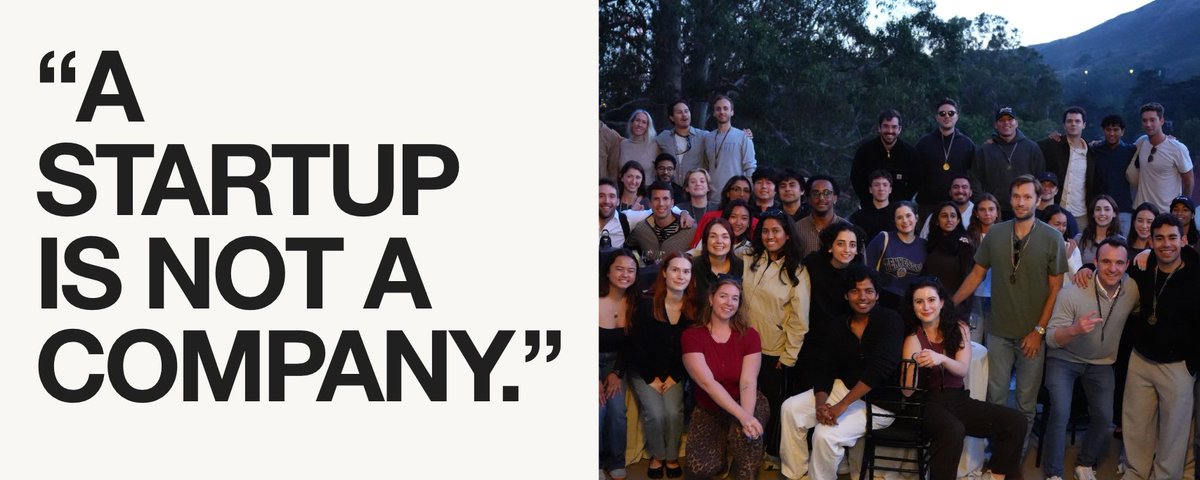
Everyone is sick of generic AI, including us.
Gamma was the first AI presentation platform to reach real scale. But now that AI tools are everywhere, everything looks the same.
Earlier this summer, we came to an uncomfortable conclusion: without a step change in visual variety, Gamma’s output would look and feel too similar to all the other AI tools. The entire point of a presentation is to help someone "get" your idea, to see it as unique and do something with it.
We started over. Today we're shipping Gamma 5, the biggest product overhaul in our company's history.
We rebuilt Gamma to create presentations that actually look like you and your brand. Your teams can design anything they dream up, following your brand's aesthetic or something entirely new, with every frontier and image model under the hood. And the same goes for your docs, social assets, and graphics.
We revamped our agent, design tools, editing, import, export, connectors, and more.
Get your ideas out there.

arash ferdowsi retweeted

Your AI is vaporware without deep integrations with your customers’ systems of record.
Introducing @WithAmpersand: integration infrastructure for enterprise agents.
We power 11x, Orb, and Square's ability to take agentic action in systems of record like Salesforce, SAP, NetSuite, and Workday.
Ask anyone serious about building AI and they’ll tell you:
- The SaaSpocalypse didn’t happen. The world depends on CRMs, ERPs, HRISs, and ITSMs.
- Your customers customized their deployments beyond recognition.
- Systems of record companies are basically monopolies. They never had to make their APIs and MCPs user-friendly.
- Docs don't explain half the weird edge cases you'll hit.
- One bad write can blow up your pilot or renewal.
- Once you finally get it working, someone changes a field and it breaks again.
The world's data lives in structured databases. AI needs a translation layer to work with it.
So, for your AI to truly transform the way enterprises work, you'll need deep integrations built for:
- scoped permissions
- bi-directional actions
- real-time speed for agents
- custom objects, fields, and workflows for each of your customers
We built Ampersand to power the future of software.
AI didn't trivialize writing integrations. It made them the critical path.
I believe that deeply, so I didn't make a launch video about Ampersand.
Instead, it's the best builders I know explaining just how big of a challenge this is.
arash ferdowsi retweeted

Morgan Stanley's Adam Jonas in new @SpaceX note:
"We think that over the next few weeks (ahead of Starship Flight 15), investors can take advantage of a unique opportunity to buy shares that look unusually cheap. We expect developments over the next few months will help investors better appreciate the role of SPCX in addressing the critical bottlenecks of power and chip making, potentially unlocking earnings growth and multiple expansion for the stock."
Price target the same at $300.

arash ferdowsi retweeted

Starting Monday, I'll be full-time on Ballast.Org, a new company grounded in a simple idea: economic value creation and humanitarian impact can compound together. Ballast is a for-profit engine built to grow capital and fund nonprofits in perpetuity. We will build in the world beyond core tech, with an initial portfolio of businesses ranging from real estate to hospitality to industrials.

arash ferdowsi retweeted
We’ve raised $85M for this moment.
Introducing Warp 2.0: The first AI Head of HR.
Every company is building AI to replace jobs. Warp is building AI to do the jobs no human should have to:
If you work in HR, I want you to spend time with the manager who needs help or building company culture people actually want to work at.
If you’re a founder, I want you to focus on signing clients or spending time with your family.
You shouldn’t have to figure out how to register state tax in California. You shouldn’t have to pay outrageous penalties because you don't know what a DE 9C is.
I want to make HR human again. Today, this is finally possible with the Warp Agent.
I’d love for you to see it in action: warp.co/agent